- Peptide research is growing because peptides combine high target specificity with relatively efficient, scalable synthesis methods.
- Solid phase peptide synthesis (SPPS) remains the dominant laboratory production method, often paired with HPLC and mass spectrometry for purity verification.
- A certificate of analysis (COA) and independent third-party testing are the standard ways researchers verify a peptide's identity and purity.
- Research peptides labeled 'research use only' are intended strictly for qualified laboratory investigation, not human or animal use.
- Growth is being driven by drug discovery, precision medicine, and expanding academic interest across endocrinology and metabolic research.
Ask a molecular biologist what they were studying ten years ago, and peptides probably weren't at the center of the conversation. Ask that same question today, and the answer is very different. Peptide research has moved from a specialized corner of biochemistry into one of the most active areas of modern biotechnology, touching everything from cell signaling studies to drug discovery pipelines.
If you've noticed peptides showing up more often in journals, conference agendas, and laboratory catalogs, you're not imagining it. This guide breaks down what's actually driving that growth: the underlying molecular biology, how synthesis and testing methods have evolved, and where the field is likely headed next.
What Is Peptide Research, and Why Does It Matter?
Peptide research is the scientific study of short chains of amino acids — typically between 2 and 50 units long — and how they behave, fold, bind, and function inside biological systems. It sits at the intersection of molecular biology, biochemistry, and pharmacology, and it matters because peptides act as some of the body's most precise chemical messengers.
Unlike small-molecule drugs, which often interact broadly with multiple biological targets, peptides tend to bind with high specificity to particular receptors. That precision is exactly why research institutions, pharmaceutical companies, and academic labs have leaned into peptide-focused programs: specificity generally means fewer off-target effects and cleaner experimental data.
Key Definition — A peptide is a short chain of amino acids linked by peptide bonds. When the chain grows long enough and folds into a stable three-dimensional shape, it's classified as a protein instead.
The Molecular Biology Behind Peptides
To understand why peptide research is accelerating, it helps to understand what peptides actually are at the molecular level, and how they differ from their larger, more complex relatives: proteins.
Amino Acids, Peptide Bonds, and Chain Structure
Every peptide begins with amino acids, the basic building blocks of biology. When two amino acids link together, they form a peptide bond, a covalent bond created when the carboxyl group of one amino acid reacts with the amino group of another, releasing a water molecule in the process.
String enough amino acids together in a specific sequence, and you get a polypeptide chain. That sequence, known as the primary structure, ultimately determines how the chain folds and what it does biologically. Even small changes to the amino acid sequence can significantly alter a peptide's bioactivity, which is part of why sequence accuracy is such a central concern in peptide synthesis and quality control.
Peptides vs Proteins: Key Differences
Peptides and proteins are built from the same basic components, but they differ in size, structural complexity, and how researchers typically study them.
Attribute | Peptides | Proteins |
|---|---|---|
Chain length | Roughly 2-50 amino acids | Typically 50+ amino acids |
Molecular weight | Generally lower | Generally higher |
Structural complexity | Often minimal secondary structure | Complex secondary, tertiary, and sometimes quaternary structure |
Synthesis approach | Chemical synthesis (e.g., SPPS) | Often produced via recombinant expression systems |
Common research use | Cell signaling, receptor studies, drug discovery | Enzymatic function, structural biology, large-scale biological processes |
How Peptides Interact With Cellular Receptors
Many peptides function as signaling molecules. They travel through biological fluids and bind to specific receptors on a cell's surface, acting somewhat like a key fitting into a lock. That binding event triggers an internal cascade, changing the cell's behavior in a targeted way.
This receptor-binding mechanism is central to fields like endocrinology research and metabolic research, where scientists study how peptide hormones regulate processes such as growth, appetite, and cellular repair. It's also why receptor specificity is one of the most closely studied properties in early-stage peptide research.
From Bench to Biotech: How Peptide Synthesis Has Evolved
Growth in peptide research isn't just about scientific curiosity, it's also about capability. Laboratories today can design, synthesize, and verify peptides faster and more precisely than they could even a decade ago.
Solid Phase Peptide Synthesis (SPPS) Explained
Solid phase peptide synthesis, first developed in the 1960s and refined continuously since, is the dominant method for building peptides in a laboratory setting. Here's the general process:
- An amino acid is anchored to an insoluble solid resin.
- A second amino acid is added, forming a peptide bond with the first.
- Protecting groups are removed and the resin is washed between each addition.
- Steps two and three repeat until the full sequence is assembled.
- The finished peptide is cleaved from the resin and purified.
Because the growing chain stays attached to the solid support throughout, excess reagents can simply be rinsed away between steps, which makes the process far more efficient than earlier solution-phase methods.
Recombinant and Custom Synthesis Methods
For longer or more complex sequences, some researchers turn to recombinant DNA technology instead, using engineered bacteria, yeast, or other host organisms to biologically express the desired peptide. Custom peptide synthesis services now allow labs to specify an exact sequence, modification, or length and receive a purpose-built compound for their study, something that was far more time-consuming and costly in earlier decades.
Quality Control: HPLC and Mass Spectrometry
Synthesis is only half the equation. Every batch needs to be verified before it's usable in research. Two techniques dominate peptide purity testing:
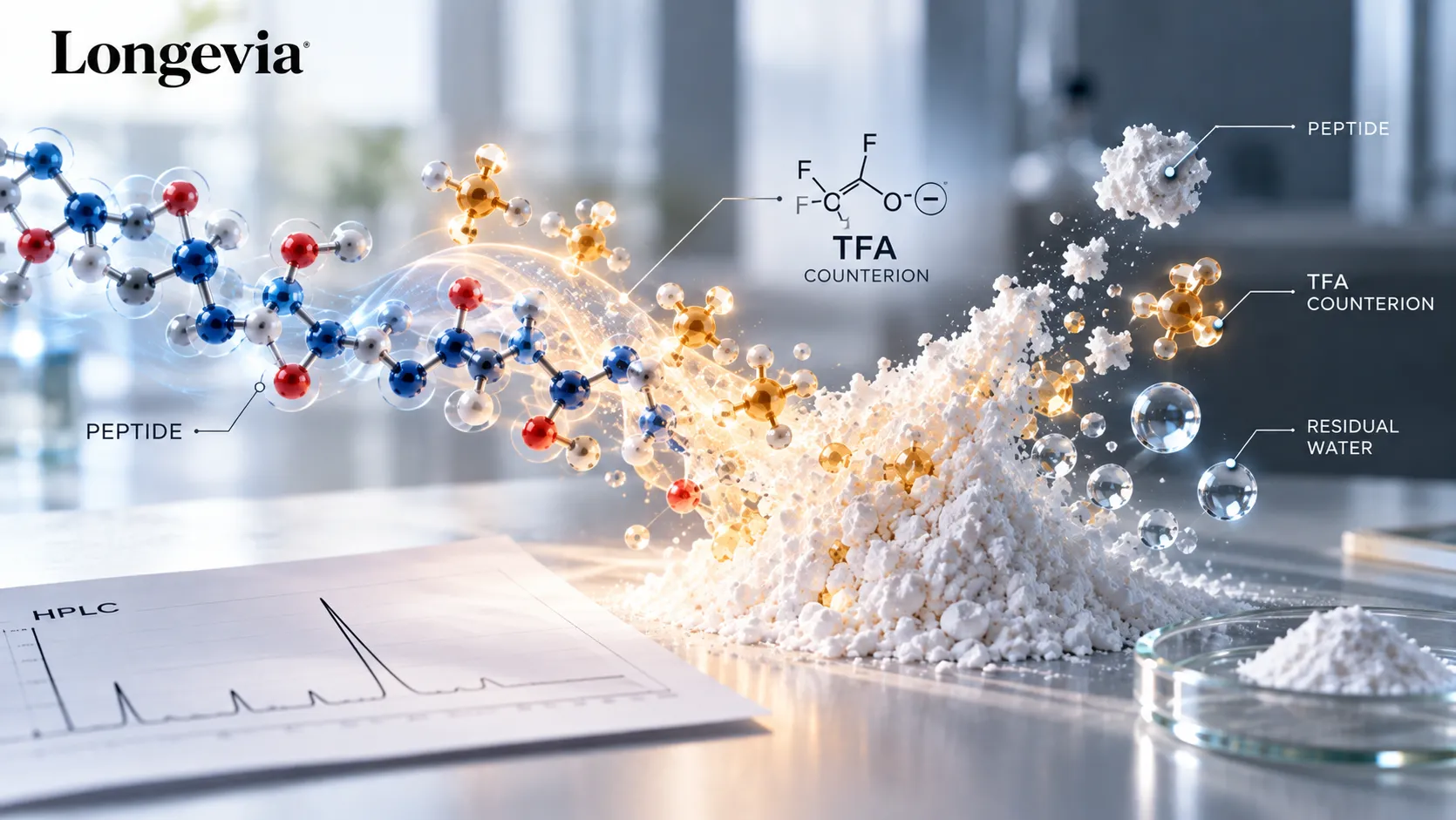
- High-performance liquid chromatography (HPLC): separates a sample into its components and calculates the percentage matching the target peptide.
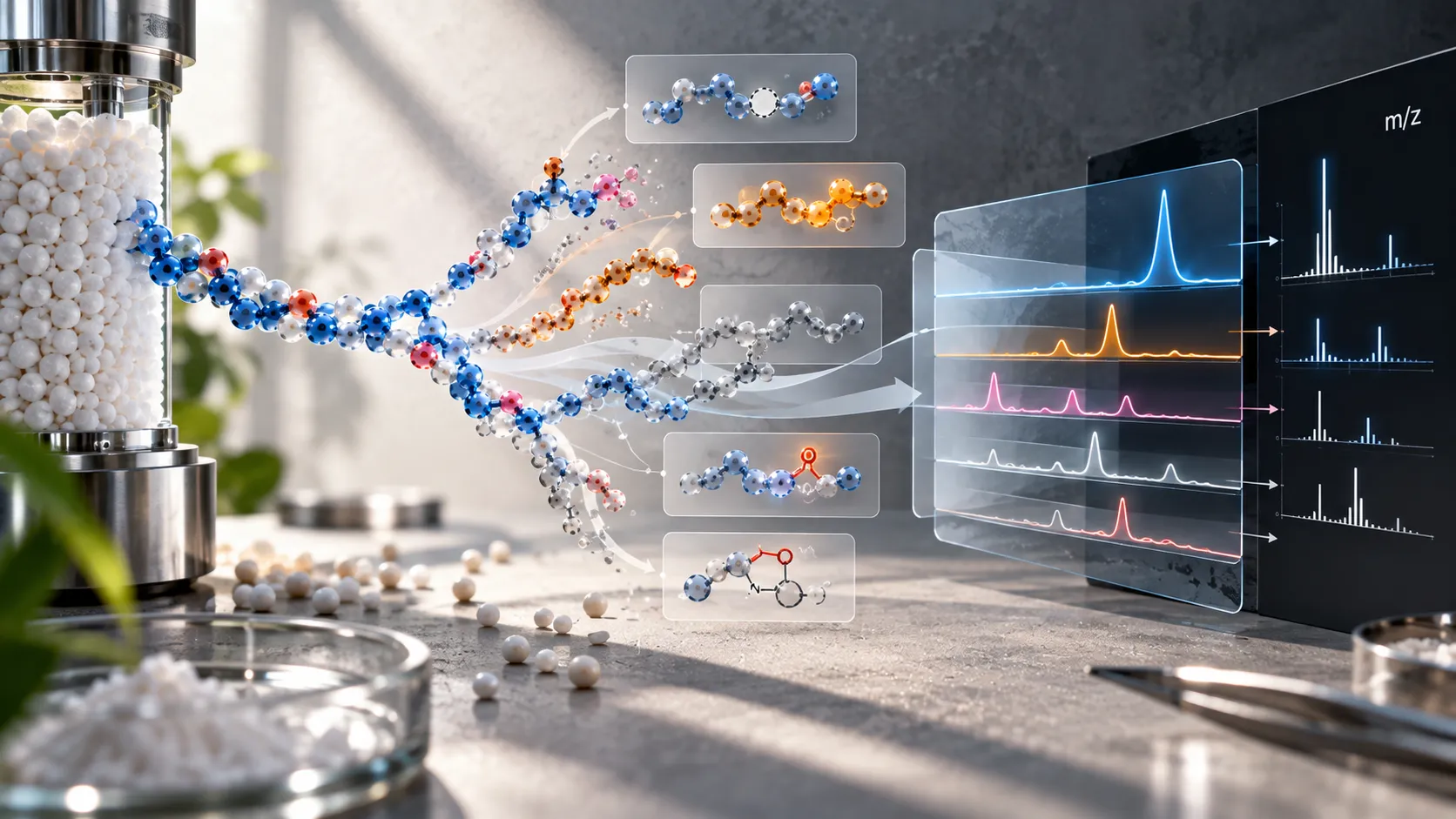
- Mass spectrometry (MS): confirms molecular weight and sequence identity, catching errors HPLC alone might miss.
Together, these methods form the backbone of a certificate of analysis (COA), the document that verifies a peptide's purity and identity before it's used in an experiment.
Why Peptide Research Is Growing in Biotechnology
Several converging factors explain why research institutions and global biotech companies have ramped up investment and publication output in this space.
Drug Discovery and Pharmaceutical Development
Peptides occupy a useful middle ground in pharmaceutical peptide development. They're generally more specific in their biological targeting than small-molecule drugs, yet easier and less costly to manufacture and modify than large biologic proteins. That combination has made peptides an increasingly attractive category across the drug discovery pipeline, from early-stage target validation through preclinical research.
Expanding Research Categories
As synthesis and testing have become more accessible, the range of peptide categories under active study has broadened considerably. Common research categories include:
- GLP-1 research peptides — studied for their role in metabolic and appetite-regulation pathways.
- Growth hormone peptides — studied in relation to cellular growth and repair signaling.
- Healing and repair peptides — studied for tissue-level regenerative processes.
- Cosmetic peptides research — studied for effects on skin cell signaling.
- Nootropic peptides — studied for potential roles in neural signaling pathways.
It's worth being precise about what this growth represents: an expansion in the scientific study of these compounds within laboratory settings. Peptides sold and labeled for research use only are intended exclusively for qualified laboratory investigation, not for human or animal administration, and have not been evaluated by the FDA for safety or efficacy outside that context.
Precision Medicine and Translational Research
Peptide research also aligns closely with the broader shift toward precision medicine, where treatments and diagnostics are tailored to specific biological mechanisms rather than applied broadly. Because peptides can be engineered to target narrow biological pathways, they're a natural fit for translational research programs trying to bridge laboratory findings and future clinical applications.
The Role of Quality and Purity Standards in Peptide Research
Experimental results are only as reliable as the materials behind them. That's why quality and purity standards have become such a central part of the conversation around peptide research.
Certificate of Analysis (COA): What It Verifies
A certificate of analysis for research peptides typically confirms three things: the compound's identity (via mass spectrometry), its purity percentage (via HPLC), and batch-specific details such as lot number and testing date. Reviewing a COA before use is one of the simplest ways a lab can catch a mismatched or degraded compound before it affects an experiment.
Third-Party Testing and Why It Matters for Research Integrity
A manufacturer testing its own product carries an inherent conflict of interest. Independent, third-party tested research peptides remove that bias by having purity and identity confirmed by a lab with no stake in the sale. For studies where reproducibility matters, that independent verification is often the deciding factor in vendor selection.
Storage, Stability, and Handling Best Practices
- Store lyophilized (freeze-dried) peptides frozen, away from light and moisture, until ready for use.
- Allow vials to reach room temperature before opening to reduce condensation.
- Reconstitute using an appropriate solvent, following the specific compound's guidance.
- Refrigerate reconstituted solutions and use within the supplier's recommended timeframe.
- Avoid repeated freeze-thaw cycles, which can degrade peptide stability.
Regulatory Landscape: Research Use Only (RUO) Compliance
What 'Research Use Only' Means
Peptides for research use only are manufactured and labeled specifically for laboratory and scientific investigation. This designation means the compound has not gone through the regulatory review process required for human or veterinary therapeutic use, and it is not intended for consumption, diagnostic use, or treatment of any kind.
FDA and Institutional Oversight
In the United States, the FDA does not review or approve research-use-only compounds the way it does approved drugs, which is why RUO status carries specific labeling and marketing restrictions. Most academic and commercial laboratories layer additional oversight on top of this, including institutional biosafety review and internal compliance protocols, to make sure research materials are procured and handled appropriately.
The Future of Peptide-Based Research
Emerging Applications
Looking ahead, several trends are likely to keep peptide biotechnology moving upward: continued growth in peptide-based therapeutic candidates, expanding computational tools for peptide design, and more accessible analytical instrumentation that lowers the barrier for smaller labs to run rigorous purity testing in-house or through partners. See our peptide research trends 2026 guide for a deeper look at what's changing right now.
Where the Field Is Headed
The throughline across all of this is accessibility. Synthesis has become faster, testing has become more precise, and the base of scientific literature has grown substantially. None of that changes what these compounds are for: peptides sold for research use only exist to support laboratory investigation, and the growth described throughout this guide is fundamentally a growth in scientific study, not in consumer application.