Certificates of Analysis
Every Certificate of Analysis below is a genuine, downloadable document as published in our system — nothing on this page is a placeholder or sample. We're actively expanding published COA coverage across the catalog; if a product you're researching isn't listed yet, reach out and we'll get you its documentation directly.
Published Certificates
| Product | Category | Reference | Uploaded | COA Download |
|---|---|---|---|---|
| GLOW — 70mg Blend Vial | Recovery & Tissue Repair | Glow peptide COA | Oct 1, 2026 | |
| KLOW Blend | Recovery & Tissue Repair | Klow peptide COA | Oct 1, 2026 | |
| NAD⁺ | Mitochondrial & Cellular Energy | NAD+ peptide COA | Oct 1, 2026 |
Don't see the product you're researching? We're continuing to publish COAs across the catalog — request one directly and we'll send it to you.
Request a Certificate of Analysis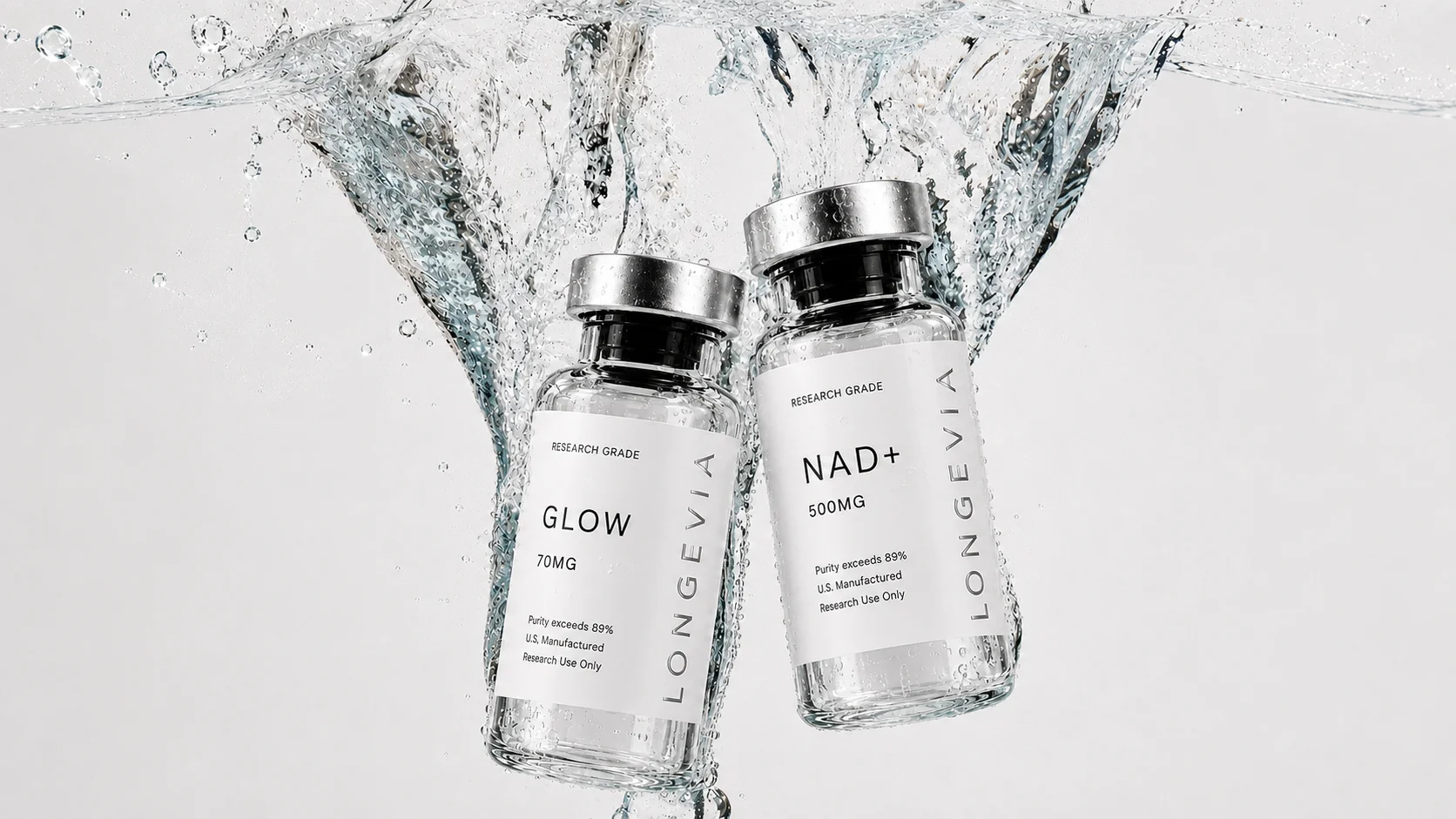
About our testing methodology
Every raw material we receive undergoes rigorous High-Performance Liquid Chromatography (HPLC) prior to compounding. This analytical technique separates, identifies, and quantifies each component in a mixture, ensuring absolute sequence accuracy.
Following synthesis and lyophilization, random samples from the finished batch are submitted to independent third-party laboratories. They perform secondary HPLC alongside Mass Spectrometry (MS) to verify that the molecular weight perfectly matches the target peptide structure and that purity exceeds our 99% baseline standard.
Want the full breakdown of how to read a chromatogram, what a purity percentage actually means, and how to spot red flags in a supplier's documentation? See our complete guide to reading a peptide Certificate of Analysis.