- Peptide purity is the percentage of a sample that is the correctly sequenced, intact target peptide.
- Purity directly affects research reproducibility, data reliability, and study integrity.
- HPLC measures purity percentage; mass spectrometry confirms peptide identity — credible testing uses both.
- A trustworthy supplier provides a batch-specific certificate of analysis on request, not a generic document.
- Purity and storage/stability data should be evaluated together, since improper storage can degrade even a high purity peptide.
Two research peptides can carry the exact same name on the label and still produce completely different results in the lab. The variable that separates them isn't the compound itself — it's purity. A batch loaded with truncated sequences, residual solvents, or degradation byproducts can quietly distort an entire study, and by the time the inconsistency shows up in the data, it's often too late to trace it back to the source.
This guide breaks down why peptide purity matters in scientific research, how purity is actually measured and verified, what a certificate of analysis should tell you, and how to evaluate whether a supplier's purity claims hold up.
What Is Peptide Purity? A Complete Definition
Peptide purity is the percentage of a sample that consists of the intact, correctly sequenced target peptide, as opposed to the total mass of the sample overall. A peptide listed at 98% purity means 98% of that sample is the exact peptide it claims to be — the remaining 2% may include truncated sequences, deletion sequences, residual synthesis solvents, or other byproducts left over from manufacturing.
This distinction matters because peptide purity is not the same thing as peptide identity. A sample can technically contain the correct peptide sequence and still be considered low purity if a large enough share of the sample is made up of related but incomplete or degraded fragments.
Peptide Purity vs. Potency: What's the Difference?
Purity and potency are related but distinct concepts. Purity describes how much of a sample is the correctly formed target peptide. Potency describes how biologically active that peptide is once correctly identified. A peptide can be highly pure but still lose potency over time due to improper storage — which is why purity data and storage/stability data are usually reported together on a thorough certificate of analysis.
Peptide Purity Percentage Explained: 95% vs. 98% vs. 99.9%
The gap between purity tiers looks small on paper but compounds quickly in practice, especially across larger sample volumes or longer research timelines.
Purity Level | Typical Research Use | Practical Consideration |
|---|---|---|
95%-97% | Preliminary or exploratory research | Higher proportion of impurities; more variability between batches |
98%-99% | Standard research grade | Common baseline for reproducible laboratory studies |
99.5%-99.9% | High-precision or publication-track research | Minimal impurity load; tighter batch-to-batch consistency |
Quick Answer: What Does Peptide Purity Mean? Peptide purity is the percentage of a sample made up of the correctly sequenced, intact target peptide. It is verified through analytical testing — primarily HPLC and mass spectrometry — not by visual inspection or vendor claims alone. Purity is distinct from potency: a pure peptide can still lose activity if stored or handled incorrectly.
Why Does Peptide Purity Matter in Scientific Research?
Peptide purity matters because research validity depends on knowing exactly what you're working with. If a sample contains unknown impurities, any biological response observed in a study could be caused by the target peptide, a contaminant, or some combination of both — which makes results impossible to interpret with confidence.
The Direct Link Between Purity and Reproducibility
Reproducibility is the backbone of credible research: another lab should be able to run the same study, with the same materials, and get comparable results. Low or inconsistent purity introduces a variable that undermines that entire premise. If Batch A and Batch B of the "same" peptide have different impurity profiles, a study repeated with each batch may produce different outcomes for reasons that have nothing to do with the actual research question.
How Low Purity Peptides Skew Research Data
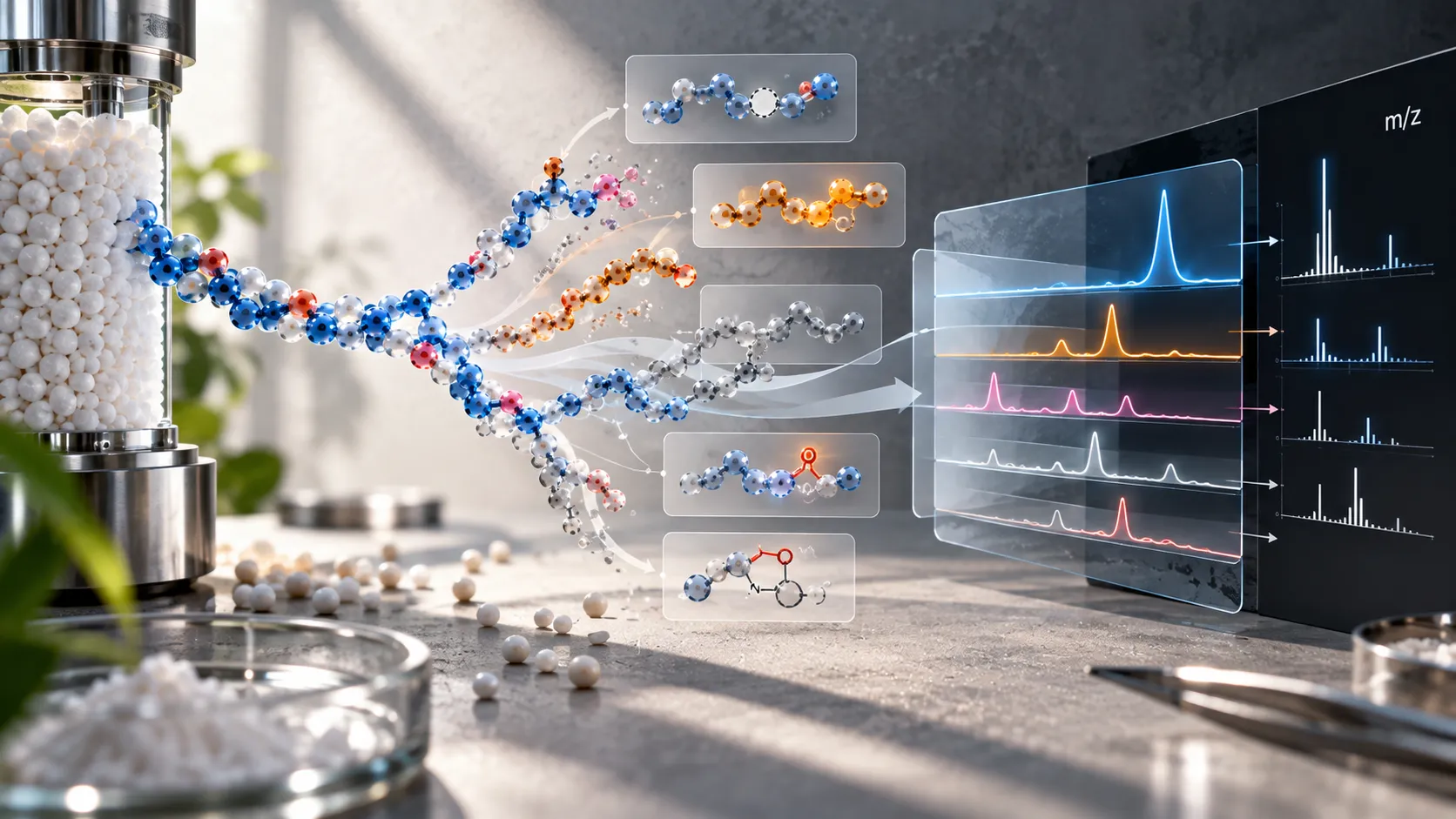
- Truncated or deletion sequences can behave differently at target receptors, muddying observed effects.
- Residual solvents and synthesis byproducts can introduce unrelated biological activity into a sample.
- Inconsistent purity between batches makes it difficult to isolate the actual variable being studied.
- Degradation products from improper storage can accumulate over time, altering results mid-study.
Purity, Dosing Accuracy, and Study Integrity
In any protocol involving concentration-based calculations, purity directly affects accuracy. If a sample's actual peptide content is lower than labeled, every downstream calculation built on that assumption is off — which is one more reason experienced researchers treat purity data as a starting requirement, not an optional detail.
Testing & Verification Methods
Purity claims are only as credible as the testing behind them. Three analytical methods form the backbone of how peptide purity and identity are verified.
HPLC Testing for Peptides: How It Works
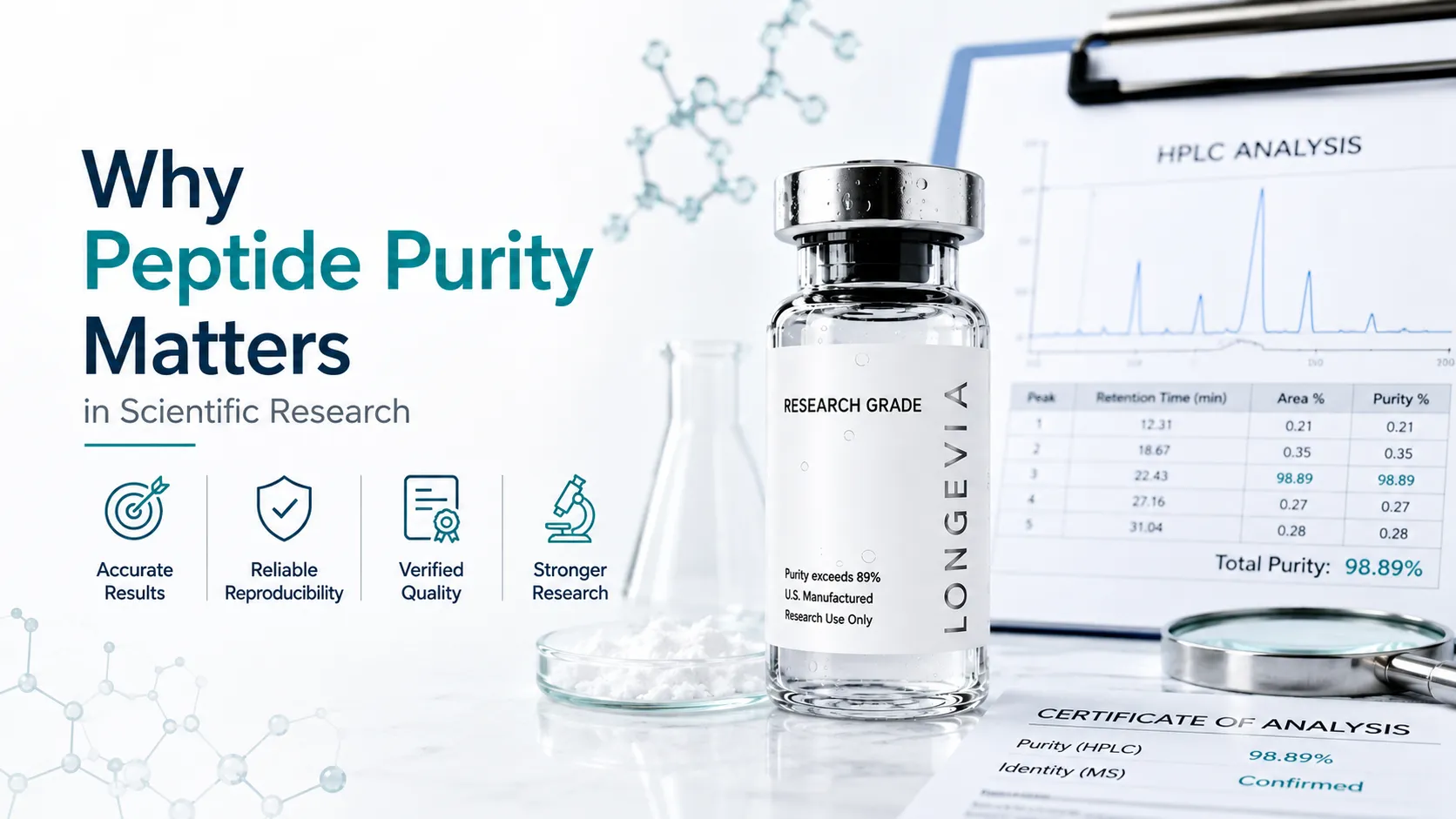
High-Performance Liquid Chromatography (HPLC) separates the components of a peptide sample as they pass through a column, allowing each component to be measured individually. The result is a chromatogram — a chart showing distinct peaks for the target peptide and any impurities. The size of the target peptide's peak relative to the total peak area gives the purity percentage.
Mass Spectrometry vs. HPLC: Which Verifies Peptide Purity Better?
HPLC and mass spectrometry answer two different questions, which is why credible testing typically uses both together rather than either alone.
Method | What It Confirms | Best Used For |
|---|---|---|
HPLC | Relative purity — how much of the sample is the target peak vs. impurities | Quantifying purity percentage |
Mass Spectrometry (MS) | Molecular weight and identity — confirms the peptide is the correct sequence | Verifying peptide identity |
Amino Acid Analysis (AAA) | Amino acid composition of the sample | Cross-checking sequence accuracy |
How to Read a Peptide Certificate of Analysis (COA)
A certificate of analysis is the document that turns testing data into something you can actually verify. A thorough COA should include:
- The exact batch or lot number matching the product you received
- Purity percentage, confirmed by HPLC
- Molecular weight verification, confirmed by mass spectrometry
- The testing method and, ideally, the testing lab used
- Date of testing
If a supplier can't produce a batch-specific COA on request, that's a meaningful gap — a generic, undated, or product-wide COA doesn't tell you anything reliable about the specific vial in front of you. Longevia publishes batch-specific COAs for every research peptide it sells, and our HPLC and purity testing guide walks through how to read one end-to-end.
Quality, Contamination & Risk
Common Peptide Impurities and What Causes Them
Impurity Type | What It Is | Common Cause |
|---|---|---|
Truncated sequences | Peptide chains missing one or more amino acids | Incomplete coupling during synthesis |
Deletion sequences | Chains with an amino acid skipped mid-sequence | Synthesis errors during chain assembly |
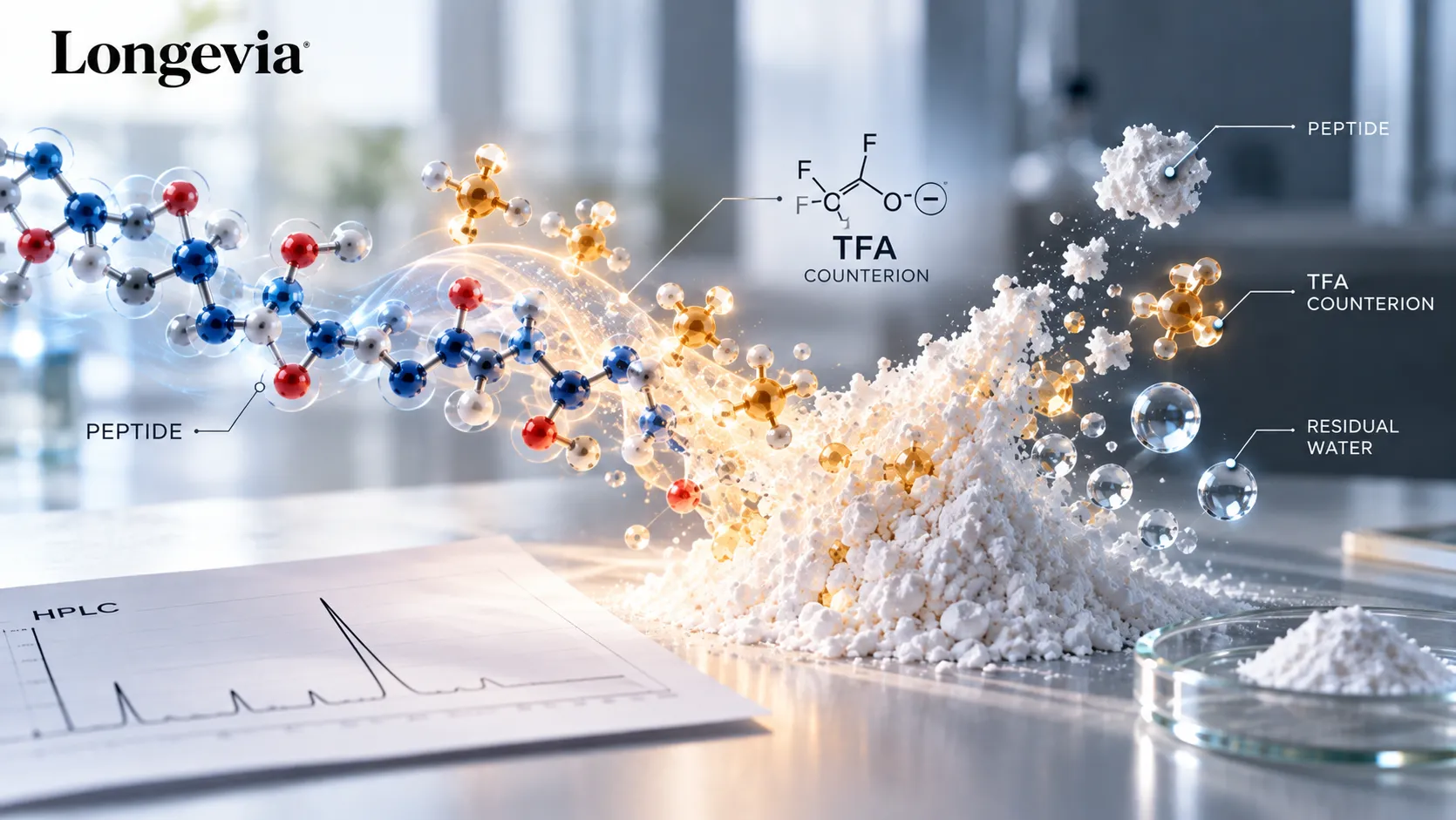
Residual solvents | Chemical byproducts left over from synthesis | Incomplete purification after synthesis |
Oxidation byproducts | Peptide altered by exposure to oxygen | Poor storage conditions or handling |
Aggregation | Peptide molecules clumping together | Improper reconstitution or storage temperature |
Endotoxin Testing in Research Peptides: Why It Matters
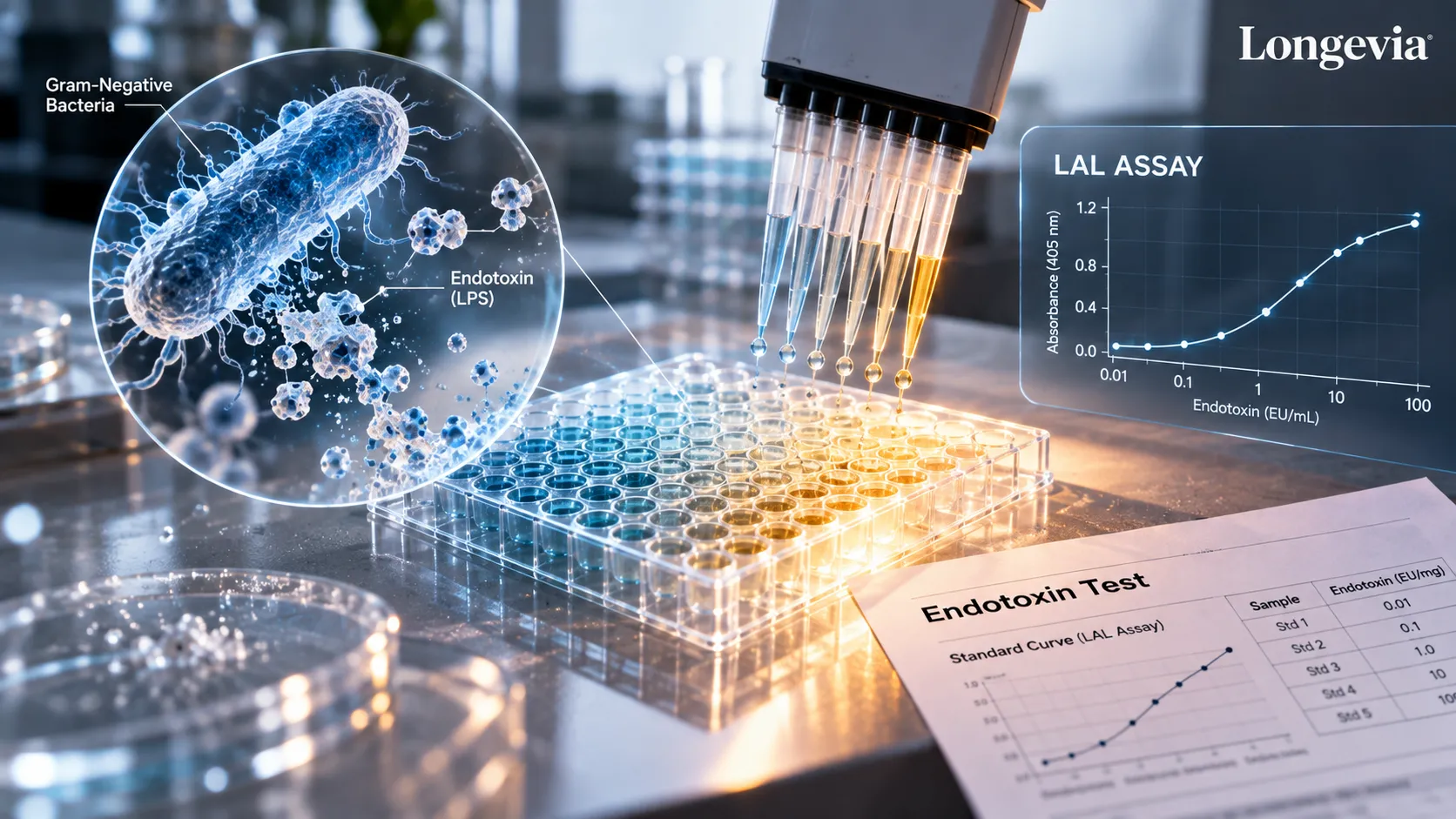
Endotoxin testing (commonly performed via the LAL method) screens for bacterial byproducts that can contaminate a peptide during manufacturing. This is a separate check from purity testing — a peptide can register as chemically pure while still carrying an endotoxin load, which is why comprehensive quality documentation addresses both purity and sterility rather than purity alone.
Storage, Stability & Shelf Life
Purity at the time of testing isn't the end of the story. Lyophilized (freeze-dried) peptides are generally more stable than reconstituted ones, but both degrade faster when exposed to heat, light, or repeated freeze-thaw cycles. A high purity peptide stored incorrectly can lose integrity well before its labeled shelf life — see our reconstitution and storage guide for handling best practices.
How to Choose a High Purity Peptide Supplier
Purity claims on a product page are only as good as the documentation backing them up. Use this checklist when evaluating a supplier:
- Batch-specific COA available on request — not a generic, product-wide document.
- Third-party lab verification, not solely in-house testing.
- Both HPLC and mass spectrometry data provided, not purity percentage alone.
- Transparent manufacturing process the supplier can actually describe.
- US-based sourcing and clear RUO (Research Use Only) labeling.
- Consistent purity across batches, not just a single "best case" sample.
Red Flags: How to Spot an Untrustworthy Peptide Vendor
- Purity percentage listed with no accompanying COA or testing data
- A COA that isn't batch-specific or has no visible date or lot number
- Pricing far below market average with no explanation of testing costs
- Vague or evasive answers about manufacturing and quality control
- No mention of third-party or independent lab verification
Why Purity Matters More Than Price — A lower price with no COA isn't a discount, it's an unverified unknown. Testing costs (HPLC, mass spec, third-party labs) are a real, unavoidable expense for legitimate suppliers. Consistently cheap pricing across an entire catalog is a common signal that testing has been skipped or minimized.
If you have questions about a specific batch's documentation, contact our team directly — read more about what Longevia stands for on our About page.