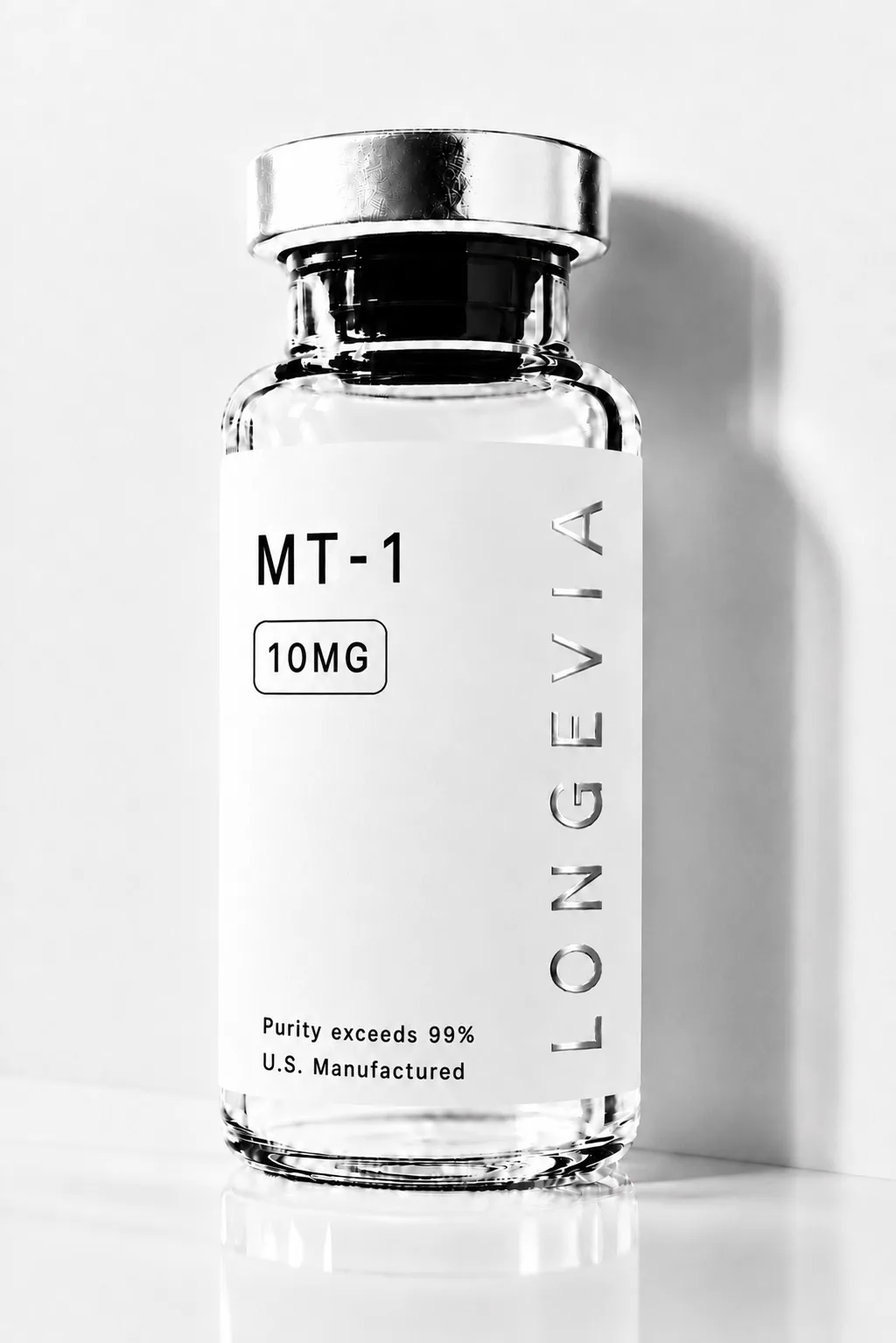
Hormonal Health
Melanotan I
$99.00
1
Slide to Add
Purity≥99% Tested
TestingLC-MS Verified
LocationUS Based
Melanotan 1 (afamelanotide) is a synthetic linear tridecapeptide analogue of α-melanocyte-stimulating hormone (α-MSH). It was designed to improve the metabolic stability of native α-MSH through a single amino acid substitution — replacing Met⁴ with Nle⁴ (norleucine) — while preserving high-affinity binding to melanocortin receptors, particularly MC1R. Research has examined Melanotan 1 in the context of melanocortin receptor pharmacology, MC1R-mediated signaling, melanogenesis, and photoprotection biology. Longevia Research supplies Melanotan 1 in a 10mg research-grade vial for qualified laboratory use.
Standard Delivery3-4 Working Days
Free ShippingOn all orders above $300
Comprehensive Product Details
Scientific identity: Melanotan 1 is a synthetic analogue of α-MSH (α-melanocyte-stimulating hormone) — the endogenous 13-amino-acid neuropeptide derived from proopiomelanocortin (POMC). The single modification relative to native α-MSH is the substitution of methionine at position 4 with norleucine (Nle⁴), which eliminates oxidative susceptibility at that residue and extends metabolic stability in experimental systems. Melanotan 1 retains the full 13-residue linear sequence and the N-terminal acetyl and C-terminal amide groups present in native α-MSH.
Peptide class: Synthetic linear tridecapeptide; melanocortin peptide analogue; α-MSH analogue; POMC-derived peptide analogue.
Primary research target: Melanocortin 1 receptor (MC1R) — a class A G protein-coupled receptor expressed predominantly on melanocytes, where it mediates cAMP-dependent signaling, melanocortin pathway activation, and eumelanin synthesis. Melanotan 1 also binds MC3R, MC4R, and MC5R with varying affinity; MC1R is the primary target studied in melanogenesis and photoprotection research contexts.
Research areas: Melanocortin receptor pharmacology, MC1R signalling research, melanogenesis and pigmentation biology, photoprotection research models, POMC peptide biology, erythropoietic protoporphyria (EPP) research models, skin biology research.
Product quantity:10mg per vial.
Purity: Greater than 99%, confirmed by HPLC and LC-MS analysis at the batch level.
Analytical documentation: A batch-specific Certificate of Analysis is available on the Longevia Research website, covering compound identity, purity, and lot traceability.
Research-use classification: For laboratory research use only. Not for human or veterinary use, clinical diagnostics, or any in-vivo application in humans outside of regulated research settings.
Advanced Research Focus
Melanocortin Receptor Pharmacology
The melanocortin receptor family consists of five class A GPCRs — MC1R through MC5R — activated by POMC-derived peptides including α-MSH, β-MSH, γ-MSH, and ACTH. MC1R is expressed predominantly on melanocytes and is the primary receptor mediating melanogenic signaling in skin biology research. Melanotan 1 binds MC1R with high affinity and activates Gαs-coupled cAMP signaling, which in melanocyte models drives downstream activation of protein kinase A, CREB phosphorylation, and MITF-mediated transcriptional regulation of melanogenic enzymes including tyrosinase. These pathway associations have been characterised in cell-based and animal experimental systems.
Melanogenesis and Photoprotection Research
Cell-based research has examined Melanotan 1 in melanocyte models investigating eumelanin synthesis, tyrosinase activity, and pigmentation-related gene expression. Animal studies have characterised the effects of Melanotan 1 administration on skin pigmentation and photoprotection endpoints in defined rodent and other preclinical models. The proposed relationship between MC1R activation, increased eumelanin production, and reduced UV-induced DNA damage has been investigated as a research mechanism relevant to photoprotection biology. These are preclinical findings in defined experimental systems.
Distinction from Melanotan 2
Melanotan 2 ([Nle⁴, D-Phe⁷]-α-MSH cyclic) is a cyclic heptapeptide that differs from Melanotan 1 in sequence length, ring structure, and receptor activity profile. Melanotan 2 has broader melanocortin receptor activity — including more pronounced MC3R and MC4R engagement — and a distinct research and adverse-effect profile in animal studies. The two compounds are separate research tools studied for different experimental purposes and should never be conflated in research documentation, assay design, or supplier labelling.
Human Research and Regulatory Status
Afamelanotide (Melanotan 1) has progressed further into human clinical research than most synthetic research peptides. Clinical trials examined afamelanotide as a subcutaneous implant (Scenesse) in erythropoietic protoporphyria — a rare photosensitivity disorder caused by ferrochelatase deficiency — demonstrating statistically significant increases in pain-free sun exposure time in affected patients. Scenesse received regulatory approval from the European Medicines Agency (EMA) in 2014 and from the US FDA in 2019 for this specific indication. These approvals concern the Scenesse subcutaneous implant formulation under defined clinical and regulatory conditions and do not establish the safety, efficacy, pharmacokinetic equivalence, or bioavailability of the Longevia Research lyophilised research vial.
Uncompromising Quality Standards
Reliable research begins with accurately characterised material: For a 13-amino-acid analogue peptide such as Melanotan 1, that means confirming sequence integrity — including the Nle⁴ substitution, N-terminal acetylation, and C-terminal amide — alongside purity at the batch level. Substitution errors or missing terminal modifications produce structurally distinct peptides with different receptor binding profiles that can confound melanocortin receptor assays and cell-based signaling studies.
Purity assessment: Each production lot is characterised to greater than 99% purity by high-performance liquid chromatography (HPLC). Chromatographic purity data is reported on the batch Certificate of Analysis.
Identity confirmation: Peptide identity, Nle⁴ substitution, and terminal modifications are confirmed by mass spectrometry (LC-MS), providing molecular-weight verification consistent with the specified sequence and modifications. HPLC and LC-MS data together confirm that the material supplied corresponds to the labelled compound at the labelled purity.
Batch traceability and Certificate of Analysis: Every vial of Melanotan 1 10mg is traceable to a specific production lot. A batch-specific Certificate of Analysis is accessible directly on the Longevia Research website, covering purity, identity, and lot information. Researchers evaluating this material for assay work are encouraged to review the current batch documentation before use, since analytical specifications are applied at the lot level.
Handling: This material should be handled by qualified personnel using appropriate laboratory technique and personal protective equipment, consistent with institutional protocols for research-grade synthetic peptides.
Legal & Compliance Notice
Longevia Research supplies Melanotan 1 10mg for laboratory and in-vitro research use only. The product is intended for use by qualified researchers and trained laboratory personnel in appropriate controlled research environments.
Melanotan 1 is a synthetic research peptide supplied strictly as a research tool. It is not a drug, not a dietary supplement, not a food or food ingredient, and not a cosmetic. While afamelanotide as Scenesse holds regulatory approval for a specific clinical indication in certain jurisdictions, no such approval applies to this Longevia Research vial, which is not a pharmaceutical product and has not been evaluated by any regulatory authority for safety or efficacy in this formulation.
Longevia provides no dosing instructions, administration guidance, treatment protocols, or reconstitution recommendations for this compound. The scientific literature summarised on this product page describes experimental observations in defined cell-based, animal, and human research systems. Those findings are not medical claims and should not be interpreted as evidence of human efficacy, human safety, or fitness for any clinical application from this product.
The purchaser assumes full responsibility for lawful acquisition, handling, storage, use, and disposal of this material, and for compliance with all applicable local, state, federal, and institutional regulations. By purchasing this product, the buyer confirms that it will be used solely for legitimate laboratory research purposes by qualified personnel, and that its acquisition and intended use comply with applicable laws in the buyer's jurisdiction.
Continue Exploring
Also Considered.
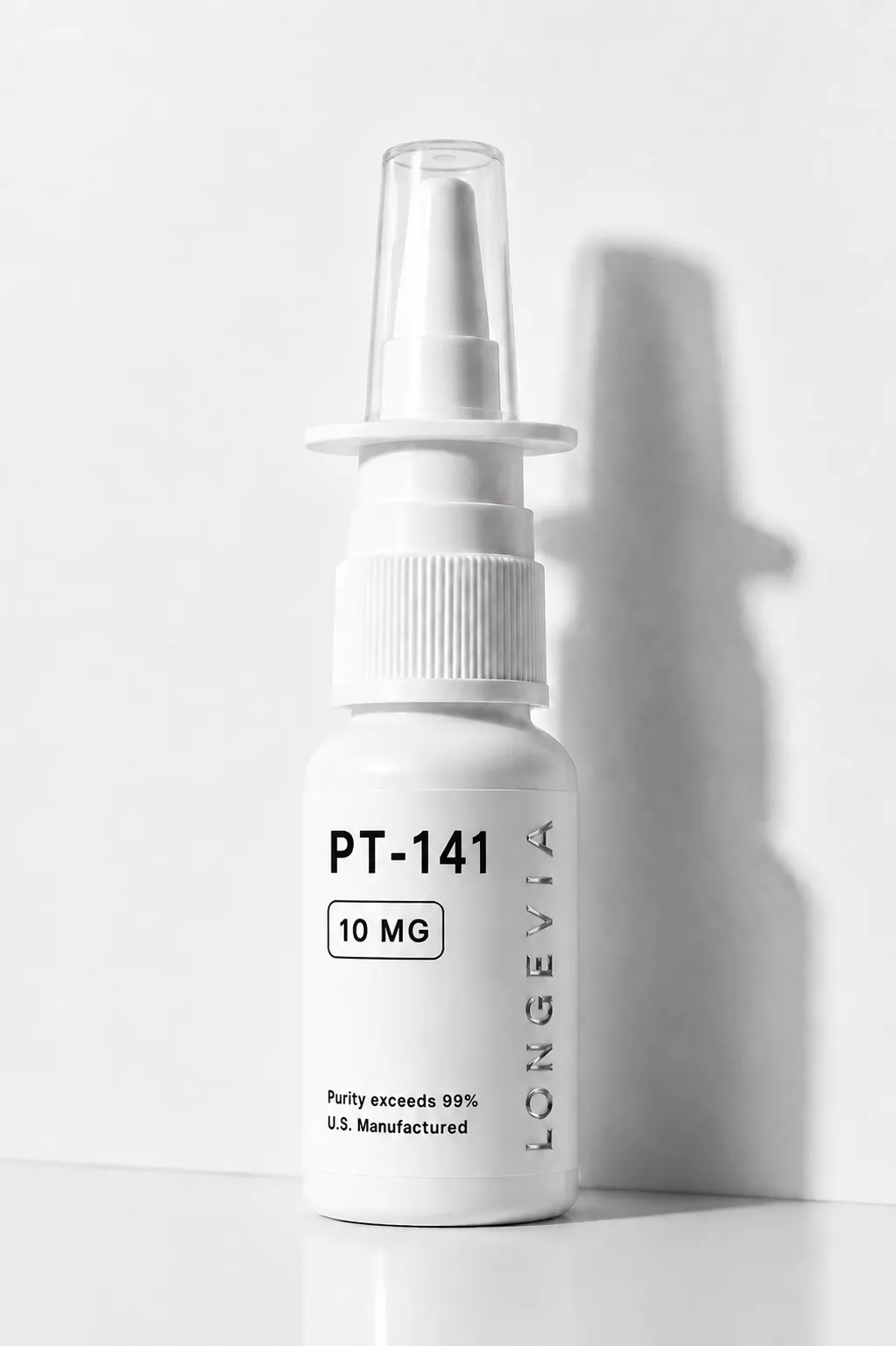
PT-141 — Spray
Longevia Research supplies PT-141 (bremelanotide) 10mg in a 45-spray format for qualified laboratory research. PT-141 is a synthetic cyclic heptapeptide and melanocortin receptor agonist investigated in MC4R signaling, sexual-function research, and melanocortin receptor pharmacology. Research Use Only.
$180.00
Slide to add
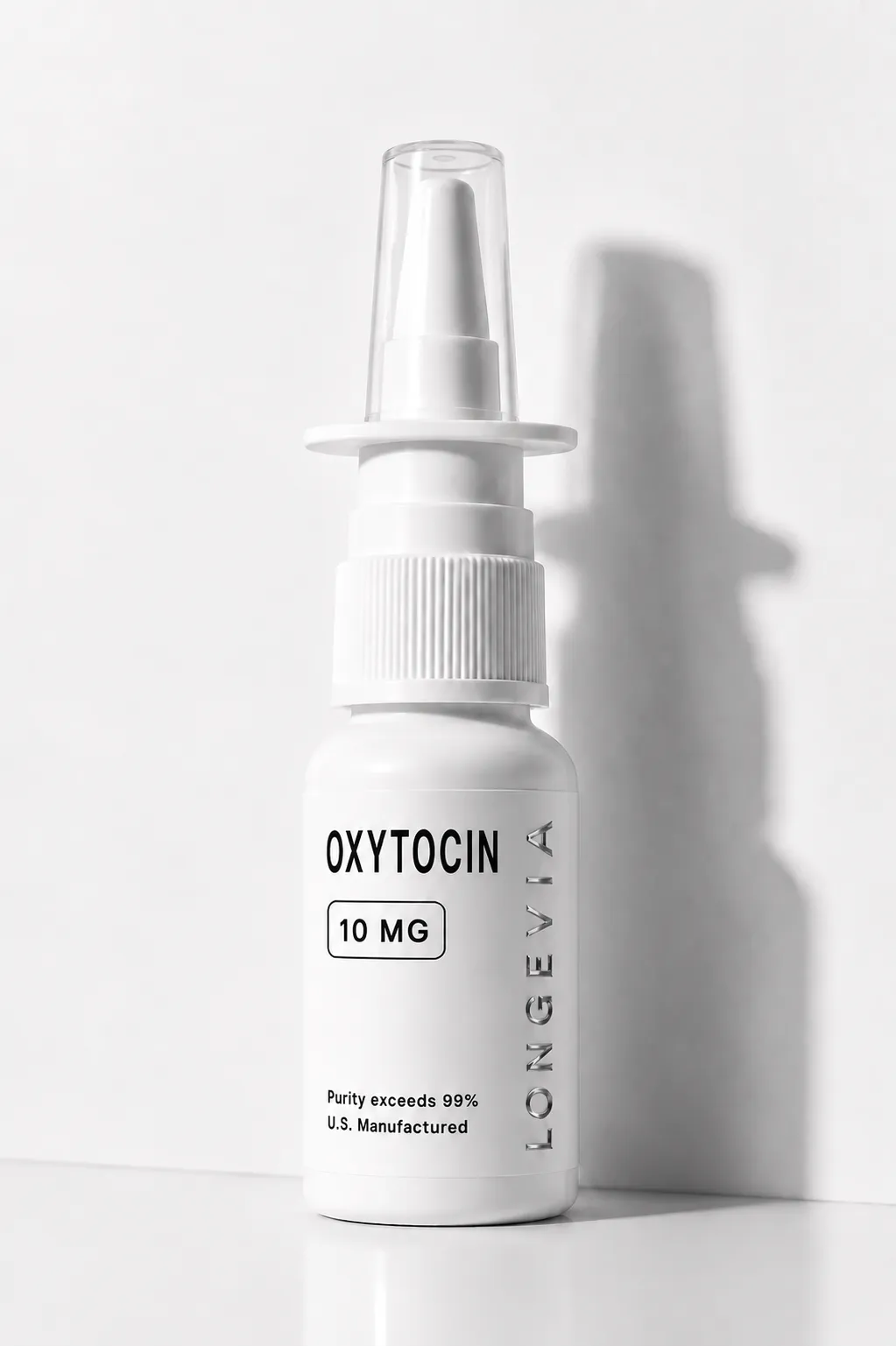
Oxytocin — Spray
Longevia Research supplies Oxytocin 10mg in a 90-spray format for qualified laboratory research. Oxytocin is a naturally occurring nonapeptide hormone and neuropeptide studied in neuroendocrine biology, reproductive physiology, oxytocin receptor (OXTR) signaling, and social-behavior research. Research Use Only.
$180.00
Slide to add
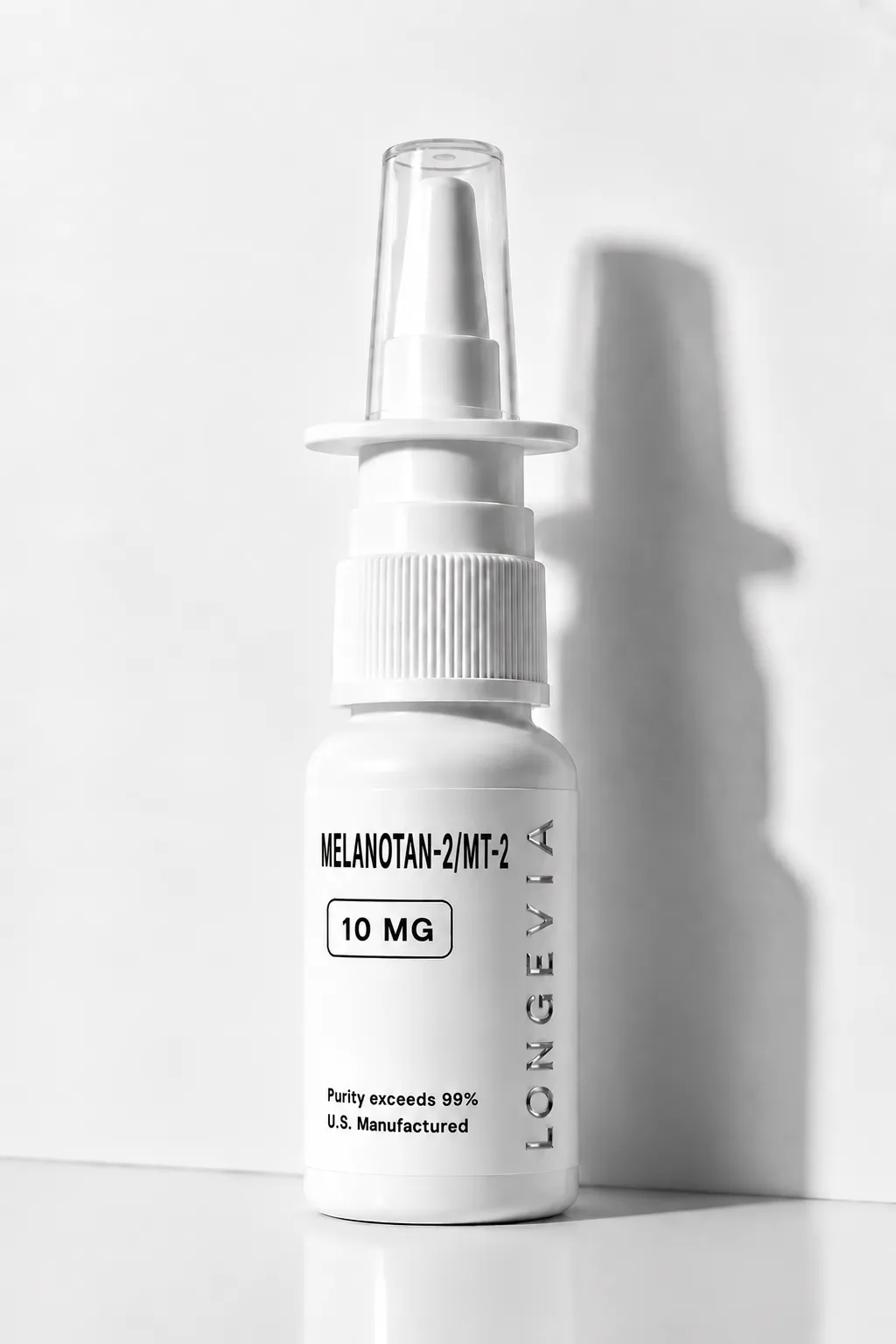
Melanotan-II — Spray
Longevia Research supplies Melanotan-II (Melanotan 2, MT-II) 10mg in a 45-spray format for qualified laboratory research. Melanotan-II is a synthetic cyclic melanocortin peptide analogue investigated for activity at MC1R, MC3R, MC4R, and MC5R in receptor pharmacology and pigmentation research. Research Use Only.
$148.50
Slide to add
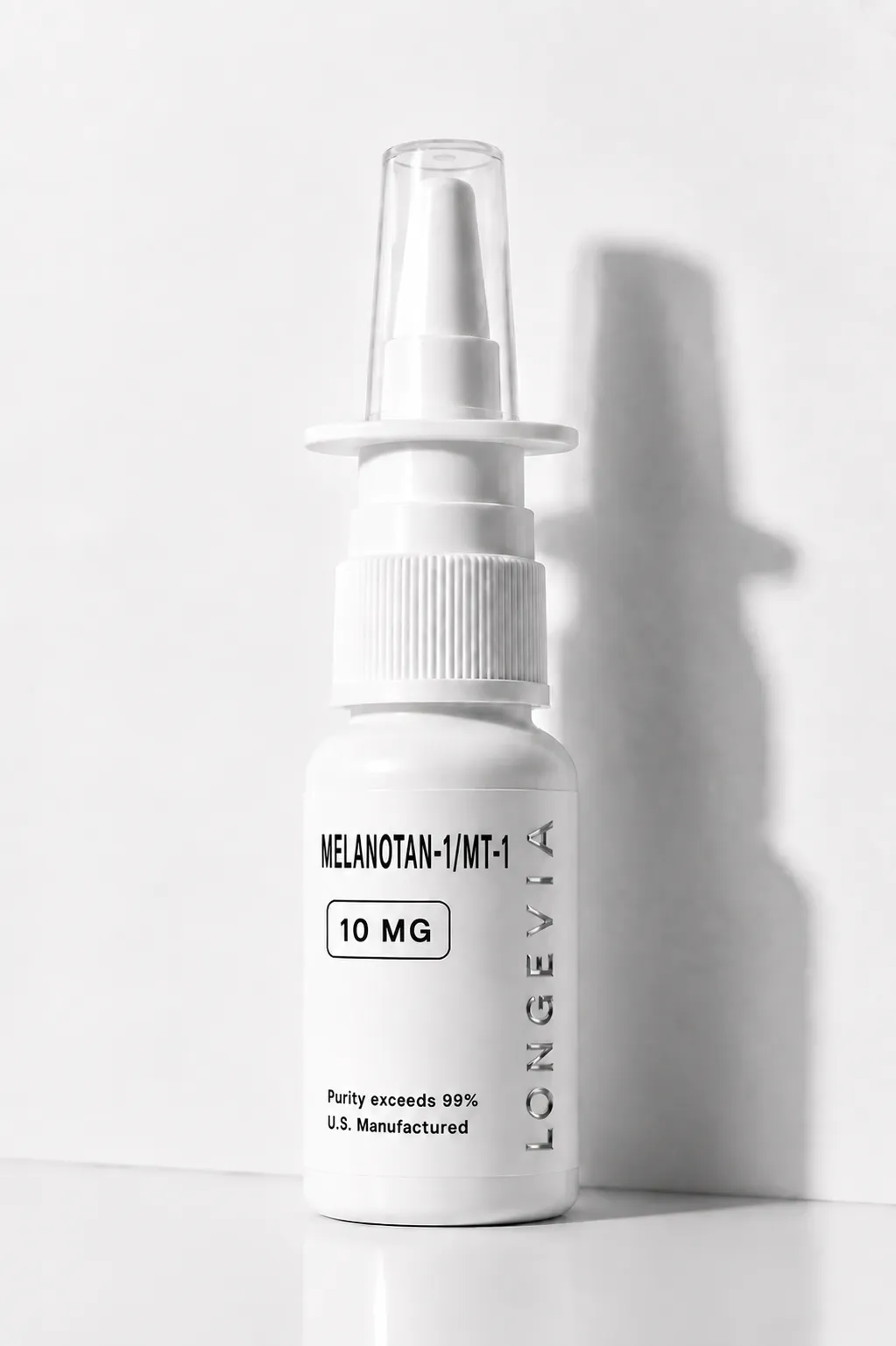
Melanotan-1 — Spray
Longevia Research supplies Melanotan-1 (Melanotan I, MT-1) 10mg in a 45-spray format for qualified laboratory research. Melanotan-1 is a synthetic α-MSH analogue and melanocortin research peptide studied in relation to MC1R signaling, melanogenesis, and pigmentation biology. Research Use Only.
$144.00
Slide to add
Product FAQs
Find answers to common questions regarding storage, reconstitution, and testing guidelines for this specific compound.