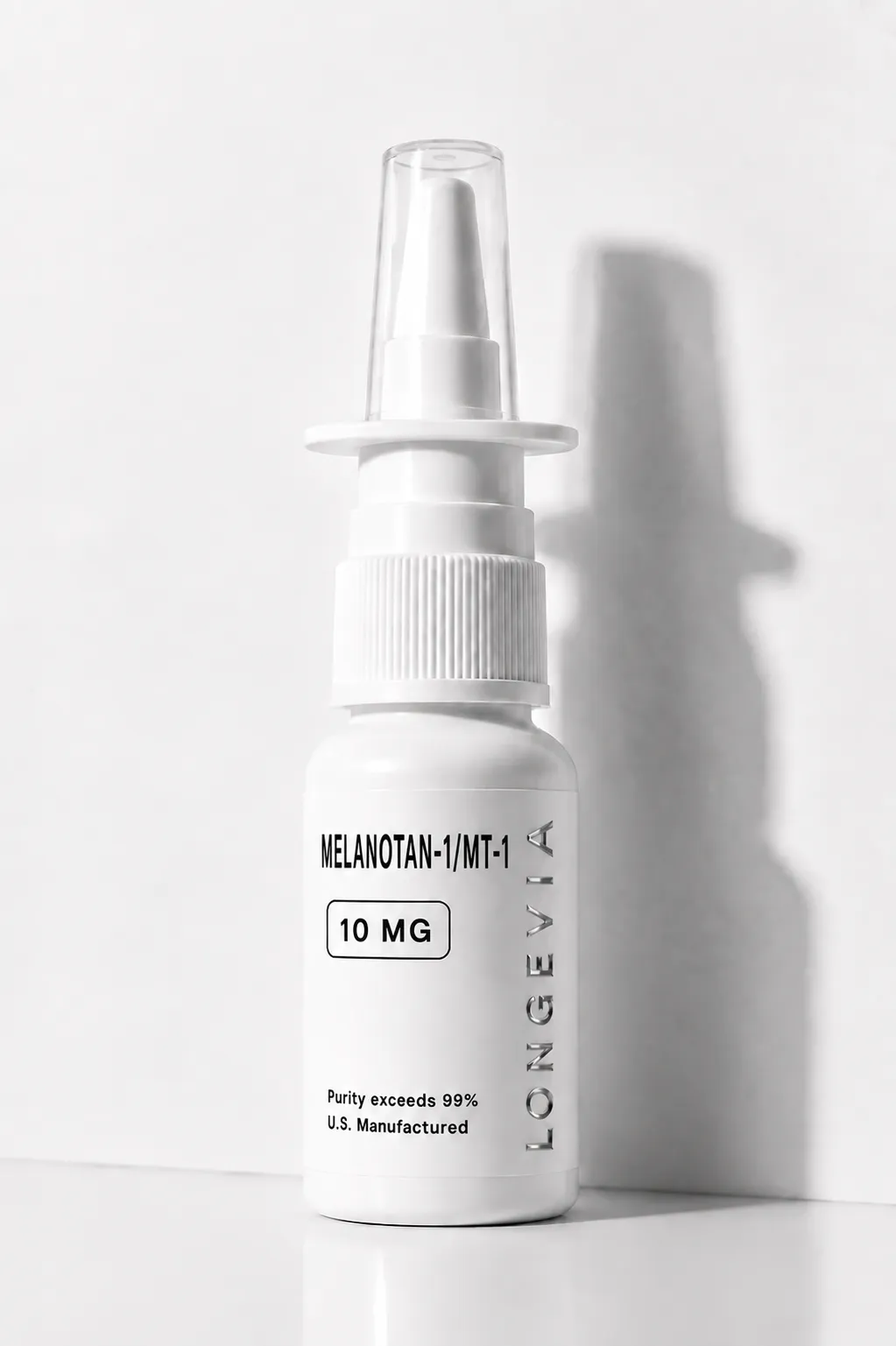
Hormonal Health
Melanotan-1 10mg — 45 Sprays
$144.00
1
Slide to Add
Purity≥99% Tested
TestingLC-MS Verified
LocationUS Based
Melanotan-1 (also designated Melanotan I or MT-1) is a synthetic 13-amino-acid analogue of alpha-melanocyte-stimulating hormone (α-MSH), incorporating two structural modifications relative to the endogenous hormone: substitution of norleucine (Nle) for methionine at position 4, and D-phenylalanine (D-Phe) for L-phenylalanine at position 7. These modifications improve resistance to oxidative degradation and enhance receptor binding affinity relative to native α-MSH in research models. Melanotan-1 has been investigated in relation to melanocortin receptor signaling — with particular research interest in its interaction with the melanocortin 1 receptor (MC1R) — and in studies of melanocyte biology, melanogenesis, and photobiology in cell-based and preclinical experimental systems. The pharmaceutical compound afamelanotide shares the same amino acid sequence as Melanotan-1 and holds regulatory approval in specific jurisdictions as a 16mg controlled-release subcutaneous implant (Scenesse, Clinuvel Pharmaceuticals) for the prevention of phototoxicity in adults with erythropoietic protoporphyria (EPP). This approval applies to the specific pharmaceutical product, formulation, and indication studied in clinical trials — it does not extend to the Longevia Research Melanotan-1 spray, which shares the amino acid sequence but is a separately supplied research compound without pharmaceutical approval or clinical validation. Longevia Research supplies Melanotan-1 as 10mg per bottle in a liquid spray format — 45 sprays per bottle — for qualified laboratory and scientific research purposes only.
Standard Delivery3-4 Working Days
Free ShippingOn all orders above $300
Product Details
Scientific identity
Melanotan-1 (CAS 75921-69-6, also the CAS for afamelanotide) is a synthetic melanocortin research compound and α-MSH analogue. Its molecular formula is C₇₈H₁₁₁N₂₁O₁₉ and molecular weight is 1,646.87 g/mol. The sequence is Ac-Ser-Tyr-Ser-Nle-Glu-His-D-Phe-Arg-Trp-Gly-Lys-Pro-Val-NH₂ — 13 residues with an N-terminal acetyl group and C-terminal primary amide, matching the terminal chemistry of native α-MSH.
Compound class
Synthetic melanocortin research compound; synthetic α-MSH analogue; MC1R research ligand. Classified as a Research Use Only material and is not a drug, dietary supplement, food, or cosmetic.
Structural modifications relative to α-MSH
Endogenous α-MSH carries methionine at position 4 and L-phenylalanine at position 7. Melanotan-1 substitutes norleucine (Nle) at position 4 — a non-natural methionine isostere that improves resistance to oxidative degradation — and D-phenylalanine (D-Phe) at position 7, which enhances MC1R binding affinity and extends plasma half-life relative to the endogenous sequence in research models. These Nle⁴-D-Phe⁷ modifications became a foundation for synthetic melanocortin ligand development and are shared with several other synthetic melanocortin research compounds.
Primary molecular target
MC1R (melanocortin 1 receptor) — a seven-transmembrane Gαs-coupled GPCR expressed primarily on melanocytes. Melanotan-1's research applications have focused primarily on MC1R; researchers should note that α-MSH engages multiple melanocortin receptors (MC1R–MC5R) with distinct tissue distributions and physiological contexts, and evidence from other receptor subtypes should not be attributed to Melanotan-1 without explicit confirmation of the specific compound and receptor studied.
Relationship to afamelanotide
Afamelanotide is the INN designation for the same amino acid sequence when developed as a pharmaceutical. Scenesse (afamelanotide 16mg implant, Clinuvel Pharmaceuticals) holds EMA and FDA approval for EPP. This regulatory status pertains to the pharmaceutical product specifically — the same amino acid sequence supplied as a separately manufactured research compound does not inherit pharmaceutical approval, clinical validation, or equivalence to Scenesse.
Product content: 10mg per bottle; 45 sprays per bottle.
Physical form: Liquid research spray.
Purity: Research-grade.
Analytical documentation
A batch-specific Certificate of Analysis is available on the Longevia Research website, covering compound identity, purity, and lot traceability.
Research-use classification
Research Use Only. Not approved for human or veterinary use. Not intended for administration to humans or animals.
Research Focus & Mechanism Overview
Receptor biology: MC1R signaling. Melanotan-1's primary investigated receptor is MC1R, a seven-transmembrane Gαs-coupled GPCR expressed primarily on melanocytes. Based on cell-based research, MC1R activation by α-MSH and structurally related agonists including Melanotan-1 initiates a signaling cascade involving adenylate cyclase stimulation, elevation of intracellular cAMP, protein kinase A (PKA) activation, and downstream phosphorylation of transcriptional regulators. PKA-mediated signaling has been studied in relation to induction of microphthalmia-associated transcription factor (MITF), a key transcriptional regulator of melanogenic gene expression, which drives transcription of melanogenic enzyme genes including tyrosinase, TYRP1, and DCT in melanocyte cell culture and biochemical research systems. These mechanisms describe experimentally characterized molecular events in defined research models and should not be interpreted as guaranteed product effects or consumer outcomes.
Melanogenesis and photobiology research
Cell-based studies using primary human melanocytes, murine B16 melanoma cells, and Melan-A cell lines have examined how α-MSH and synthetic analogues including Melanotan-1 influence intracellular cAMP, MITF expression, tyrosinase activity, and melanin content in cultured melanocyte systems. Animal studies using C57BL/6 mice — which express functional MC1R and exhibit coat color responses to melanocortin manipulation — have investigated in vivo effects of melanocortin agonists on pigmentation-related endpoints. Research has also examined the relationship between melanocortin signaling and cellular responses to ultraviolet radiation, including the paracrine role of keratinocyte-derived α-MSH in coordinating the UV-induced tanning response at the epidermal level. Translation of cell-based or animal melanogenesis findings to physiologically meaningful outcomes in humans requires consideration of species differences, skin architecture, and melanocyte-keratinocyte interactions in the intact epidermis — and findings from experimental models should not be presented as direct evidence of this product's behavior in human subjects.
Afamelanotide clinical research context
Afamelanotide — the pharmaceutical designation for the same amino acid sequence — has been studied in formal clinical trials in patients with erythropoietic protoporphyria (EPP), a rare condition characterized by severe phototoxic reactions to visible light, administered as a controlled-release subcutaneous implant at defined pharmaceutical doses. Additional investigational research has examined afamelanotide in other photodermatoses including solar urticaria. These clinical findings are specific to the pharmaceutical product, the studied patient populations, the subcutaneous implant formulation, and the measured clinical endpoints. They do not establish that the Longevia Research Melanotan-1 spray is safe, effective, bioavailable, or therapeutically comparable to Scenesse. Compound sequence identity does not confer pharmaceutical equivalence or approved status on a separately supplied research preparation.
Regulatory status
Melanotan-1 as a research compound designation does not carry regulatory approval in its own right. The Longevia Research Melanotan-1 spray has not been submitted for or received regulatory approval from any agency and has not been evaluated in clinical trials as a distinct product. It is classified strictly as a Research Use Only material for qualified laboratory investigation. Researchers should not infer clinical efficacy, safety, or approved-use status for this product from the pharmaceutical literature concerning afamelanotide.
Quality & Purity Standards
For a synthetic research peptide such as Melanotan-1, research-grade quality begins with confirming that the supplied compound has the correct peptide sequence, terminal modifications, stereochemical configuration, and molecular mass. The structural specificity of Melanotan-1 — including its two non-natural residue modifications (Nle⁴ and D-Phe⁷) and its N-terminal acetylation and C-terminal amidation — makes sequence and structural verification a foundational quality requirement. Substitution of a different α-MSH analogue or an incorrectly synthesized peptide could fundamentally misrepresent the compound supplied.
Research-grade quality assessment for Melanotan-1 appropriately involves:
Peptide identity confirmation: Sequence verification through analytical methods capable of confirming the correct amino acid composition and sequence, including liquid chromatography-mass spectrometry (LC-MS/MS), tandem MS fragmentation, or amino acid analysis.
Molecular mass confirmation: High-resolution mass spectrometry (HRMS) or LC-MS to confirm the molecular formula C₇₈H₁₁₁N₂₁O₁₉ and molecular weight of 1646.87 g/mol, distinguishing Melanotan-1 from related melanocortin analogues of similar but distinct mass.
Stereochemical verification: Confirmation that D-Phe at position 7 is present (rather than L-Phe), as this substitution is structurally and pharmacologically significant. Chiral analysis or appropriate MS fragmentation approaches can verify stereochemical identity at this position.
Terminal modification verification: Confirmation of N-terminal acetylation and C-terminal amidation, which are critical structural features of both the endogenous α-MSH sequence and Melanotan-1's design.
Purity assessment: Reversed-phase HPLC or UHPLC to assess peptide purity and quantify related substances, synthesis-related impurities, or degradation products.
Batch documentation and traceability: Provision of batch-specific records enabling traceability from synthesis through supply.
Longevia Research's quality approach is oriented toward providing researchers with well-characterized peptides supported by appropriate analytical documentation. Researchers should consult current product documentation and available certificates of analysis for batch-specific data applicable to this product.
No specific purity grade, third-party certification, cGMP status, or independent laboratory verification is stated for this listing. Researchers requiring documentation of specific quality parameters should contact Longevia Research directly.
Compliance Notice
FOR RESEARCH USE ONLY. NOT FOR HUMAN CONSUMPTION. NOT FOR VETERINARY USE.
Melanotan-1 10mg — 45 Sprays, as supplied by Longevia Research, is intended exclusively for qualified laboratory and scientific research conducted by trained professionals in appropriate research settings. This product is not a drug, dietary supplement, food, or cosmetic. It has not been evaluated or approved by the U.S. Food and Drug Administration, the European Medicines Agency, or any other regulatory authority for use as a therapeutic, prophylactic, or diagnostic agent in humans or animals.
This product is not intended to diagnose, treat, cure, or prevent any disease, condition, or health-related outcome.
Distinction from afamelanotide/Scenesse: Although Melanotan-1 shares a peptide sequence with afamelanotide (the INN designation for this compound as a pharmaceutical), this Longevia Research spray is not afamelanotide, is not Scenesse, is not manufactured by Clinuvel Pharmaceuticals, and does not carry any regulatory approval associated with the approved pharmaceutical product. The clinical research, regulatory approvals, and therapeutic indications associated with Scenesse apply exclusively to that specific pharmaceutical product and do not extend to this research spray.
Formulation and route distinction: Clinical research involving afamelanotide has used subcutaneous implant or injection formulations. Findings from those studies — including pharmacokinetic data, safety data, and efficacy data — do not establish the bioavailability, pharmacokinetics, safety, or efficacy of this spray formulation.
Research evidence scope: Research involving Melanotan-1, afamelanotide, α-MSH, or other melanocortin agonists does not establish that this specific Longevia Research spray produces equivalent biological effects in any system or population.
Pigmentation and photoprotection: Pigmentation-related research involving melanocortin receptor signaling and melanogenesis does not establish that this product provides clinical UV protection, prevents UV-induced disease, or is appropriate for any skin-related therapeutic application. This product is not a sunscreen, photoprotective agent, or cosmetic.
Purchasers are solely responsible for ensuring that acquisition, possession, storage, handling, use, and disposal of this product comply with all applicable local, state, national, and international laws and regulations governing research compounds. Longevia Research makes no warranties regarding the suitability of this product for any specific research application. This product should be handled by qualified personnel following appropriate laboratory safety protocols.
By purchasing this product, the purchaser confirms that they are a qualified researcher or research professional acquiring this compound for legitimate scientific research purposes only.
Continue Exploring
Also Considered.
PT-141 10mg — 45 Sprays
Longevia Research supplies PT-141 (bremelanotide) 10mg in a 45-spray format for qualified laboratory research. PT-141 is a synthetic cyclic heptapeptide and melanocortin receptor agonist investigated in MC4R signaling, sexual-function research, and melanocortin receptor pharmacology. Research Use Only.
$180.00
Slide to add
Oxytocin 10mg — 90 Sprays
Longevia Research supplies Oxytocin 10mg in a 90-spray format for qualified laboratory research. Oxytocin is a naturally occurring nonapeptide hormone and neuropeptide studied in neuroendocrine biology, reproductive physiology, oxytocin receptor (OXTR) signaling, and social-behavior research. Research Use Only.
$180.00
Slide to add
Melanotan-II 10mg — 45 Sprays
Longevia Research supplies Melanotan-II (Melanotan 2, MT-II) 10mg in a 45-spray format for qualified laboratory research. Melanotan-II is a synthetic cyclic melanocortin peptide analogue investigated for activity at MC1R, MC3R, MC4R, and MC5R in receptor pharmacology and pigmentation research. Research Use Only.
$148.50
Slide to add
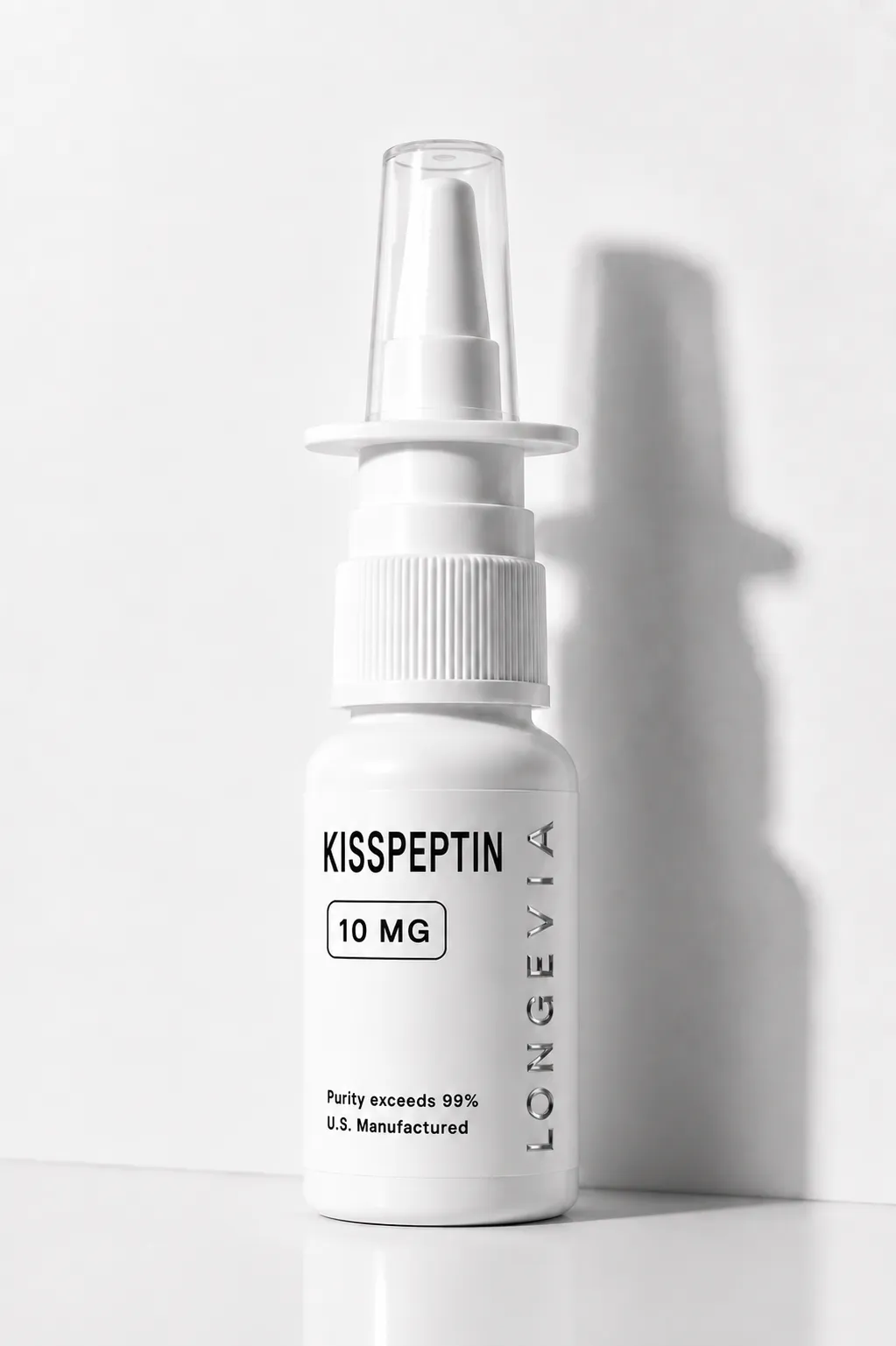
Kisspeptin 10mg — 45 Sprays
Kisspeptin is a family of KISS1-derived signaling peptides investigated in extensive research examining KISS1R/GPR54 receptor biology, GnRH neuronal regulation, hypothalamic neuroendocrinology, and HPG-axis signaling. Available from Longevia Research as 10mg — 45 sprays — for qualified laboratory research use only.
$252.00
Slide to add
Product FAQs
Find answers to common questions regarding storage, reconstitution, and testing guidelines for this specific compound.