Hormonal Health
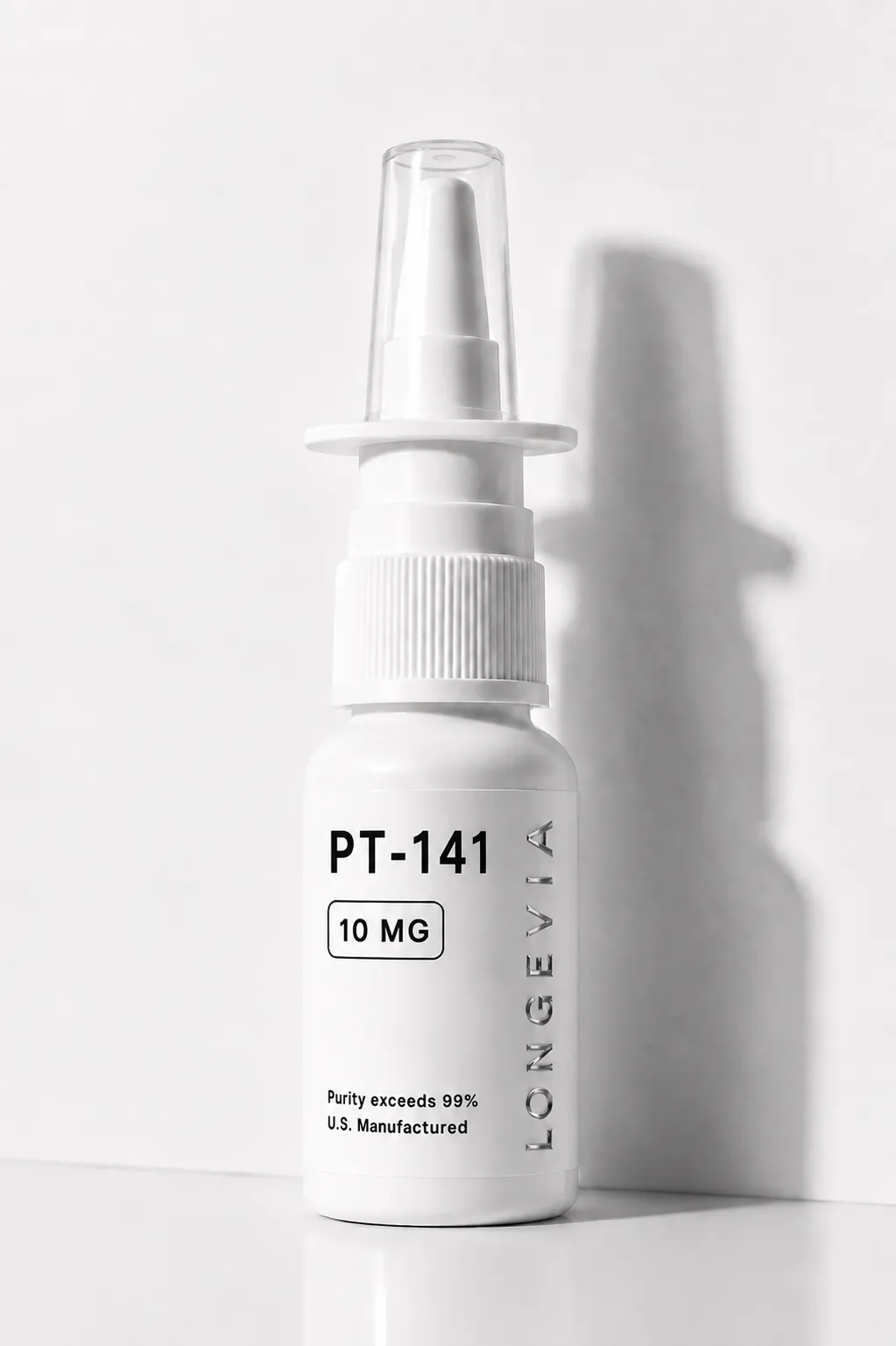
PT-141 10mg — 45 Sprays
$180.00
1
Slide to Add
Purity≥99% Tested
TestingLC-MS Verified
LocationUS Based
PT-141, identified by the International Nonproprietary Name bremelanotide, is a synthetic cyclic heptapeptide and melanocortin receptor agonist developed from melanocortin-system research. It is a seven-residue cyclic lactam compound closely related to Melanotan-II — from which it is distinguished by a C-terminal free acid (Gly-OH) rather than C-terminal amide (Gly-NH₂), a modification that arose during metabolite characterization studies and results in a distinct molecular identity. PT-141 has been investigated for agonist activity at multiple melanocortin receptor subtypes — MC1R, MC3R, MC4R, and MC5R — with particular research interest in MC4R-mediated signaling in central nervous-system circuits. Research spanning receptor pharmacology, animal behavioral models, and human clinical studies has examined bremelanotide's pharmacological profile; findings from each domain are model-specific and must be considered in their appropriate experimental context. Longevia Research supplies PT-141 as 10mg per bottle in a liquid spray format — 45 sprays per bottle — for qualified laboratory and scientific research purposes only.
Standard Delivery3-4 Working Days
Free ShippingOn all orders above $300
Product Details
Scientific identity
PT-141 / bremelanotide (CAS 189691-06-3); sequence Ac-Nle-c[Asp-His-D-Phe-Arg-Trp-Lys]-OH; molecular formula C₅₀H₆₈N₁₄O₁₀; molecular weight 1,025.18 g/mol; 7-residue cyclic heptapeptide with N-terminal acetylation and C-terminal free acid.
Compound class
Synthetic cyclic heptapeptide; melanocortin receptor agonist; synthetic α-MSH analogue; Research Use Only — not a drug, dietary supplement, food, or cosmetic.
Structural architecture
Cyclic lactam bridge between Asp and Lys side chains constrains the pharmacophoric His-D-Phe-Arg-Trp core into a defined cyclic conformation; N-terminal norleucine (Nle) with acetylation; C-terminal free acid (-OH) is the defining structural distinction from Melanotan-II (C-terminal amide, -NH₂); this approximately 1 Da difference in molecular weight (PT-141: 1,025.18 g/mol; Melanotan-II: 1,024.20 g/mol) and the substitution of one nitrogen for one additional oxygen at the C-terminus are analytically significant.
Distinction from related compounds
PT-141 and Melanotan-II share the same cyclic lactam core and differ only at the C-terminus — they are not interchangeable research reagents and findings from one should not be attributed to the other without explicit justification; afamelanotide (pharmaceutical Melanotan-I sequence, linear 13 AA, CAS 75921-69-6) is structurally distinct from PT-141 in length, architecture, and molecular identity; PT-141 is sometimes described as an active des-amide metabolite of Melanotan-II observed during pharmacological studies.
Receptor profile: MC1R (melanocytes; pigmentation biology), MC3R (hypothalamus; neuroendocrine and energy-balance research), MC4R (hypothalamus and CNS; appetite regulation, energy homeostasis, and sexual behavior research), MC5R (exocrine glands; secretory function research); PT-141 is not strictly selective for MC4R and its biological effects in any experimental system reflect combined receptor activation across expressed subtypes.
Pharmaceutical context: Vyleesi (bremelanotide injection, FDA-approved 2019 for HSDD in premenopausal women) applies to the specific pharmaceutical product — not to this research spray; the Longevia Research preparation differs in formulation, route, and status.
Product content: 10mg per bottle; 45 sprays per bottle.
Physical form: Liquid research spray.
Purity: Research-grade.
Analytical documentation
A batch-specific Certificate of Analysis is available on the Longevia Research website, covering compound identity, purity, and lot traceability; mass spectrometric confirmation at 1,025.18 g/mol distinguishes PT-141 from Melanotan-II (~1,024.20 g/mol) and confirms the C-terminal free acid form; chromatographic purity assessment separates PT-141 from related melanocortin analogues and synthesis-related impurities.
Research-use classification
Research Use Only; not approved for human or veterinary use; not intended for administration to humans or animals.
Research Focus & Mechanism Overview
Research background
The development of PT-141 traces to systematic SAR research on POMC-derived melanocortin peptides initiated in the 1980s and 1990s. The Nle⁴-D-Phe⁷ modifications and cyclic lactam architecture incorporated into Melanotan-II were designed to improve receptor binding affinity and metabolic stability relative to native α-MSH. During pharmacological studies of Melanotan-II, bremelanotide was identified as an active metabolite arising from C-terminal amide hydrolysis and was subsequently developed as an independent research and pharmaceutical compound. PT-141's research trajectory diverged from Melanotan-I and Melanotan-II in its pharmaceutical development focus — centered on central melanocortin signaling and sexual-function biology — ultimately leading to the first FDA approval of a centrally acting compound for sexual-function in women.
Receptor pharmacology
Receptor-binding assays using radioligand competition at cloned human MC1R, MC3R, MC4R, and MC5R preparations have characterized PT-141's binding affinity and functional agonist activity across the melanocortin receptor family. Cell-based functional assays examining intracellular cAMP accumulation in MC4R-expressing cell lines have characterized dose-response relationships for receptor activation. MC4R has attracted particular research attention given its expression in hypothalamic and CNS regions studied in relation to sexual behavior in animal models and its established roles in energy homeostasis — though PT-141's multi-receptor profile means that biological effects in any experimental system reflect combined receptor activation rather than an exclusively MC4R-mediated response. MC3R has been studied in neuroendocrine and energy-balance contexts; MC1R in melanocyte and pigmentation biology; MC5R in exocrine secretory function.
Central nervous-system and sexual-behavior research
Central melanocortin signaling through hypothalamic and limbic MC4R circuits has been studied in relation to energy homeostasis, feeding behavior, and sexual behavior in animal models. Preclinical research using PT-141 and related melanocortin agonists has employed central administration, peripheral systemic administration, and site-specific microinfusion approaches to investigate hypothalamic circuit contributions to behavioral responses in rodent models — examining sexual behavior endpoints and associated autonomic responses in male and female rat experimental systems. These animal studies characterize MC4R-containing circuit pharmacology in rodents and provide mechanistic hypotheses; they do not directly establish the magnitude, nature, or generalizability of effects in humans. Research has also examined interactions between melanocortin receptor activation and dopaminergic reward circuits and oxytocinergic hypothalamic pathways — active areas of mechanistic inquiry rather than established facts about downstream consequences of PT-141 in any specific biological preparation.
Human clinical research and regulatory status
Human research on bremelanotide spans pharmacokinetic characterization studies following subcutaneous injection, dose-finding and safety studies, and Phase 2 and Phase 3 clinical trials including the RECONNECT Phase 3 program — which examined patient-reported outcomes in women with acquired, generalized HSDD using validated diary and questionnaire instruments and provided the primary evidence basis for FDA approval of Vyleesi in 2019. Additional clinical studies have examined bremelanotide in other populations including men with sexual-function concerns. All human research is specific to the compound as administered via subcutaneous injection at defined pharmaceutical doses under clinical trial conditions; the pharmacokinetic profile, bioavailability, and CNS exposure established in injection studies are not transferable to the Longevia Research spray product, for which no such data are stated. The FDA approval of Vyleesi applies to the specific pharmaceutical product and does not extend to this research spray, which is supplied strictly as a Research Use Only material for qualified laboratory investigation.
Quality & Purity Standards
For a synthetic cyclic research peptide such as PT-141, research-grade quality depends on accurate confirmation of peptide identity, sequence, cyclic architecture, and critically — the C-terminal group (free acid, Gly-OH) that distinguishes bremelanotide from Melanotan-II. Because PT-141 and Melanotan-II differ by approximately 1 Da in molecular weight (1025.18 vs. 1024.20 g/mol) and by the replacement of a C-terminal amide nitrogen with a free-acid oxygen, analytical methods capable of resolving this difference are essential for confirming correct compound identity. Supplying one compound when the other is intended would represent a fundamental identity error with direct consequences for receptor pharmacology studies.
Research-grade quality assessment for PT-141 appropriately involves:
Peptide identity and sequence verification: Confirmation of the seven-residue sequence (Ac-Nle-c[Asp-His-D-Phe-Arg-Trp-Lys]-OH) using LC-MS/MS tandem mass spectrometry, verifying the sequence, cyclic lactam structure, and C-terminal free acid group.
Molecular mass confirmation: High-resolution mass spectrometry (HRMS) to confirm the molecular formula C₅₀H₆₈N₁₄O₁₀ and molecular weight of 1025.18 g/mol — resolving PT-141 from Melanotan-II (MW 1024.20 g/mol, CAS 121062-08-6), which requires sub-1 Da mass resolution for unambiguous identification.
C-terminal group verification: Specific analytical confirmation that the C-terminus is a free acid (-OH) rather than an amide (-NH₂), as this distinction defines the compound's identity as bremelanotide (PT-141) versus Melanotan-II. LC-MS/MS fragmentation patterns can distinguish these terminal groups.
Cyclic structure verification: Confirmation that the lactam bridge between Asp and Lys side chains is intact, distinguishing the cyclic form from any uncyclized linear precursor.
Stereochemical verification: Confirmation of D-Phe at the critical pharmacophoric position.
Purity assessment: Reversed-phase HPLC or UHPLC to assess chemical purity and quantify related substances, synthesis-related impurities, or structural analogues.
Batch documentation and traceability: Provision of batch-specific analytical records enabling traceability from synthesis through supply.
Longevia Research's quality approach is oriented toward providing researchers with well-characterized peptides supported by appropriate analytical documentation. Researchers should consult current product documentation and available certificates of analysis for batch-specific data.
No specific purity grade, third-party certification, cGMP status, or independent laboratory verification is stated for this listing. Researchers requiring documentation of specific quality parameters should contact Longevia Research directly.
Compliance Notice
FOR RESEARCH USE ONLY. NOT FOR HUMAN CONSUMPTION. NOT FOR VETERINARY USE.
PT-141 10mg — 45 Sprays, as supplied by Longevia Research, is intended exclusively for qualified laboratory and scientific research conducted by trained professionals in appropriate research settings. This product is not a drug, dietary supplement, food, or cosmetic. It has not been evaluated or approved by the U.S. Food and Drug Administration, the European Medicines Agency, or any other regulatory authority for use as a therapeutic, prophylactic, or diagnostic agent in humans or animals.
This product is not intended to diagnose, treat, cure, or prevent any disease, condition, or health-related outcome.
Distinction from pharmaceutical bremelanotide (Vyleesi): The FDA-approved pharmaceutical product bremelanotide injection (Vyleesi, 1.75mg/0.3mL subcutaneous injection) applies to a specific pharmaceutical formulation, administration route, clinical indication (acquired, generalized HSDD in premenopausal women), and patient population studied in the approving clinical trials. This approval does not extend to the Longevia Research PT-141 spray, which is a separately supplied research compound with a different format, unstated formulation, and no regulatory approval. The Longevia Research product is not Vyleesi and is not equivalent to any approved bremelanotide pharmaceutical product.
Formulation and route distinction: Clinical research involving pharmaceutical bremelanotide used subcutaneous injection formulations with defined pharmacokinetics. Findings from those formulations and administration routes — including pharmacokinetic data, bioavailability, and clinical outcomes — cannot be assumed to apply to the properties of this spray product, for which no such data are stated.
Evidence scope: Research involving PT-141 or bremelanotide in animal models, biochemical assays, or human clinical trials does not establish the safety, efficacy, bioavailability, or clinical significance of this specific Longevia Research spray. Animal research does not establish human outcomes. Research findings should not be interpreted as personal-use recommendations for any purpose.
Purchasers are solely responsible for ensuring that acquisition, possession, storage, handling, use, and disposal of this product comply with all applicable local, state, national, and international laws and regulations governing research compounds. Longevia Research makes no warranties regarding the suitability of this product for any specific research application. This product should be handled by qualified personnel following appropriate laboratory safety protocols.
By purchasing this product, the purchaser confirms that they are a qualified researcher or research professional acquiring this compound for legitimate scientific research purposes only.
Continue Exploring
Also Considered.
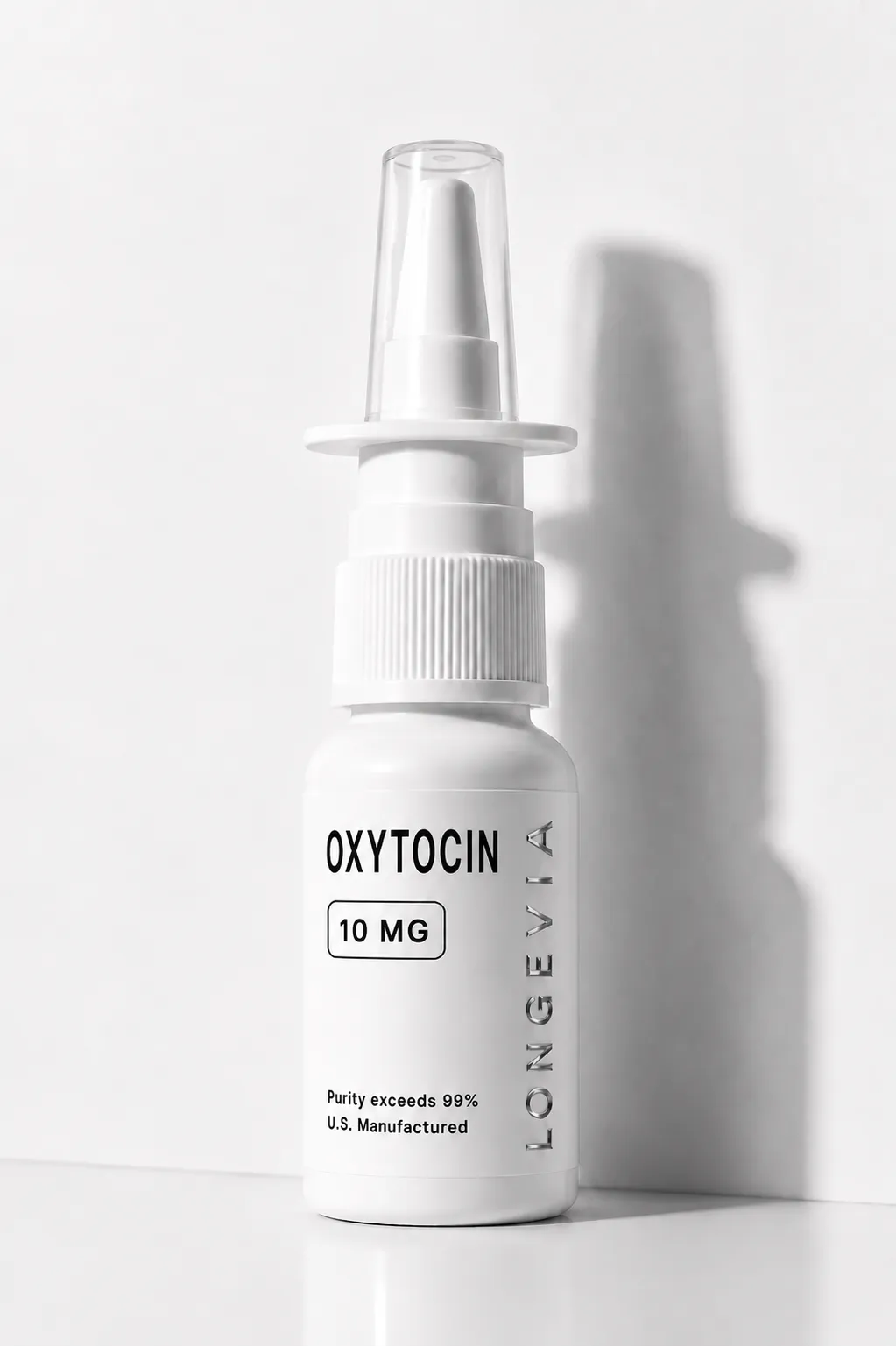
Oxytocin 10mg — 90 Sprays
Longevia Research supplies Oxytocin 10mg in a 90-spray format for qualified laboratory research. Oxytocin is a naturally occurring nonapeptide hormone and neuropeptide studied in neuroendocrine biology, reproductive physiology, oxytocin receptor (OXTR) signaling, and social-behavior research. Research Use Only.
$180.00
Slide to add
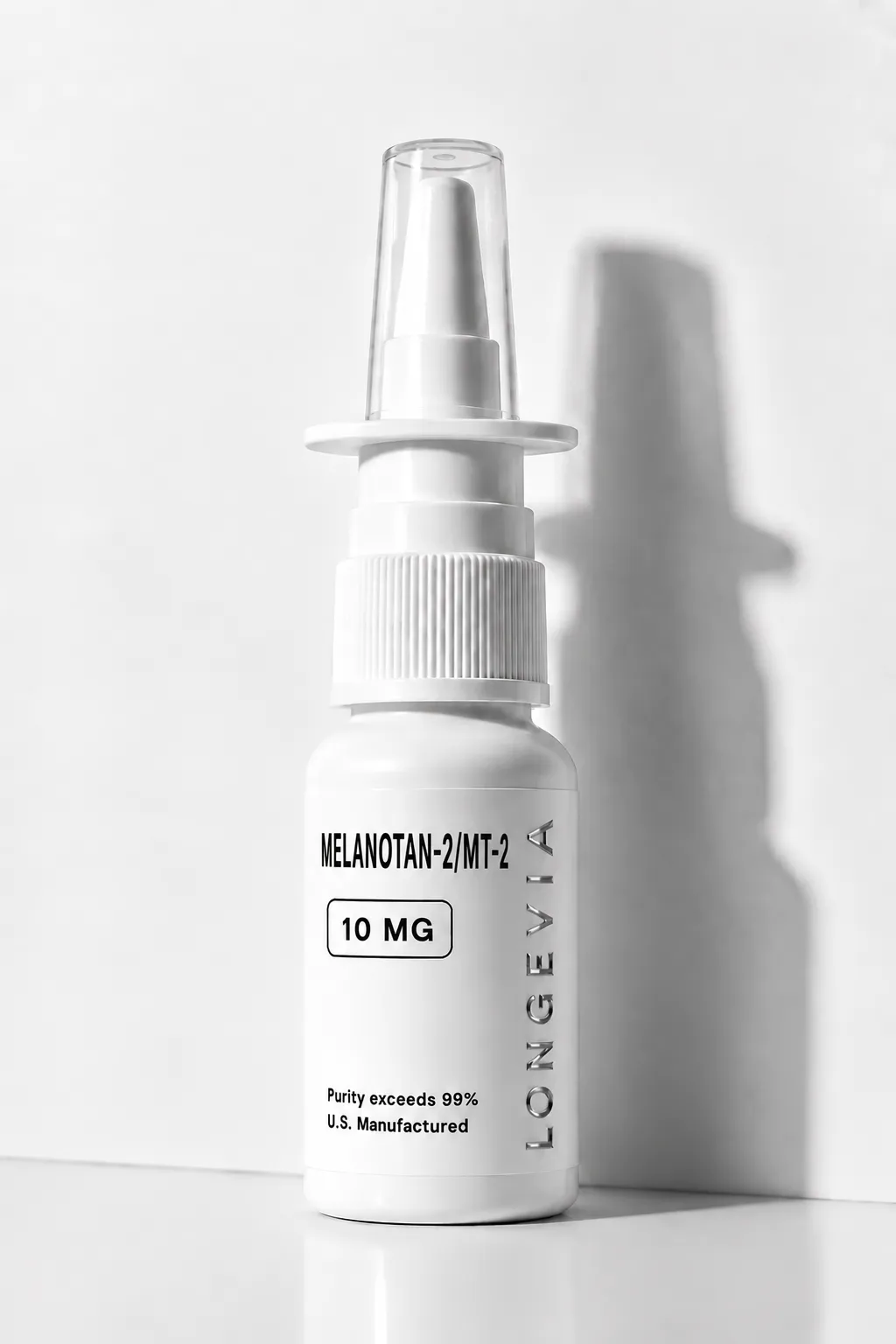
Melanotan-II 10mg — 45 Sprays
Longevia Research supplies Melanotan-II (Melanotan 2, MT-II) 10mg in a 45-spray format for qualified laboratory research. Melanotan-II is a synthetic cyclic melanocortin peptide analogue investigated for activity at MC1R, MC3R, MC4R, and MC5R in receptor pharmacology and pigmentation research. Research Use Only.
$148.50
Slide to add
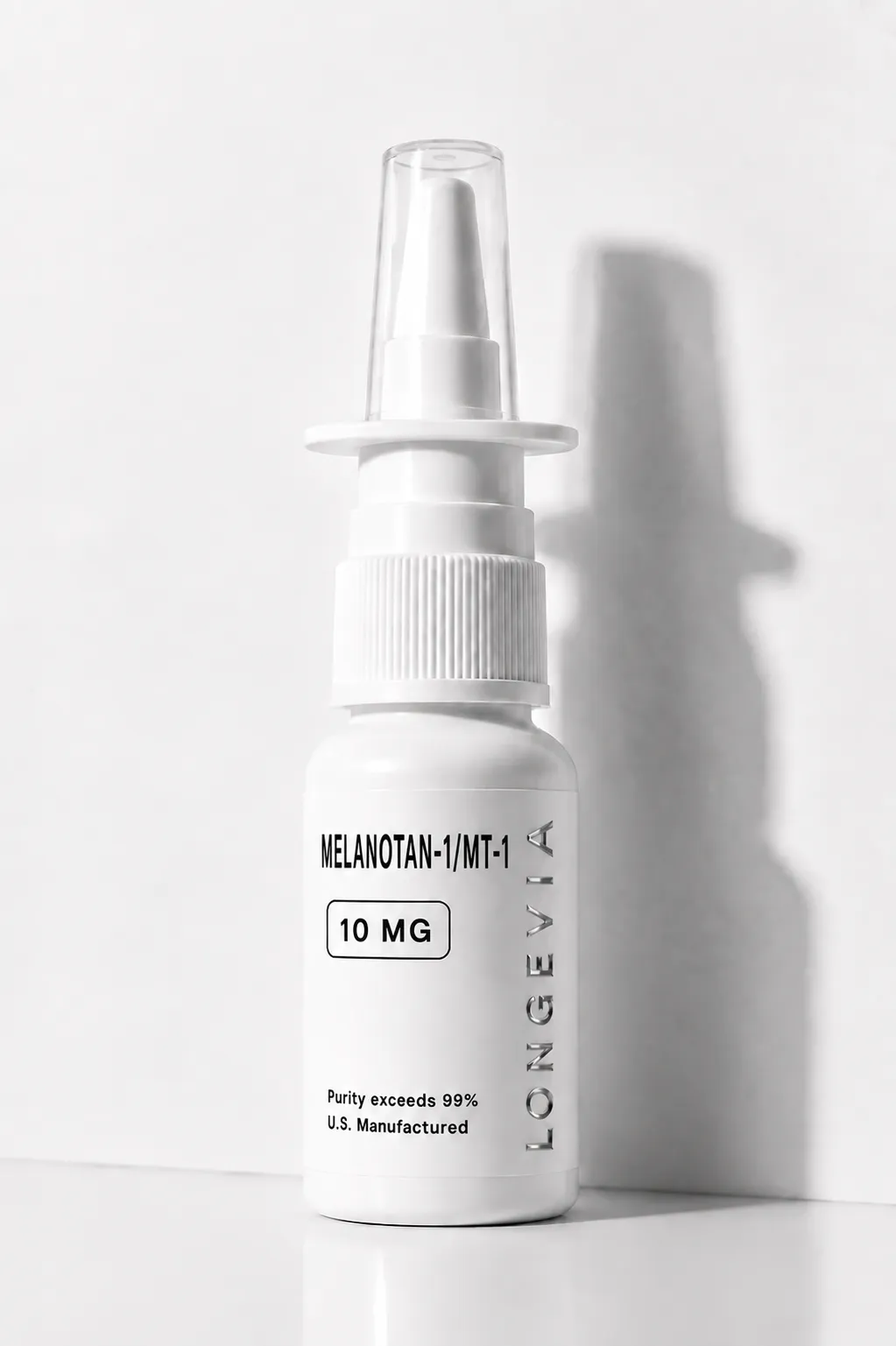
Melanotan-1 10mg — 45 Sprays
Longevia Research supplies Melanotan-1 (Melanotan I, MT-1) 10mg in a 45-spray format for qualified laboratory research. Melanotan-1 is a synthetic α-MSH analogue and melanocortin research peptide studied in relation to MC1R signaling, melanogenesis, and pigmentation biology. Research Use Only.
$144.00
Slide to add
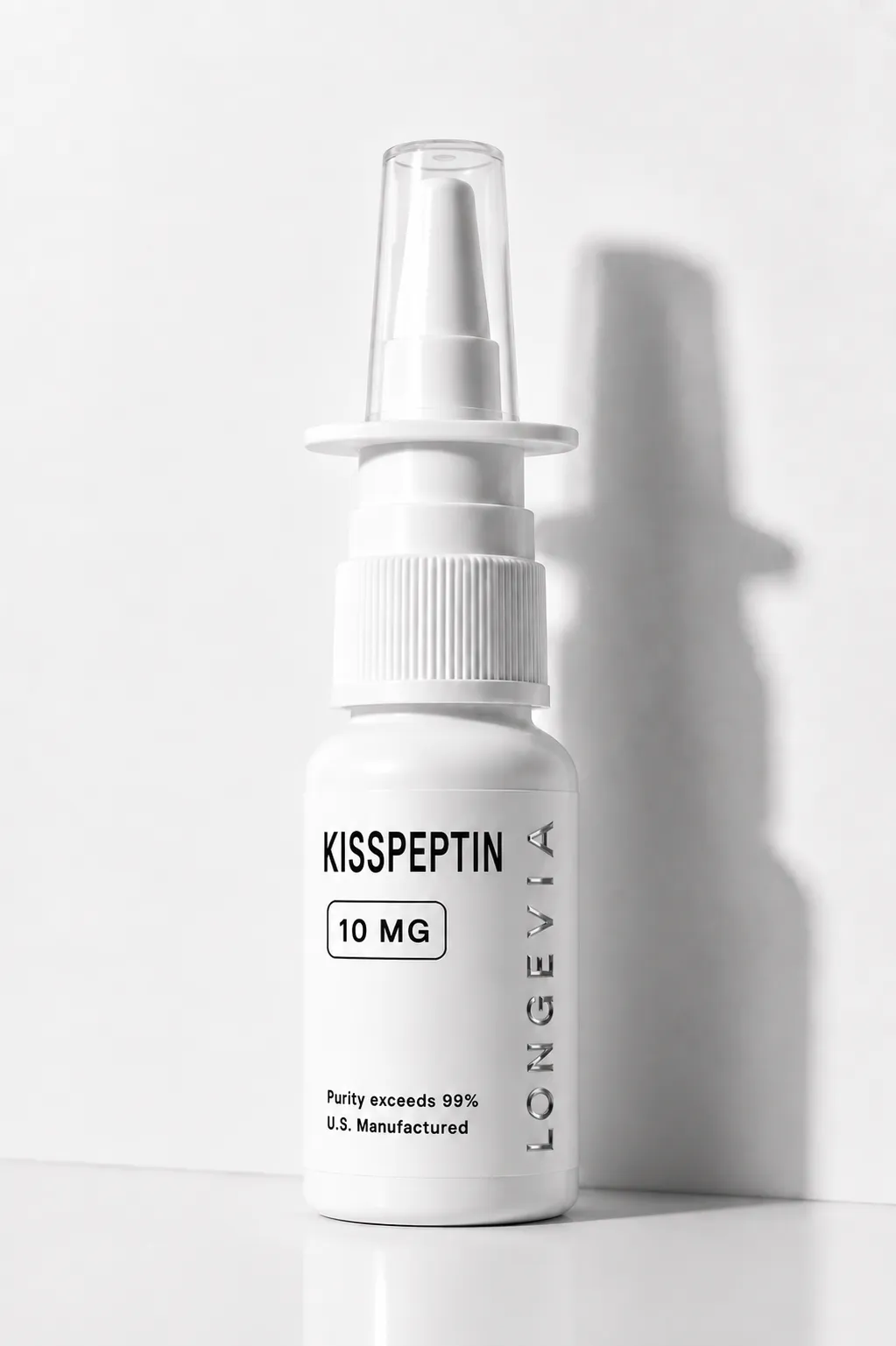
Kisspeptin 10mg — 45 Sprays
Kisspeptin is a family of KISS1-derived signaling peptides investigated in extensive research examining KISS1R/GPR54 receptor biology, GnRH neuronal regulation, hypothalamic neuroendocrinology, and HPG-axis signaling. Available from Longevia Research as 10mg — 45 sprays — for qualified laboratory research use only.
$252.00
Slide to add
Product FAQs
Find answers to common questions regarding storage, reconstitution, and testing guidelines for this specific compound.