Hormonal Health
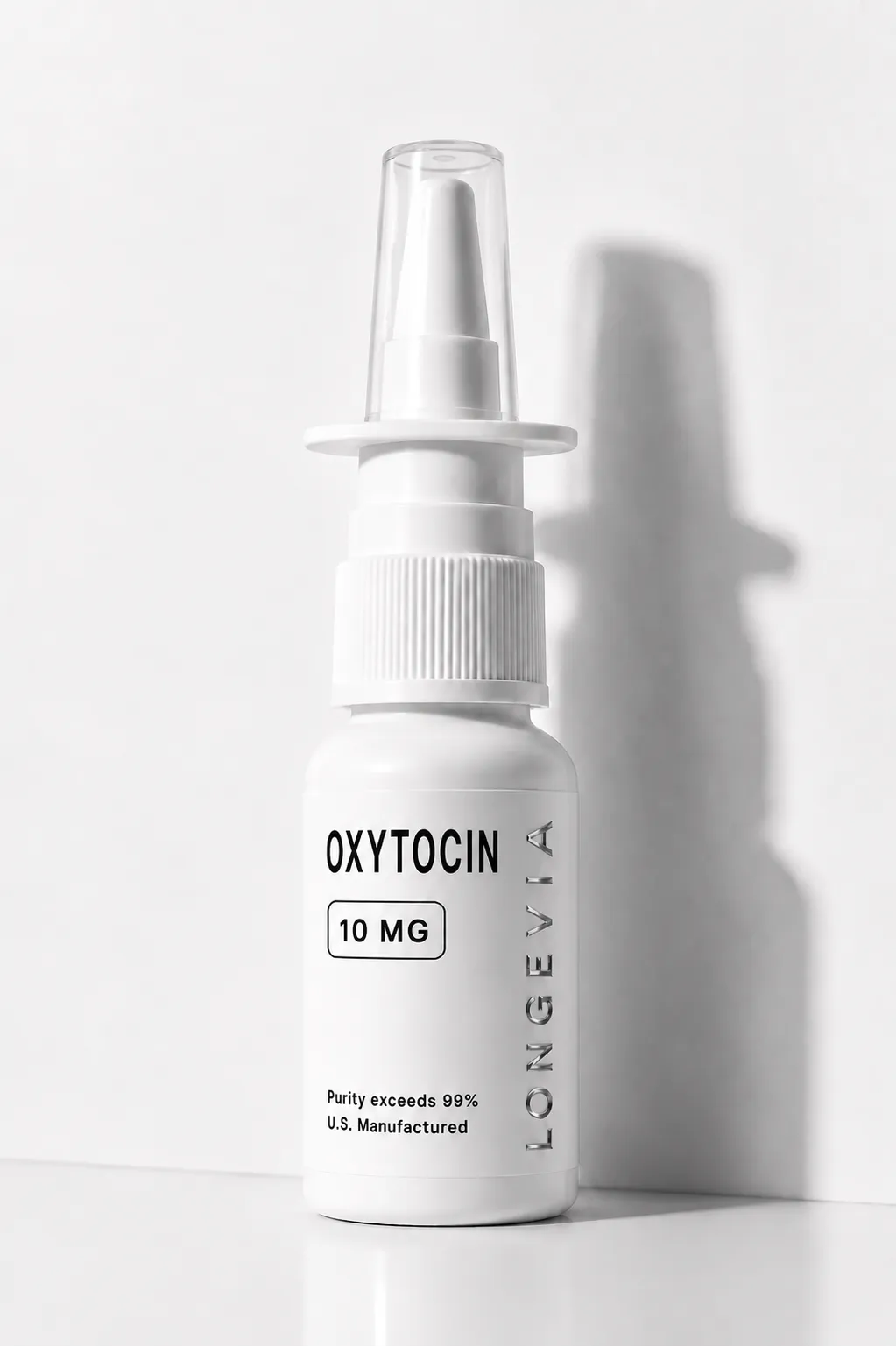
Oxytocin 10mg — 90 Sprays
$180.00
1
Slide to Add
Purity≥99% Tested
TestingLC-MS Verified
LocationUS Based
Oxytocin is a naturally occurring nine-amino-acid cyclic peptide hormone and neuropeptide synthesized primarily in magnocellular neurons of the paraventricular nucleus (PVN) and supraoptic nucleus (SON) of the hypothalamus. It operates principally through the oxytocin receptor (OXTR) — a Gq/11-coupled GPCR expressed in uterine smooth muscle, mammary myoepithelial cells, and multiple brain regions. Its established biological roles include mediating uterine contractility during parturition and the milk-ejection reflex during lactation; research has additionally investigated its participation in neuroendocrine regulation, social behavior, affective processing, and stress-related signaling — areas in which findings are often context-dependent and subject to ongoing scientific investigation. Longevia Research supplies Oxytocin as 10mg per bottle in a liquid spray format — 90 sprays per bottle — for qualified laboratory and scientific research purposes only.
Standard Delivery3-4 Working Days
Free ShippingOn all orders above $300
Product Details
Scientific identity: Oxytocin (CAS 50-56-6); sequence Cys-Tyr-Ile-Gln-Asn-Cys-Pro-Leu-Gly-NH₂; molecular formula C₄₃H₆₆N₁₂O₁₂S₂; molecular weight 1,007.19 g/mol; 9-amino-acid nonapeptide with C-terminal primary amide.
Compound class: Nonapeptide hormone; neuropeptide; cyclic peptide; Research Use Only — not a drug, dietary supplement, food, or cosmetic.
Structural architecture
An intramolecular disulfide bond between Cys¹ and Cys⁶ creates a six-residue cyclic ring; a tripeptide tail (Pro-Leu-Gly-NH₂) extends from the ring; the disulfide bond is essential for biological activity — reduced linear oxytocin with free thiol groups has substantially lower receptor affinity; disulfide bond integrity is therefore a critical quality consideration for research applications requiring active oxytocin.
Distinction from vasopressin: Oxytocin and AVP differ only at positions 3 (Ile in oxytocin vs. Phe in vasopressin) and 8 (Leu vs. Arg); despite this similarity, their primary receptor systems are distinct — oxytocin signals through OXTR, vasopressin through V1a, V1b, and V2; cross-reactivity can occur at elevated experimental concentrations and must be considered in research design; findings from vasopressin research should not be attributed to oxytocin.
Primary molecular target: OXTR (oxytocin receptor) — a Class A Gq/11-coupled GPCR; also capable of coupling to Gi and engaging β-arrestin-mediated pathways depending on cell type and biological context.
Endogenous synthesis site: Magnocellular neurons of the hypothalamic PVN and SON; released into peripheral circulation via the posterior pituitary and also acting centrally as a neuropeptide.
Product content: 10mg per bottle; 90 sprays per bottle.
Physical form: Liquid research spray.
Purity: Research-grade.
Analytical documentation
A batch-specific Certificate of Analysis is available on the Longevia Research website, covering peptide identity, purity, and lot traceability; identity confirmation should include mass spectrometric verification at 1,007.19 g/mol and confirmation of the disulfide-bonded cyclic form; analytical approaches addressing disulfide bond integrity — distinguishing the active cyclic form from reduced linear impurities — are particularly relevant for this compound.
Research-use classification
Research Use Only; not approved for human or veterinary use; not intended for administration to humans or animals.
Research Focus & Mechanism Overview
Research background
Oxytocin was first characterized as the posterior-pituitary factor responsible for uterine contraction and milk ejection; its full chemical characterization and synthesis by Vincent du Vigneaud in the 1950s — for which he received the Nobel Prize in Chemistry in 1955 — established it as the first peptide hormone to be fully synthesized. Research subsequently expanded understanding of oxytocin from a peripheral hormone to a centrally acting neuropeptide with roles in social behavior, stress regulation, and neuroendocrine physiology, making it one of the most intensively studied neuropeptides in modern neuroscience. Contemporary oxytocin research spans reproductive physiology, social neuroscience, neuroendocrinology, psychiatry, and pharmacology — each domain involving distinct methods, endpoints, and levels of biological complexity.
Receptor biology and signaling
OXTR is a Class A (rhodopsin-like) GPCR expressed in the uterus, mammary gland, heart, kidney, adrenal gland, and multiple brain regions including the amygdala, hypothalamus, hippocampus, nucleus accumbens, and brainstem; OXTR expression is dynamically regulated by estrogen, progesterone, and other hormonal signals across physiological states and developmental stages. Canonical Gq/11 coupling activates PLCβ, generating IP₃ and DAG — mobilizing intracellular calcium and activating PKC isoforms; functional consequences differ substantially by cell type, driving uterine smooth-muscle contractility in myometrium, myoepithelial cell contraction in mammary tissue, and diverse signaling responses in OXTR-expressing neural cells. OXTR's capacity to also couple to Gi and engage β-arrestin-mediated pathways contributes to context-dependent and cell-type-specific biological responses relevant to research design and data interpretation.
Key research areas
Reproductive physiology research has characterized OXTR-mediated uterine contractility — including the Ferguson's reflex positive-feedback loop during parturition — and the milk-ejection reflex involving synchronized oxytocin neuron burst firing and mammary myoepithelial contraction; these are well-characterized mechanisms of endogenous oxytocin biology distinct from any properties of this research product. Social and behavioral research — particularly in rodent models and prairie voles with high mesolimbic OXTR expression — has investigated contributions of OXTR-expressing neurons in the amygdala, nucleus accumbens, olfactory bulb, and bed nucleus of the stria terminalis to social recognition, affiliative behavior, pair bonding, maternal behavior, and social memory; these findings are model-specific and reflect the interaction of OXTR distribution with dopaminergic reward circuits rather than simple behavioral effects of oxytocin alone. Stress and HPA-axis research has examined central oxytocin signaling in relation to CRH neurons, ACTH release, and corticosterone responses in animal models, and associations between circulating oxytocin and cortisol responses under social-support conditions in human observational research — findings that are context-dependent and not generalizable to universal stress-reducing properties.
Human research and important caveats
Controlled human studies using intranasal oxytocin have investigated social trust, emotion recognition, face perception, empathy, cooperation, and interpersonal behavior in healthy populations and clinical groups including individuals with autism spectrum disorder, social anxiety, and post-traumatic stress disorder — a body of research that has generated findings of interest alongside null results and ongoing debate about reproducibility, effect sizes, and mechanistic basis. A fundamental interpretive challenge is that oxytocin is a relatively hydrophilic nonapeptide that crosses the blood-brain barrier poorly from peripheral circulation; the extent of central penetration via intranasal routes, the brain regions reached, and the pharmacokinetic relationship between intranasal dose and CNS oxytocin levels remain subjects of active scientific debate. These complexities are directly relevant to designing and interpreting any research involving exogenous oxytocin administration. Pharmaceutical synthetic oxytocin (Syntocinon, Pitocin) is approved in multiple jurisdictions for induction or augmentation of labor and management of postpartum hemorrhage under medical supervision — this approval applies to those specific products and indications and does not confer approval, clinical equivalence, or established safety for the Longevia Research research spray.
Quality & Purity Standards
Oxytocin presents distinct quality challenges for research-grade peptide supply because its biological activity depends critically on the integrity of its intramolecular disulfide bond and the correct amino-acid sequence. Disulfide bond reduction — converting the biologically active cyclic form to the biologically less active linear reduced form — represents a primary degradation mode relevant to storage and preparation. Additionally, the structural similarity between oxytocin and vasopressin means that a preparation contaminated with vasopressin could produce misleading results in OXTR-specific research.
Research-grade quality assessment for oxytocin appropriately involves:
Peptide identity and sequence verification: Confirmation of the nine-residue sequence Cys-Tyr-Ile-Gln-Asn-Cys-Pro-Leu-Gly-NH₂ using LC-MS/MS tandem mass spectrometry or equivalent analytical methods resolving the full sequence and distinguishing oxytocin from vasopressin (which differs at positions 3 and 8) and other nonapeptide analogues.
Molecular mass confirmation: High-resolution mass spectrometry (HRMS) to confirm the molecular formula C₄₃H₆₆N₁₂O₁₂S₂ and molecular weight of 1007.19 g/mol, verifying the disulfide-bonded cyclic form rather than the reduced (disulfide-open) form (MW 1009.21 g/mol — which is 2 Da heavier, reflecting two additional hydrogen atoms in the reduced state).
Disulfide bond integrity verification: Analytical confirmation that the Cys¹–Cys⁶ disulfide bond is present and intact — distinguishing the pharmacologically active cyclic form from reduced peptide using mass spectrometry or non-reducing SDS-PAGE where applicable.
Distinction from vasopressin: Confirmation that the preparation does not contain vasopressin contamination, which would complicate receptor specificity in OXTR-targeted research.
Purity assessment: Reversed-phase HPLC or UHPLC to assess chemical purity and quantify related substances, synthesis-related impurities, reduced (dithiol) forms, and other modification products.
Batch documentation and traceability: Provision of batch-specific analytical records enabling traceability from synthesis through supply.
Longevia Research's quality approach is oriented toward providing researchers with well-characterized peptides supported by appropriate analytical documentation. Researchers should consult current product documentation and available certificates of analysis for batch-specific data.
No specific purity grade, third-party certification, cGMP status, or independent laboratory verification is stated for this listing. Researchers requiring documentation of specific quality parameters — including disulfide bond status, oxytocin/vasopressin distinction, and absence of reduced forms — should contact Longevia Research directly.
Compliance Notice
FOR RESEARCH USE ONLY. NOT FOR HUMAN CONSUMPTION. NOT FOR VETERINARY USE.
Oxytocin 10mg — 90 Sprays, as supplied by Longevia Research, is intended exclusively for qualified laboratory and scientific research conducted by trained professionals in appropriate research settings. This product is not a drug, dietary supplement, food, or cosmetic. It has not been evaluated or approved by the U.S. Food and Drug Administration, the European Medicines Agency, or any other regulatory authority for use as a therapeutic, prophylactic, or diagnostic agent in humans or animals.
This product is not intended to diagnose, treat, cure, or prevent any disease, condition, or health-related outcome.
Distinction from pharmaceutical oxytocin: The existence of approved pharmaceutical oxytocin preparations (including Syntocinon and Pitocin, used for specific obstetric indications under medical supervision) does not establish the safety, clinical equivalence, formulation equivalence, regulatory status, or appropriateness for clinical use of this Longevia Research spray. This product is a research compound, not a pharmaceutical.
Evidence scope: Research involving endogenous oxytocin as a biomarker does not establish the effects of administering this product. Animal model findings do not establish human outcomes. Human behavioral research findings in this area are context-dependent and may not generalize across populations, paradigms, or experimental conditions.
Blood-brain barrier and delivery: No claim is made regarding the central nervous-system penetration, bioavailability, pharmacokinetics, or biological activity of this spray product. The relationship between peripheral oxytocin administration and central nervous-system exposure is an active area of scientific research and should not be assumed for any specific product or administration route.
No social, behavioral, reproductive, or psychiatric claims: Research investigating oxytocin in the contexts of social behavior, social cognition, stress, anxiety, reproductive physiology, or lactation does not establish that this product produces social, emotional, reproductive, or psychiatric effects in human users. This product is not appropriate for obstetric, lactation, psychiatric, behavioral-enhancement, or social-function applications.
Purchasers are solely responsible for ensuring that acquisition, possession, storage, handling, use, and disposal of this product comply with all applicable local, state, national, and international laws and regulations governing research compounds. Longevia Research makes no warranties regarding the suitability of this product for any specific research application. This product should be handled by qualified personnel following appropriate laboratory safety protocols.
By purchasing this product, the purchaser confirms that they are a qualified researcher or research professional acquiring this compound for legitimate scientific research purposes only.
Continue Exploring
Also Considered.
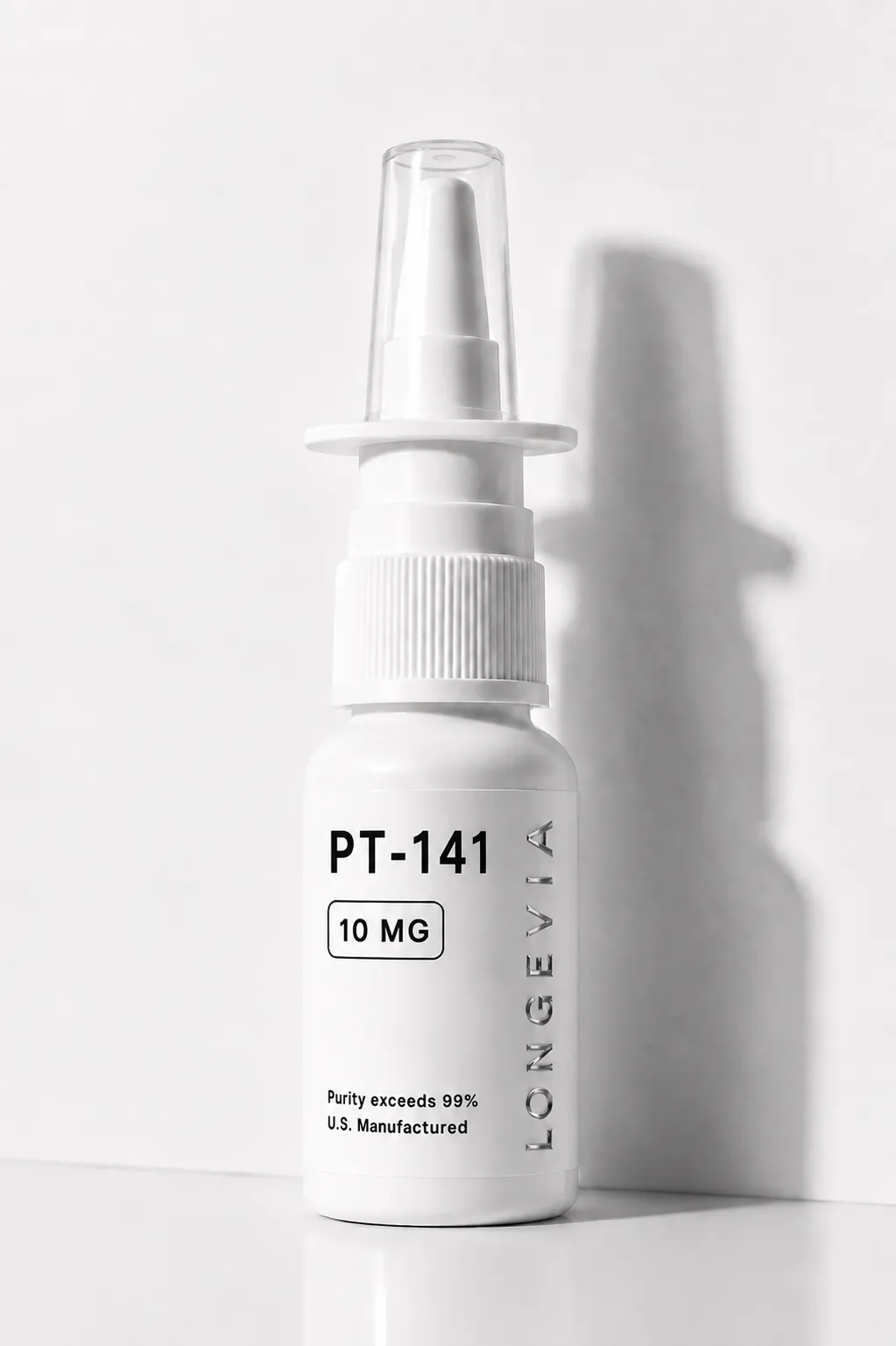
PT-141 10mg — 45 Sprays
Longevia Research supplies PT-141 (bremelanotide) 10mg in a 45-spray format for qualified laboratory research. PT-141 is a synthetic cyclic heptapeptide and melanocortin receptor agonist investigated in MC4R signaling, sexual-function research, and melanocortin receptor pharmacology. Research Use Only.
$180.00
Slide to add
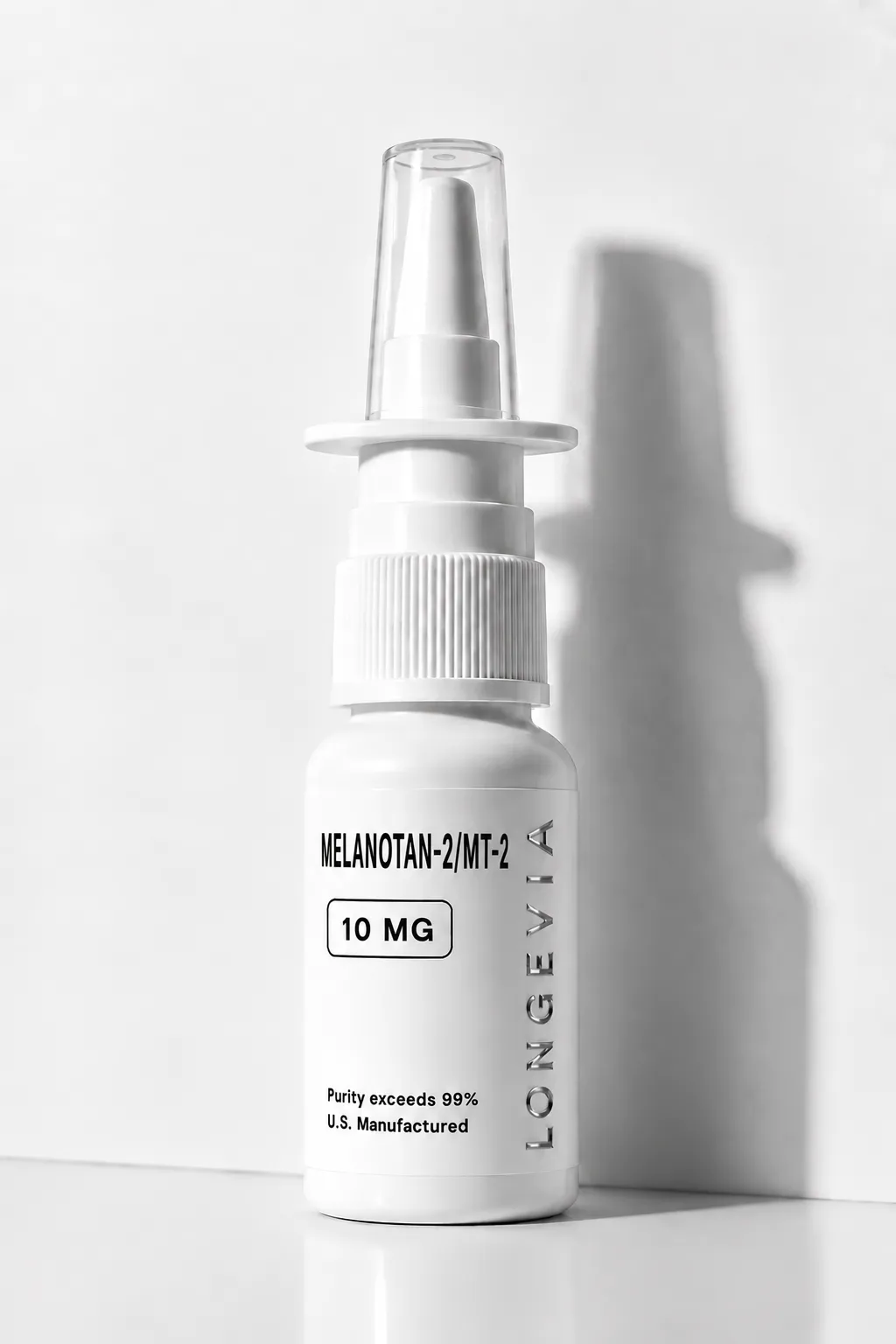
Melanotan-II 10mg — 45 Sprays
Longevia Research supplies Melanotan-II (Melanotan 2, MT-II) 10mg in a 45-spray format for qualified laboratory research. Melanotan-II is a synthetic cyclic melanocortin peptide analogue investigated for activity at MC1R, MC3R, MC4R, and MC5R in receptor pharmacology and pigmentation research. Research Use Only.
$148.50
Slide to add
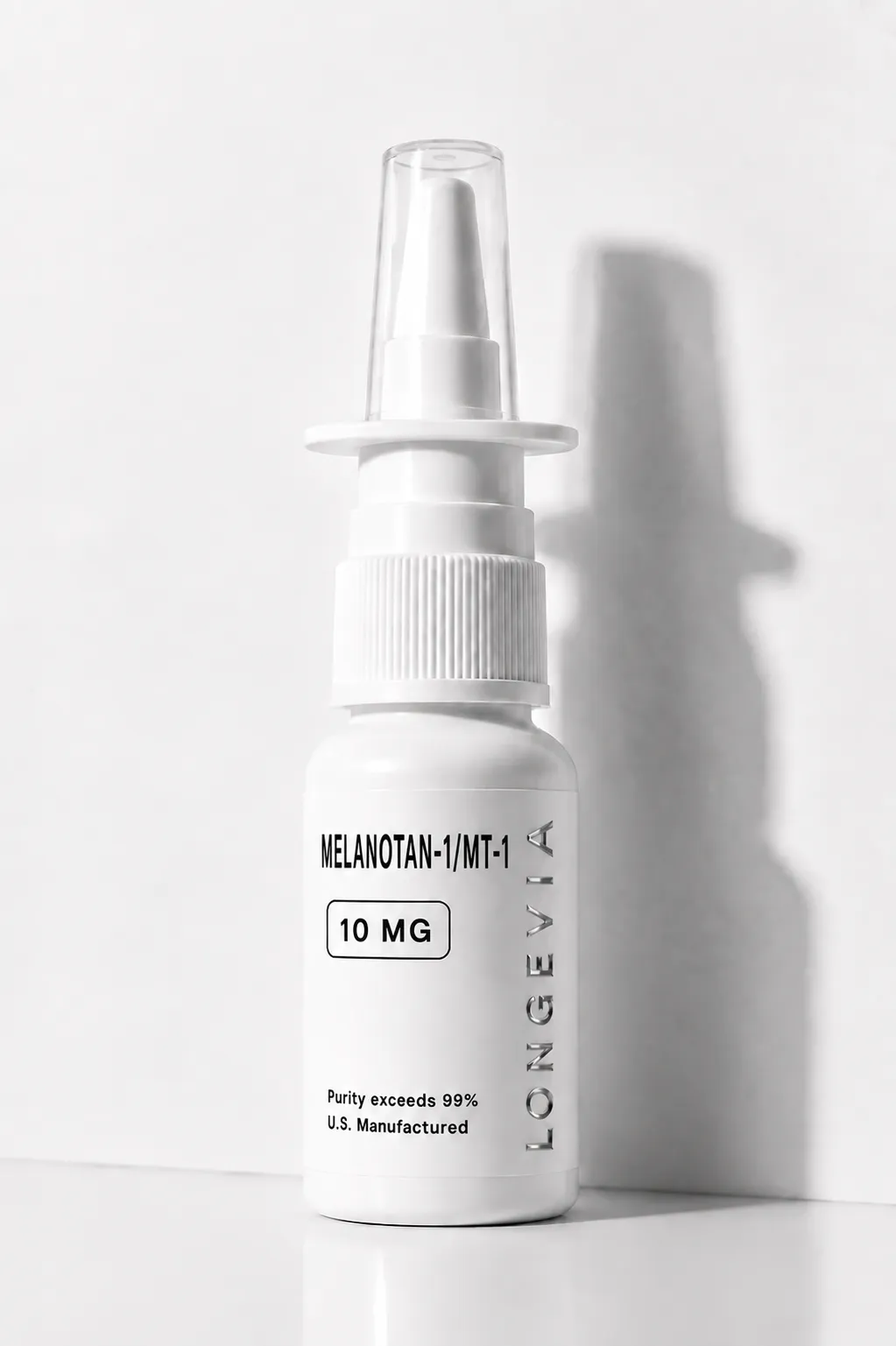
Melanotan-1 10mg — 45 Sprays
Longevia Research supplies Melanotan-1 (Melanotan I, MT-1) 10mg in a 45-spray format for qualified laboratory research. Melanotan-1 is a synthetic α-MSH analogue and melanocortin research peptide studied in relation to MC1R signaling, melanogenesis, and pigmentation biology. Research Use Only.
$144.00
Slide to add
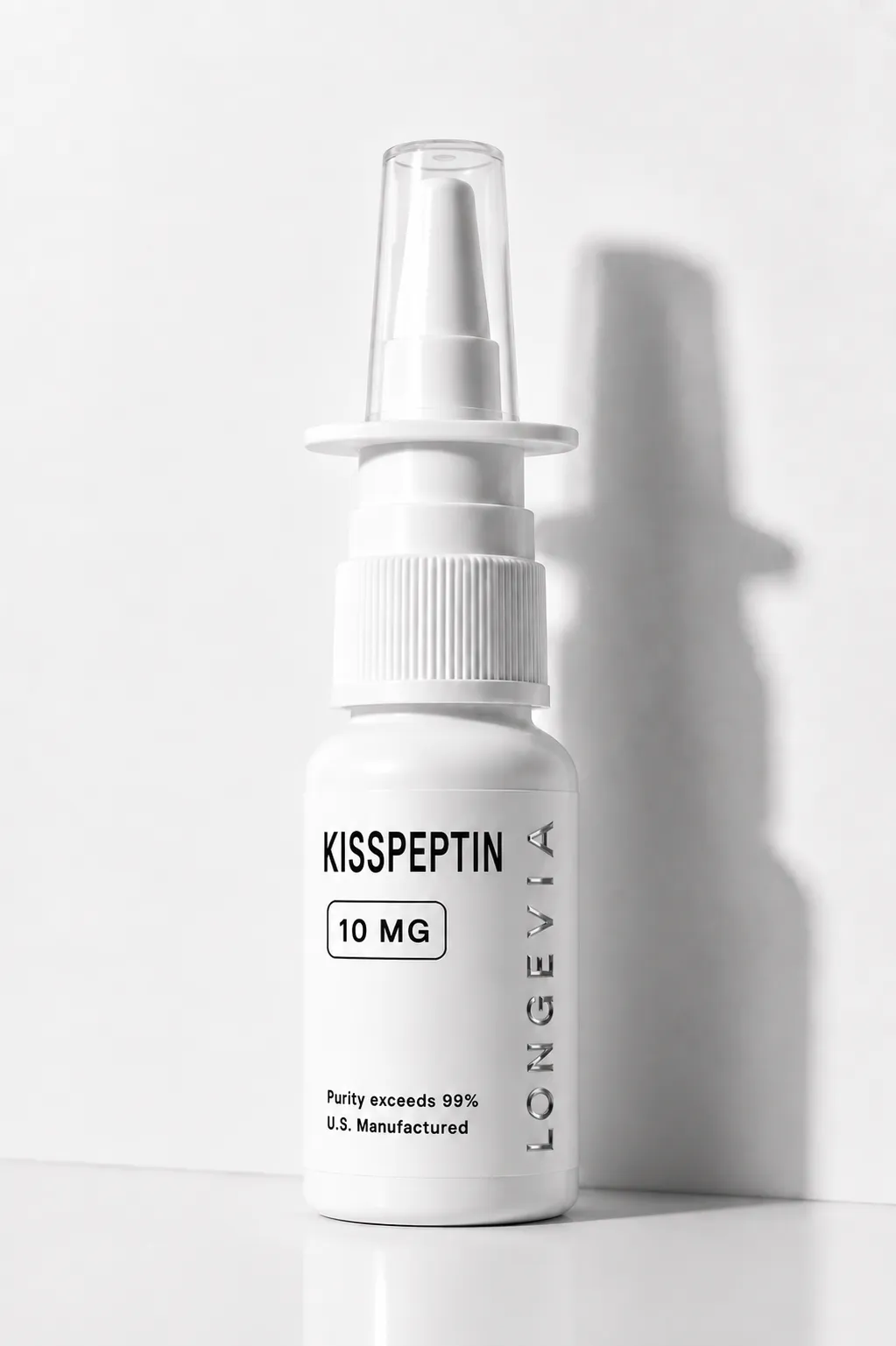
Kisspeptin 10mg — 45 Sprays
Kisspeptin is a family of KISS1-derived signaling peptides investigated in extensive research examining KISS1R/GPR54 receptor biology, GnRH neuronal regulation, hypothalamic neuroendocrinology, and HPG-axis signaling. Available from Longevia Research as 10mg — 45 sprays — for qualified laboratory research use only.
$252.00
Slide to add
Product FAQs
Find answers to common questions regarding storage, reconstitution, and testing guidelines for this specific compound.