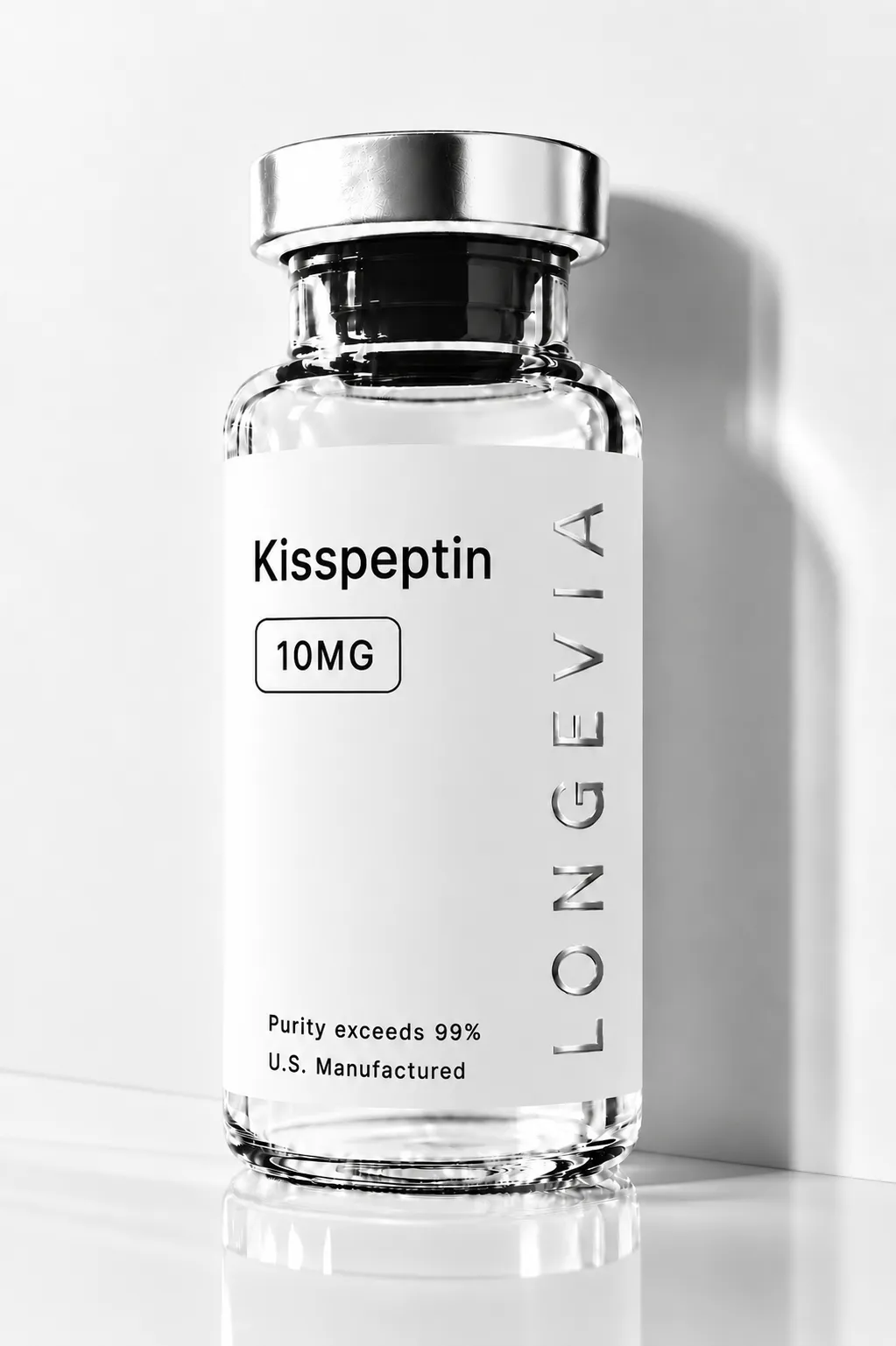
Hormonal HealthLongevity Research
Kisspeptin
$135.00
1
Slide to Add
Purity≥99% Tested
TestingLC-MS Verified
LocationUS Based
Kisspeptin (KP-10) is a synthetic 10-amino-acid neuropeptide representing the C-terminal decapeptide fragment of kisspeptin-54 — the primary endogenous kisspeptin isoform derived from the KISS1 gene product. It acts as an agonist at KISS1R (GPR54) — a class A G protein-coupled receptor expressed in hypothalamic GnRH neurons — and has been investigated in research involving GnRH pulse generation, hypothalamic-pituitary-gonadal (HPG) axis regulation, and reproductive neuroendocrine biology. Longevia Research supplies Kisspeptin in a 10mg research-grade vial for qualified laboratory use. Kisspeptin research occupies a central position in reproductive neuroendocrinology, with KISS1R identified as a critical gatekeeper of GnRH secretion and downstream HPG axis activation. Kisspeptin-10 (KP-10) retains the full KISS1R binding and agonist activity of the larger kisspeptin isoforms — kisspeptin-54, kisspeptin-14, and kisspeptin-13 — making it the most widely used synthetic research tool within the kisspeptin peptide family. Kisspeptin has been investigated in human clinical research for reproductive endocrine applications. This product is supplied for Research Use Only and is not intended for human or veterinary use.
Standard Delivery3-4 Working Days
Free ShippingOn all orders above $300
Product Details
Scientific identity. Kisspeptin-10 is a decapeptide corresponding to the C-terminal 10 amino acids of kisspeptin-54 (residues 45–54 of the mature kisspeptin-54 sequence): Tyr-Asn-Trp-Asn-Ser-Phe-Gly-Leu-Arg-Phe-NH₂. The C-terminal amide is essential for KISS1R binding and agonist activity — the free acid form has substantially reduced receptor affinity. All endogenous kisspeptin isoforms (KP-54, KP-14, KP-13, KP-10) share this C-terminal decapeptide sequence, establishing it as the minimal pharmacophore for KISS1R engagement. The KISS1 gene was originally identified as a metastasis suppressor gene before its role in reproductive neuroendocrinology was established — its designation as "kisspeptin" derives from Hershey, Pennsylvania, home of Hershey's Kisses chocolate, reflecting the gene's discovery location.
Alternative names. Kisspeptin-10 is referenced in research literature and chemical databases as KP-10, metastin(45–54), kisspeptin 10, and the sequence Tyr-Asn-Trp-Asn-Ser-Phe-Gly-Leu-Arg-Phe-NH₂. Metastin is an alternative name for kisspeptin-54 derived from its original identification as a metastasis suppressor; KP-10 is its C-terminal fragment. It should not be confused with kisspeptin-54 (KP-54), kisspeptin-14 (KP-14), or kisspeptin-13 (KP-13) — larger isoforms with the same C-terminal sequence but longer N-terminal extensions.
Peptide class. Synthetic neuropeptide; RF-amide related peptide; KISS1 gene-derived decapeptide; KISS1R/GPR54 agonist; HPG axis regulatory peptide.
Important note on molecular identifiers. Kisspeptin-10 is typically supplied as an acetate salt in research-grade formulations; the free peptide molecular weight and salt form molecular weight differ. The C-terminal amide is a defining structural feature — the free acid form of the same sequence is biologically distinct and carries a different molecular weight. The molecular weight, molecular formula, salt form, and C-terminal amide status applicable to this Longevia vial are confirmed on the batch Certificate of Analysis. Researchers should verify these identifiers from the batch COA before use in assay calculations.
Primary receptor target. KISS1R (GPR54) — a class A G protein-coupled receptor coupled to Gαq/11, activating phospholipase C, IP₃ production, and intracellular calcium mobilisation. KISS1R is expressed predominantly in hypothalamic GnRH neurons, the anterior pituitary, and peripheral reproductive tissues including the gonads and placenta.
Research areas. KISS1R/GPR54 pharmacology, GnRH pulse generation research, HPG axis neuroendocrinology, reproductive biology research, hypothalamic neuropeptide signaling, puberty onset biology research, metabolic-reproductive axis research, cancer biology research (KISS1 metastasis suppressor context).
Product quantity. 10mg per vial.
Physical form. Supplied as a lyophilised solid in a sealed research vial.
Purity. Greater than 99%, confirmed by HPLC and LC-MS analysis at the batch level.
Analytical documentation. A batch-specific Certificate of Analysis is available on the Longevia Research website, covering compound identity, purity, and lot traceability.
Research-use classification. For laboratory research use only. Not for human or veterinary use, clinical diagnostics, or any in-vivo application in humans outside of regulated research settings.
Research Focus
KISS1R Biology and GnRH Regulation
KISS1R (GPR54) is a class A GPCR expressed on hypothalamic GnRH neurons where it mediates a critical upstream regulatory signal for GnRH pulsatile secretion. Kisspeptin neurons in the arcuate nucleus and anteroventral periventricular nucleus of the hypothalamus project directly onto GnRH neurons, providing the primary excitatory drive for GnRH pulse generation. KISS1R activation by kisspeptin triggers Gαq/11-coupled phospholipase C signaling, IP₃ production, and calcium mobilisation — stimulating GnRH release from hypothalamic nerve terminals into the hypophyseal portal circulation. The discovery of loss-of-function mutations in KISS1R causing hypogonadotropic hypogonadism in humans established KISS1R as an essential and non-redundant regulator of reproductive axis function.
HPG Axis Research
The hypothalamic-pituitary-gonadal (HPG) axis is the central neuroendocrine pathway regulating reproductive function: kisspeptin→GnRH→LH/FSH→gonadal steroid secretion. Research has used kisspeptin-10 in cell-based and animal models to investigate each step of this axis, with particular focus on kisspeptin's role as the upstream signal controlling GnRH pulse frequency and amplitude. Animal studies have examined the consequences of kisspeptin administration and KISS1R manipulation on LH pulsatility, gonadal steroidogenesis, and reproductive function across species. Cell-based research has characterised KISS1R signaling in hypothalamic neuron models and GnRH-secreting cell lines.
Human Clinical Research
Kisspeptin has one of the more developed human research profiles among neuropeptides studied for reproductive applications. Human pharmacodynamic studies have examined kisspeptin-10 and kisspeptin-54 administration in healthy volunteers and in patients with hypothalamic amenorrhea, hypogonadotropic hypogonadism, and polycystic ovary syndrome — measuring LH pulse frequency, LH amplitude, and gonadotropin responses as functional endpoints of HPG axis engagement. These human findings concern pharmaceutical-grade kisspeptin formulations under regulated research conditions and do not establish the safety, efficacy, or bioavailability of the Longevia Research research vial.
Puberty and Metabolic-Reproductive Research
Kisspeptin neurons are studied as critical integrators of metabolic and reproductive signaling — responding to leptin, energy status, and circadian cues to modulate GnRH pulse generation in relation to nutritional and metabolic state. Research has examined kisspeptin neuron activity in animal models of nutritional restriction, obesity, and metabolic stress, characterising kisspeptin as a potential mediator of the well-documented relationship between energy availability and reproductive function.
Research Status
Kisspeptin has no regulatory approval for any therapeutic indication in any jurisdiction. It has been investigated in human clinical research for reproductive endocrine applications but has not progressed to approved pharmaceutical use. It is supplied for Research Use Only.
Quality & Purity
Reliable research begins with accurately characterised material. For a decapeptide such as Kisspeptin-10, that means confirming the full 10-residue sequence and — critically — the C-terminal amide modification at the batch level. The free acid form of the same sequence has substantially reduced KISS1R binding affinity relative to the amidated form; supplying the wrong terminal chemistry would confound receptor pharmacology assays and HPG axis research designed around the active kisspeptin pharmacophore.
Purity assessment. Each production lot is characterised to greater than 99% purity by high-performance liquid chromatography (HPLC). Chromatographic purity data is reported on the batch Certificate of Analysis.
Identity confirmation. Peptide identity, full sequence integrity, and C-terminal amide modification are confirmed by mass spectrometry (LC-MS), providing molecular-weight verification consistent with the amidated decapeptide form. HPLC and LC-MS data together confirm that the material supplied corresponds to the labelled compound at the labelled purity.
Batch traceability and Certificate of Analysis. Every vial of Kisspeptin 10mg is traceable to a specific production lot. A batch-specific Certificate of Analysis is accessible directly on the Longevia Research website, covering purity, identity, and lot information. Researchers evaluating this material for receptor assay or neuroendocrine research are encouraged to review the current batch documentation before use, since analytical specifications are applied at the lot level.
Handling. This material should be handled by qualified personnel using appropriate laboratory technique and personal protective equipment, consistent with institutional protocols for research-grade synthetic neuropeptides.
Compliance Notice
Longevia Research supplies Kisspeptin 10mg for laboratory and in-vitro research use only. The product is intended for use by qualified researchers and trained laboratory personnel in appropriate controlled research environments.
Kisspeptin-10 is a synthetic research peptide supplied strictly as a research tool. It is not a drug, not a dietary supplement, not a food or food ingredient, and not a cosmetic. No regulatory authority has approved Kisspeptin-10 for any human or veterinary therapeutic use, and Longevia does not supply it for administration to humans or animals, for clinical diagnostics, or for any therapeutic purpose.
Longevia provides no dosing instructions, administration guidance, treatment protocols, or reconstitution recommendations for this compound. The scientific literature summarised on this product page describes experimental observations in defined cell-based, animal, and human pharmacodynamic research systems. Those findings are not medical claims and should not be interpreted as evidence of human efficacy, human safety, or fitness for any clinical application.
The purchaser assumes full responsibility for lawful acquisition, handling, storage, use, and disposal of this material, and for compliance with all applicable local, state, federal, and institutional regulations. By purchasing this product, the buyer confirms that it will be used solely for legitimate laboratory research purposes by qualified personnel, and that its acquisition and intended use comply with applicable laws in the buyer's jurisdiction.
Continue Exploring
Also Considered.
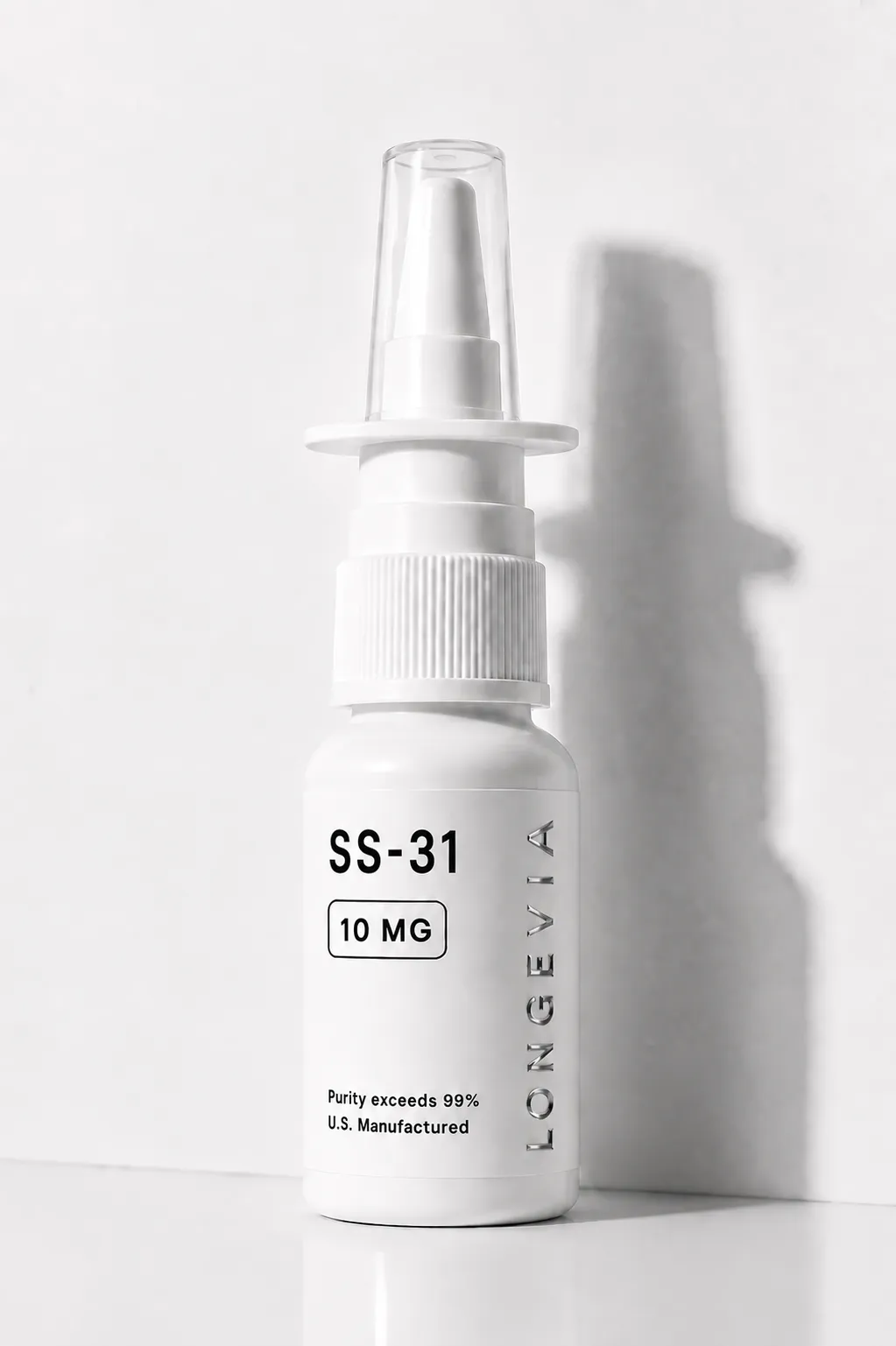
SS-31 — Spray
Longevia Research supplies SS-31 (elamipretide / MTP-131) in 10mg and 50mg quantities, 45-spray format, for qualified laboratory research. SS-31 is a synthetic mitochondria-targeted tetrapeptide investigated in cardiolipin, mitochondrial membrane biology, and mitochondrial bioenergetics research. Research Use Only.
$198.00
Slide to add
SNAP-8 — Spray
Longevia Research supplies SNAP-8 (Acetyl Octapeptide-3) in 10mg and 20mg quantities, 45-spray format, for qualified laboratory research. SNAP-8 is a synthetic acetylated octapeptide associated with SNAP-25 and SNARE-complex biology, investigated in neurotransmitter-release and vesicle-fusion research. Research Use Only.
$130.50
Slide to add
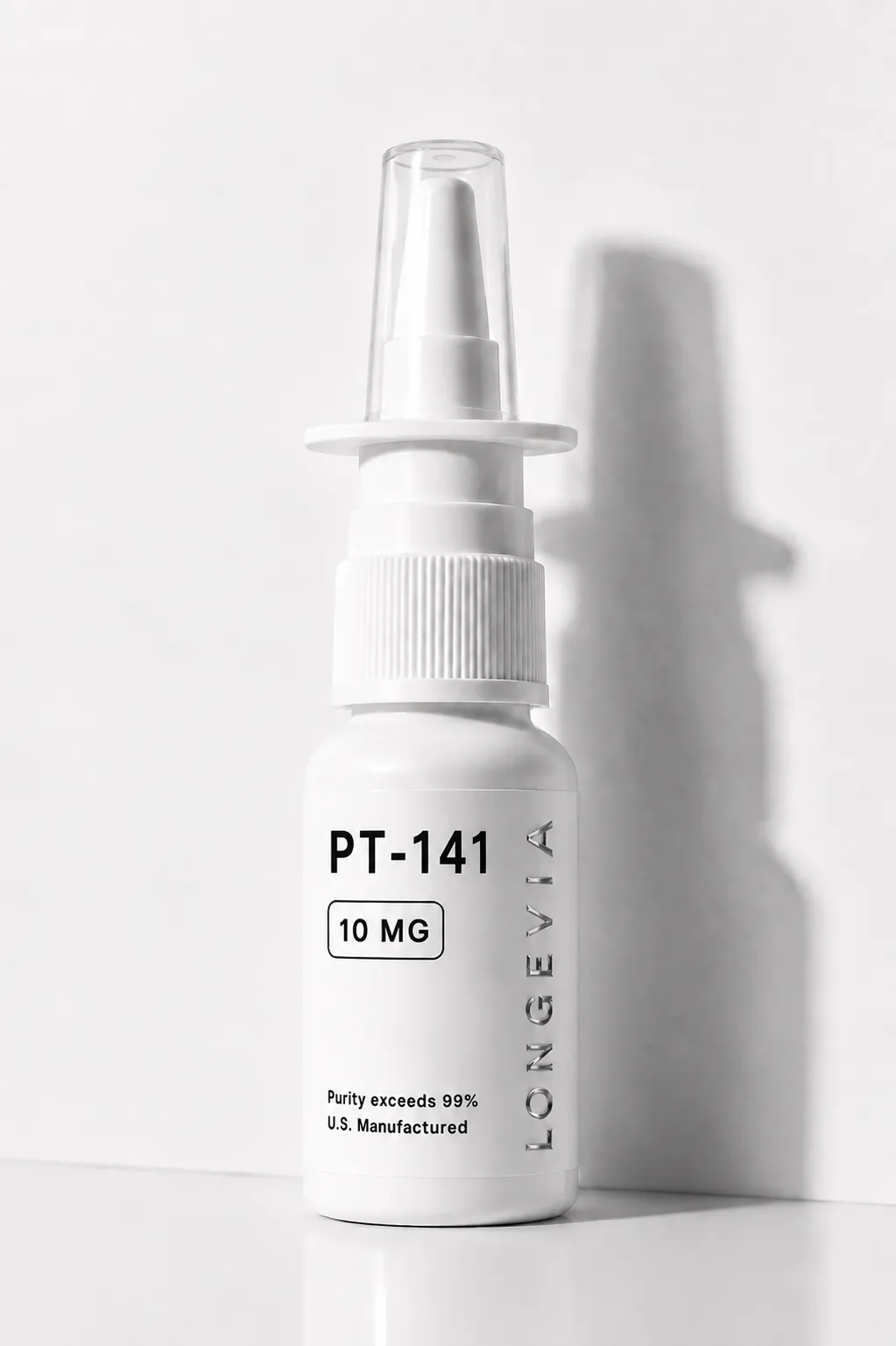
PT-141 — Spray
Longevia Research supplies PT-141 (bremelanotide) 10mg in a 45-spray format for qualified laboratory research. PT-141 is a synthetic cyclic heptapeptide and melanocortin receptor agonist investigated in MC4R signaling, sexual-function research, and melanocortin receptor pharmacology. Research Use Only.
$180.00
Slide to add
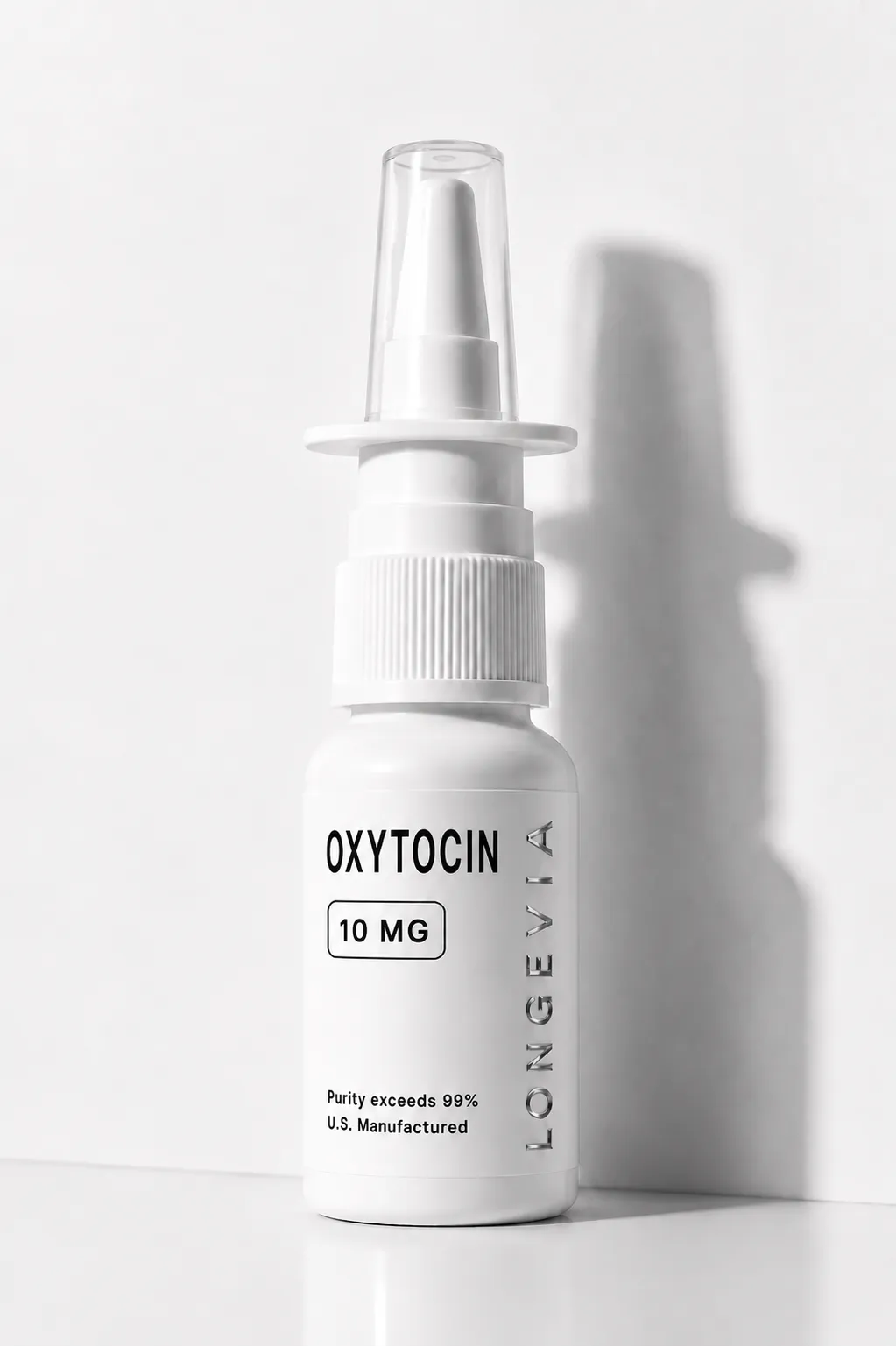
Oxytocin — Spray
Longevia Research supplies Oxytocin 10mg in a 90-spray format for qualified laboratory research. Oxytocin is a naturally occurring nonapeptide hormone and neuropeptide studied in neuroendocrine biology, reproductive physiology, oxytocin receptor (OXTR) signaling, and social-behavior research. Research Use Only.
$180.00
Slide to add
Product FAQs
Find answers to common questions regarding storage, reconstitution, and testing guidelines for this specific compound.