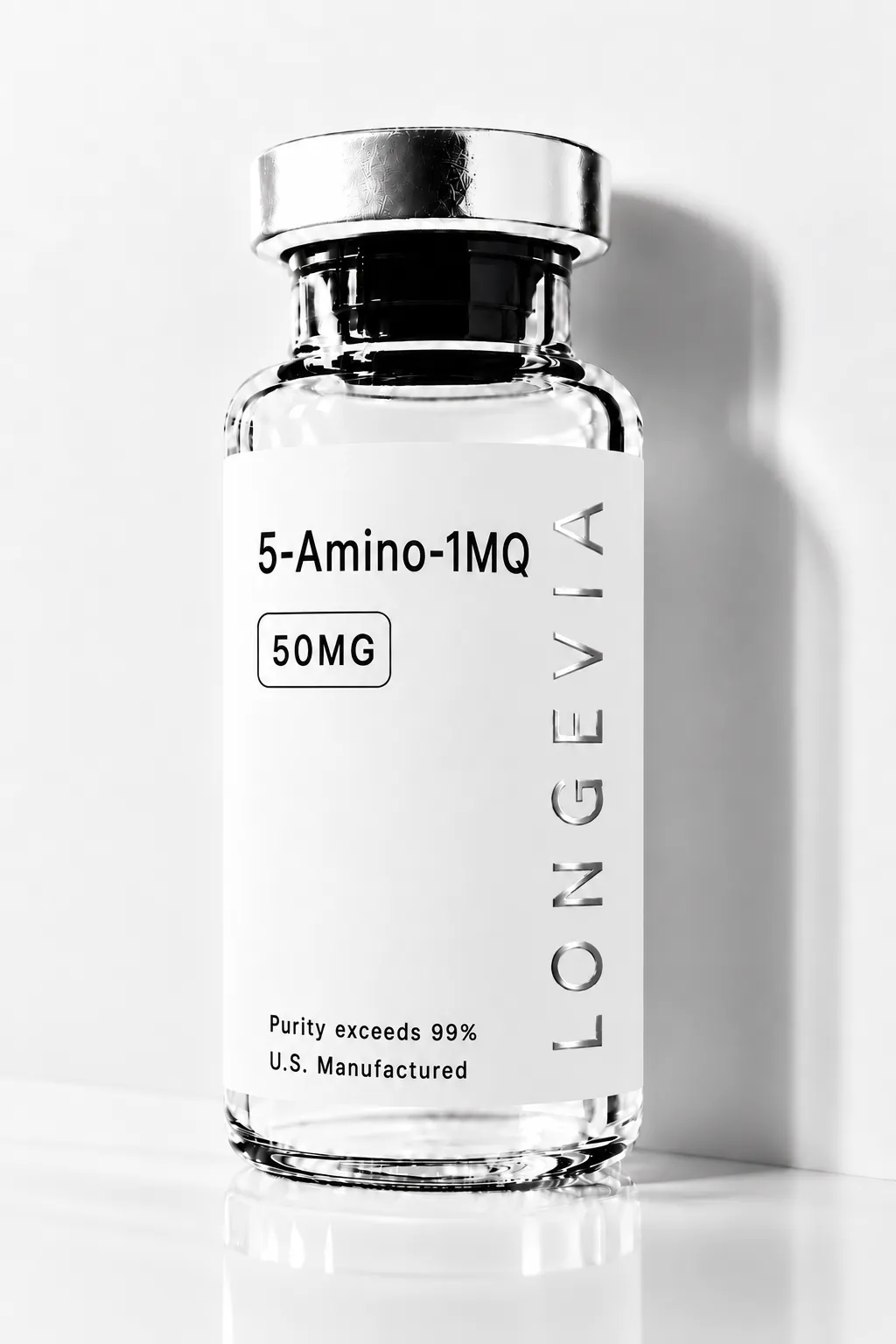
5-Amino-1MQ
$117.00
1
Slide to Add
Purity≥99% Tested
TestingLC-MS Verified
LocationUS Based
5-Amino-1MQ 50mg is a synthetic small-molecule research compound supplied by Longevia Research for laboratory use only. Known formally as 5-amino-1-methylquinolinium — and in the published literature as 5-AMQ or 5A-1MQ — it belongs to the quinolinium class of heterocyclic compounds. Researchers study it as a selective inhibitor of nicotinamide N-methyltransferase (NNMT), an enzyme involved in nicotinamide metabolism and cellular methyl-donor utilisation.
Standard Delivery3-4 Working Days
Free ShippingOn all orders above $300
COMPREHENSIVE PRODUCT DETAILS
Scientific identity: 5-Amino-1MQ is the established shorthand for 5-amino-1-methylquinolinium. The molecule is constructed on a quinoline bicyclic scaffold. A primary amine occupies the C5 position, while methylation at the ring nitrogen (N1) creates a quaternary ammonium centre and a permanent positive charge. That structural feature distinguishes it clearly from neutral small molecules and defines its behaviour in solution and during chromatographic analysis.
Alternative names. The compound is indexed in chemical databases and the scientific literature under several designations: 5-amino-1-methylquinolinium, 5-AMQ, 5A-1MQ, and — in a number of published studies — as "NNMTi," a shorthand for the NNMT-inhibitor chemotype rather than a unique compound name. The parent cation is registered at PubChem under CID 950107 (molecular formula C₁₀H₁₁N₂⁺, formula weight 159.21 g/mol).
Salt form and molecular identifiers. Commercially supplied 5-amino-1-methylquinolinium carries a permanent positive charge and is therefore always handled as a salt. The iodide salt (C₁₀H₁₁IN₂, CAS 42464-96-0) is the most extensively referenced form in primary literature and commercial supplier documentation. The molecular weight, molecular formula, and CAS number applicable to this Longevia vial correspond to the supplied salt form and are confirmed on the batch Certificate of Analysis.
Important note on chemical identifiers. Researchers should take care to distinguish the cation formula weight (159.21 g/mol for C₁₀H₁₁N₂⁺) from the molecular weight of the salt. These are not interchangeable values in assay calculations. The batch COA confirms the identity and form of the material supplied in this vial.
Compound class. Synthetic small-molecule quaternary ammonium compound (quinolinium salt). Selective inhibitor of nicotinamide N-methyltransferase (NNMT).
Product quantity: 50mg per vial.
Purity: Greater than 99%, confirmed by HPLC and mass spectrometric analysis at the batch level.
Analytical documentation: A batch-specific Certificate of Analysis is available on the Longevia Research website. Documentation covers compound identity, purity, and lot traceability.
Research-use classification: For laboratory research use only. Not for human or veterinary use, clinical diagnostics, or any in-vivo application in humans.
Research Focus & Mechanism Overview
5-Amino-1MQ is a small-molecule inhibitor studied for its selectivity against nicotinamide N-methyltransferase (NNMT) — a cytosolic enzyme that transfers a methyl group from S-adenosylmethionine (SAM) to nicotinamide (NAM), producing 1-methylnicotinamide (1-MNA). Because nicotinamide is a direct NAD⁺ precursor and SAM supplies methyl groups for DNA methylation and histone modification, NNMT sits at a metabolically significant intersection. Research has proposed that inhibiting NNMT may spare nicotinamide for NAD⁺ salvage while simultaneously conserving the cellular methyl-donor pool — though these remain hypotheses under active investigation.
Published enzyme inhibition assays report an IC₅₀ of approximately 1.2 µM against NNMT under defined cell-free conditions, with cellular studies in 3T3-L1 adipocyte models reporting an EC₅₀ of approximately 2.3 µM for reduction of 1-MNA output. Selectivity testing against DNMT1, PRMT3, COMT, NAMPT, and SIRT1 showed no significant inhibition at pharmacologically relevant concentrations — supporting NNMT selectivity within the enzymes tested, though not across the full methyltransferase family.
Preclinical research includes murine metabolic models examining adipose tissue and body composition parameters, aged-mouse skeletal muscle studies, microbiome composition research, and oncology cell-line work. All published findings are from cell-based or animal systems. 5-Amino-1MQ holds no regulatory approval, no approved therapeutic indication, and no published human clinical trial data. Longevia Research supplies this compound for Research Use Only.
Quality & Purity Standards
Reliable research begins with accurately characterised material. For a small-molecule compound such as 5-amino-1-methylquinolinium, that means confirming three things at the batch level: identity, purity, and salt form — because the molecular weight and mass-per-unit content of a quaternary salt depend on which counter-ion is present, and because small-molecule impurities at even low concentrations can confound enzyme inhibition and cell-based assays.
Purity assessment. Each production lot of Longevia's 5-Amino-1MQ is characterised to greater than 99% purity by high-performance liquid chromatography (HPLC). Chromatographic purity data is reported on the batch Certificate of Analysis.
Identity confirmation. Compound identity is confirmed by mass spectrometry (MS), providing molecular-weight verification consistent with the specified chemical form. HPLC and mass-spectrometric data together confirm that the material supplied corresponds to the labelled compound at the labelled purity.
Batch traceability and Certificate of Analysis. Every vial of 5-Amino-1MQ 50mg is traceable to a specific production lot. A batch-specific Certificate of Analysis is accessible directly on the Longevia Research website, covering purity, identity, and lot information. Researchers evaluating this material for assay work are encouraged to review the current batch documentation before use, since analytical specifications are applied at the lot level.
Storage and stability. Research compounds in the quinolinium class should be stored under conditions that minimise exposure to moisture and light. Specific storage recommendations for this product are stated on the batch Certificate of Analysis and product label. Longevia recommends consulting the COA for lot-specific guidance before opening the vial.
Handling. This material should be handled by qualified personnel using appropriate laboratory technique and personal protective equipment, consistent with institutional protocols for synthetic research compounds.
Compliance Notice
Longevia Research supplies 5-Amino-1MQ 50mg for laboratory and in-vitro research use only. The product is intended for use by qualified researchers and trained laboratory personnel in appropriate controlled research environments.
5-Amino-1MQ is a synthetic small-molecule quinolinium compound supplied strictly as a research tool. It is not a drug, not a dietary supplement, not a food or food ingredient, and not a cosmetic. No regulatory authority has approved this compound for human or veterinary therapeutic use, and Longevia does not supply it for administration to humans or animals, for clinical diagnostics, or for any therapeutic purpose.
Longevia provides no dosing instructions, administration guidance, treatment protocols, or cycle recommendations for this compound. The scientific literature summarised on this product page describes experimental observations in defined cell-based and animal model systems. Those findings are not medical claims, and they should not be interpreted as evidence of human efficacy, human safety, or fitness for any clinical application.
The purchaser assumes full responsibility for lawful acquisition, handling, storage, use, and disposal of this material, and for compliance with all applicable local, state, federal, and institutional regulations. By purchasing this product, the buyer confirms that it will be used solely for legitimate laboratory research purposes by qualified personnel, and that its acquisition and intended use comply with applicable laws in the buyer's jurisdiction.
Continue Exploring
Also Considered.
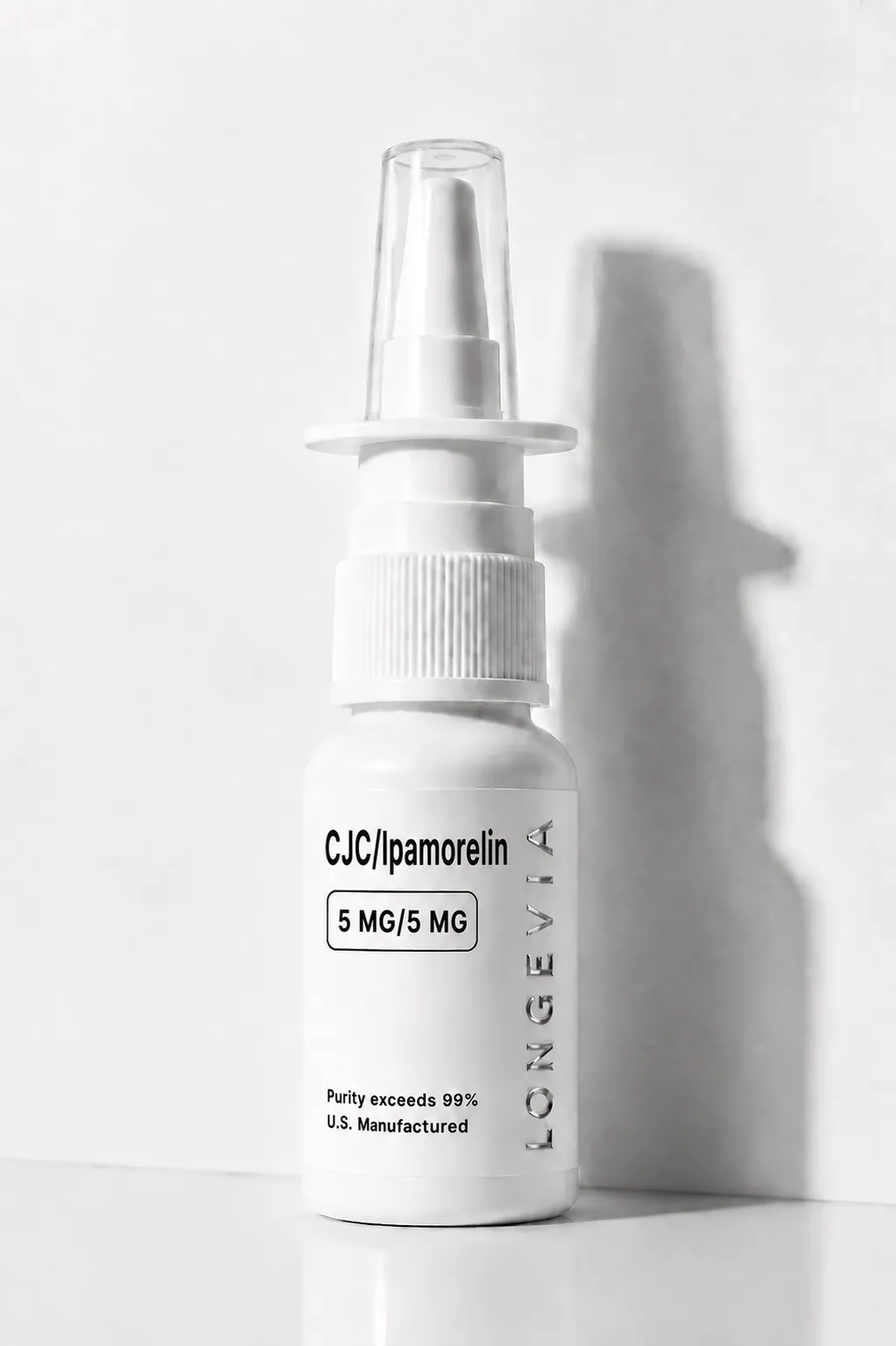
CJC/Ipamorelin 5mg/5mg Spray
CJC/Ipamorelin 5mg/5mg spray — 45 sprays of two distinct synthetic research peptides targeting separate GH-axis receptor systems. Supplied by Longevia Research for laboratory use only. Batch COA available.
$166.50
Slide to add
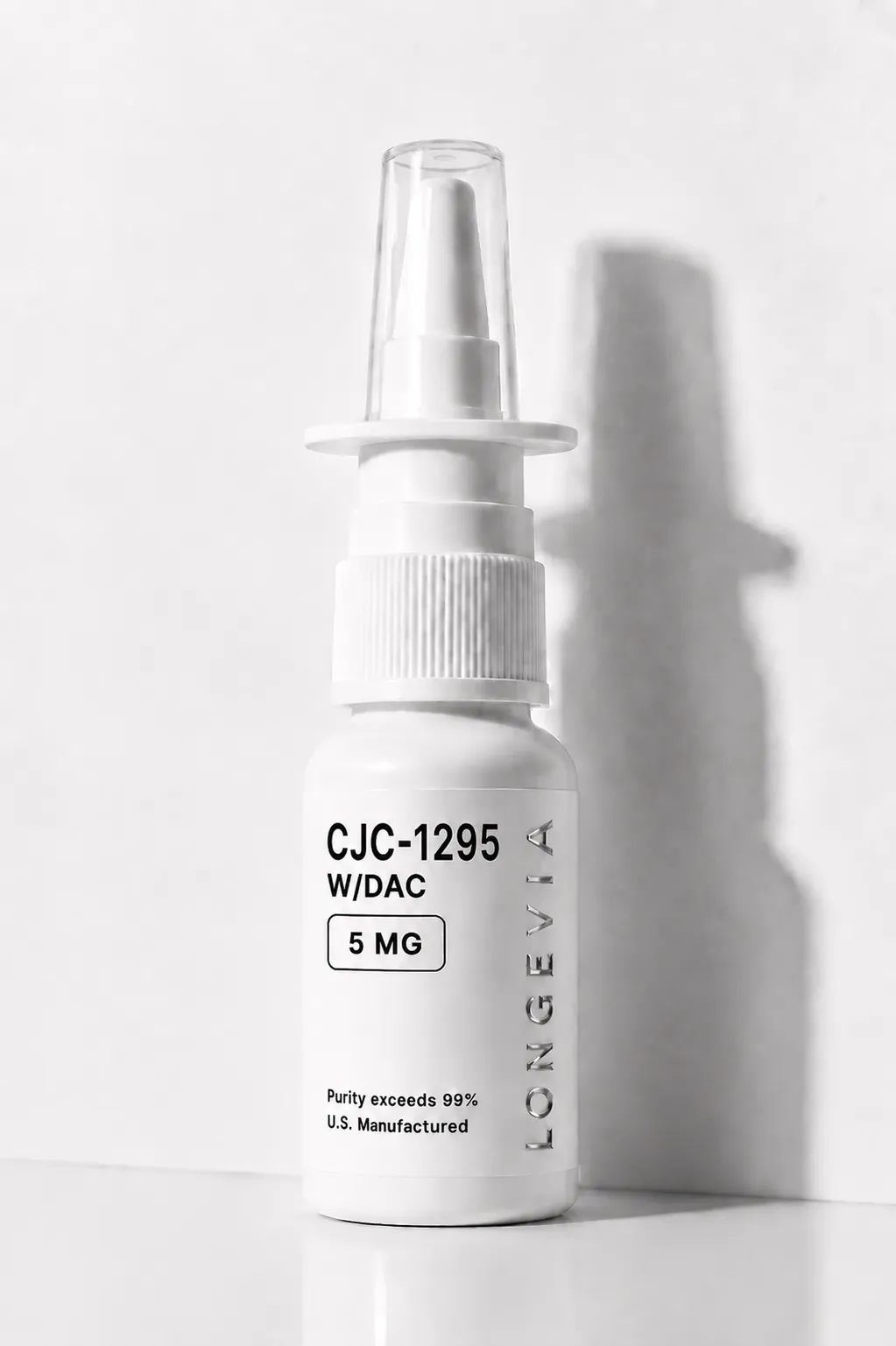
CJC-1295 With DAC 5mg Spray
CJC-1295 with DAC 5mg spray — 45 sprays of the synthetic albumin-binding GHRH analogue (CAS 446262-90-4, ~3,647 Da). Supplied by Longevia Research for laboratory use only. Batch COA available.
$220.50
Slide to add
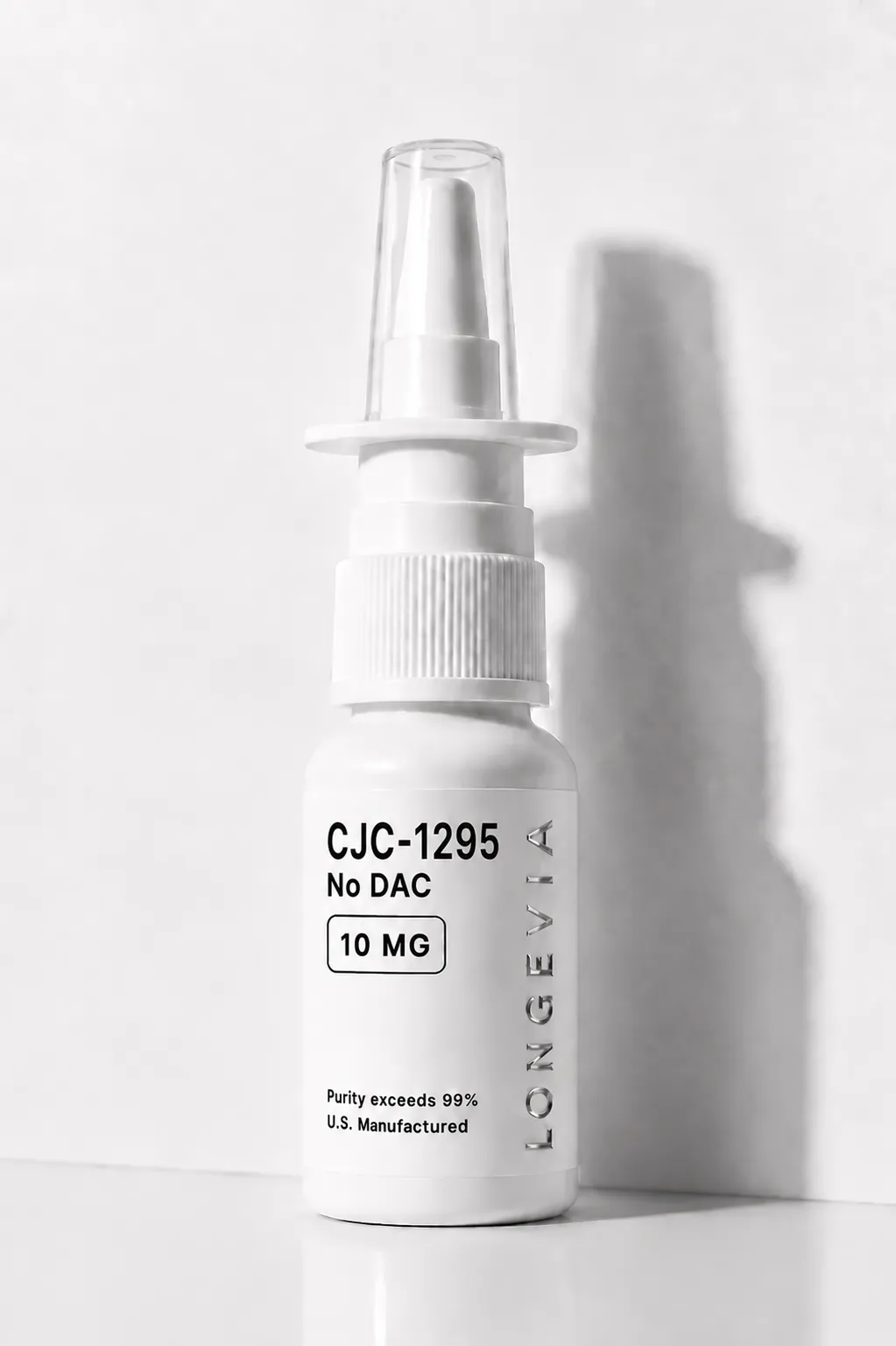
CJC-1295 No DAC 10mg Spray
CJC-1295 No DAC 10mg spray — 45 sprays of Modified GRF (1-29), a synthetic 29-residue GHRH analogue (CAS 446036-97-1, ~3,368 Da). Supplied by Longevia Research for laboratory use only.
$207.00
Slide to add
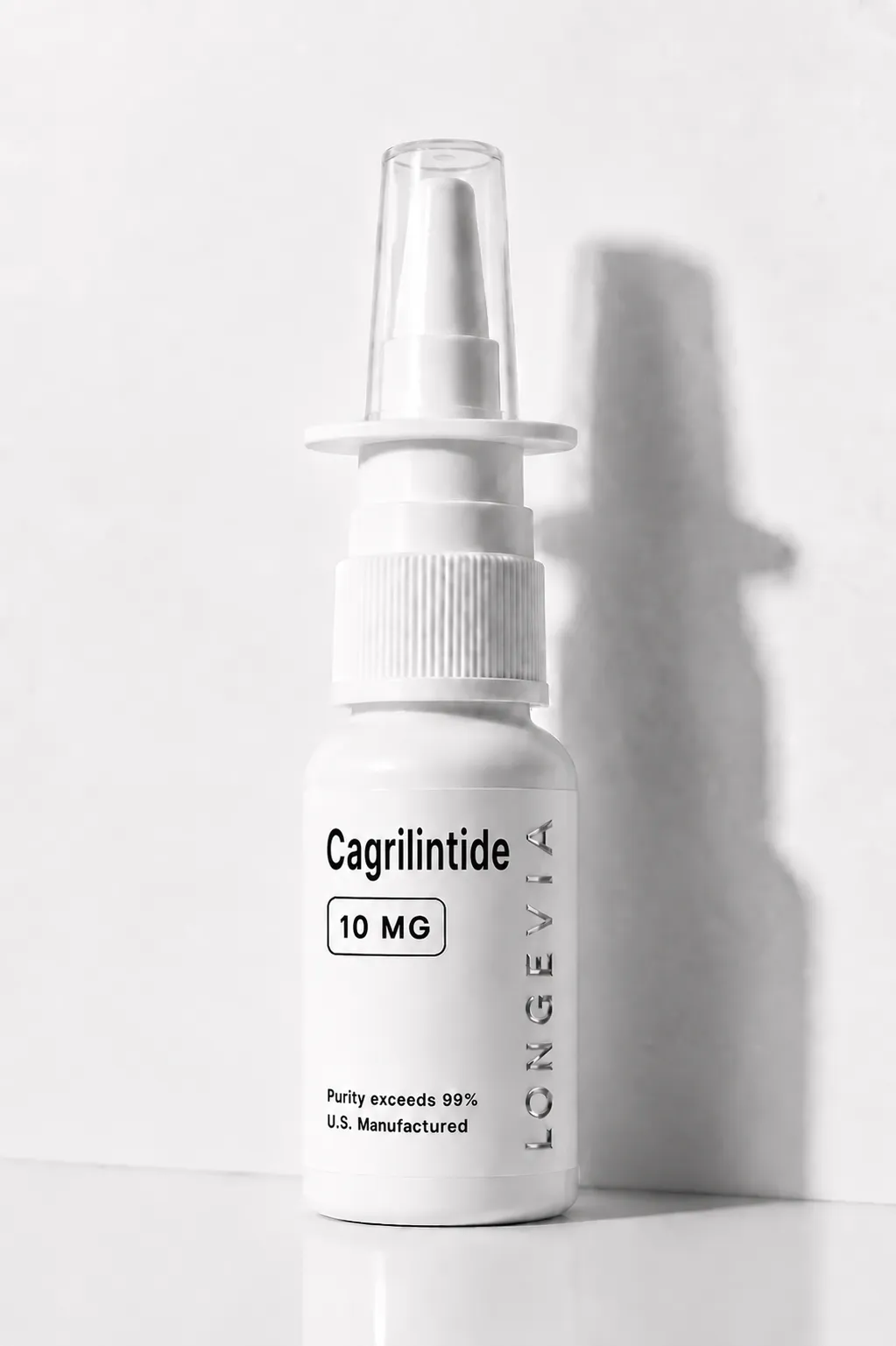
Cagrilintide 10mg Spray
Cagrilintide 10mg spray — 45 sprays of long-acting acylated amylin analogue (AM833, CAS 1415456-99-3, ~4,409 Da). Supplied by Longevia Research for laboratory use only. Batch COA available.
$202.50
Slide to add
Product FAQs
Find answers to common questions regarding storage, reconstitution, and testing guidelines for this specific compound.