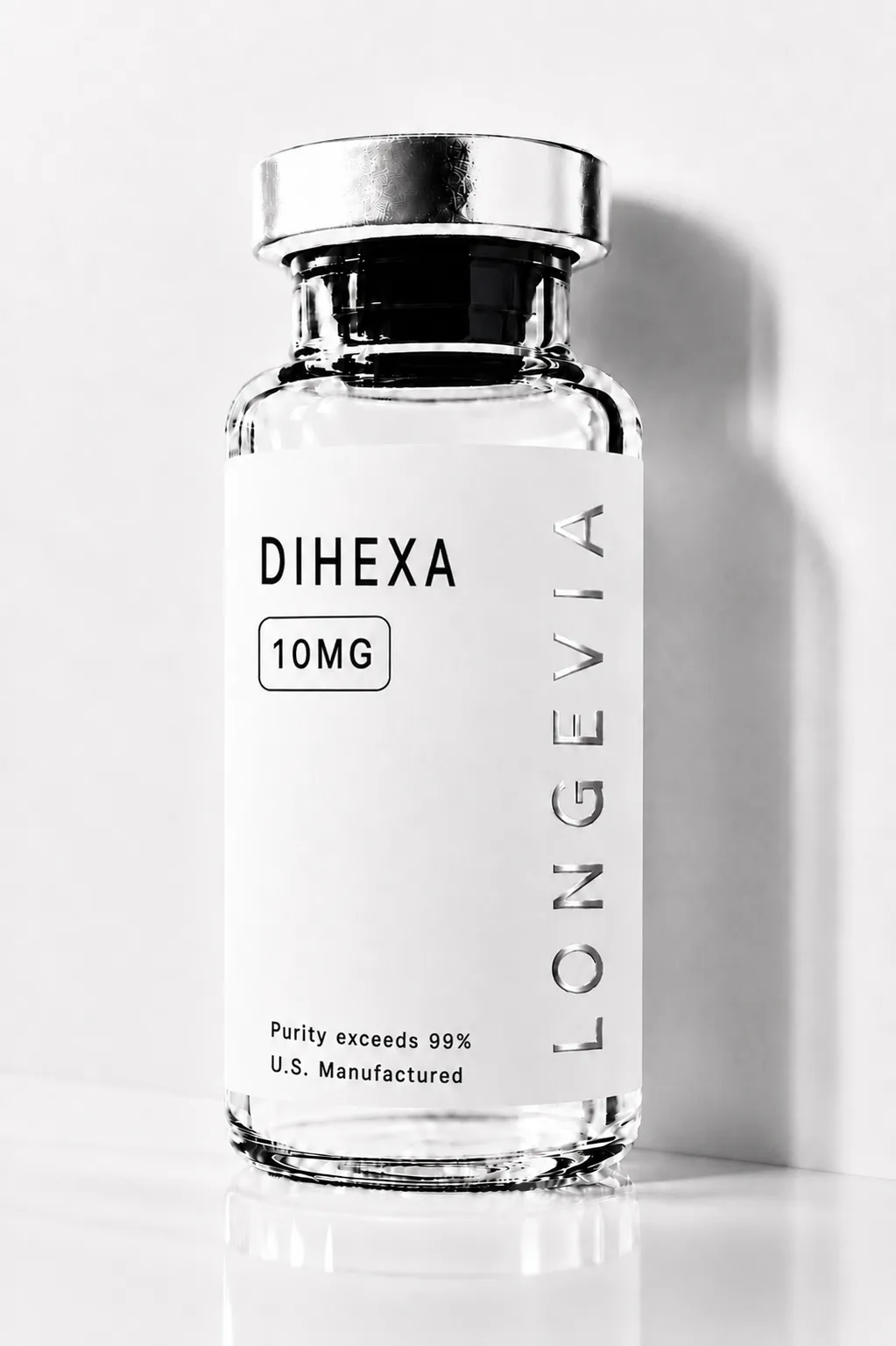
Dihexa 10mg
$126.00
1
Slide to Add
Purity≥99% Tested
TestingLC-MS Verified
LocationUS Based
Dihexa 10mg is a synthetic research compound supplied by Longevia Research for laboratory use only. Known by its developmental code PNB-0408 and by its chemical name N-hexanoic-Tyr-Ile-(6) aminohexanoic amide, Dihexa is derived from angiotensin IV — the C-terminal hexapeptide of the renin-angiotensin system — and has been structurally modified to produce a metabolically stable, blood-brain-barrier-permeable peptidomimetic. Researchers studying renin-angiotensin system pharmacology, neurological pathway biology, and related experimental models have investigated this compound in a range of preclinical systems.
Standard Delivery3-4 Working Days
Free ShippingOn all orders above $300
Comprehensive Product Details
Scientific identity: Dihexa is formally designated N-hexanoic-Tyr-Ile-(6) aminohexanoic amide. Its full IUPAC systematic name is 6-[(2S,3S)-2-[(2S)-2-hexanamido-3-(4-hydroxyphenyl)propanamido]-3-methylpentanamido]hexanamide. The compound was developed at Washington State University and subsequently advanced under the developmental codes PNB-0408 and ATH-1001.
Compound class: Synthetic angiotensin IV-derived analogue · peptidomimetic · capped dipeptide analogue. Dihexa incorporates L-tyrosine and L-isoleucine residues from the angiotensin IV sequence but is not a conventional linear peptide. The N-terminal hexanoyl cap and the C-terminal 6-aminohexanoic amide group confer metabolic stability and distinguish the compound's physical and pharmacological characteristics from those of uncapped peptides.
Solubility: Dihexa is lipophilic with limited aqueous solubility at neutral pH. It dissolves in DMSO and in ethanol-containing solvent systems. Researchers should consult appropriate laboratory references for solvent preparation relevant to their assay system.
Product quantity: 10mg per vial.
Purity: Greater than 99%, confirmed by HPLC and mass spectrometric analysis at the batch level.
Analytical documentation: A batch-specific Certificate of Analysis is available on the Longevia Research website, covering compound identity, purity, and lot traceability.
Research-use classification: For laboratory research use only. Not for human or veterinary use, clinical diagnostics, or any in-vivo application in humans.
Advanced Research Focus
Dihexa is a synthetic hexapeptide derived from angiotensin IV, the hexapeptide fragment Val-Tyr-Ile-His-Pro-Phe produced by metabolic processing of angiotensin II. It was designed to address the rapid enzymatic breakdown of native angiotensin IV by modifying the N- and C-termini, producing a compound reported in rodent studies to have improved metabolic stability and blood-brain-barrier penetrance compared to the parent fragment.
The AT₄ Receptor Research Context
Angiotensin IV binds a receptor population pharmacologically designated AT₄ — distinct from the classical AT₁ and AT₂ receptors. AT₄ receptors are expressed in brain regions associated with memory and learning in preclinical models, including the hippocampus and cortex. A 2018 systematic review in Neuroscience and Biobehavioral Reviews surveyed 32 animal studies of angiotensin IV analogs and found consistent memory facilitation across rodent models. This review covers the broader compound class rather than Dihexa specifically.
Preclinical Research
The principal characterisation study (McCoy et al., 2013) reported improved spatial memory performance in aged rats following oral Dihexa administration. This paper carries an active Expression of Concern, and investigators should account for that when evaluating its conclusions.
An independent study (Sun et al., 2021, Brain Sciences) examined Dihexa in APP/PS1 transgenic mice — a common Alzheimer's model — and reported changes in cognitive, neuronal, and inflammatory markers alongside proposed PI3K/AKT signalling involvement. This study has not been retracted.
A separate study (Wells et al., 2024, Journal of Huntington's Disease) found no significant effect on motor function or spatial memory in a rat model of Huntington's-like neurodegeneration. This is a material negative dataset.
Retraction Notice and the HGF/c-Met Mechanism
Much of the historical mechanistic literature proposed that Dihexa acts through allosteric potentiation of the hepatocyte growth factor (HGF) / c-Met receptor system. The principal 2014 paper supporting this mechanism was formally retracted in April 2025 following a research-integrity investigation at Washington State University, with figures found to contain falsified and fabricated data. Additional papers from the same laboratory were simultaneously retracted.
The HGF/c-Met mechanistic model should therefore be treated as an unresolved hypothesis, not an established mechanism. Researchers should also note independently that c-Met pathway activation is implicated in tumour proliferation and metastasis in oncology literature, which warrants consideration in any research protocol involving this compound.
Evidence Limitations and Research Status
The reliable Dihexa evidence base consists of a limited number of preclinical animal studies, one independent transgenic mouse study, one negative dataset, and the broader angiotensin IV analog systematic review. There is no human clinical trial data. Dihexa (also referred to as PNB-0408) has never entered a registered human clinical trial, and no regulatory authority has approved it for any indication.
Researchers should not confuse Dihexa with fosgonimeton (ATH-1017), a structurally distinct HGF/c-Met-targeting prodrug developed by Athira Pharma that did reach clinical trials but failed to meet primary endpoints in the LIFT-AD Phase 2/3 trial in 2024. The two compounds share a research context but are structurally different and have separate evidence profiles.
Dihexa is supplied for Research Use Only.
Uncompromising Quality Standards
For a research compound with Dihexa's structural and solubility characteristics, analytical documentation serves a dual purpose: it confirms that the material supplied is the intended compound at the specified quantity, and it provides the baseline data against which researchers can evaluate lot-to-lot consistency in their own assay systems.
Identity confirmation: Each production lot of Longevia's Dihexa 10mg is characterised by mass spectrometric analysis, confirming the molecular ion consistent with C₂₇H₄₄N₄O₅ at 504.66 g/mol. Chromatographic and mass-spectrometric data together confirm compound identity and distinguish the target molecule from structural analogues or synthesis impurities.
Purity assessment: Each batch is characterised to greater than 99% purity by HPLC. Chromatographic purity data is reported on the batch Certificate of Analysis.
Batch traceability and Certificate of Analysis. Every vial of Dihexa 10mg is traceable to a specific production lot. A batch-specific Certificate of Analysis is accessible on the Longevia Research website, covering identity, purity, and lot information. Researchers are encouraged to review the current batch documentation before incorporating the material into experimental workflows.
Storage: Dihexa's lipophilic character and susceptibility to degradation under humid or photolytic conditions mean that proper storage is essential for maintaining material integrity between use. The compound should be stored in conditions that exclude moisture and direct light. Specific storage recommendations for this lot are confirmed on the batch Certificate of Analysis and product labelling. Longevia recommends consulting the COA for lot-specific guidance and keeping the vial sealed and desiccated when not in active use.
Handling: This material should be handled by qualified laboratory personnel using appropriate protective equipment and standard laboratory practices for synthetic research compounds, including careful attention to solvent system selection given Dihexa's limited aqueous solubility.
Legal & Compliance Notice
Longevia Research supplies Dihexa 10mg for laboratory and in-vitro research use only. The product is intended for qualified researchers and trained laboratory personnel working in appropriate controlled research environments.
Dihexa is a synthetic research compound supplied strictly as a laboratory research tool. It is not a drug, not a dietary supplement, not a food or food ingredient, and not a cosmetic. No regulatory authority has approved Dihexa for any human or veterinary therapeutic use, and Longevia does not supply this product for administration to humans or animals, for clinical diagnostics, or for any therapeutic purpose.
No therapeutic, diagnostic, or efficacy claims are being made for this compound. The scientific literature summarised on this page describes experimental observations from defined preclinical and cell-based model systems. Readers should note that portions of the historical mechanistic literature have been subject to retraction; this is disclosed transparently in the research section above. Research findings should not be interpreted as evidence of human efficacy, safety, or fitness for any clinical application.
Longevia provides no dosing instructions, reconstitution guidance for administration purposes, treatment protocols, or cycle recommendations. The purchaser assumes full responsibility for lawful acquisition, handling, storage, use, and disposal of this material, and for compliance with all applicable local, state, federal, and institutional regulations. By purchasing this product, the buyer confirms that it will be used solely for legitimate laboratory research purposes by qualified personnel, in compliance with applicable law.
Continue Exploring
Also Considered.
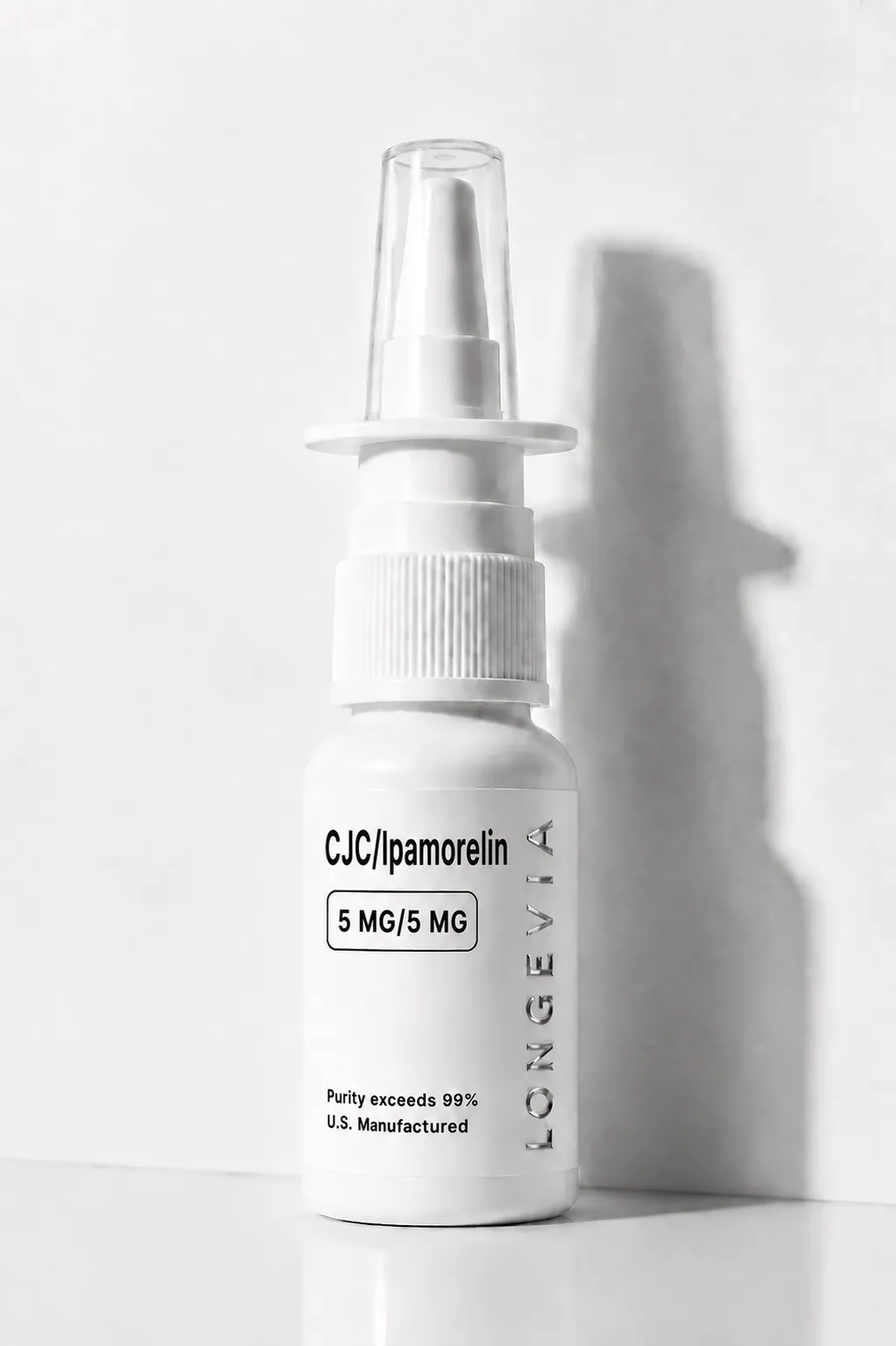
CJC/Ipamorelin 5mg/5mg Spray
CJC/Ipamorelin 5mg/5mg spray — 45 sprays of two distinct synthetic research peptides targeting separate GH-axis receptor systems. Supplied by Longevia Research for laboratory use only. Batch COA available.
$166.50
Slide to add
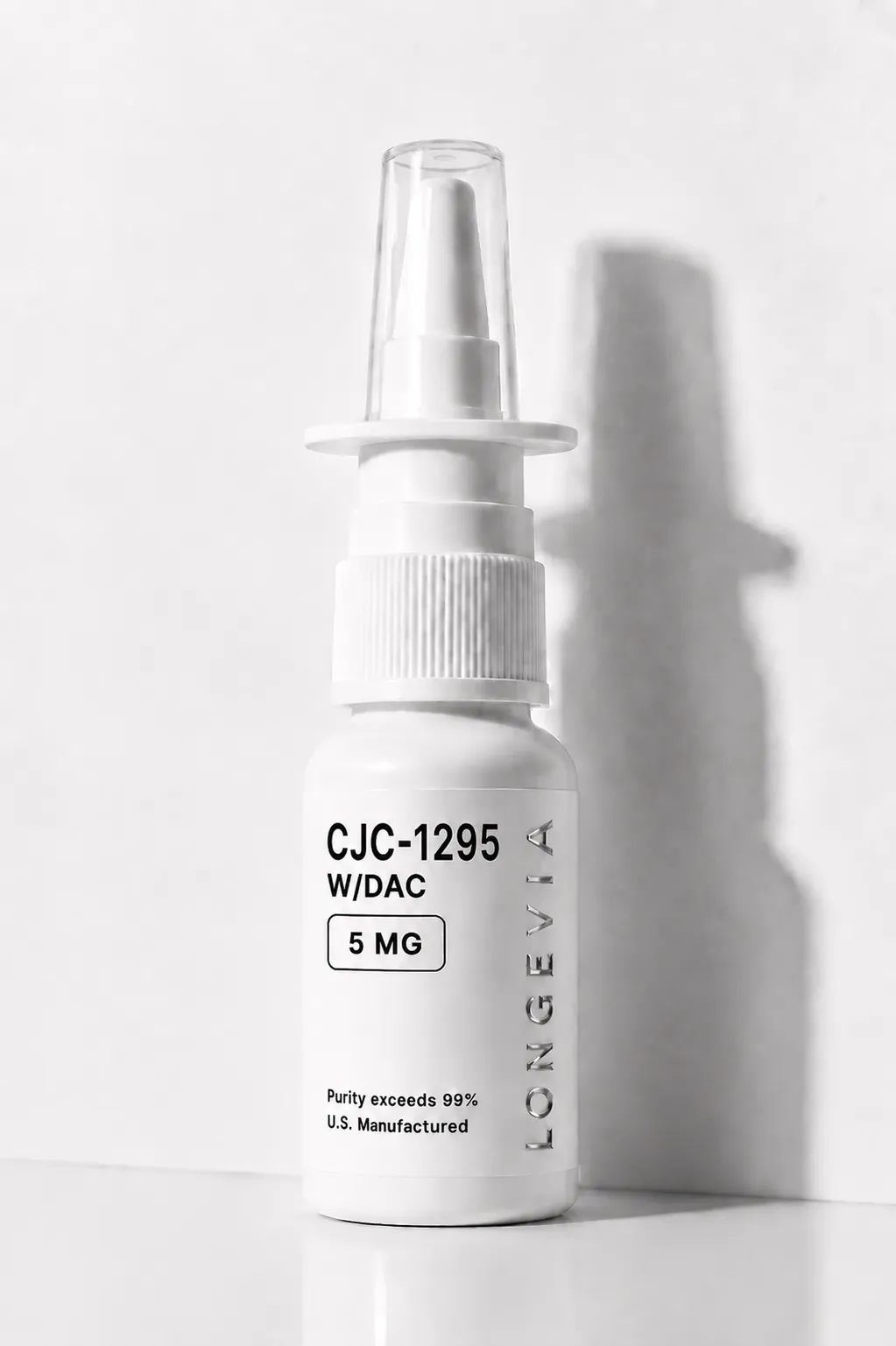
CJC-1295 With DAC 5mg Spray
CJC-1295 with DAC 5mg spray — 45 sprays of the synthetic albumin-binding GHRH analogue (CAS 446262-90-4, ~3,647 Da). Supplied by Longevia Research for laboratory use only. Batch COA available.
$220.50
Slide to add
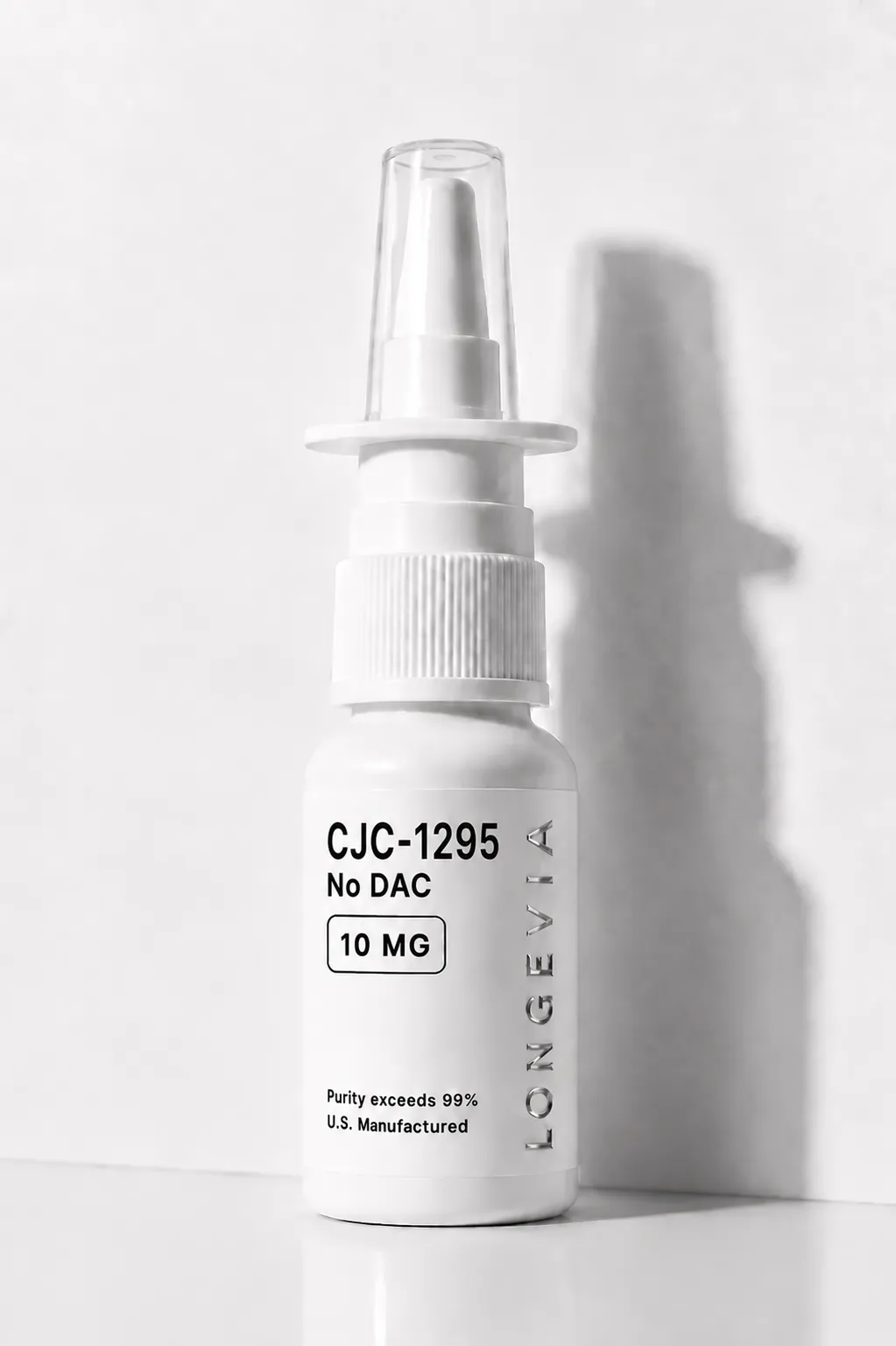
CJC-1295 No DAC 10mg Spray
CJC-1295 No DAC 10mg spray — 45 sprays of Modified GRF (1-29), a synthetic 29-residue GHRH analogue (CAS 446036-97-1, ~3,368 Da). Supplied by Longevia Research for laboratory use only.
$207.00
Slide to add
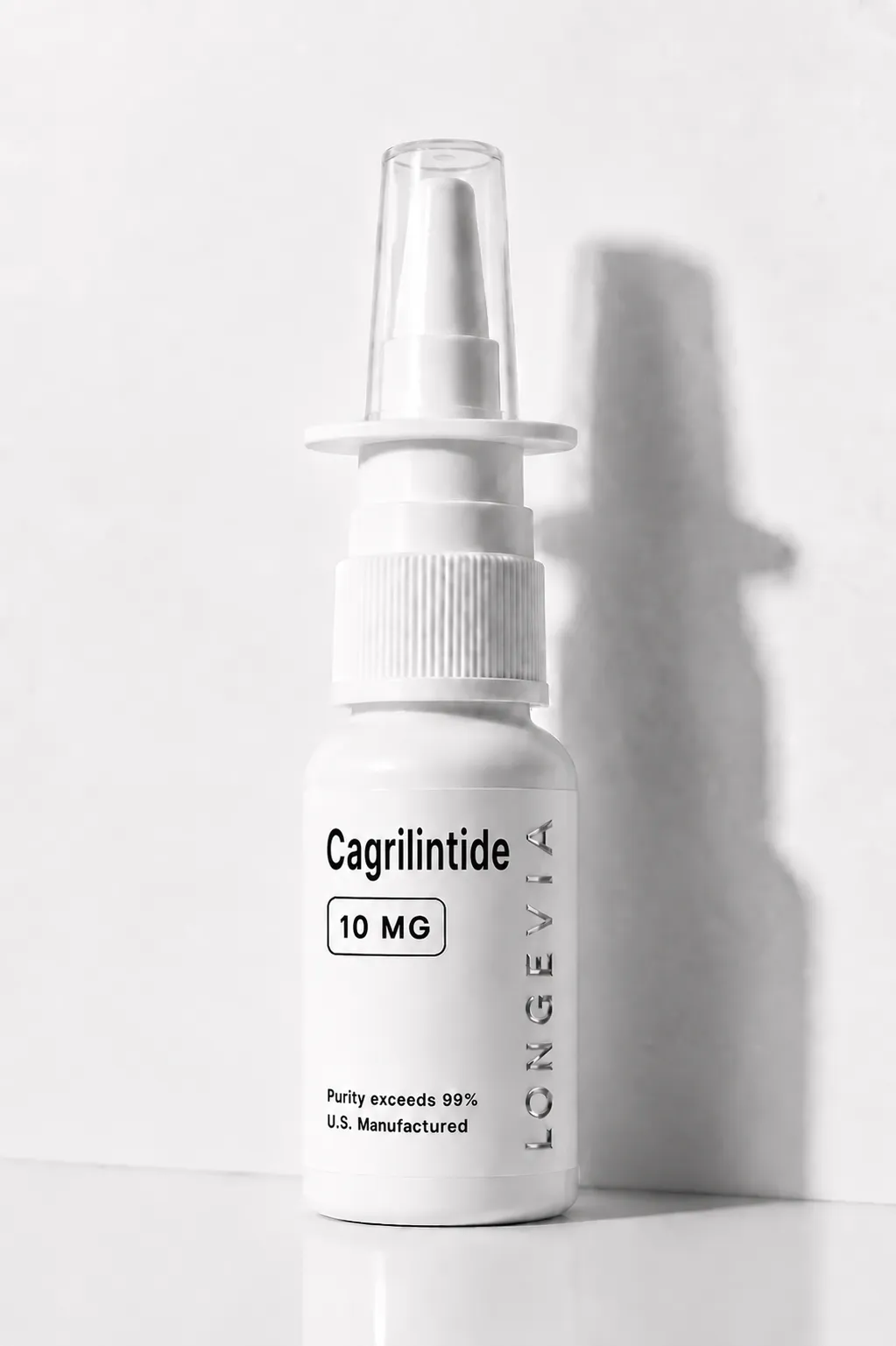
Cagrilintide 10mg Spray
Cagrilintide 10mg spray — 45 sprays of long-acting acylated amylin analogue (AM833, CAS 1415456-99-3, ~4,409 Da). Supplied by Longevia Research for laboratory use only. Batch COA available.
$202.50
Slide to add
Product FAQs
Find answers to common questions regarding storage, reconstitution, and testing guidelines for this specific compound.