Growth Hormone Secretagogues
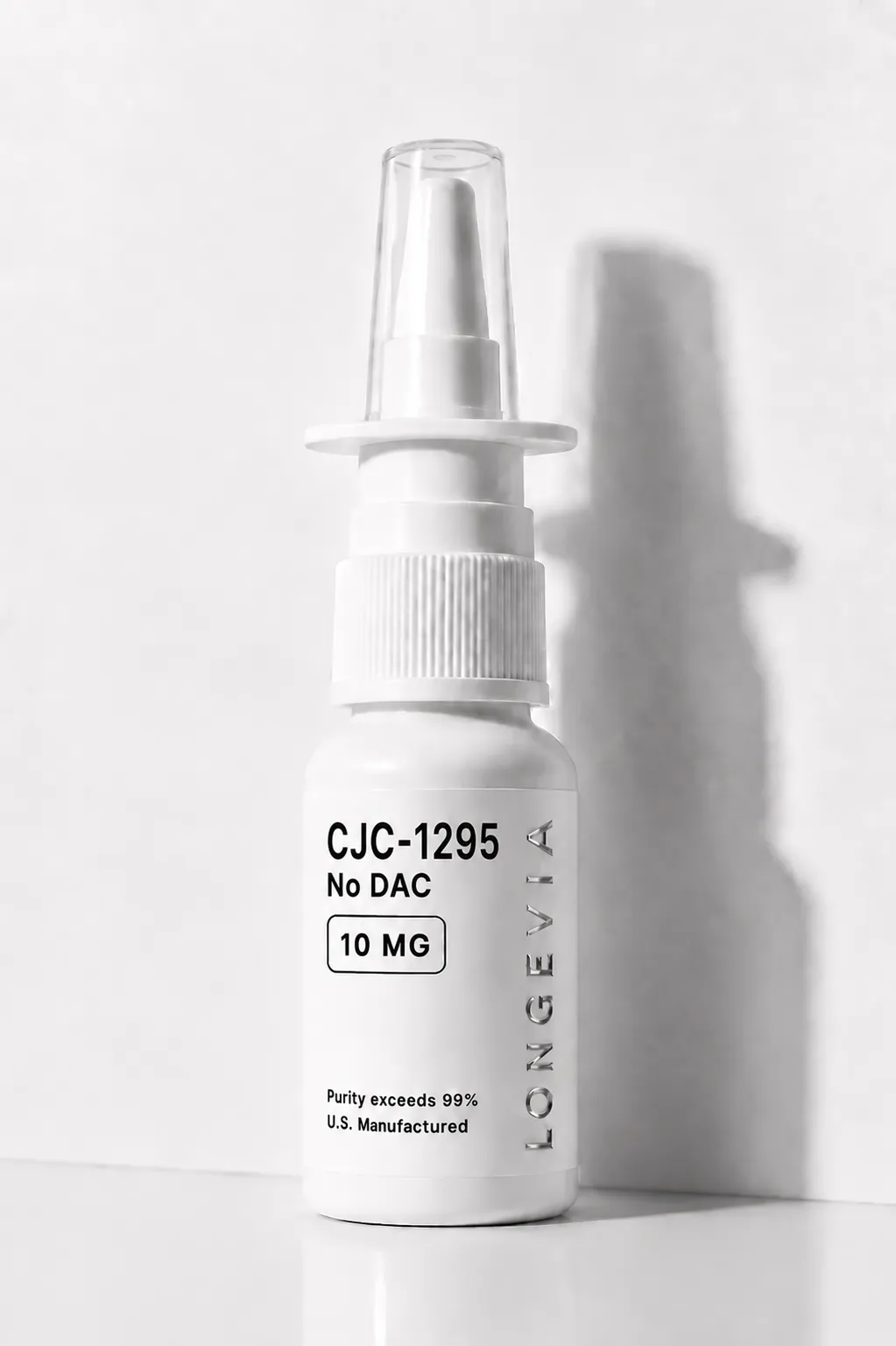
CJC-1295 No DAC 10mg Spray
$207.00
1
Slide to Add
Purity≥99% Tested
TestingLC-MS Verified
LocationUS Based
CJC-1295 No DAC is a synthetic 29-amino-acid research peptide derived from the N-terminal sequence of human growth hormone-releasing hormone (GHRH). Also known as Modified GRF (1-29) or Mod GRF 1-29, it is a tetrasubstituted analogue of the native GHRH(1-29) sequence, incorporating four targeted amino acid modifications that improve its resistance to enzymatic degradation and extend its functional stability relative to the unmodified parent peptide. Unlike the pharmacologically distinct compound CJC-1295 with DAC — which carries an additional C-terminal modification enabling covalent albumin binding — CJC-1295 No DAC retains no albumin-binding moiety and behaves as a short-acting GHRH receptor agonist, relevant for experimental systems where pulsatile, discrete receptor engagement is the research objective. Researchers studying growth hormone-releasing hormone receptor (GHRHR) pharmacology, pituitary somatotroph biology, and GH-axis signalling use CJC-1295 No DAC as a tool compound for investigating these pathways in vitro and in preclinical animal model systems. The compound's shorter half-life relative to DAC-modified analogues makes it useful for experimental designs where the duration of receptor engagement is a controlled variable. Longevia Research supplies CJC-1295 No DAC as a 10mg, 45-spray laboratory research material for qualified research use only. This product is not a drug, dietary supplement, food, or cosmetic, and is not intended for human or veterinary use.
Standard Delivery3-4 Working Days
Free ShippingOn all orders above $300
Product Details
Scientific Identity
CJC-1295 No DAC is formally designated Modified GRF (1-29) — the designation reflecting that it is a modified version of the 29-amino-acid N-terminal growth-releasing factor sequence, distinct from the 30-residue DAC-conjugated compound catalogued separately as CJC-1295 with DAC. The compound was characterised as part of ConjuChem's GHRH analogue programme and is defined by four amino acid substitutions relative to the native GHRH(1-29) sequence, each addressing a specific vulnerability of the native peptide in physiological environments:
Position 2: L-Ala → D-Ala — blocks dipeptidyl peptidase-IV (DPP-IV) cleavage at the N-terminal Tyr-Ala bond, which is the primary route of rapid native GHRH inactivation
Position 8: Gly → Gln — prevents asparagine rearrangement at position 8
Position 15: Ala modification — enhances receptor binding stability
Position 27: Met → Leu — prevents methionine oxidation
These substitutions extend the functional half-life from approximately 7 minutes for native GHRH to approximately 30 minutes for the Modified GRF (1-29) form, while preserving full agonist activity at the GHRH receptor.
Alternative Names and Designations
CJC-1295 No DAC · Modified GRF (1-29) · Mod GRF 1-29 · ModGRF(1-29) · CJC-1295 without DAC · [D-Ala², Gln⁸, Ala¹⁵, Leu²⁷]-GHRH(1-29)
A Critical Naming Note
The names "CJC-1295," "CJC-1295 No DAC," and "CJC-1295 with DAC" are used inconsistently in the scientific literature and research market, and several published papers have incorrectly equated Modified GRF (1-29) with the albumin-conjugated DAC form. Researchers should identify which compound is supplied in their material from the Certificate of Analysis, which will confirm the molecular formula and molecular weight. The Wikipedia article on CJC-1295 explicitly notes that CJC-1295, CJC-1295 DAC, and CJC-1295 with DAC are synonyms for the albumin-conjugating compound, while Modified GRF (1-29) — CJC-1295 without DAC — is a structurally distinct compound lacking the C-terminal Lys-maleimidopropionamide DAC extension.
Molecular Information
For comparison, CJC-1295 with DAC (a distinct compound):
CAS: 446262-90-4
Formula: C₁₆₅H₂₆₉N₄₇O₄₆
MW: approximately 3,647.25 g/mol
PubChem CID: 56841945
Carries C-terminal Lys-maleimidopropionamide (the DAC modification)
Researchers should never apply the molecular identifiers of one form to the other. The batch Certificate of Analysis for any CJC-1295 product confirms which form is supplied.
Product Format
The quantity per individual spray is documented on the product label and batch Certificate of Analysis. Longevia provides no dosing, spray-frequency, or administration guidance.
Research Focus & Mechanism Overview
GHRH Biology and the Somatotroph Research Framework
Growth hormone-releasing hormone (GHRH) is a 44-amino-acid hypothalamic neuropeptide that is the primary stimulatory regulator of growth hormone (GH) secretion from anterior pituitary somatotroph cells. GHRH is released from the hypothalamic arcuate nucleus in episodic bursts and travels through the hypothalamic-pituitary portal vasculature to the anterior pituitary, where it binds the GHRH receptor (GHRHR) — a class B G-protein-coupled receptor coupled to Gs and adenylyl cyclase.
GHRHR activation stimulates intracellular cAMP production, which drives both the acute release of GH stored in secretory granules and the transcriptional regulation of GH gene expression over longer timescales. Endogenous GHRH is rapidly inactivated in the circulation — primarily by DPP-IV cleavage of the N-terminal Tyr-Ala dipeptide bond within approximately 7 minutes — which makes unmodified GHRH(1-29) a difficult research tool for experiments requiring sustained receptor engagement. Modified GRF (1-29) / CJC-1295 No DAC addresses this limitation through its four amino acid substitutions without altering the receptor pharmacology.
CJC-1295 No DAC as a GHRH Research Tool
CJC-1295 No DAC (Modified GRF 1-29) is studied as a full agonist at the GHRH receptor. In published pharmacological research, it has been used to investigate GHRHR activation, somatotroph biology, and GH-axis signalling across both cell-based and animal model systems.
GHRHR pharmacology. In receptor binding and functional assays, Modified GRF (1-29) binds GHRHR with high affinity and activates the downstream Gs/adenylyl cyclase/cAMP signalling cascade with potency consistent with full GHRH receptor agonism. The four substitutions preserve the receptor contact residues in the N-terminal domain while protecting the DPP-IV cleavage site, resulting in a compound that engages the receptor like endogenous GHRH but remains stable for substantially longer in experimental systems.
DPP-IV resistance. The D-Ala substitution at position 2 is the structural feature most directly responsible for CJC-1295 No DAC's improved metabolic stability. By placing a D-configured amino acid at the DPP-IV scissile position, the compound eliminates the primary inactivation route available to the enzyme without altering the N-terminal receptor engagement. This DPP-IV resistance is the defining pharmacological engineering of the Modified GRF (1-29) class.
Functional half-life in research models. In pharmacological characterisation experiments, Modified GRF (1-29) shows a functional half-life of approximately 30 minutes — a roughly four-fold improvement over native GHRH — compared with the approximately 8-day circulating half-life of CJC-1295 with DAC. This intermediate half-life positions the No DAC form as appropriate for experimental designs examining pulsatile GH axis stimulation, while the DAC form is more relevant for research involving sustained, tonic receptor engagement.
CJC-1295 No DAC vs CJC-1295 with DAC: A Critical Research Distinction
These are structurally distinct compounds with different molecular formulas, different CAS numbers, different pharmacokinetic profiles, and different experimental use cases.
The DAC moiety — Nε-maleimidopropionyl-Lysine — attached at the C-terminal Lys-30 position in CJC-1295 with DAC reacts covalently with Cys34 of circulating serum albumin, forming a stable peptide-albumin conjugate that dramatically reduces renal clearance and accounts for the DAC form's extended residence time. CJC-1295 No DAC has no such modification and therefore no albumin-binding capacity.
Several scientific papers have incorrectly equated these two forms. Researchers should verify which compound is described in any study they cite, as the pharmacokinetic and experimental context differs substantially.
Preclinical and Receptor Research
Primary pharmacological characterisation. The foundational pharmacology of GHRH analogues in this class — including the initial characterisation of Modified GRF (1-29) as a GHRHR agonist — was conducted by ConjuChem and colleagues, with key published work including Jette and colleagues (Endocrinology, 2005; PMID 15817669), who examined CJC-1295 albumin bioconjugates and the non-conjugated precursor in rat anterior pituitary assays. That study confirmed GHRH receptor activation in pituitary tissue and provided comparative pharmacokinetic characterisation between albumin-conjugated and non-conjugated forms.
Animal pituitary research. In primary rat anterior pituitary cell preparations, Modified GRF (1-29) and related GHRH analogues have been shown to stimulate GH secretion in a concentration-dependent manner, consistent with GHRHR agonism. These are in-vitro cell preparations from animal tissue; they describe pharmacological receptor activity in an experimental system and do not establish human physiological effects.
Ionescu and Frohman (2006). A study published in the Journal of Clinical Endocrinology and Metabolism (PMID 16352683) by Ionescu and Frohman examined aspects of GHRH analogue pharmacology relevant to both DAC and non-DAC forms in the context of GH axis research, including the physiological significance of pulsatile GH release patterns and the experimental implications of short-acting versus long-acting GHRH analogue tools.
Clinical Research Status and an Important Attribution Caveat
The most widely cited human clinical study in the CJC-1295 research literature is the Teichman and colleagues (JCEM, 2006; PMID 16352683) dose-escalation study that reported dose-dependent elevations in circulating GH and IGF-1 in healthy adult subjects. That study examined CJC-1295 with DAC — the albumin-conjugating form. Its findings cannot be attributed to CJC-1295 No DAC / Modified GRF (1-29), which is a structurally and pharmacokinetically distinct compound.
No published, dedicated Phase 1 or Phase 2 clinical trial examining CJC-1295 No DAC (Modified GRF (1-29)) as a standalone investigational compound in human subjects has been identified in the peer-reviewed literature. CJC-1295 No DAC is not approved for human therapeutic use by any regulatory authority and has no approved human indication.
Longevia Research supplies this compound for laboratory research use only. Its supply does not imply therapeutic intent.
Quality & Purity Standards
For a tetrasubstituted 29-residue GHRH analogue, analytical quality documentation addresses compound identity at the sequence level and chromatographic purity — distinguishing the correctly modified research material from the unmodified parent sequence, from alternative CJC-1295 variants (particularly the DAC form), and from truncation or deletion impurities that can arise during solid-phase synthesis of proline-containing sequences.
Identity confirmation. Each production lot of Longevia's CJC-1295 No DAC spray is characterised by mass spectrometric analysis, verifying the observed molecular ion against the expected mass for Modified GRF (1-29) at approximately 3,367.9 g/mol (C₁₅₂H₂₅₂N₄₄O₄₂). This confirms the compound is the No DAC form and is not the DAC-modified variant (~3,647.25 g/mol), which would be clearly distinguishable by the ~279 Da mass difference.
Purity assessment. Chromatographic purity analysis quantifies the target compound relative to all UV-absorbing species in the chromatogram. For this compound class, purity documentation is particularly important because the research market's history of confusion between CJC-1295 forms means that molecular identity — not just purity percentage — is the critical analytical specification.
Batch traceability and Certificate of Analysis. Every production lot of CJC-1295 No DAC 10mg spray is traceable to a specific batch. A batch-specific Certificate of Analysis is accessible on the Longevia Research website, covering compound identity, purity, and lot information. Researchers are strongly encouraged to review the batch documentation — particularly the molecular weight confirmation — before use, to confirm they have the No DAC form.
Storage. Specific storage conditions for this lot are confirmed on the batch Certificate of Analysis and product labelling. Researchers should follow the COA's lot-specific guidance and institutional protocols for synthetic research peptides.
Compliance Notice
Longevia Research supplies CJC-1295 No DAC 10mg Spray for laboratory and in-vitro research use only. The product is intended for qualified researchers and trained laboratory personnel working in appropriate controlled research environments.
CJC-1295 No DAC (Modified GRF 1-29) is a synthetic research peptide supplied strictly as a laboratory research tool. It is not CJC-1295 with DAC; these are distinct compounds with different molecular structures, different CAS numbers, and different pharmacokinetic profiles, and they must not be treated as interchangeable. It is not a drug, not a dietary supplement, not a food or food ingredient, and not a cosmetic. No regulatory authority has approved CJC-1295 No DAC for human or veterinary therapeutic use, and Longevia does not supply this product for administration to humans or animals, for clinical diagnostics, or for any therapeutic application.
No therapeutic, diagnostic, or efficacy claims are made for this compound. The scientific literature referenced on this page describes experimental observations from defined cell-based and animal model systems, and from human research conducted on the structurally distinct CJC-1295 with DAC compound — findings from the DAC form do not apply to this product. No dosing instructions, spray-frequency guidance, administration protocols, or cycle recommendations are provided. The purchaser assumes full responsibility for lawful acquisition, handling, storage, use, and disposal of this material, and for compliance with all applicable local, state, federal, and institutional regulations.
Continue Exploring
Also Considered.
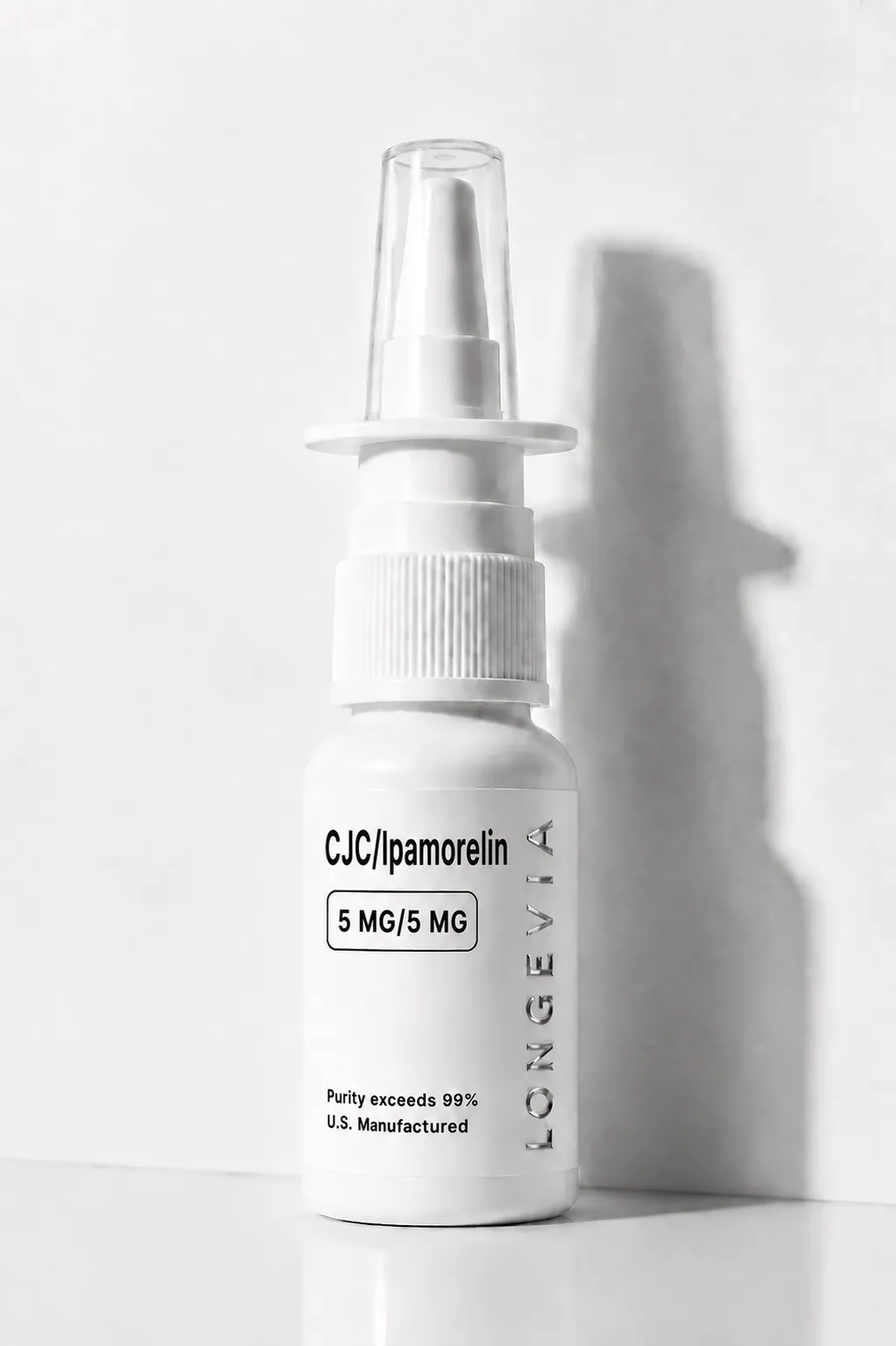
CJC/Ipamorelin 5mg/5mg Spray
CJC/Ipamorelin 5mg/5mg spray — 45 sprays of two distinct synthetic research peptides targeting separate GH-axis receptor systems. Supplied by Longevia Research for laboratory use only. Batch COA available.
$166.50
Slide to add
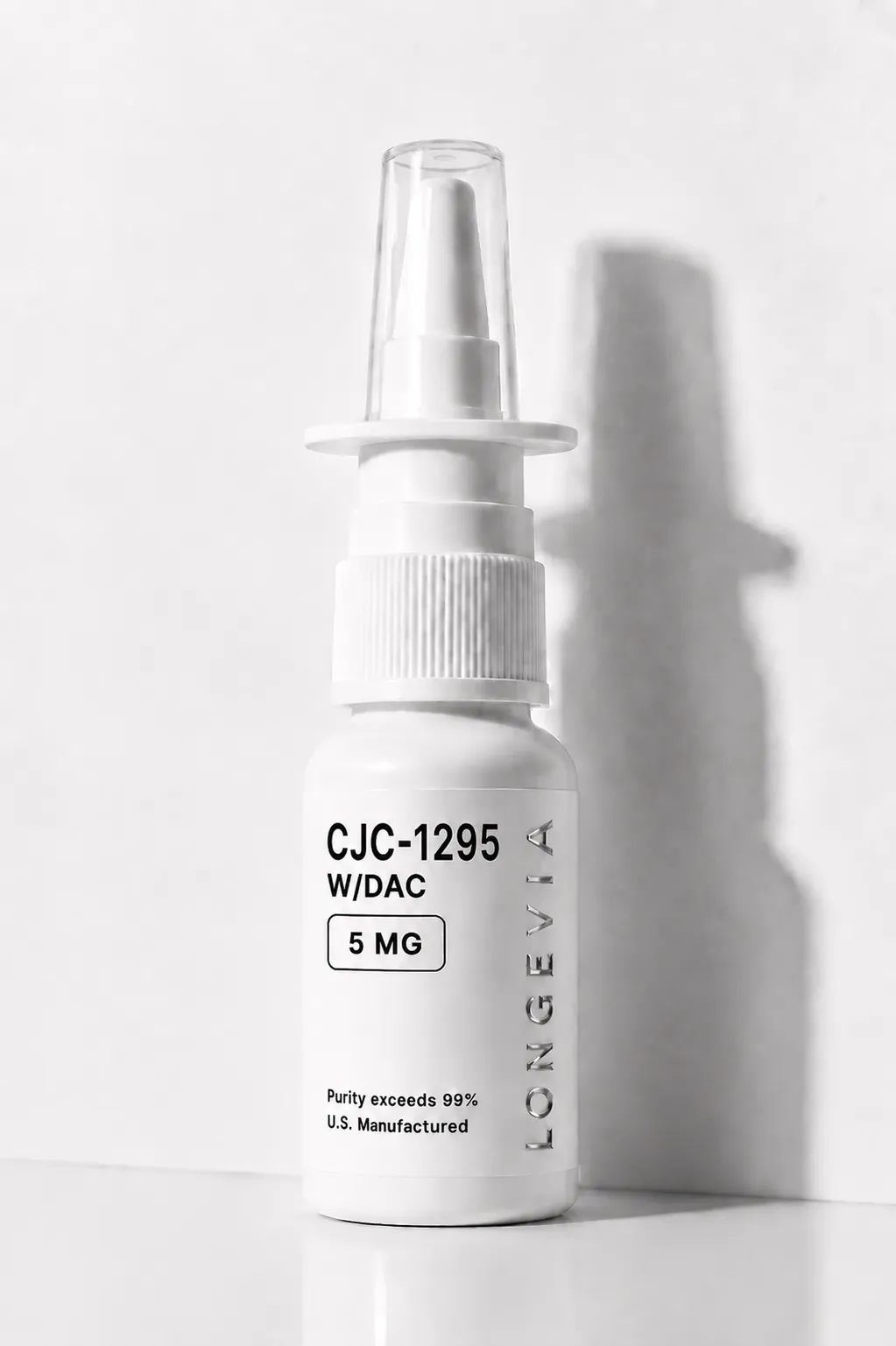
CJC-1295 With DAC 5mg Spray
CJC-1295 with DAC 5mg spray — 45 sprays of the synthetic albumin-binding GHRH analogue (CAS 446262-90-4, ~3,647 Da). Supplied by Longevia Research for laboratory use only. Batch COA available.
$220.50
Slide to add
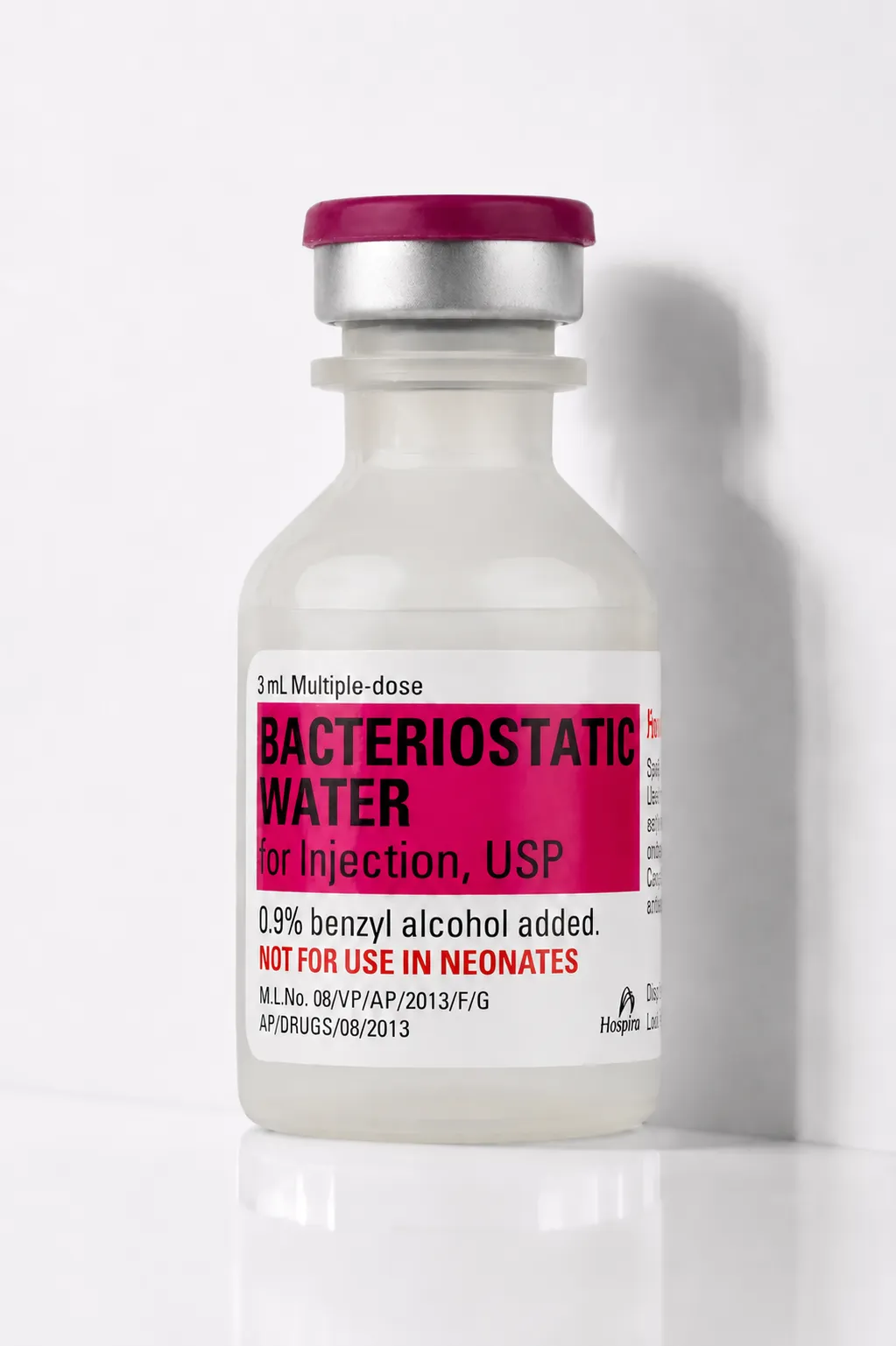
BAC Water
Shop research-grade BAC Water manufactured under strict quality standards for laboratory preparation, dilution, and reconstitution of research compounds.
$34.00
Slide to add
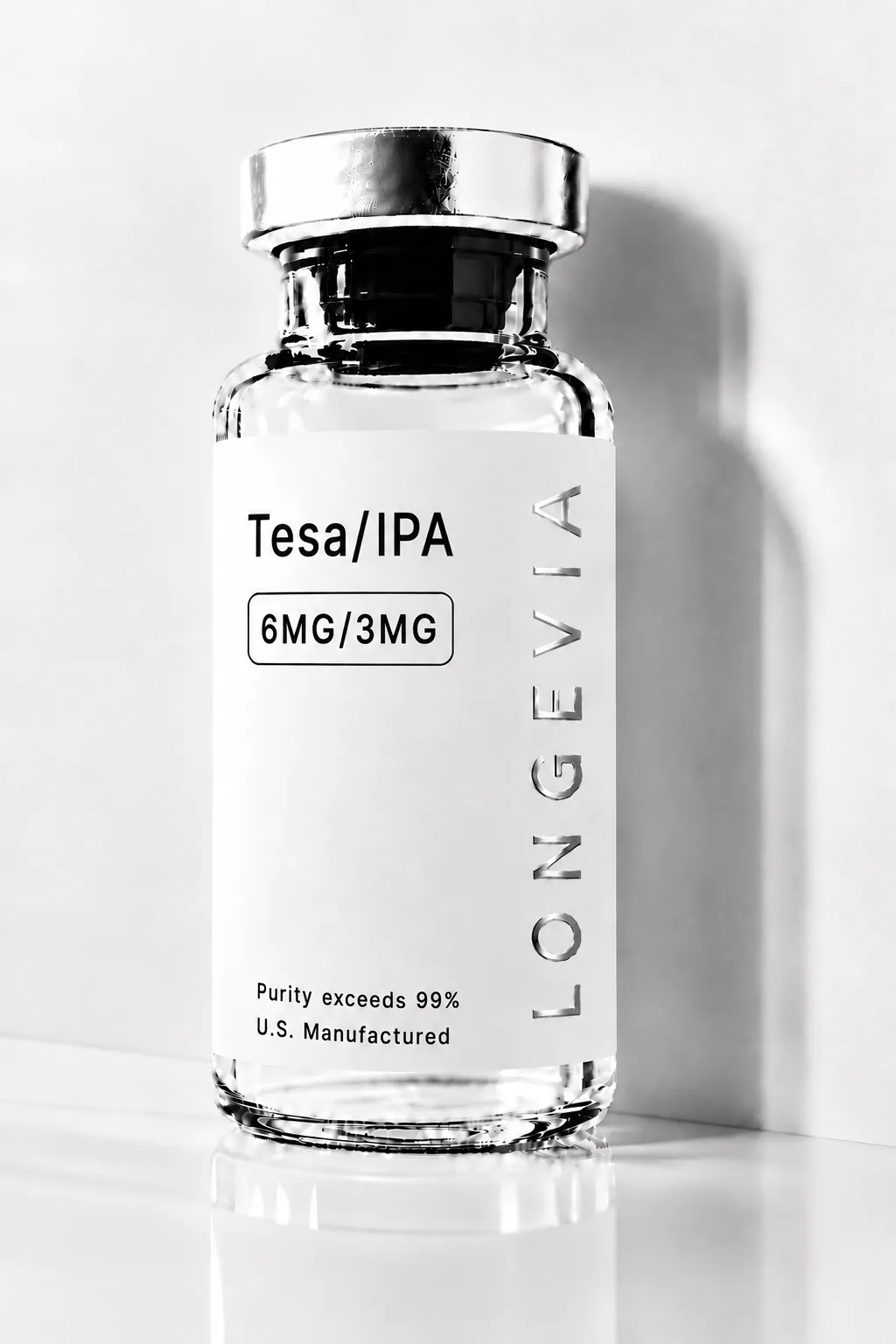
Tesa/IPA
Tesa/IPA — Tesamorelin and Ipamorelin combination research vials in 6mg/3mg and 13mg/3mg formats. GHRH-axis laboratory research compound supplied by Longevia Research for in-vitro use only.
$180.00
Slide to add
Product FAQs
Find answers to common questions regarding storage, reconstitution, and testing guidelines for this specific compound.