Metabolic Research
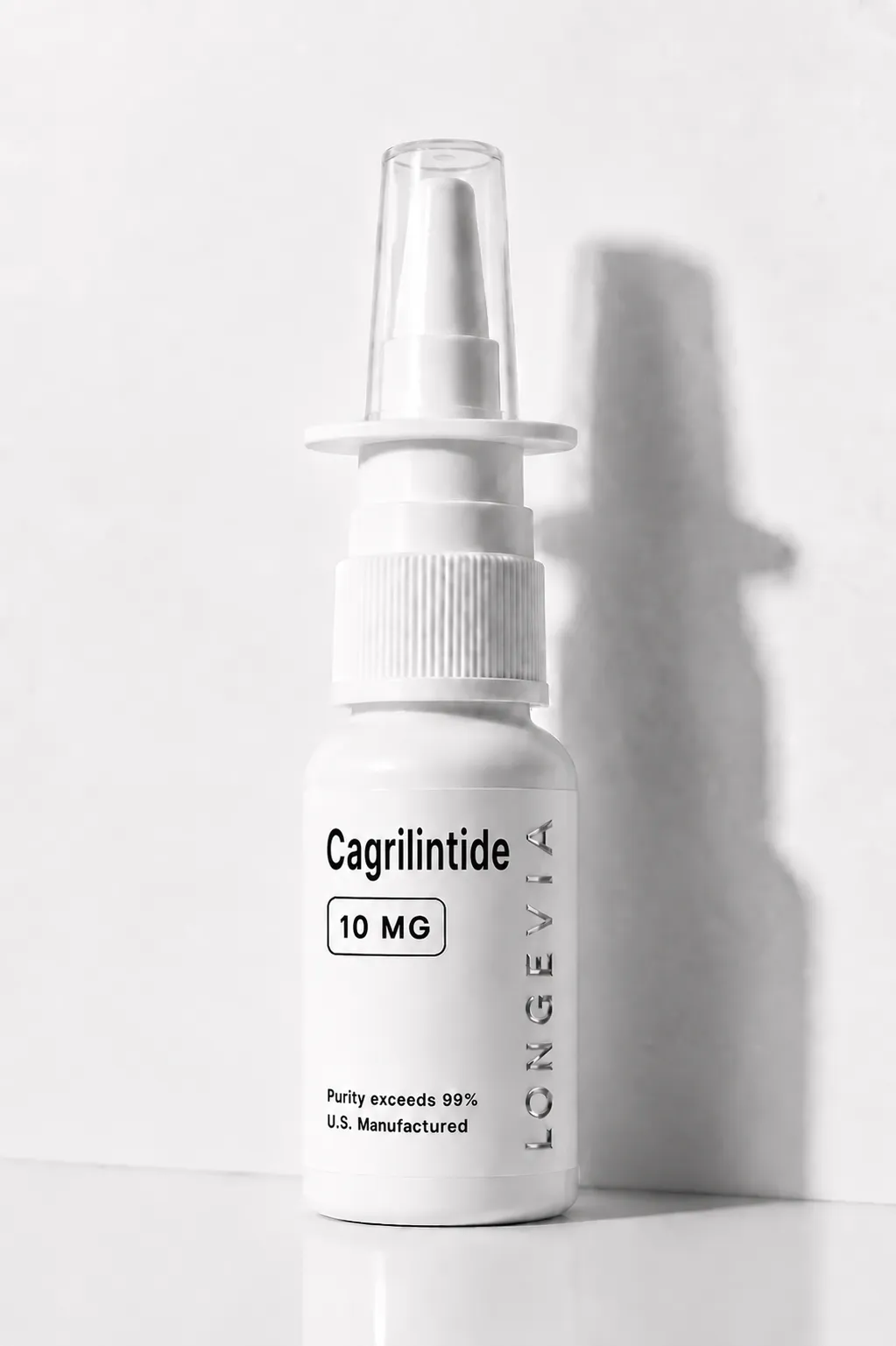
Cagrilintide 10mg Spray
$202.50
1
Slide to Add
Purity≥99% Tested
TestingLC-MS Verified
LocationUS Based
Cagrilintide is an investigational long-acting acylated amylin analogue developed by Novo Nordisk and studied as a non-selective agonist of amylin receptors and the calcitonin receptor. It is a synthetic lipidated 37-residue peptide built on a pramlintide-inspired backbone — modified from native human amylin to eliminate the amyloid fibril-forming propensity that makes the unmodified hormone technically challenging as a research tool — and equipped with a C20 fatty diacid conjugated via a γ-glutamyl linker that enables albumin binding and extends the compound's pharmacokinetic half-life substantially compared with native amylin or first-generation analogues. With an in-vivo half-life of approximately 180 hours, cagrilintide has been investigated in preclinical pharmacology studies and in a substantial Phase 2 and Phase 3 human clinical research programme, making it one of the most pharmacologically characterised investigational amylin-class compounds currently under scientific examination. Researchers studying amylin receptor biology, calcitonin receptor pharmacology, metabolic signalling, and the broader neuroendocrine regulation of appetite and satiety use cagrilintide as a tool compound for investigating these receptor systems under defined experimental conditions. The compound is also studied in combination with GLP-1 receptor agonists, as the amylin and GLP-1 receptor pathways engage distinct but functionally complementary mechanisms in experimental metabolic models. Longevia Research supplies cagrilintide as a 10mg, 45-spray laboratory research material for qualified research use only. This product is not a drug, supplement, food, or cosmetic, and is not intended for human or veterinary use.
Standard Delivery3-4 Working Days
Free ShippingOn all orders above $300
Product Details
Scientific Identity
Cagrilintide is formally designated an acylated long-acting amylin analogue. It is a synthetic 37-residue peptide that incorporates the general structural framework of pramlintide (the approved clinical amylin analogue for diabetes management) as its starting scaffold — pramlintide having replaced three proline residues at positions 25, 28, and 29 of native amylin to prevent amyloid fibril formation. Cagrilintide builds on this base with additional modifications, most critically the N-terminal acylation with a C20 fatty diacid (eicosanedioic acid) attached via a γ-glutamyl spacer, which enables the compound to bind reversibly to serum albumin and thereby dramatically extends its circulating half-life relative to native amylin (minutes) or pramlintide (about 50 minutes).
Alternative Names and Designations
Cagrilintide · AM833 · NN9838 · NNC0174-0833 · INN: Cagrilintide
Compound Classification
Synthetic lipidated 37-residue peptide analogue. Long-acting acylated amylin analogue. Non-selective agonist of amylin receptors (AMY1R, AMY2R, AMY3R) and the calcitonin receptor (CTR).
Molecular Information
CAS note. CAS 1415456-99-3 is the primary chemical registry number for cagrilintide (AM833/NN9838) as catalogued in multiple authoritative chemical databases. A second CAS number (2375393-84-7) appears on some commercial listings and may correspond to a specific salt or formulation form; researchers should confirm which identifier applies to their specific material from the batch Certificate of Analysis.
Product Format
The quantity per individual spray is documented on the product label and batch Certificate of Analysis. Longevia provides no dosing, spray-frequency, or administration guidance.
Research Focus & Mechanism Overview
Amylin Biology: The Research Backdrop
Amylin (islet amyloid polypeptide, IAPP) is a 37-amino acid peptide hormone co-secreted with insulin by pancreatic beta cells in response to nutrient intake. In contrast to insulin, which acts primarily on peripheral tissues to regulate glucose uptake, amylin exerts a significant proportion of its effects through the central nervous system — primarily through brainstem and hypothalamic circuits — and on gastrointestinal physiology. The established biological actions of endogenous amylin in experimental models include slowing of gastric emptying, suppression of post-prandial glucagon secretion, and modulation of food intake through central satiety pathways. Amylin receptors are also expressed in bone and kidney, contributing to the hormone's complex multi-tissue biology.
The challenge of studying amylin pharmacology directly is the parent molecule's tendency to form amyloid fibrils — the same aggregation process implicated in the pancreatic amyloid deposits associated with type 2 diabetes. This physical property makes unmodified amylin difficult to handle as a research tool and even more difficult as a pharmaceutical candidate. First-generation analogues (pramlintide) addressed this by substituting three prolines to prevent beta-sheet stacking, but retained the short half-life of approximately 50 minutes. Cagrilintide represents a further engineering step, using fatty acid acylation to achieve a half-life close to one week in pharmacological studies — enabling a pharmacokinetic window suitable for once-weekly experimental protocols.
Receptor Research: Amylin and Calcitonin Receptor Pharmacology
Amylin receptors are heterodimeric G-protein-coupled receptors formed by the association of the calcitonin receptor (CTR, a class B GPCR) with one of three receptor activity-modifying proteins (RAMP1, RAMP2, or RAMP3), producing the receptor subtypes AMY1R (CTR + RAMP1), AMY2R (CTR + RAMP2), and AMY3R (CTR + RAMP3). This heterodimeric architecture means that amylin pharmacology is mechanistically intertwined with calcitonin receptor pharmacology; compounds that bind the amylin receptor complex necessarily also engage the calcitonin receptor subunit. Endogenous amylin is non-selective across these subtypes.
Cagrilintide reproduces this non-selective agonist profile — activating AMY1R, AMY2R, and AMY3R, as well as the calcitonin receptor itself. Receptor characterisation studies published by Fletcher and colleagues (Journal of Pharmacology and Experimental Therapeutics, 2021) characterised cagrilintide (as AM833) across this receptor family, defining its agonist activity and selectivity profile relative to other amylin class compounds. The distinction between cagrilintide's amylin receptor activity and calcitonin receptor activity has been examined as part of the compound's pharmacological characterisation relevant to its research and development programme.
Pharmacological Research
Rodent pharmacology. The foundational preclinical characterisation of cagrilintide was published by Kruse and colleagues (Journal of Medicinal Chemistry, 2021; PMID 34288673) at Novo Nordisk. In preclinical rodent studies, cagrilintide at doses ranging from 0.1 to 30 nmol/kg subcutaneously produced dose-dependent reductions in food intake sustained for several days. At 10 nmol/kg, pharmacokinetic characterisation in rats and rabbits reported half-lives of 20±2 hours (intravenous) and 27±3 hours (subcutaneous) — shorter than the approximately 180 hours observed in human pharmacokinetic modelling, consistent with known inter-species allometric differences in albumin-binding half-life extension.
Receptor pharmacology. Fletcher and colleagues (J Pharmacol Exp Ther, 2021; PMID 33619192) characterised cagrilintide as AM833 in cellular receptor pharmacology assays, comparing its activity against amylin receptor subtypes and related class B GPCRs and establishing the receptor engagement profile that defines the compound's pharmacological identity.
These preclinical findings describe pharmacological activity in defined experimental model systems. They do not establish equivalent effects in humans.
Human Clinical Research Programme
Cagrilintide has accumulated a substantial published human clinical research record, including a completed Phase 2 monotherapy dose-finding trial and the Phase 3 REDEFINE programme. All clinical findings below describe results from specific clinical trial protocols and should not be interpreted as product claims for the Longevia research material.
Phase 2 monotherapy dose-finding trial. A 26-week, double-blind, placebo-controlled Phase 2 trial examined once-weekly subcutaneous cagrilintide at five doses (0.3, 0.6, 1.2, 2.4, and 4.5 mg) versus placebo or daily liraglutide in 706 adults with obesity or overweight plus at least one weight-related comorbidity. At the highest dose (4.5 mg), investigators reported approximately 10.8% mean weight loss at 26 weeks versus approximately 3.0% on placebo. Dose-dependent gastrointestinal adverse events (nausea, constipation) were the most commonly reported findings across dose arms.
REDEFINE Phase 3 programme. The REDEFINE trials examined CagriSema — a co-formulation of cagrilintide 2.4 mg and semaglutide 2.4 mg (a GLP-1 receptor agonist) — rather than cagrilintide monotherapy. REDEFINE 1 enrolled adults with obesity without diabetes; at 68 weeks, the CagriSema arm showed approximately 22.7% mean weight reduction by the trial-product estimand versus placebo. REDEFINE 2, in adults with obesity and type 2 diabetes, reported approximately 15.7% weight reduction with CagriSema at 68 weeks. REDEFINE trial results reflect the fixed combination and cannot be attributed to cagrilintide alone.
Regulatory status. As of September 2026, cagrilintide is not approved by the FDA or EMA for any human therapeutic indication. Novo Nordisk filed a New Drug Application for CagriSema with the FDA in December 2025; no approval decision has been issued as of the date of publication. The Longevia research material is not the clinical trial compound and carries no therapeutic status.
Combination Research Context
The pairing of cagrilintide with GLP-1 receptor agonists — particularly semaglutide — reflects the pharmacological rationale that amylin receptor activation and GLP-1 receptor activation engage distinct but complementary mechanisms within the brain and gastrointestinal system: amylin acts primarily through brainstem area-postrema circuits and through calcitonin receptor-rich regions of the hypothalamus; GLP-1 acts through hypothalamic GLP-1 receptors and vagal afferent pathways. These are parallel rather than redundant pathways, providing a scientific basis for investigating dual-mechanism experimental models. Researchers studying these complementary systems may use cagrilintide alongside GLP-1 axis research compounds in appropriately designed in-vitro or animal model experiments.
Quality & Purity Standards
For a complex lipidated peptide such as cagrilintide, analytical quality documentation addresses multiple structural features simultaneously: the 37-residue backbone sequence, the intramolecular Cys3–Cys8 disulfide bridge, and the C20 fatty diacid N-terminal modification via the γ-glutamyl linker. Each of these elements must be confirmed for the material to be correctly characterised — mass spectrometric confirmation at the intact peptide level provides a molecular weight consistent with C₁₉₄H₃₁₂N₅₄O₅₉S₂ at approximately 4,409 Da, confirming all three structural elements simultaneously.
Identity confirmation. Each production lot of Longevia's cagrilintide spray is characterised by mass spectrometric analysis, verifying the observed molecular ion against the expected mass for the fully acylated, disulfide-bonded peptide. This distinguishes cagrilintide from unacylated precursor material, reduced (open-chain) disulfide forms, or sequence-related impurities.
Purity assessment. Chromatographic purity analysis quantifies the target compound against all other UV-absorbing species in the chromatogram. For a lipidated peptide, the fatty acid conjugate confers distinct chromatographic retention that is analytically useful for both identity confirmation and purity determination.
Batch traceability and Certificate of Analysis. Every production lot of cagrilintide 10mg spray is traceable to a specific batch. A batch-specific Certificate of Analysis is accessible on the Longevia Research website, covering compound identity, purity, and lot information. Researchers are encouraged to review current batch documentation before use.
Storage. Specific storage conditions and stability information for this lot are confirmed on the batch Certificate of Analysis and product labelling. Lipidated peptide research compounds can be sensitive to temperature, light, and oxidative conditions; researchers should follow the COA's lot-specific guidance.
Compliance Notice
Longevia Research supplies Cagrilintide 10mg Spray for laboratory and in-vitro research use only. The product is intended for qualified researchers and trained laboratory personnel working in appropriate controlled research environments.
Cagrilintide is an investigational synthetic research compound supplied strictly as a laboratory research tool. It is not a drug, not a dietary supplement, not a food or food ingredient, and not a cosmetic. No regulatory authority has approved cagrilintide for any human or veterinary therapeutic use. A New Drug Application for CagriSema (a co-formulation of cagrilintide with semaglutide) was filed by Novo Nordisk in December 2025; no approval has been issued as of the date of this publication. The Longevia research material is not the compound used in Novo Nordisk's clinical programme and carries no pharmaceutical status.
The clinical trial findings referenced on this page describe results from Novo Nordisk-sponsored research under specific clinical protocols. They do not establish that the Longevia research material is safe or effective for any human application. No dosing instructions, spray-frequency guidance, administration protocols, or cycle recommendations are provided. The purchaser assumes full responsibility for lawful acquisition, handling, storage, use, and disposal of this material, and for compliance with all applicable local, state, federal, and institutional regulations.
Continue Exploring
Also Considered.
AOD-9604 5mg / 10mg Spray
AOD-9604 5mg and 10mg spray formats — 45 sprays each. Synthetic C-terminal hGH fragment research compound (CAS 221231-10-3) supplied by Longevia Research for laboratory use only.
$189.00
Slide to add
Tirzepatide
Tirzepatide is a synthetic dual GIP and GLP-1 receptor agonist peptide investigated in research involving incretin receptor pharmacology, glucose-dependent insulin secretion, and metabolic signaling biology. Available in 10mg, 20mg, 30mg, and 60mg vials. Research Use Only — Longevia Research.
$99.00
Slide to add
Retatrutide 10mg–60mg
Retatrutide (LY3437943) — an investigational GLP-1/GIP/glucagon triple receptor agonist supplied by Longevia Research in 10mg, 20mg, 30mg and 60mg vials for laboratory use only.
$121.50
Slide to add
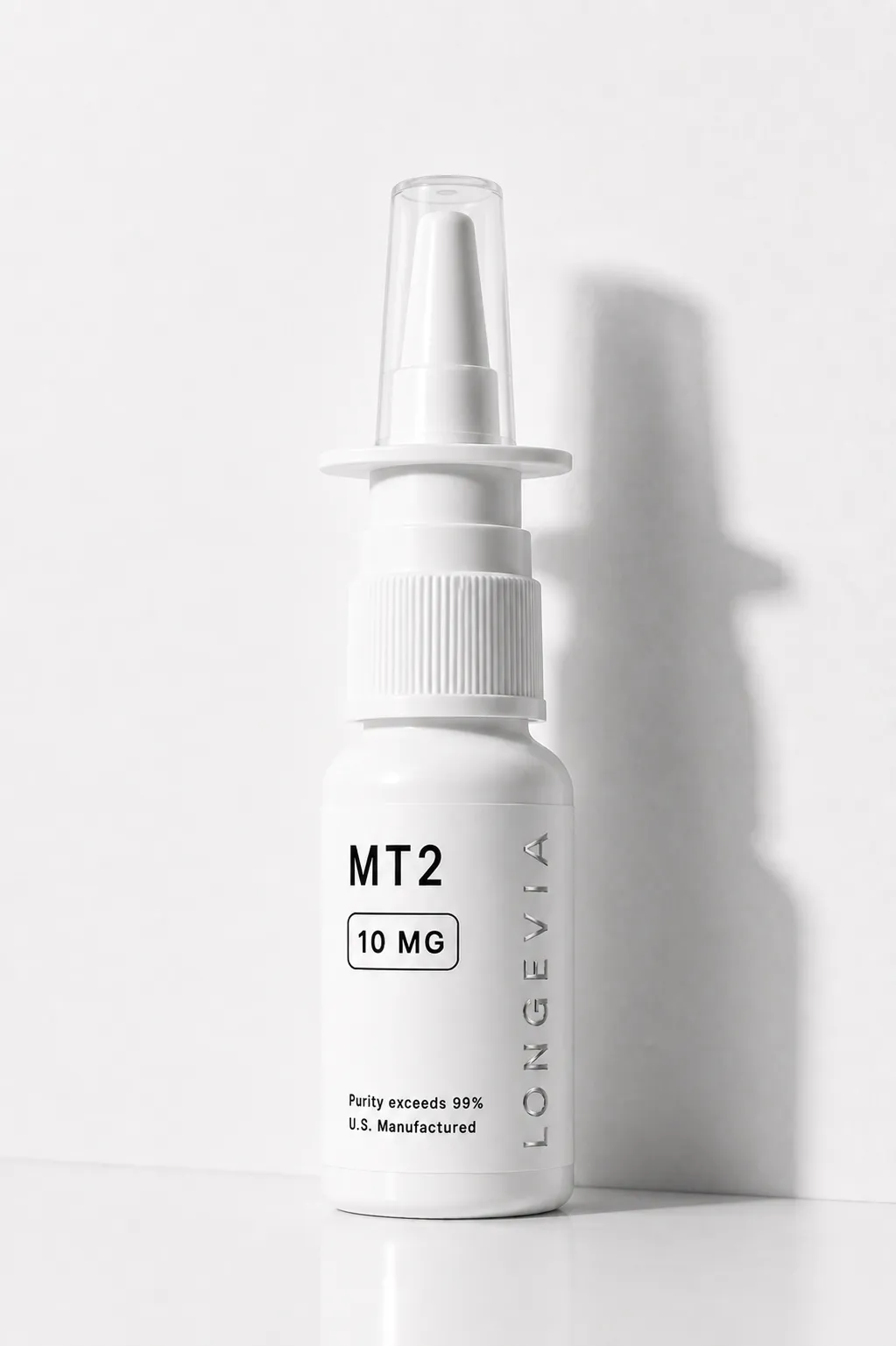
MT-2 Spray
Buy MT-2 Spray, a research-grade Melanotan II preparation in a convenient spray format for melanocortin receptor and pigmentation pathway research. COA-verified, 99%+ purity. Research use only.
$80.00
Slide to add
Product FAQs
Find answers to common questions regarding storage, reconstitution, and testing guidelines for this specific compound.