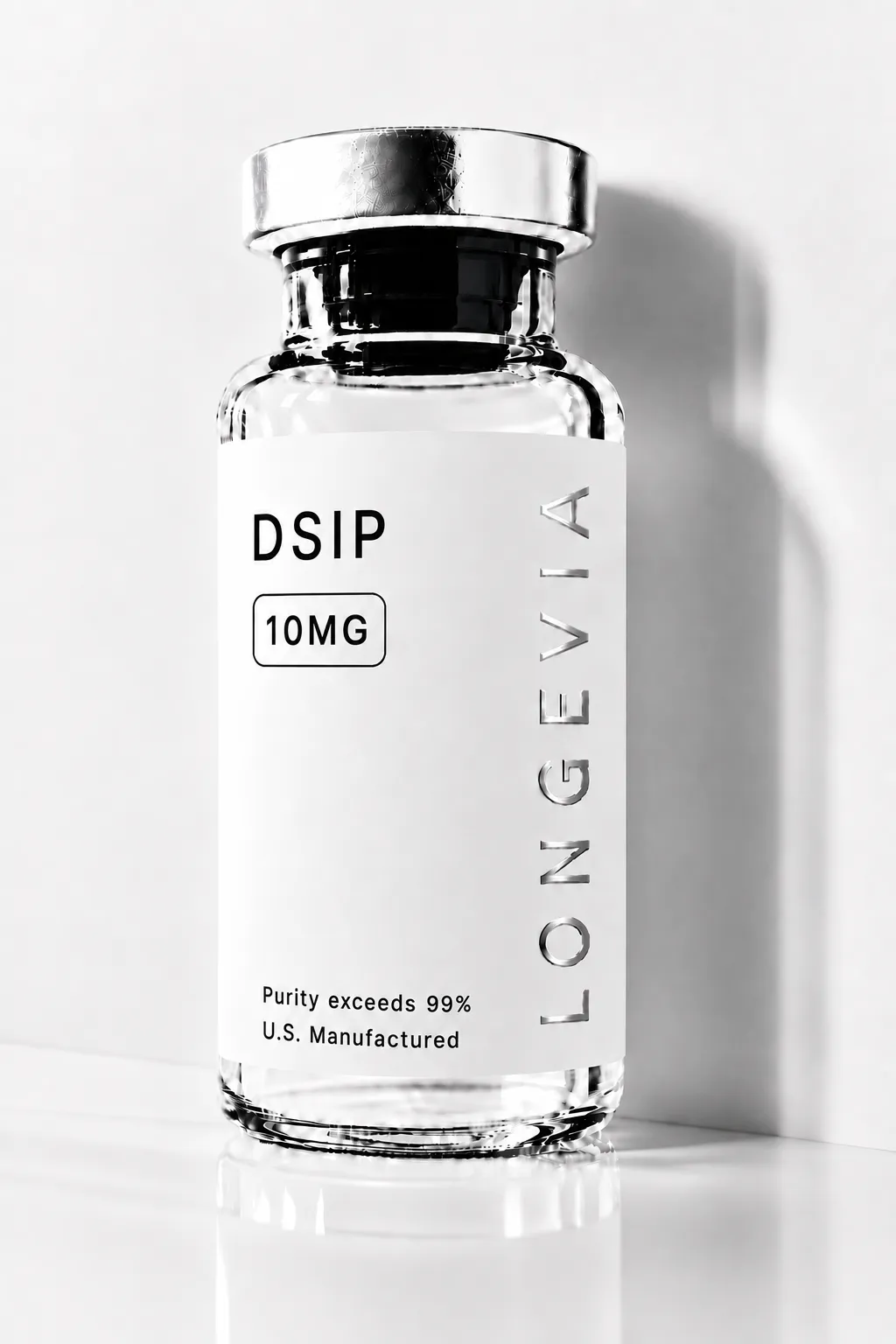
DSIP
$126.00
1
Slide to Add
Purity≥99% Tested
TestingLC-MS Verified
LocationUS Based
DSIP 10mg is a synthetic nonapeptide research compound supplied by Longevia Research for laboratory use only. Known formally as emideltide and by its full name delta sleep-inducing peptide, DSIP carries the nine-residue sequence Trp-Ala-Gly-Gly-Asp-Ala-Ser-Gly-Glu — rendered in single-letter code as WAGGDASGE. The compound was first described in published research in the 1970s in the context of sleep-related electroencephalographic investigations in animal models, and it has since been examined in a range of experimental biological systems. Researchers studying neuroendocrine signalling, circadian biology, and related experimental models have used DSIP as a tool compound. Its precise mechanism of action remains incompletely characterised in the scientific literature.
Standard Delivery3-4 Working Days
Free ShippingOn all orders above $300
Comprehensive Product Details
Scientific identity: DSIP is formally designated emideltide by the International Nonproprietary Name (INN) system. Its full name — delta sleep-inducing peptide — dates to the original literature characterising its association with slow-wave EEG activity in experimental animal preparations. The nine-residue sequence is H-Trp-Ala-Gly-Gly-Asp-Ala-Ser-Gly-Glu-OH, with tryptophan at the N-terminus and glutamic acid at the C-terminus. In single-letter notation this reads WAGGDASGE.
Alternative names: Emideltide · delta sleep-inducing peptide · DSIP nonapeptide · δ-sleep-inducing peptide · Deltaran
Compound class. Synthetic linear nonapeptide. DSIP is a short-chain research compound consisting of nine amino acid residues with molecular weight and solution behaviour characteristic of small synthetic peptides.
Product quantity: 10mg per vial.
Purity: Greater than 99%, confirmed by HPLC and mass spectrometric analysis at the batch level.
Analytical documentation: A batch-specific Certificate of Analysis is available on the Longevia Research website, covering peptide identity, purity, and lot traceability.
Research-use classification: For laboratory research use only. Not for human or veterinary use, clinical diagnostics, or any in-vivo application in humans.
Advanced Research Focus
Delta Sleep-Inducing Peptide (DSIP), also known as emideltide, is a synthetic nonapeptide with the sequence H-Trp-Ala-Gly-Gly-Asp-Ala-Ser-Gly-Glu-OH. It has a molecular weight of approximately 848.8 g/mol. The name reflects its origin: investigators studying slow-wave sleep in rabbit models in the 1970s identified a low-molecular-weight factor in venous dialysate from sleeping animals that appeared to promote delta EEG activity in recipient animals. That observation gave the compound its name — not a proven pharmacological claim.
EEG, Sleep, and Neuroendocrine Research
Animal studies from the 1970s and 1980s examined DSIP in relation to sleep architecture, EEG activity, and sleep-wake transitions. Results varied across experimental conditions and no definitive mechanism was established. Research also examined circadian locomotor activity patterns and HPA axis markers, including ACTH, in animal models. A 2006 review in the Journal of Neurochemistry characterised DSIP as a compound with "still unresolved" biology, noting that after several decades of investigation, its precursor gene, specific receptor, and mechanism had not been conclusively established.
Historical Human Research
Human studies were conducted from the early 1980s through the early 1990s in healthy volunteers and chronic insomnia patients. A 1992 double-blind study in chronic insomnia patients reported modest changes in sleep efficiency and latency but concluded that short-term treatment was unlikely to provide major therapeutic benefit. Results across the human literature were inconsistent, sample sizes were small, and study designs varied substantially. These studies do not constitute evidence of an approved therapeutic effect.
Regulatory Context
In July 2026, the FDA Pharmacy Compounding Advisory Committee reviewed emideltide for possible inclusion on the 503A Bulk Drug Substances List — which identifies substances compounding pharmacies may use in customised formulations. The committee voted against recommending inclusion, citing insufficient physical and chemical characterisation, concerns about synthesis-related impurities, and weak and inconsistent clinical evidence for the proposed uses. The vote is advisory and nonbinding; no final FDA determination has been issued. This process is separate from drug approval and does not constitute either an approval or a prohibition of DSIP as a research compound.
Evidence Limitations and Research Status
DSIP's biological mechanism remains incompletely characterised. No specific receptor has been identified, and its endogenous precursor gene has not been unambiguously established. Most of the primary literature predates current experimental and statistical standards and is best read as exploratory. DSIP has no approved therapeutic indication in any jurisdiction and is supplied for Research Use Only.
Uncompromising Quality Standards
Reliable analytical characterisation is the foundation of reproducible research with any synthetic peptide. For a nine-residue compound such as DSIP, whose synthesis involves sequential residue coupling and deprotection steps, quality documentation should address compound identity at the sequence level, chromatographic purity, and lot traceability.
Purity assessment. Each production lot of Longevia's DSIP 10mg is characterised to greater than 99% purity by high-performance liquid chromatography (HPLC). Chromatographic purity data is reported on the batch Certificate of Analysis.
Identity confirmation. Compound identity is confirmed by mass spectrometric analysis, verifying that the molecular ion is consistent with the expected molecular formula C₃₅H₄₈N₁₀O₁₅ at approximately 848.8 g/mol. This distinguishes the target nonapeptide from truncated sequences, deletion analogues, or oxidation products that can arise during SPPS and purification.
Synthesis and purification. Synthetic DSIP is produced by solid-phase peptide synthesis, then purified by preparative HPLC before lyophilisation to yield the characterised solid supplied in the research vial. The SPPS route permits precise sequence control and is the standard production method for this class of short-chain research peptide.
Batch traceability and Certificate of Analysis. Every vial of DSIP 10mg is traceable to a specific production lot. A batch-specific Certificate of Analysis is accessible on the Longevia Research website, covering identity, purity, and lot information. Researchers are encouraged to consult the current batch documentation before incorporating the material into experimental workflows.
Storage. Lyophilised synthetic peptides should be stored to prevent moisture uptake and photodegradation. Specific storage conditions for this lot are confirmed on the batch Certificate of Analysis and product labelling. Longevia recommends consulting the COA for lot-specific guidance and keeping the vial sealed when not in use.
Legal & Compliance Notice
Longevia Research supplies DSIP 10mg for laboratory and in-vitro research use only. The product is intended for qualified researchers and trained laboratory personnel working in appropriate controlled research environments.
DSIP (emideltide) is a synthetic research compound supplied strictly as a laboratory research tool. It is not a drug, not a dietary supplement, not a food or food ingredient, and not a cosmetic. No regulatory authority has approved DSIP for human or veterinary therapeutic use, and Longevia does not supply this product for administration to humans or animals, for clinical diagnostics, or for any therapeutic purpose.
No therapeutic, diagnostic, or efficacy claims are made for this compound. The historical scientific literature summarised on this page describes experimental observations in animal models and small exploratory human studies; these findings do not establish safety or efficacy for any modern therapeutic application. In July 2026, an FDA advisory committee reviewed emideltide for potential inclusion on the compounding 503A Bulks List and voted against recommending it, citing insufficient characterisation and limited clinical evidence. That process is distinct from drug approval and from any assessment of DSIP as a research material; it is disclosed here for transparency.
Longevia provides no dosing instructions, reconstitution guidance for administration, treatment protocols, or cycle recommendations. The purchaser assumes full responsibility for lawful acquisition, handling, storage, use, and disposal of this material, and for compliance with all applicable local, state, federal, and institutional regulations. By purchasing this product, the buyer confirms that it will be used solely for legitimate laboratory research purposes by qualified personnel, in compliance with applicable law.
Continue Exploring
Also Considered.
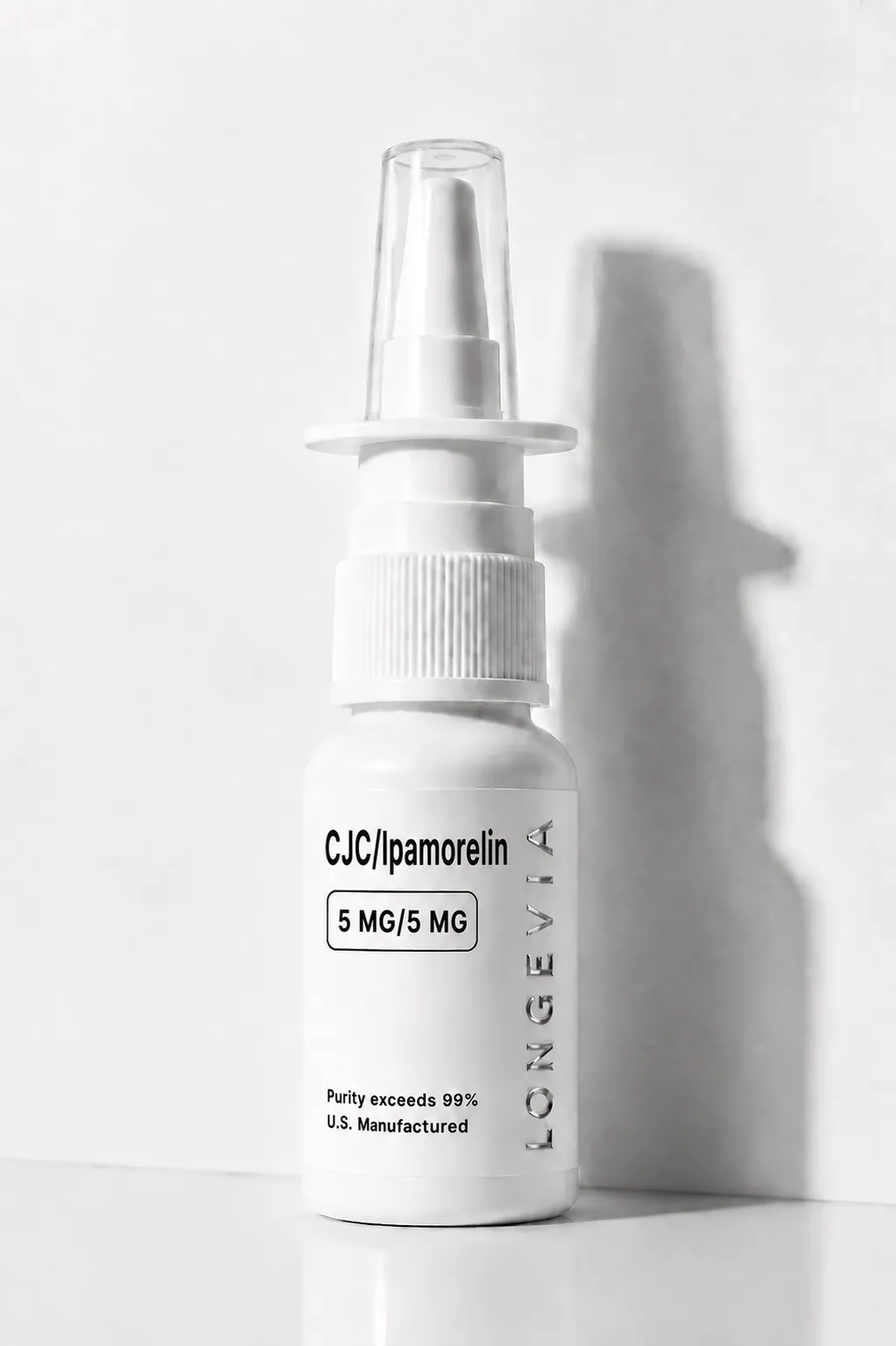
CJC/Ipamorelin 5mg/5mg Spray
CJC/Ipamorelin 5mg/5mg spray — 45 sprays of two distinct synthetic research peptides targeting separate GH-axis receptor systems. Supplied by Longevia Research for laboratory use only. Batch COA available.
$166.50
Slide to add
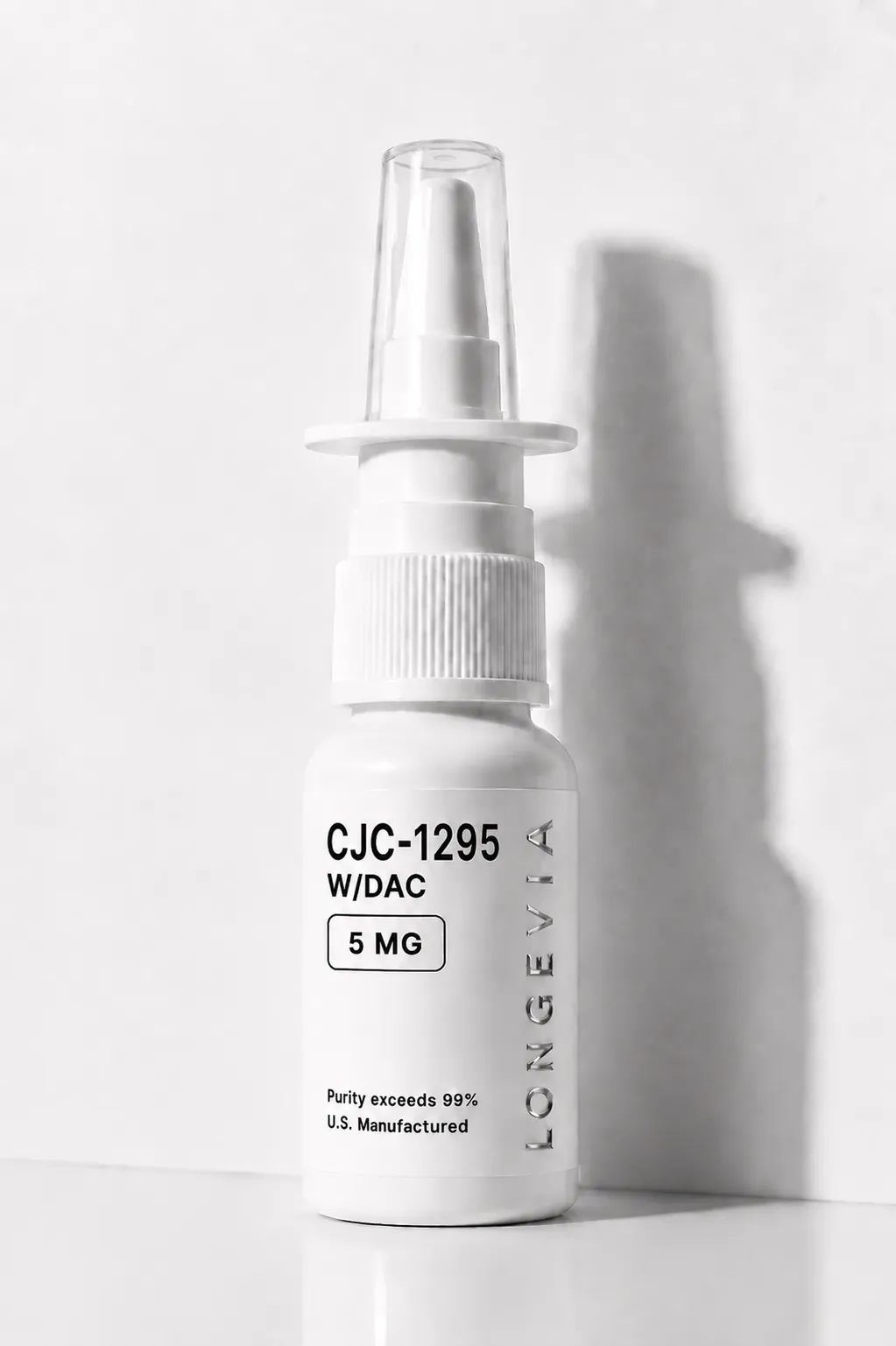
CJC-1295 With DAC 5mg Spray
CJC-1295 with DAC 5mg spray — 45 sprays of the synthetic albumin-binding GHRH analogue (CAS 446262-90-4, ~3,647 Da). Supplied by Longevia Research for laboratory use only. Batch COA available.
$220.50
Slide to add
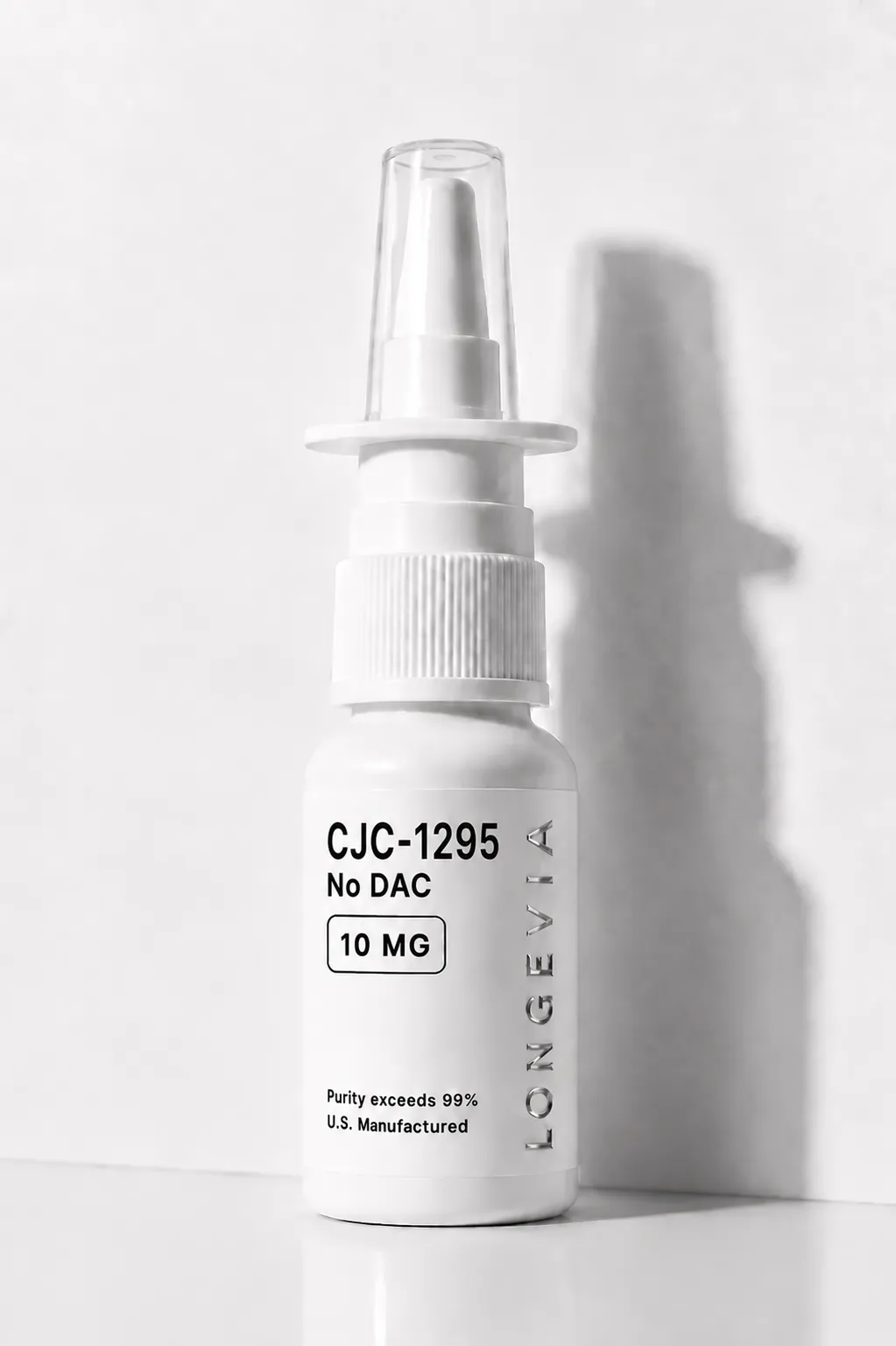
CJC-1295 No DAC 10mg Spray
CJC-1295 No DAC 10mg spray — 45 sprays of Modified GRF (1-29), a synthetic 29-residue GHRH analogue (CAS 446036-97-1, ~3,368 Da). Supplied by Longevia Research for laboratory use only.
$207.00
Slide to add
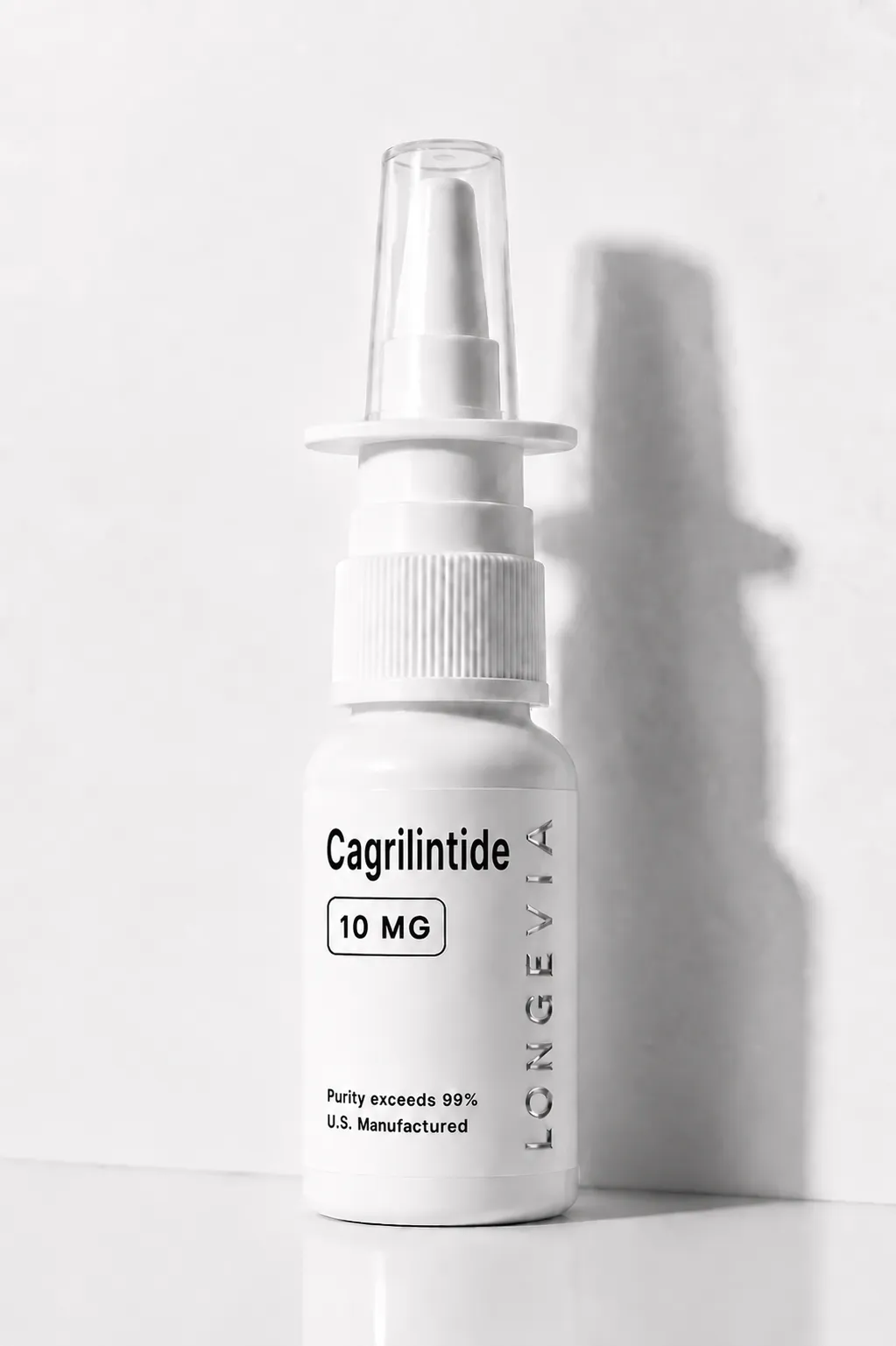
Cagrilintide 10mg Spray
Cagrilintide 10mg spray — 45 sprays of long-acting acylated amylin analogue (AM833, CAS 1415456-99-3, ~4,409 Da). Supplied by Longevia Research for laboratory use only. Batch COA available.
$202.50
Slide to add
Product FAQs
Find answers to common questions regarding storage, reconstitution, and testing guidelines for this specific compound.