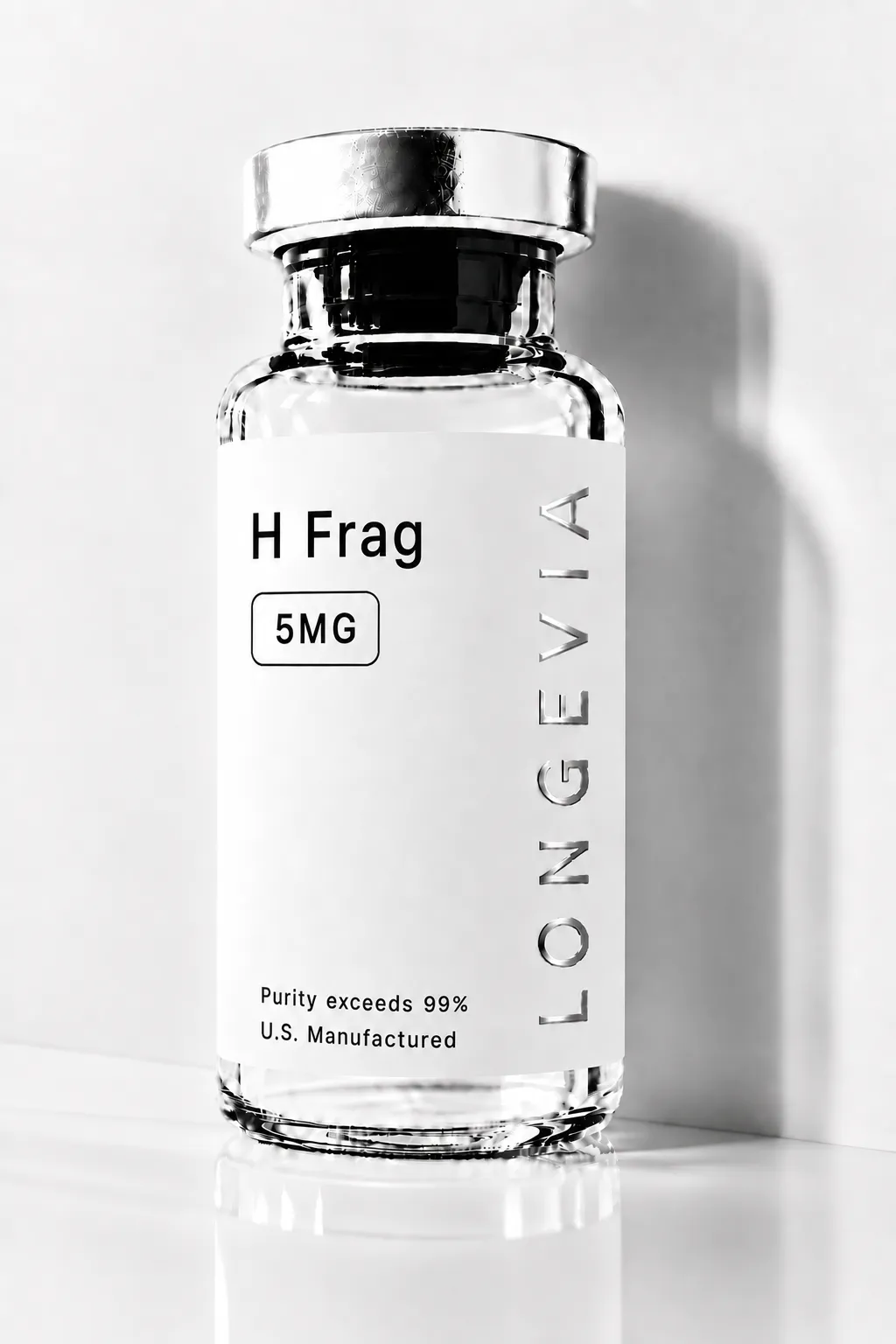
H Frag
$108.00
1
Slide to Add
Purity≥99% Tested
TestingLC-MS Verified
LocationUS Based
H Frag 5mg is a synthetic research peptide supplied by Longevia Research for laboratory use only. The compound is formally designated human growth hormone fragment 176-191 (HGH Frag 176-191) — a 16-residue sequence corresponding to the C-terminal region of the 191-amino-acid human growth hormone polypeptide. The fragment carries an intramolecular disulfide bridge between its two cysteine residues and represents the segment of human growth hormone that has been the focus of preclinical investigation into lipid metabolism biology and related experimental models.
Standard Delivery3-4 Working Days
Free ShippingOn all orders above $300
Comprehensive Product Details
Scientific identity. H Frag is a working shorthand for HGH Fragment 176-191, the native 16-amino-acid peptide corresponding to residues 176 through 191 at the C-terminus of the 191-amino-acid human growth hormone sequence. The full sequence is H-Phe-Leu-Arg-Ile-Val-Gln-Cys-Arg-Ser-Val-Glu-Gly-Ser-Cys-Gly-Phe-OH, rendered in single-letter code as FLRIVQCRSVEGSCGF. The two cysteine residues at positions 7 and 14 of the fragment form an intramolecular disulfide bridge that is structurally important for the fragment's conformation in solution.
A critical identity note: HGH Fragment 176-191 vs AOD-9604. These are two structurally distinct compounds that are frequently conflated in research literature and catalogues. HGH Fragment 176-191 is the native sequence exactly as it occurs in intact human growth hormone: it begins with phenylalanine at the N-terminus. AOD-9604 (Anti-Obesity Drug 9604, also called Tyr-hGH(177-191)) was developed at Monash University and carries a synthetic tyrosine substituted at the N-terminal position, making it effectively one residue longer than the native fragment and chemically distinct. The Longevia product is HGH Fragment 176-191 — the native form.
Product quantity: 5mg per vial.
Purity: Greater than 99%, confirmed by HPLC and mass spectrometric analysis at the batch level.
Analytical documentation: A batch-specific Certificate of Analysis is available on the Longevia Research website, covering peptide identity, purity, and lot traceability.
Research-use classification: For laboratory research use only. Not for human or veterinary use, clinical diagnostics, or any in-vivo application in humans.
Advanced Research Focus
HGH Fragment 176-191 is a 16-residue peptide corresponding to the last sixteen amino acids of human growth hormone (hGH). Early structural work on hGH identified the C-terminal region as the domain associated with the lipolytic activity of the full molecule, while the N-terminal domain carries the anabolic and IGF-1-stimulating properties. This distinction motivated the study of the C-terminal fragment as an isolated research tool — one that could be used to examine lipid metabolism-related activity without engaging the somatotropic pathway.
The fragment contains two cysteine residues that form an intramolecular disulfide bridge, a structural feature shared with the equivalent region of intact hGH and considered relevant to its conformation in experimental systems.
Adipose Biology and Lipid Metabolism Research
The primary research context for HGH Fragment 176-191 is adipocyte biology. Preclinical cell-based studies examined C-terminal hGH fragments for their interaction with adipocyte membrane receptors and capacity to stimulate lipolysis through pathways distinct from the classical GH receptor. Animal studies using the related compound AOD-9604 in diet-induced obese mouse models reported effects on fat mass. One study in beta-3 adrenergic receptor (beta-3 AR) knockout mice found that chronic fat-mass effects were absent in the knockouts while an acute energy expenditure response was partially preserved — findings consistent with, though not conclusively establishing, a beta-3 AR-dependent mechanism in rodents.
The AOD-9604 Distinction
Researchers should note that most published preclinical and clinical literature on this compound class used AOD-9604 — a tyrosine-substituted variant of the native fragment — not HGH Fragment 176-191 itself. The two are chemically distinct but are frequently conflated in secondary literature and catalogues.
AOD-9604 was developed as a pharmaceutical obesity candidate and progressed through human clinical trials. Results did not support drug registration, and pharmaceutical development was discontinued. The compound later received FDA GRAS status for food additive use — a food safety designation, not drug approval. Separately, a 2015 rabbit osteoarthritis study reported improvements in cartilage morphology following intra-articular AOD-9604 injection, representing a distinct early-stage preclinical research area.
None of this human trial data applies directly to HGH Fragment 176-191, which has not been independently studied in human clinical trials.
Additional Research Contexts
A 2022 study in Drug Design, Development and Therapy examined HGH Fragment 176-191-loaded chitosan nanoparticles in combination with doxorubicin against MCF-7 breast cancer cells in vitro. This is a cell-line study with no clinical implications, illustrating the compound's use as a research tool in drug-delivery and oncological chemistry contexts.
Evidence Limitations and Research Status
The receptor binding site, full downstream signalling cascade, and translational relevance of rodent metabolic findings to human physiology remain incompletely characterised. HGH Fragment 176-191 has no approved therapeutic indication and is supplied for Research Use Only.
Uncompromising Quality Standards
Meaningful research with synthetic peptide fragments requires material that is correctly characterised at the sequence, purity, and structural levels. For HGH Fragment 176-191, this includes particular attention to the intramolecular disulfide bridge — if the two cysteine residues are in the reduced rather than oxidised form, the compound's structure and behaviour in solution and in assays will differ from the correctly folded, disulfide-bridged form.
Purity assessment. Each production lot of Longevia's H Frag 5mg is characterised to greater than 99% purity by high-performance liquid chromatography (HPLC). Chromatographic purity data is reported on the batch Certificate of Analysis.
Identity confirmation. Compound identity is confirmed by mass spectrometric analysis, verifying the molecular ion consistent with C₇₈H₁₂₃N₂₃O₂₂S₂ at approximately 1,799 g/mol. Mass spectrometric data distinguishes HGH Fragment 176-191 from AOD-9604 and from truncated or oxidised impurities.
Synthesis and purification. HGH Fragment 176-191 is produced by solid-phase peptide synthesis, followed by disulfide bridge formation, preparative HPLC purification, and lyophilisation to yield a stable, analytically characterised solid research material.
Batch traceability and Certificate of Analysis. Every vial of H Frag 5mg is traceable to a specific production lot. A batch-specific Certificate of Analysis is accessible on the Longevia Research website, covering peptide identity, purity, and lot information. Researchers are encouraged to review the current batch documentation, and to confirm the disulfide bridge status of the material, before use.
Storage. Lyophilised peptides containing disulfide bridges should be stored under conditions that prevent moisture ingress and oxidative stress. Specific storage requirements for this lot are confirmed on the batch Certificate of Analysis and product labelling.
Legal & Compliance Notice
Longevia Research supplies H Frag 5mg (HGH Fragment 176-191) for laboratory and in-vitro research use only. The product is intended for qualified researchers and trained laboratory personnel working in appropriate controlled research environments.
H Frag is a synthetic research peptide supplied strictly as a laboratory research tool. It is not a drug, not a dietary supplement, not a food or food ingredient, and not a cosmetic. No regulatory authority has approved HGH Fragment 176-191 for human or veterinary therapeutic use, and Longevia does not supply this product for administration to humans or animals, for clinical diagnostics, or for any therapeutic purpose.
No therapeutic, diagnostic, or efficacy claims are made for this compound. The scientific literature referenced on this page describes experimental observations in defined cell-based and animal model systems, alongside clinical data pertaining specifically to AOD-9604 — a structurally related but chemically distinct compound. Those findings should not be interpreted as evidence of human efficacy, safety, or fitness for any clinical application for HGH Fragment 176-191 specifically.
Longevia provides no dosing instructions, reconstitution guidance for administration, treatment protocols, or cycle recommendations. The purchaser assumes full responsibility for lawful acquisition, handling, storage, use, and disposal of this material, and for compliance with all applicable local, state, federal, and institutional regulations.
Continue Exploring
Also Considered.
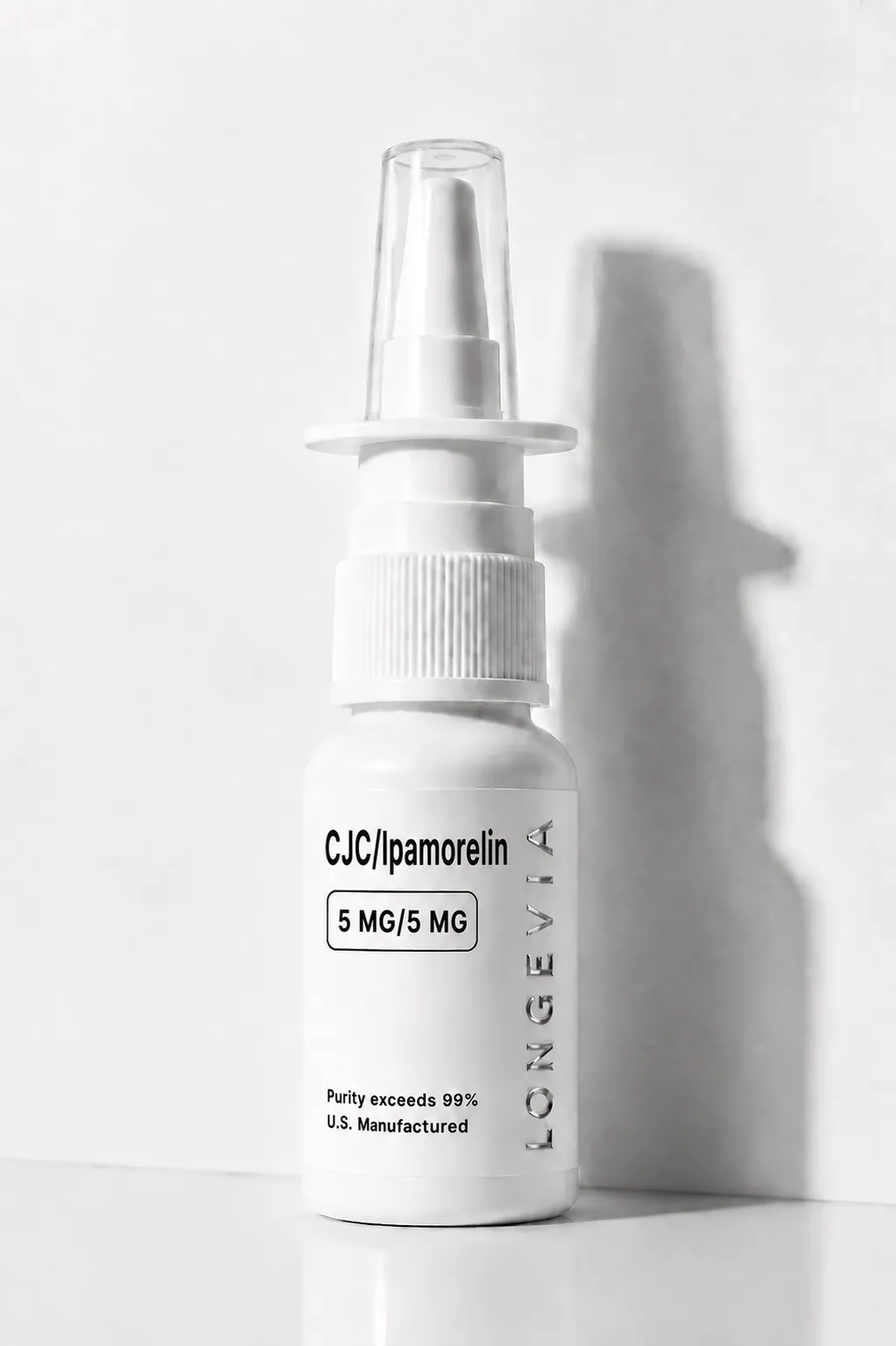
CJC/Ipamorelin 5mg/5mg Spray
CJC/Ipamorelin 5mg/5mg spray — 45 sprays of two distinct synthetic research peptides targeting separate GH-axis receptor systems. Supplied by Longevia Research for laboratory use only. Batch COA available.
$166.50
Slide to add
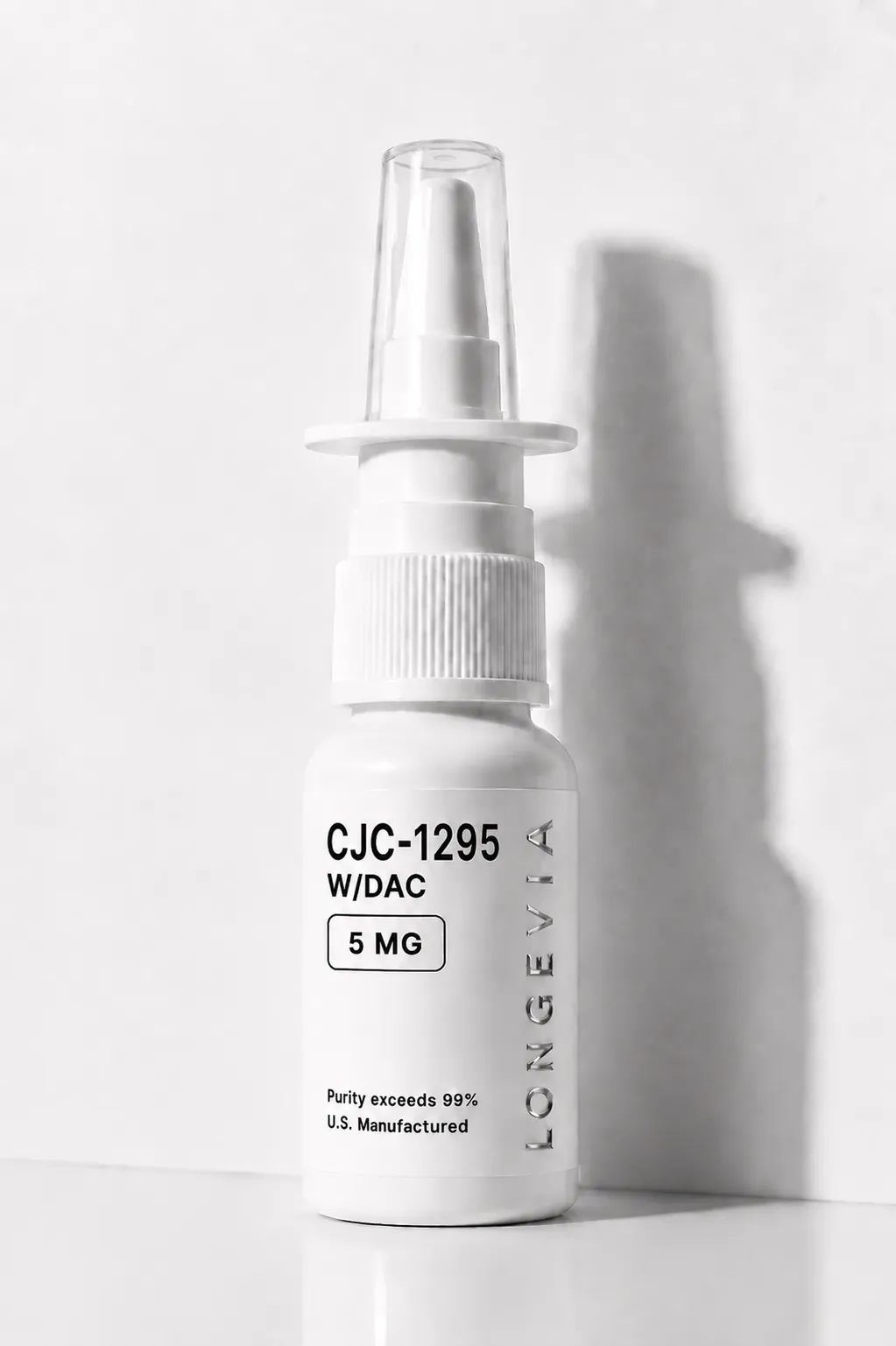
CJC-1295 With DAC 5mg Spray
CJC-1295 with DAC 5mg spray — 45 sprays of the synthetic albumin-binding GHRH analogue (CAS 446262-90-4, ~3,647 Da). Supplied by Longevia Research for laboratory use only. Batch COA available.
$220.50
Slide to add
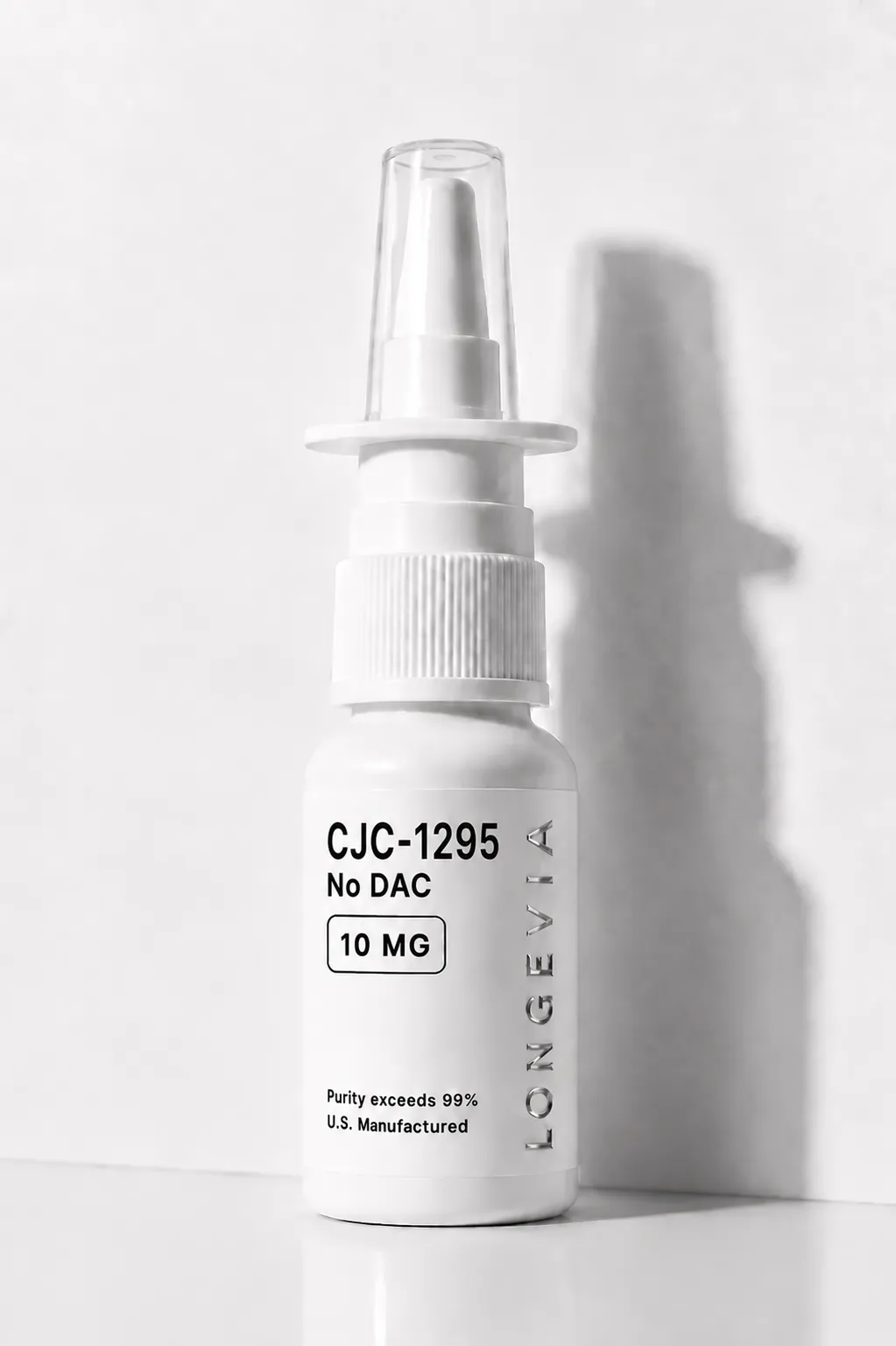
CJC-1295 No DAC 10mg Spray
CJC-1295 No DAC 10mg spray — 45 sprays of Modified GRF (1-29), a synthetic 29-residue GHRH analogue (CAS 446036-97-1, ~3,368 Da). Supplied by Longevia Research for laboratory use only.
$207.00
Slide to add
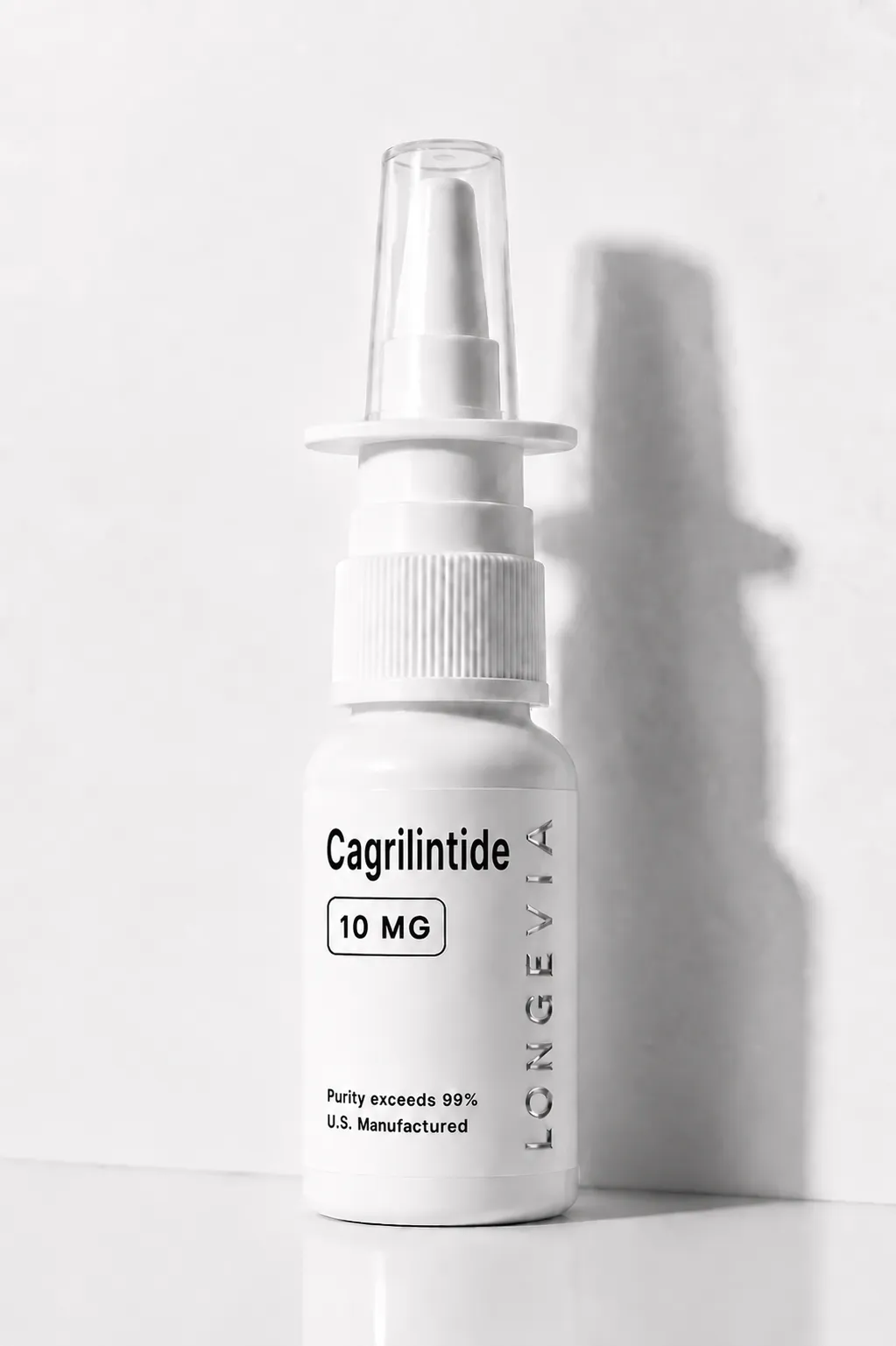
Cagrilintide 10mg Spray
Cagrilintide 10mg spray — 45 sprays of long-acting acylated amylin analogue (AM833, CAS 1415456-99-3, ~4,409 Da). Supplied by Longevia Research for laboratory use only. Batch COA available.
$202.50
Slide to add
Product FAQs
Find answers to common questions regarding storage, reconstitution, and testing guidelines for this specific compound.