- Peptide research is the scientific study of short amino acid chains and their biological signaling functions.
- Research peptides are labeled Research Use Only (RUO) and are not approved for human consumption.
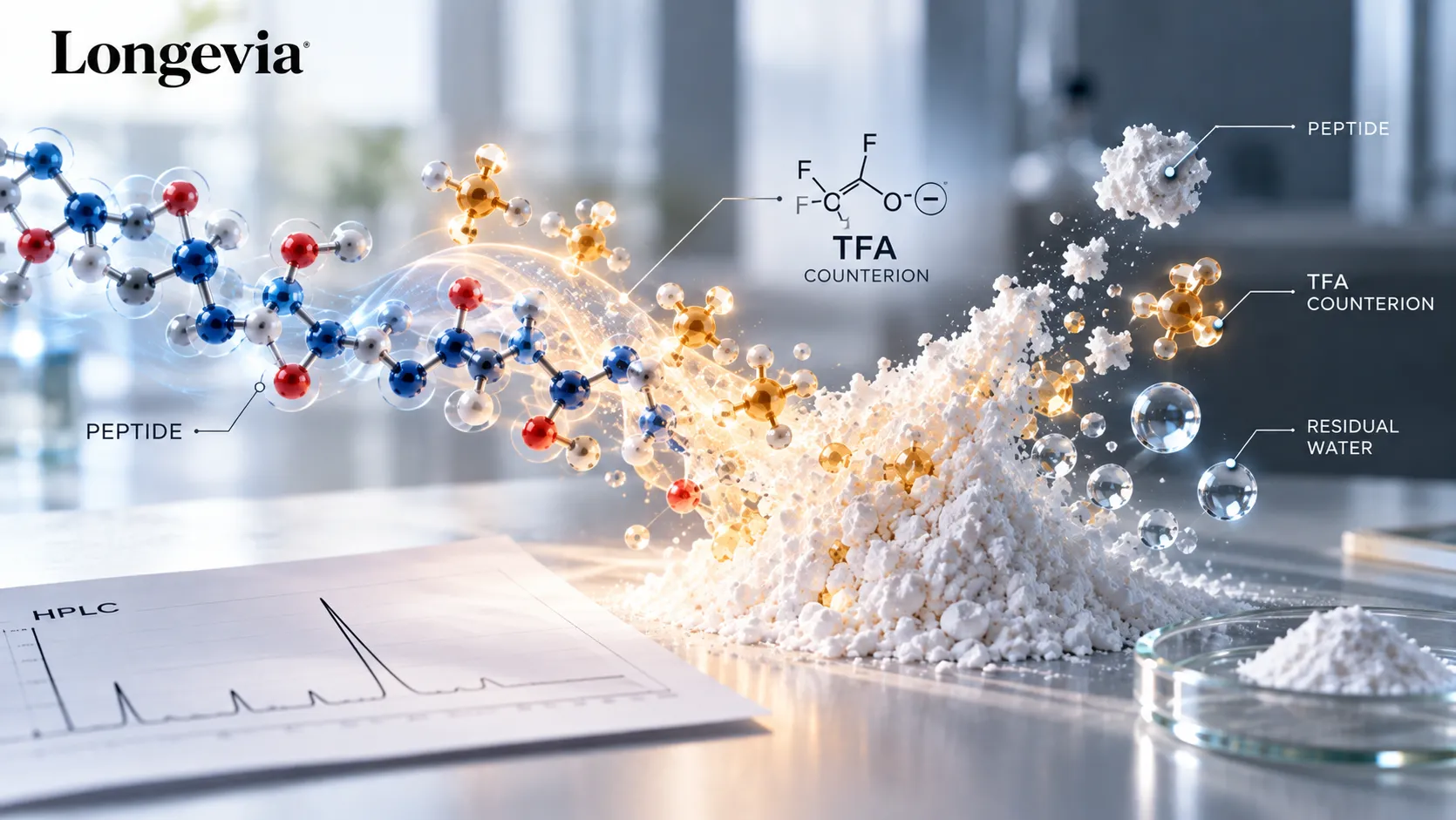
- Purity testing via HPLC and mass spectrometry, backed by a batch-specific COA, is the standard for verifying peptide quality.
- RUO peptides are legal to purchase for laboratory research in the U.S., but regulations vary by compound and can change.
- A reputable supplier provides transparent, third-party-verified documentation for every batch it sells.
If you've started digging into peptide research online, you've probably noticed the same problem everyone runs into: the information is scattered, inconsistent, and often written for people who already have a biochemistry background. That's a frustrating place to start. This guide fixes that by walking through peptide research from the ground up — what it actually is, how peptides work at the molecular level, why purity and testing standards matter so much, and what "Research Use Only" really means from a legal standpoint.
By the end, you'll understand the core vocabulary of peptide research, know how to evaluate the quality and credibility of a research peptide supplier, and be able to separate legitimate scientific information from marketing hype.
What Is Peptide Research?
Peptide research is the scientific study of peptides — short chains of amino acids linked by peptide bonds — to understand their structure, biological function, and potential applications. Researchers examine how peptides interact with receptors, influence cellular signaling, and behave under different laboratory conditions. Peptides used for this purpose are manufactured and sold under a "Research Use Only" (RUO) designation, meaning they are intended exclusively for qualified laboratory and academic research, not for human or animal consumption.
Peptide research sits at the intersection of biochemistry, molecular biology, and pharmacology. It's carried out by researchers, biochemists, lab technicians, and academic institutions studying how these small but powerful molecules function.
Key Definition — A research peptide is a short amino acid chain manufactured for laboratory study, labeled Research Use Only (RUO), and not approved by the FDA for human use. RUO status means the product is intended strictly for qualified researchers operating in a controlled laboratory setting.
The Science of Peptides: Amino Acids, Bonds, and Structure
What Is a Peptide, Exactly?
A peptide is a molecule formed when two or more amino acids link together through a chemical bond called a peptide bond. Amino acids are the basic building blocks of biology — the same units that make up proteins. What separates a peptide from a protein is largely chain length: peptides are shorter chains (generally under 50 amino acids), while proteins are longer, more complex structures that often fold into three-dimensional shapes.
Peptide Bonds and Chain Length
A peptide bond forms when the carboxyl group of one amino acid reacts with the amino group of another, releasing a water molecule in the process. This bond is the structural backbone of every peptide chain. Chain length matters scientifically because it influences a peptide's molecular weight, stability, and how it interacts with receptors — all core variables in peptide research.
How Peptides Are Synthesized
Most research peptides are produced using solid-phase peptide synthesis (SPPS), a laboratory technique where amino acids are added one at a time to a growing chain anchored to a solid resin. This method allows researchers and manufacturers to build peptides with a specific, controlled amino acid sequence — a level of precision that's essential for reproducible research results.
How Do Peptides Work at the Cellular Level?
Peptides are signaling molecules. In biological systems, they typically work by binding to specific receptors on the surface of a cell, which triggers a cascade of internal reactions — what scientists call a cellular signaling pathway. Depending on the peptide and the receptor it targets, this signaling can influence processes such as hormone regulation, metabolic activity, and cell growth.
This receptor-binding behavior is one of the main reasons peptides are of scientific interest: because they're highly specific to certain receptors, they can be used as precise research tools to study particular biological pathways, compared to broader-acting compounds.
Peptides vs. Proteins vs. Amino Acids: What's the Difference?
These three terms are related but not interchangeable. Here's how researchers distinguish them:
Term | Definition | Typical Size |
|---|---|---|
Amino acid | A single organic molecule; the basic building block of peptides and proteins | 1 unit |
Peptide | A short chain of amino acids linked by peptide bonds | 2-50 amino acids |
Protein | A large, complex molecule made of one or more folded peptide chains | 50+ amino acids |
Categories of Research Peptides
Published peptide research spans a wide range of biological systems. While the specific findings vary study by study, most research peptides fall into a few broad categories based on the biological pathway being studied.
Longevity and Anti-Aging Research
A significant share of current peptide research examines cellular aging, tissue repair mechanisms, and longevity-related pathways — an area of growing interest across academic and pharmaceutical research alike.
Metabolic Research
Some peptides are studied for their role in metabolic regulation, including how the body processes energy and manages weight-related biological pathways at the cellular level.
Cognitive Research
Peptide research in this category focuses on neural signaling and cognitive function, exploring how certain peptides interact with pathways relevant to brain health.
Recovery and Regenerative Research
This category covers peptides studied for their involvement in tissue repair and recovery processes, an area with applications across sports science and regenerative medicine research.
Purity, Testing & Quality Standards in Peptide Research
Why Purity Matters
Purity is one of the single most important factors in peptide research. Even small impurities — leftover synthesis byproducts, incorrect amino acid sequences, or degraded peptide fragments — can compromise research results and make findings impossible to reproduce. This is why credible research peptide suppliers publish third-party purity testing for every batch. Read our full guide on why peptide purity matters for a deeper look at testing methods.
How Purity Is Measured
- High-Performance Liquid Chromatography (HPLC): separates and quantifies the components of a peptide sample to confirm purity percentage.
- Mass spectrometry: verifies that the peptide's molecular weight matches its intended amino acid sequence.
Together, these two methods are the industry standard for confirming that a research peptide is what it claims to be.
Reading a Certificate of Analysis (COA)
A certificate of analysis (COA) is a lab document that reports a peptide batch's purity percentage, molecular weight, and testing method. A trustworthy supplier provides a batch-specific COA for every product — not a generic or outdated one — so researchers can verify what they're working with before starting a study. Longevia publishes batch-specific COAs for every research peptide it sells.
Research Grade vs. Pharmaceutical Grade Peptides
Attribute | Research Grade (RUO) | Pharmaceutical Grade |
|---|---|---|
Intended use | Laboratory research only | Approved for human medical use |
Regulatory status | Not FDA-approved for human use | FDA-approved through clinical trials |
Typical purity threshold | Commonly 98%+, verified by COA | Meets pharmacopeial (USP/EP) standards |
Oversight | Manufacturer/third-party lab testing | FDA manufacturing and quality oversight |
Is Peptide Research Legal? Understanding RUO Status
In the United States, many research peptides can be legally manufactured, sold, and purchased for laboratory research purposes under Research Use Only (RUO) status. This designation means the product has not gone through FDA approval for human use and is not intended for human consumption, diagnostic use, or therapeutic application. Legitimate suppliers state this clearly on product labeling and documentation — see our research-use disclaimer for the full compliance context.
Regulatory oversight in this space is evolving, and specific compounds can be subject to additional restrictions depending on their classification. Anyone involved in peptide research should review current FDA guidance and consult a qualified professional or legal advisor regarding the regulatory status of a specific compound before purchasing or working with it.
Quick Answer: Is Peptide Research Legal? Research peptides sold under RUO status are generally legal to purchase for laboratory research in the U.S. RUO peptides are not approved by the FDA for human use, treatment, or self-administration. Regulations vary by compound and can change — always verify current status before purchasing.
Safety and Handling Considerations in a Research Setting
Proper handling is a foundational part of credible peptide research, and it starts with who is doing the handling: qualified researchers working in an appropriately equipped laboratory environment. A few standards are common across research-grade peptide handling practices:
- Peptides are handled by trained personnel following standard laboratory safety protocols.
- Products are stored according to manufacturer specifications, typically requiring refrigerated or frozen storage to preserve stability.
- Sterile technique is used during any laboratory preparation to prevent contamination of samples.
- Products are clearly labeled RUO and kept out of any workflow involving human or animal treatment.
Because research peptides are not approved for human use, questions about dosing, administration, or self-use fall outside the scope of research handling and outside what any RUO supplier or informational resource can appropriately advise on. Anyone with questions along those lines should speak with a licensed medical professional.
How to Choose a Reputable Research Peptide Supplier
Not all suppliers hold themselves to the same standard. Use this checklist to evaluate a research peptide supplier before purchasing:
- Batch-specific COA: the supplier publishes a current certificate of analysis for the exact batch you're purchasing, not a generic product-level document.
- Third-party testing: purity is verified by an independent lab, not just the manufacturer's own internal testing.
- Clear RUO labeling: product pages and packaging clearly state the peptide is for research use only and not for human consumption.
- Transparent sourcing: the supplier can describe its manufacturing and quality-control process.
- No medical claims: reputable suppliers avoid language suggesting a peptide treats, cures, or prevents any condition.
- Responsive support: a knowledgeable team that can answer sourcing and documentation questions. Contact our research support team with any sourcing questions.
Common Mistakes to Avoid When Evaluating Research Peptides
- Assuming a low price signals good value — it often signals skipped purity testing.
- Treating marketplace reviews as a substitute for a verified certificate of analysis.
- Confusing RUO status with clinical- or pharmaceutical-grade approval.
- Assuming high purity alone confirms a peptide is appropriate for a given research use — sequence and structure verification matter too.
- Overlooking a supplier's storage and shipping practices, which directly affect peptide stability.