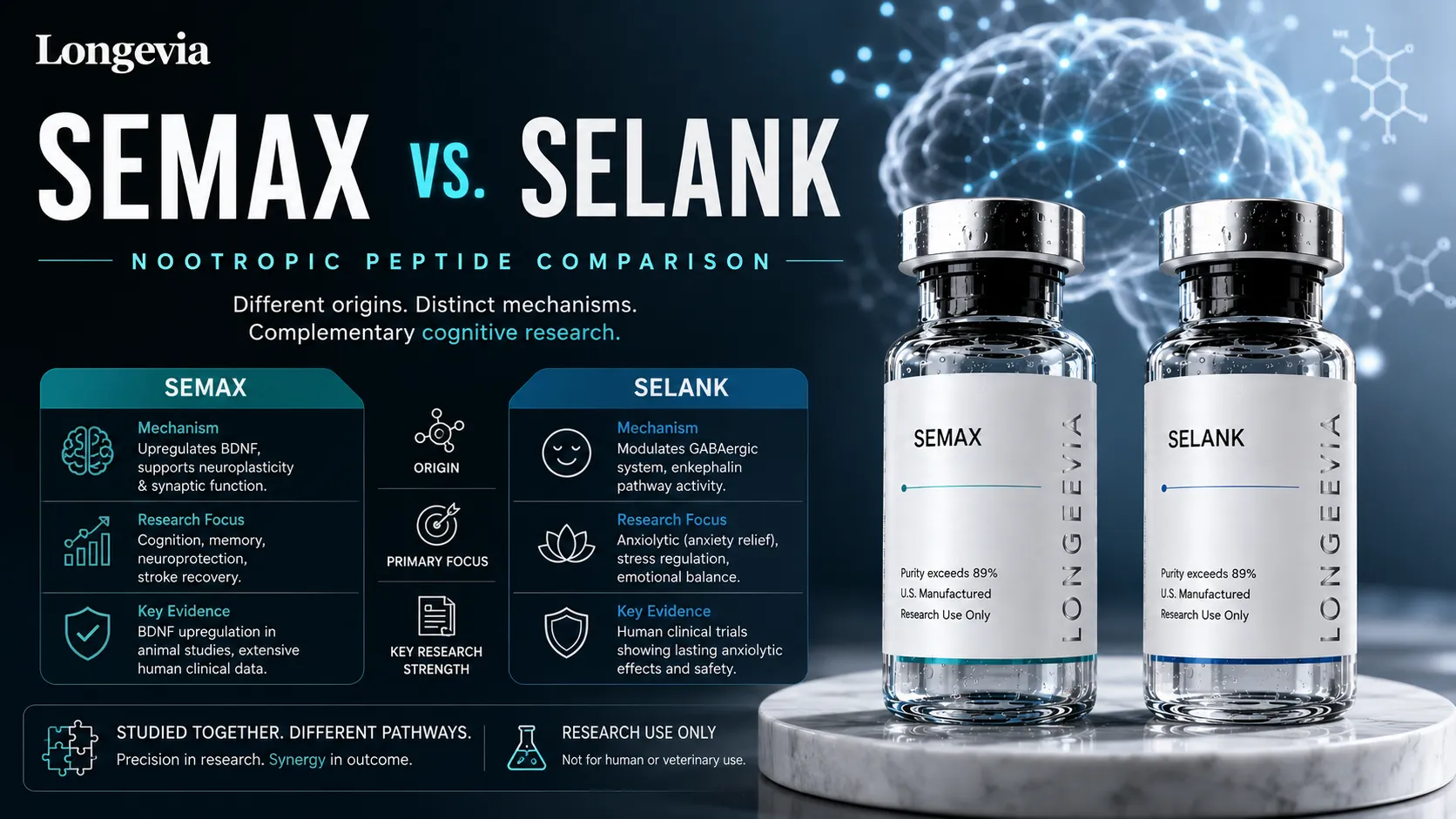
- Semax is an ACTH(4-10) analog primarily associated with BDNF upregulation and neurotrophic/cognitive research applications.
- Selank is a tuftsin analog primarily associated with anxiolytic and antiasthenic effects via proposed GABAergic modulation.
- Both compounds share a protective Pro-Gly-Pro structural extension but have distinct primary mechanisms and research literatures.
- A direct neuroimaging comparison found Semax and Selank produce measurably different whole-brain functional connectivity signatures.
- Both compounds have unusually substantial published human clinical data for research peptides, primarily from Russian clinical settings.
- Most published research uses intranasal administration, a meaningfully different route from injectable dosing used for many other research peptides.
- Neither compound is FDA-approved for any indication; both are properly classified Research Use Only in the United States.
- Semax has been a registered pharmaceutical drug in Russia since 1994 for ischemic stroke and cognitive impairment, generating an unusually deep real-world clinical literature.
- Semax is scheduled for FDA Pharmacy Compounding Advisory Committee review on July 24, 2026, evaluating it for cerebral ischemia, migraine, and trigeminal neuralgia.
Semax
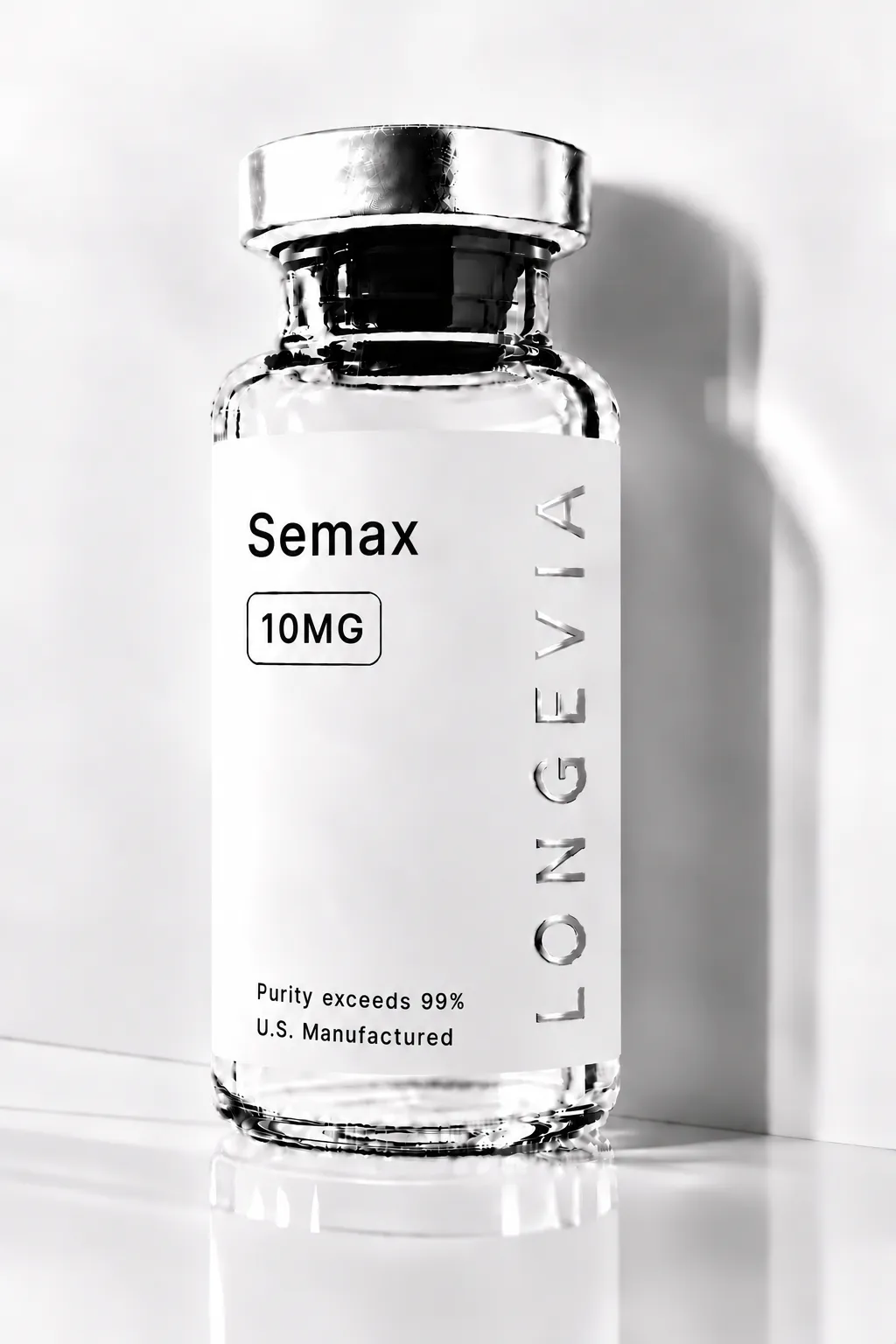
Semax is a synthetic heptapeptide analogue of the ACTH(4–7) core sequence investigated in research involving neuropeptide signalling, BDNF expression, melanocortin receptor biology, and central nervous system research models. Available in 10mg and 30mg vials. Research Use Only — Longevia Research.
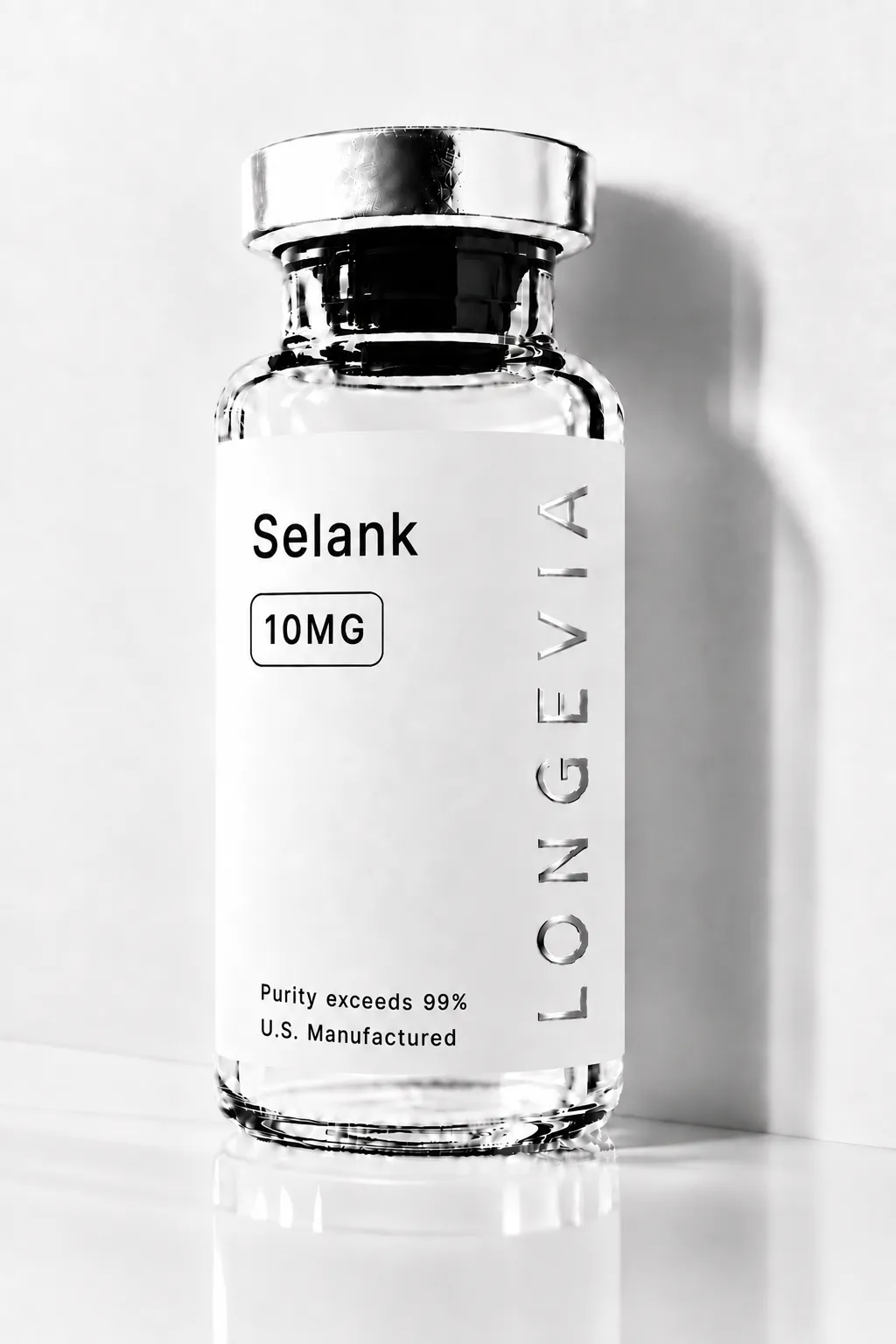
Selank
Selank 10mg — a synthetic heptapeptide tuftsin analogue (TKPRPGP) studied in neurobiology and GABAergic signalling research. Supplied by Longevia Research for laboratory use only. Batch COA available.
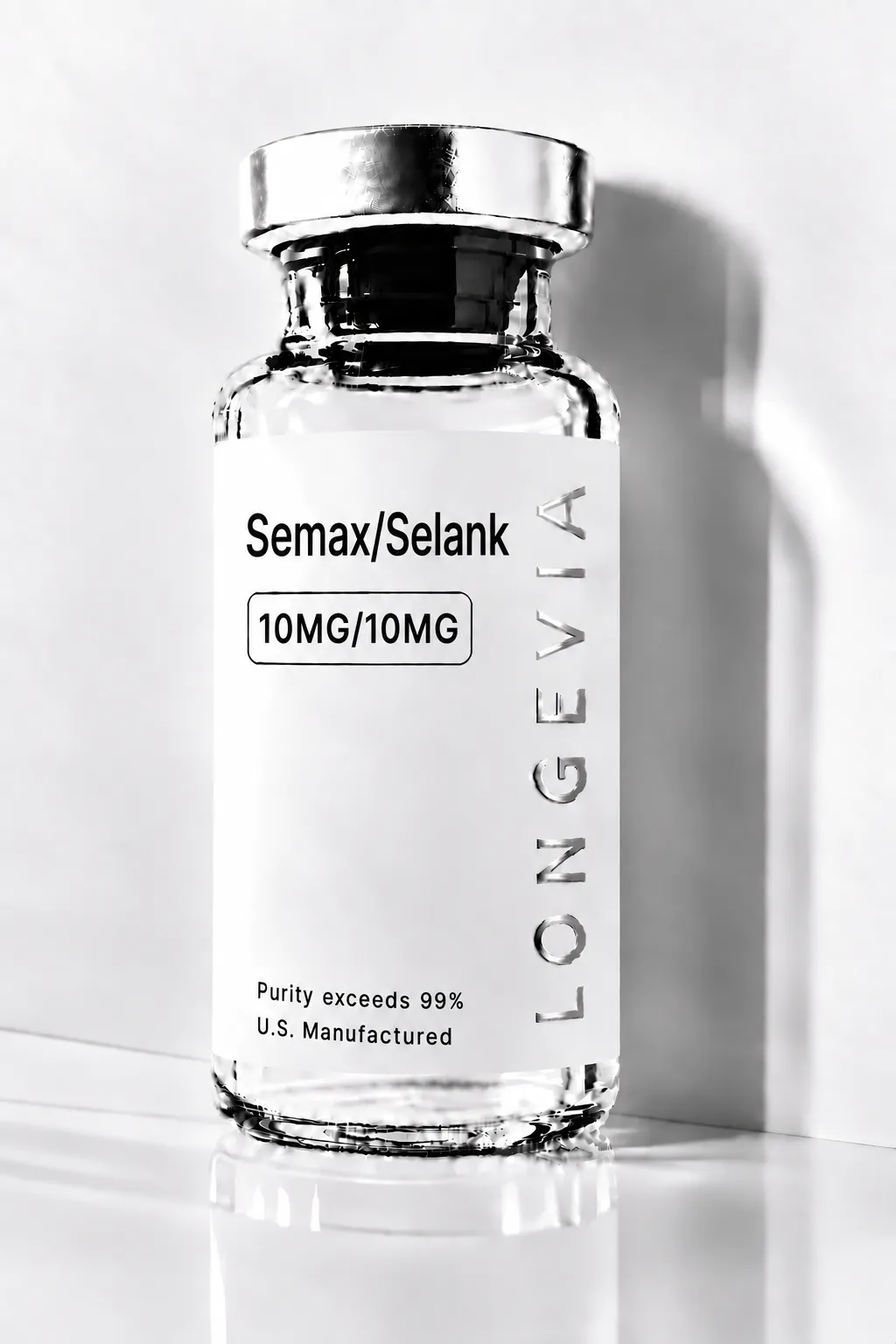
Semax / Selank
Semax/Selank Blend combines 10mg of Semax (ACTH(4–7) analogue) and 10mg of Selank (tuftsin analogue) in a single research vial, investigated in neuropeptide signalling, BDNF pathway, and GABAergic/anxiolytic biology research. Research Use Only — Longevia Research.
Semax
Semax is a synthetic heptapeptide analogue of the ACTH(4–7) core sequence investigated in research involving neuropeptide signalling, BDNF expression, melanocortin receptor biology, and central nervous system research models. Available in 10mg and 30mg vials. Research Use Only — Longevia Research.
Selank
Selank 10mg — a synthetic heptapeptide tuftsin analogue (TKPRPGP) studied in neurobiology and GABAergic signalling research. Supplied by Longevia Research for laboratory use only. Batch COA available.
Semax / Selank
Semax/Selank Blend combines 10mg of Semax (ACTH(4–7) analogue) and 10mg of Selank (tuftsin analogue) in a single research vial, investigated in neuropeptide signalling, BDNF pathway, and GABAergic/anxiolytic biology research. Research Use Only — Longevia Research.
Few peptide comparisons generate as much search interest, or as much genuine confusion, as Semax and Selank. Semax and Selank are consistently studied together, compared against each other, and stacked together in research protocols — but they are structurally unrelated peptides with different origins, different primary mechanisms, and different research literatures. Understanding where they overlap and where they genuinely diverge is more useful for research design than treating them as interchangeable "nootropic peptides," which is how they are frequently marketed.
Both compounds were developed in Russia at research institutes with a decades-long tradition of regulatory peptide research, and both have a body of published human clinical literature that is unusually substantial for peptides in this general category — most cognitive-research peptides have only preclinical animal data available. That human evidence base is precisely why Semax and Selank are considered, per current search-and-competition analysis, among the lowest-competition, highest-opportunity compounds in peptide content: there is real published science to discuss, and comparatively little authoritative content doing so.
What Semax is and how it works
Semax (Met-Glu-His-Phe-Pro-Gly-Pro) is a synthetic heptapeptide developed at Moscow State University as an analog of ACTH(4-10), the adrenocorticotropic hormone fragment associated with cognitive and neurotrophic effects but stripped of the steroidogenic activity of full-length ACTH. [1] The added C-terminal Pro-Gly-Pro sequence protects the peptide against rapid enzymatic degradation, extending its functional half-life compared with the unmodified ACTH fragment.
The most consistently reported mechanism across the Semax literature is upregulation of brain-derived neurotrophic factor (BDNF). Rodent studies have demonstrated significant increases in BDNF mRNA and protein expression in the hippocampus and frontal cortex following Semax administration — tissue regions centrally involved in synaptic plasticity, memory consolidation, and neuronal survival. [1][2] Because BDNF signaling is one of the most heavily studied pathways in neuroplasticity research generally, Semax's reported effect on this specific pathway is what gives it mechanistic plausibility beyond anecdotal cognitive-enhancement claims.
Semax's C-terminal Pro-Gly-Pro extension is not a cosmetic modification — it is the structural feature that distinguishes it from the native ACTH(4-10) fragment, extending resistance to enzymatic breakdown while eliminating the adrenal-stimulating activity associated with full-length ACTH.
What Selank is and how it works
Selank is a synthetic heptapeptide derivative of tuftsin, an endogenous immunomodulatory tetrapeptide, extended with the same Pro-Gly-Pro protective sequence used in Semax. Its research literature centers on anxiolytic (anxiety-reducing) effects rather than the cognitive-enhancement framing more commonly applied to Semax, though the two compounds share overlapping downstream effects on BDNF expression in some study designs.
A published clinical study compared Selank against medazepam (a benzodiazepine) in 62 patients with generalized anxiety disorder and neurasthenia, finding broadly comparable anxiolytic effect between the two, with Selank additionally showing antiasthenic (anti-fatigue) and mild psychostimulant properties not typical of benzodiazepine treatment. [3] A separate study in 60 patients reported that Selank's anxiolytic effect persisted for approximately a week after the dosing period ended — a finding of particular research interest because it suggests a mechanism distinct from the receptor-occupancy-dependent effect typical of benzodiazepines, which lose effect essentially immediately after clearance. [4]
Selank's proposed mechanism involves modulation of the GABAergic system and inhibition of enkephalin-degrading enzymes, which would be expected to prolong the activity of endogenous opioid peptides involved in stress and anxiety regulation — though the complete mechanistic picture remains an active research question rather than settled pharmacology. [5]
Semax's Russian regulatory history and stroke research
Unlike most peptides discussed in this category, Semax is not merely a research chemical with scattered preclinical data — it has been a registered pharmaceutical drug in Russia since 1994, approved there for ischemic stroke, transient ischemic attack recovery, cognitive impairment following head injury, and several additional neurological indications. [7] This registration status is the direct source of Semax's unusually deep human clinical literature: Russian hospitals have used it routinely enough in acute and subacute stroke protocols to generate real-world outcome data spanning decades, not just controlled trial cohorts.
Published Russian clinical work describes intranasal Semax administered within 6 to 12 hours of ischemic stroke symptom onset, typically at 9 to 18 mg per day via a 1% intranasal solution, with reported improvements in neurological recovery scores, functional outcomes, and — in some trial reports — lower mortality when Semax was added to standard stroke care protocols. [7] This body of evidence is substantial by research-peptide standards, but it originates almost entirely from a single national clinical system using its own trial and reporting conventions, which is why it should be read as strong preliminary and real-world evidence rather than as equivalent to an FDA-completed trial program.
Semax has never been evaluated or approved by the FDA for any indication in the United States. Its Russian pharmaceutical registration does not transfer to U.S. regulatory status, and stroke-recovery dosing data from that literature should never be treated as a self-administration protocol.
This regulatory gap is narrowing in relevance, not widening: Semax is one of several peptides scheduled for review by the FDA's Pharmacy Compounding Advisory Committee (PCAC) on July 24, 2026, specifically evaluating it for cerebral ischemia, migraine, and trigeminal neuralgia indications, and considering its potential inclusion on the Section 503A Bulk Drug Substances List. [7] That is the same PCAC session date on which Epithalon was separately reviewed — see Longevia's Epithalon research guide for the parallel regulatory story. A PCAC review recommendation is a meaningful regulatory signal, but it is a recommendation step within a longer process, not an approval, and researchers should track the committee's actual published outcome rather than assuming a review date implies a particular result.
Direct comparison: mechanism and research focus
Attribute | Semax | Selank |
|---|---|---|
Structural origin | ACTH(4-10) analog | Tuftsin analog |
Primary reported mechanism | BDNF upregulation in hippocampus/cortex | GABAergic modulation, enkephalin protection |
Primary research framing | Cognitive enhancement, neuroprotection | Anxiolytic, antiasthenic |
Published human data | Clinical use in Russia for cognitive/stroke-adjacent research contexts | RCT-style comparison vs. medazepam in GAD |
Typical co-study design | Often paired with Selank in connectomic imaging studies | Often paired with Semax in connectomic imaging studies |
A functional neuroimaging study specifically designed to compare both peptides assessed their effects on whole-brain resting-state functional connectivity in 52 healthy participants, finding that Semax and Selank produced measurably different connectivity signatures — direct evidence that the two compounds are not mechanistically redundant despite frequently being grouped together under the same "nootropic peptide" umbrella. [6]
When designing a comparative study, treat Semax and Selank as testing two different hypotheses — neurotrophic/cognitive versus anxiolytic/GABAergic — rather than as two doses of the same underlying effect. The connectomic imaging data supports genuinely distinct network-level effects. [6]
Why researchers study them together
The rationale for combined study designs is not that the compounds do the same thing, but that their proposed mechanisms are potentially complementary: a BDNF-mediated plasticity effect (Semax) alongside a GABAergic anxiolytic effect (Selank) addresses two different variables that commonly confound cognitive-performance research — anxiety is itself a well-documented confounder of cognitive testing, so a compound that reduces anxiety could clarify whether a cognitive effect from a co-administered compound is genuine or partially an artifact of reduced test anxiety.
This is a scientifically coherent rationale for a combined study, but it is a hypothesis about experimental design, not established evidence that combining the compounds produces a synergistic effect beyond their individually documented actions. Researchers should treat "stacking" claims with the same evidentiary skepticism as any other unstudied combination — see Longevia's general guide to peptide stacking considerations for compatibility and documentation principles that apply to any multi-compound protocol.
Administration route and research handling
Both Semax and Selank are most commonly studied via intranasal administration in the published Russian clinical literature, which is a meaningfully different route from the subcutaneous injection route used for most other research peptides in this catalog. This route difference has real implications for reconstitution and dosing documentation: intranasal formulations require different concentration and volume-per-spray record-keeping than injectable concentration-per-mL documentation.
Where injectable or reconstituted-solution research formats are used instead, the same general documentation principles apply as with any lyophilized peptide: record lot number, nominal amount, diluent, calculated concentration, and storage condition. Longevia's peptide dosage calculations guide and peptide calculator cover the underlying concentration mathematics regardless of administration route, and a certificate of analysis documenting identity and purity remains a baseline expectation for any research-grade batch.
Product format matters for research design
Because the published clinical literature for both compounds centers on intranasal delivery, format choice is a genuine research variable rather than a packaging preference. A lyophilized vial intended for reconstitution and injection, an intranasal spray, and a combined-compound formulation each carry different concentration documentation requirements, and a protocol should specify which format was used rather than referring generically to "Semax" or "Selank" as if delivery format were interchangeable.
A spray-format product delivers a fixed volume per actuation at a manufacturer-specified concentration, which simplifies dose-volume tracking compared with calculating a draw volume from a reconstituted vial, but it also means the available dose increments are fixed by the device rather than freely adjustable. A combined Semax/Selank product, by contrast, requires documenting both compounds' individual concentrations within the same formulation, since a single "total peptide content" figure without a per-compound breakdown is not sufficient for a reproducible research record. Whichever format is used, the lot number, lab-verified concentration, and administration method should all be captured in the same preparation record — see Longevia's peptide dosage calculations guide for the underlying unit-conversion principles that apply across formats.
Evidence limitations
Despite having more published human data than many peptides in the research category, neither Semax nor Selank has completed the large-scale, placebo-controlled trial program that would be required for regulatory approval in the United States. The existing clinical literature originates predominantly from Russian research institutions and clinical settings, using study designs, endpoints, and statistical approaches that do not always map directly onto FDA or EMA trial standards. This does not invalidate the findings, but it does mean the evidence base should be read as substantial preliminary and clinical-practice data rather than as equivalent to a completed Western regulatory approval pathway.
Neither compound is FDA-approved for any indication in the United States, and both are properly classified as Research Use Only material in this market. See Longevia's research-use disclaimer for the complete compliance position governing RUO compounds discussed across this site.
Common comparison mistakes
The most frequent error is treating a shared Pro-Gly-Pro structural motif as evidence that Semax and Selank are functionally similar — the protective sequence is a stability feature shared by design, not evidence of shared receptor pharmacology. A second common error is citing "nootropic" as a blanket descriptor for both; Selank's own literature is centered on anxiolytic and antiasthenic endpoints rather than cognitive enhancement specifically, even though downstream BDNF effects overlap in some study designs. A third mistake is assuming intranasal dosing data can be converted directly to an injectable-route dose — bioavailability differs meaningfully by route, and a concentration figure from one administration format does not transfer arithmetically to another.
Practical research checklist
- Identify which specific research question is being asked — cognitive/neurotrophic (Semax-associated) or anxiolytic/GABAergic (Selank-associated) — before selecting a compound.
- Do not assume Semax and Selank produce the same or additive effects; connectomic imaging data shows distinct network-level signatures.
- Document administration route explicitly, since intranasal and injectable dosing are not interchangeable without route-specific conversion data.
- Request lot-specific identity and purity documentation for any research batch.
- Treat combined-protocol "stacking" rationale as a documented hypothesis, not established synergy evidence.
- Cite the specific human study design and population when referencing either compound's clinical literature, rather than generic "clinical studies show" framing.
Semax and Selank's real research value is not that they are two versions of the same nootropic effect — it is that they represent two independently studied, mechanistically distinct peptide research programs that happen to share a development lineage and a protective structural motif, which makes careful, source-specific citation more important for these two compounds than for almost any other pairing in the research-peptide category.
Frequently Asked Questions
- Semax structure-activity and BDNF upregulation research overview.
- Semax administration and hippocampal/cortical BDNF expression in rodent models.
- Efficacy and possible mechanisms of action of a new peptide anxiolytic Selank in the therapy of generalized anxiety disorders and neurasthenia.
- Selank anxiolytic effect persistence following dosing cessation, 60-patient study.
- Selank mechanism: GABAergic modulation and enkephalin-degradation inhibition.
- Functional Connectomic Approach to Studying Selank and Semax Effects on whole-brain resting-state connectivity.
- Semax Russian pharmaceutical registration (1994), stroke trial dosing data, and 2026 FDA PCAC review scheduling.