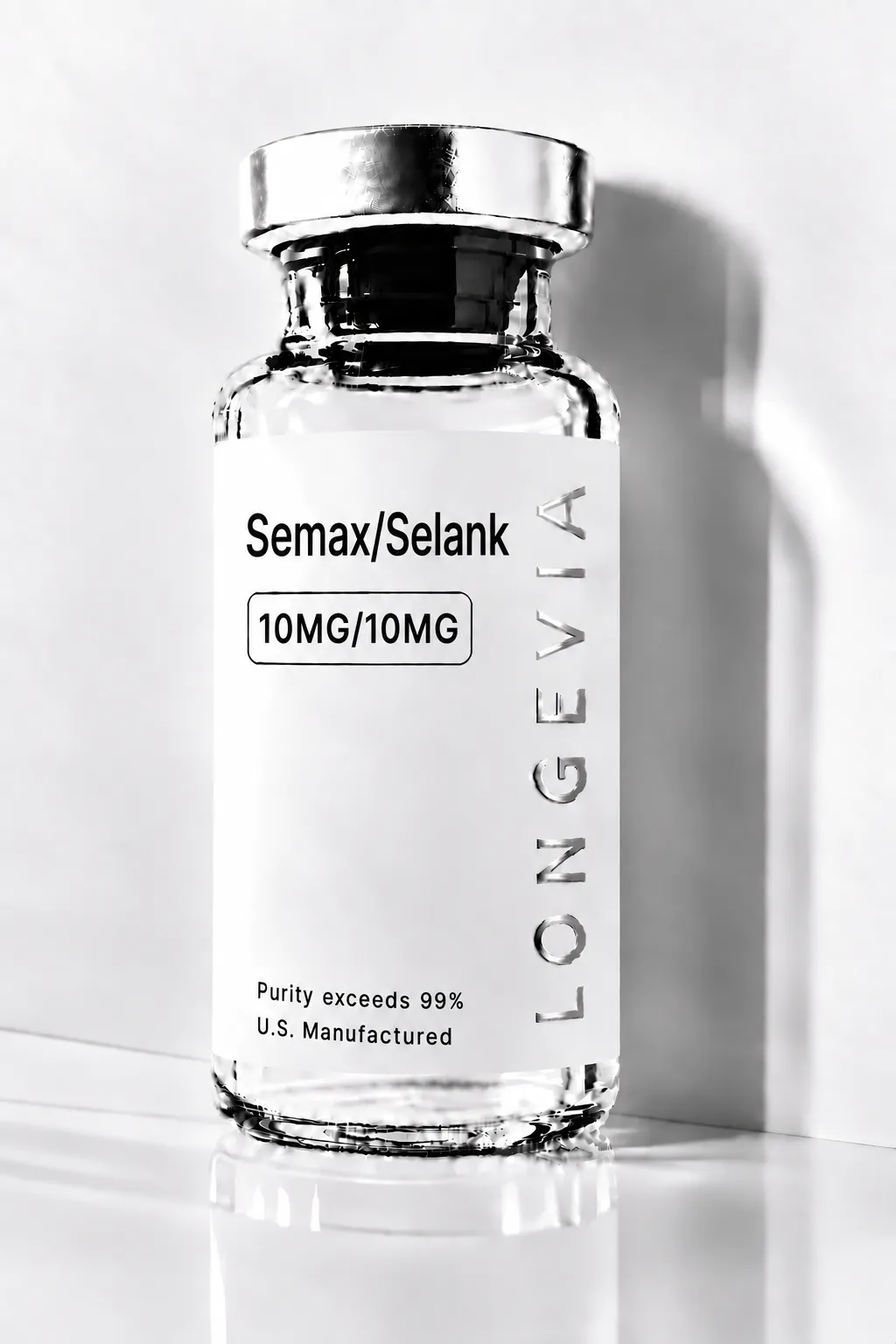
Cognitive & NootropicImmune Regulation
Semax / Selank
$139.50
1
Slide to Add
Purity≥99% Tested
TestingLC-MS Verified
LocationUS Based
The Semax / Selank Blend is a single research vial containing 10mg of Semax (Met-Glu-His-Phe-Pro-Gly-Pro) and 10mg of Selank (Thr-Lys-Pro-Arg-Pro-Gly-Pro) — two separately characterised synthetic heptapeptides supplied together as a combined research preparation. Semax is a synthetic analogue of the ACTH(4–7) core sequence investigated in BDNF pathway research, melanocortin-related neuropeptide biology, and CNS signalling models. Selank is a synthetic analogue of the immunomodulatory tetrapeptide tuftsin investigated in GABAergic signalling research, neuropeptide anxiolytic biology, and CNS immunomodulatory models. Both peptides share a C-terminal Pro-Gly-Pro stability extension and have been subjects of pharmaceutical development in Russia, where they have been investigated in specific regulated clinical contexts. Longevia Research supplies this combination for qualified laboratory research use only.
Standard Delivery3-4 Working Days
Free ShippingOn all orders above $300
Comprehensive Product Details
Scientific identity — Semax component: Semax is a heptapeptide with the sequence Met-Glu-His-Phe-Pro-Gly-Pro, derived from the ACTH(4–7) core sequence with a C-terminal Pro-Gly-Pro extension for metabolic stability. Its ACTH(4–7) tetrapeptide core — Met-Glu-His-Phe — corresponds to the shared pharmacophore region of ACTH and α-MSH and has been investigated in melanocortin receptor pharmacology and BDNF-related CNS signalling research.
Scientific identity — Selank component: Selank is a heptapeptide with the sequence Thr-Lys-Pro-Arg-Pro-Gly-Pro, derived from the immunomodulatory tetrapeptide tuftsin (Thr-Lys-Pro-Arg) with the same C-terminal Pro-Gly-Pro stability extension. Tuftsin is a naturally occurring tetrapeptide fragment of the Fc region of IgG, studied in immunomodulatory and neuropeptide signaling research. Selank has been investigated in GABAergic signalling models, enkephalin degradation research, and CNS anxiolytic biology in experimental systems.
Research areas: Neuropeptide pharmacology, BDNF pathway research, GABAergic signalling models, melanocortin-related CNS research, tuftsin analogue biology, POMC-derived peptide research, combined neuropeptide research tools.
Product format: Single vial containing both peptides combined.
Purity: Each peptide component characterised to greater than 99% individual purity, confirmed by HPLC and LC-MS analysis at the batch level.
Analytical documentation: A batch-specific Certificate of Analysis is available on the Longevia Research website, covering identity, purity, and lot traceability for both peptide components.
Research-use classification: For laboratory research use only. Not for human or veterinary use, clinical diagnostics, or any in-vivo application in humans.
Advanced Research Focus
Semax: ACTH(4–7) Core Sequence and BDNF Research
Semax preserves the Met-Glu-His-Phe tetrapeptide pharmacophore shared by ACTH and α-MSH — both POMC-derived peptides with melanocortin receptor activity. Research has examined Semax in animal models investigating BDNF mRNA and protein expression in brain regions, with findings suggesting BDNF pathway engagement following Semax administration in rodent CNS tissue. The molecular mechanism connecting ACTH(4–7) sequence engagement to BDNF expression changes is an active research question characterised in defined preclinical systems. Research has also examined Semax in CNS ischemia models and oxidative stress systems in neural cells.
Selank: Tuftsin Analogue and GABAergic Research
Selank is derived from tuftsin — a naturally occurring Fc-derived tetrapeptide with established immunomodulatory properties. As a synthetic heptapeptide analogue, Selank has been investigated in GABAergic signaling research, with animal studies examining interactions with GABA-A receptor-related pathways in CNS models. Research has also examined Selank in relation to enkephalin-degrading enzyme activity, proposing a mechanism involving reduced enkephalin degradation as a contributing factor to observed anxiolytic-related behavioral endpoints in rodent paradigms. These are experimental research hypotheses characterised in defined animal systems.
Shared Pro-Gly-Pro Stability Architecture
The C-terminal Pro-Gly-Pro extension present in both Semax and Selank is a shared synthetic stability element that reduces susceptibility to carboxypeptidase degradation, extending the functional half-life of each peptide in biological systems relative to their respective parent sequences. This shared structural feature makes the Semax/Selank combination of interest in comparative neuropeptide stability research examining the consequences of identical C-terminal modification on peptides with distinct N-terminal pharmacophores.
Combination Research Context
The Semax/Selank blend is supplied as a combined research preparation for investigators examining the two neuropeptides in parallel experimental systems. Each peptide retains its individual molecular identity and pharmacological characteristics within the blend. Research findings from each peptide's independent literature should not be assumed to apply to the combined preparation without experimental verification; combined-peptide interactions in biological systems are a separate research question not established in the current literature.
Pharmaceutical Development Context
Both Semax and Selank have been subjects of pharmaceutical development and clinical investigation in Russia, where each has been investigated under specific regulatory frameworks. Neither holds FDA nor EMA approval for any indication. Published clinical findings concern pharmaceutical-grade individual formulations under Russian regulatory conditions and do not establish the safety, efficacy, or bioavailability of the Longevia Research combined research vial.
Uncompromising Quality Standards
Reliable research begins with accurately characterised material. For a combination vial containing two distinct synthetic heptapeptides, that means confirming the sequence integrity, purity, and identity of each component individually at the batch level — because co-formulation of two peptides requires verification that each is present at its stated quantity and that neither component contains sequence errors or truncations that would confound experiments designed around either peptide's specific pharmacological profile.
Purity assessment: Each peptide component in this blend is characterised to greater than 99% individual purity by high-performance liquid chromatography (HPLC). Chromatographic purity data for both components is reported on the batch Certificate of Analysis.
Identity confirmation: The identity of both Semax and Selank is confirmed by mass spectrometry (LC-MS), providing molecular-weight verification consistent with the complete heptapeptide sequence of each component. HPLC and LC-MS data together confirm that both materials supplied correspond to their labelled compounds at the labelled purities.
Batch traceability and Certificate of Analysis: Every vial of the Semax/Selank Blend 10mg/10mg is traceable to a specific production lot. A batch-specific Certificate of Analysis is accessible directly on the Longevia Research website, covering purity, identity, and lot information for both components. Researchers evaluating this material are encouraged to review the current batch documentation before use.
Handling: This material should be handled by qualified personnel using appropriate laboratory technique and personal protective equipment, consistent with institutional protocols for research-grade synthetic neuropeptides.
Legal & Compliance Notice
Longevia Research supplies the Semax/Selank Blend 10mg/10mg for laboratory and in-vitro research use only. The product is intended for use by qualified researchers and trained laboratory personnel in appropriate controlled research environments.
Both Semax and Selank are synthetic research peptides supplied strictly as research tools. This combination vial is not a drug, not a dietary supplement, not a food or food ingredient, and not a cosmetic. Neither Semax nor Selank holds FDA or EMA approval for any therapeutic indication. References to their pharmaceutical use in Russian clinical contexts concern regulated individual formulations under specific regulatory frameworks that do not apply to this Longevia Research combined research vial, which is not a pharmaceutical product and has not been evaluated by any regulatory authority for safety or efficacy in this formulation.
Longevia provides no dosing instructions, administration guidance, treatment protocols, or reconstitution recommendations for this combination product. The scientific literature summarised on this product page describes experimental observations from individual peptide research in defined cell-based, animal, and limited clinical systems. Those findings are not medical claims and should not be interpreted as evidence of human efficacy, human safety, or fitness for any clinical application from this product.
The purchaser assumes full responsibility for lawful acquisition, handling, storage, use, and disposal of this material, and for compliance with all applicable local, state, federal, and institutional regulations. By purchasing this product, the buyer confirms that it will be used solely for legitimate laboratory research purposes by qualified personnel, and that its acquisition and intended use comply with applicable laws in the buyer's jurisdiction.
Continue Exploring
Also Considered.
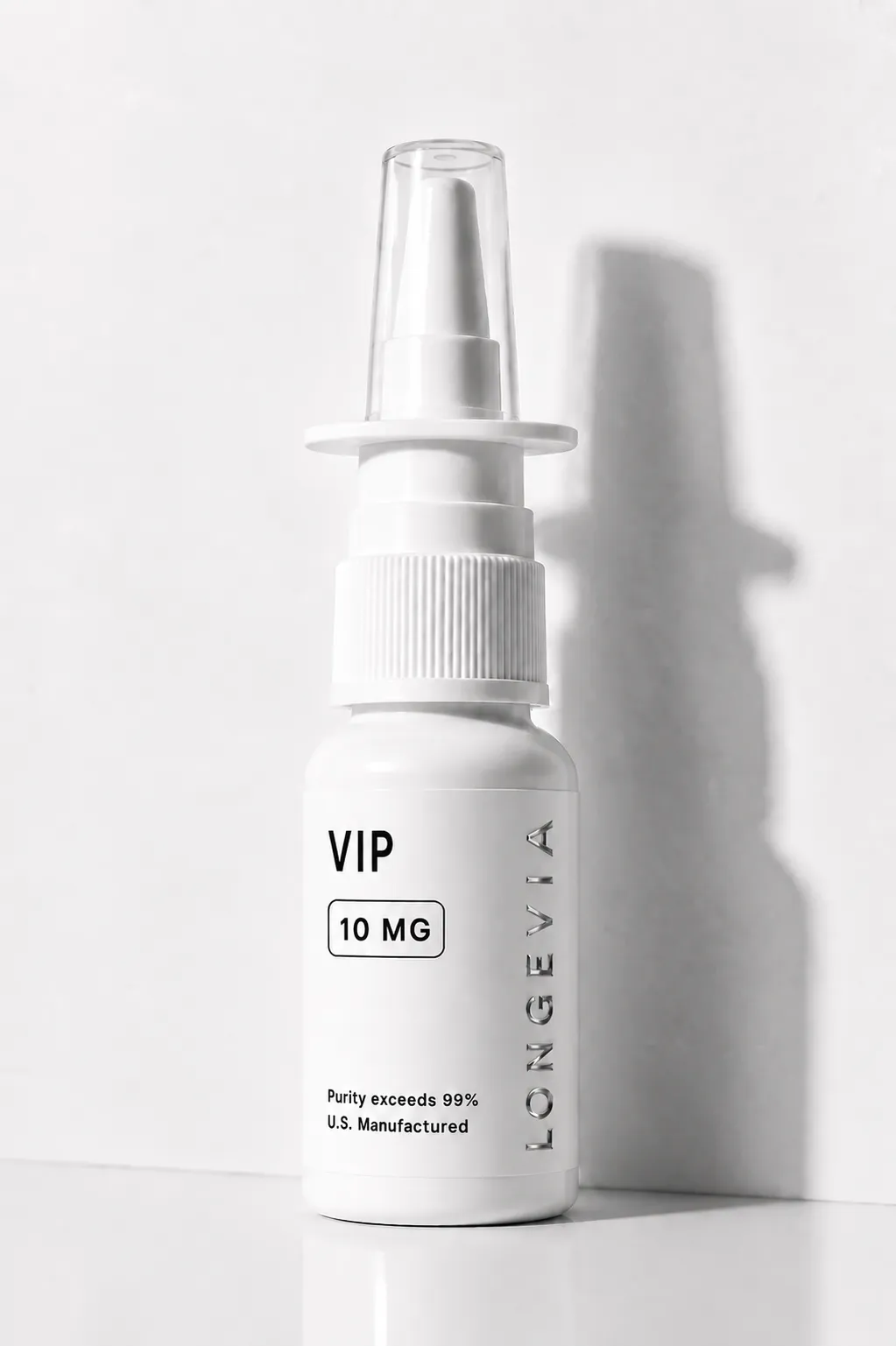
VIP Spray
Longevia Research supplies VIP (Vasoactive Intestinal Peptide, CAS 40077-57-4) 10mg in a 90-spray research format. A naturally occurring 28-amino-acid endogenous neuropeptide studied in VPAC1/VPAC2 receptor pharmacology, gastrointestinal neurobiology, vascular signaling, neuroendocrine research, circadian biology, and immunological signaling. Research Use Only.
$211.50
Slide to add
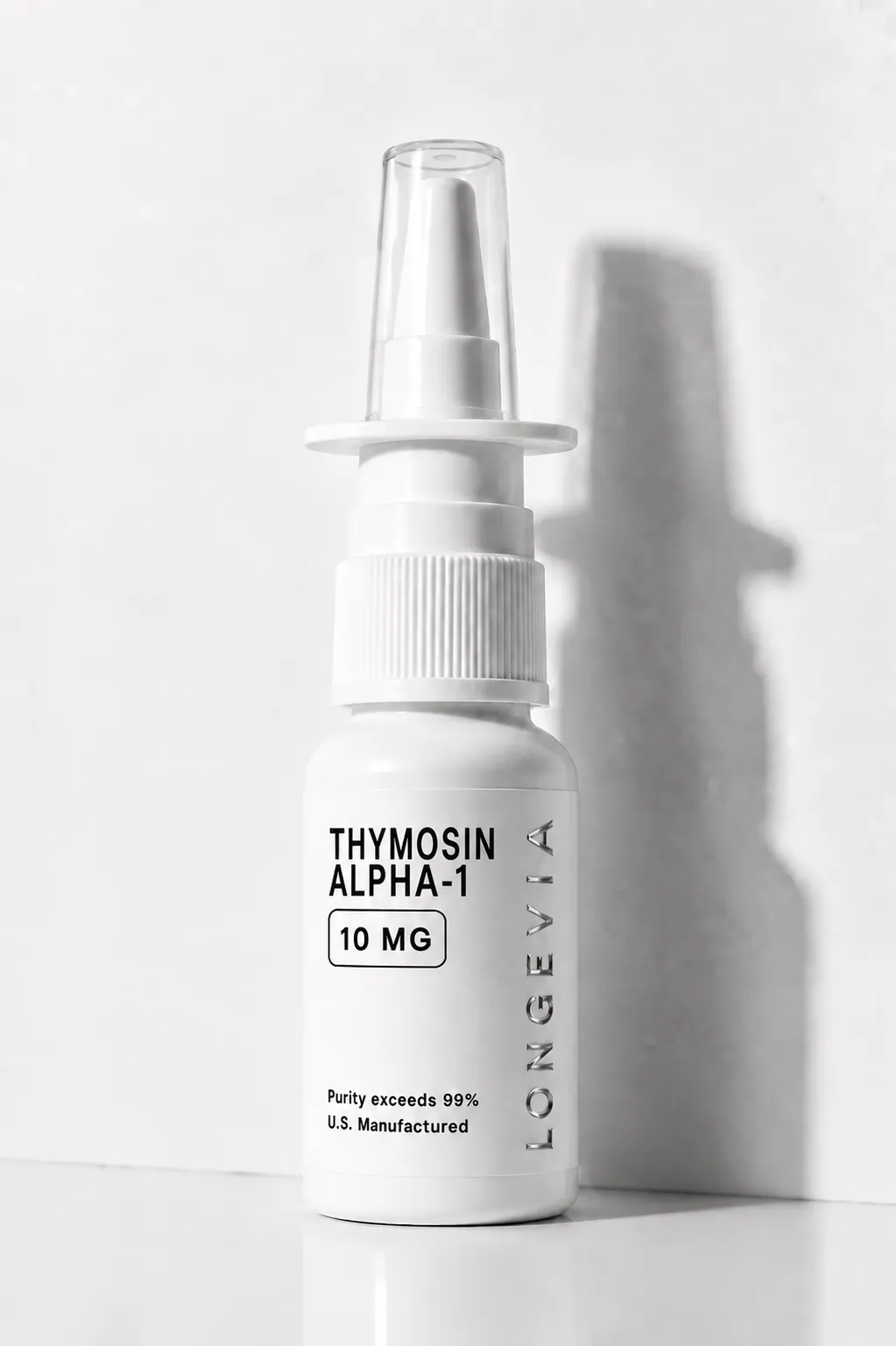
Thymosin Alpha-1 — Spray
Longevia Research supplies Thymosin Alpha-1 (Tα1 / TA-1, CAS 62304-98-7) 10mg in a 45-spray research format. A synthetic 28-amino-acid N-terminally acetylated peptide corresponding to the N-terminal region of prothymosin alpha, studied in TLR signaling, innate immunity, adaptive immune responses, dendritic cell biology, and clinical immunology research. Research Use Only.
$189.00
Slide to add
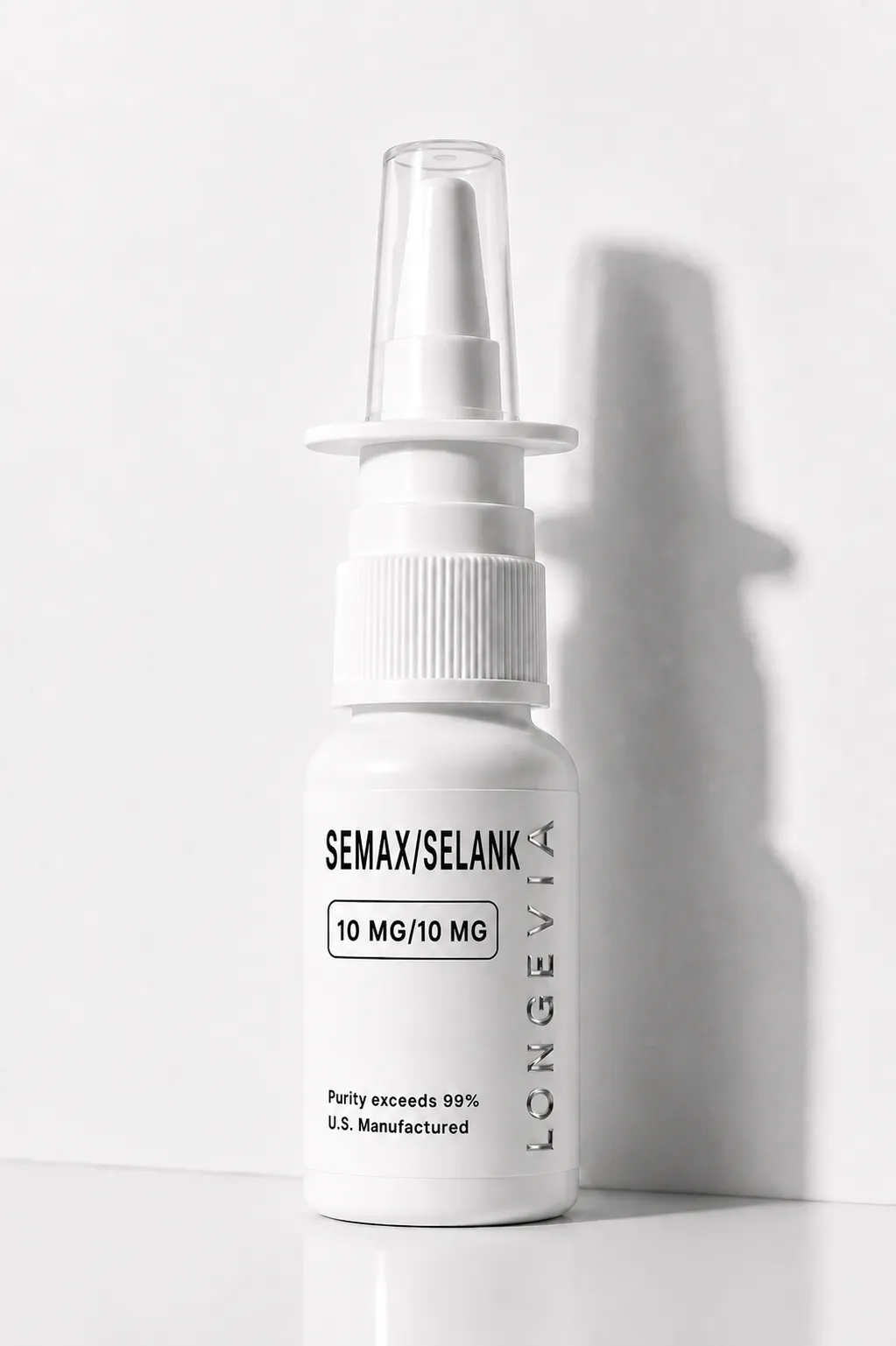
Semax/Selank — Spray
Longevia Research supplies a Semax/Selank research formulation (10mg/10mg, 90 sprays) containing two distinct synthetic heptapeptides investigated in neurobiology, neurotrophic signaling, neuroimmune research, and peptide signaling biology. Research Use Only.
$184.50
Slide to add
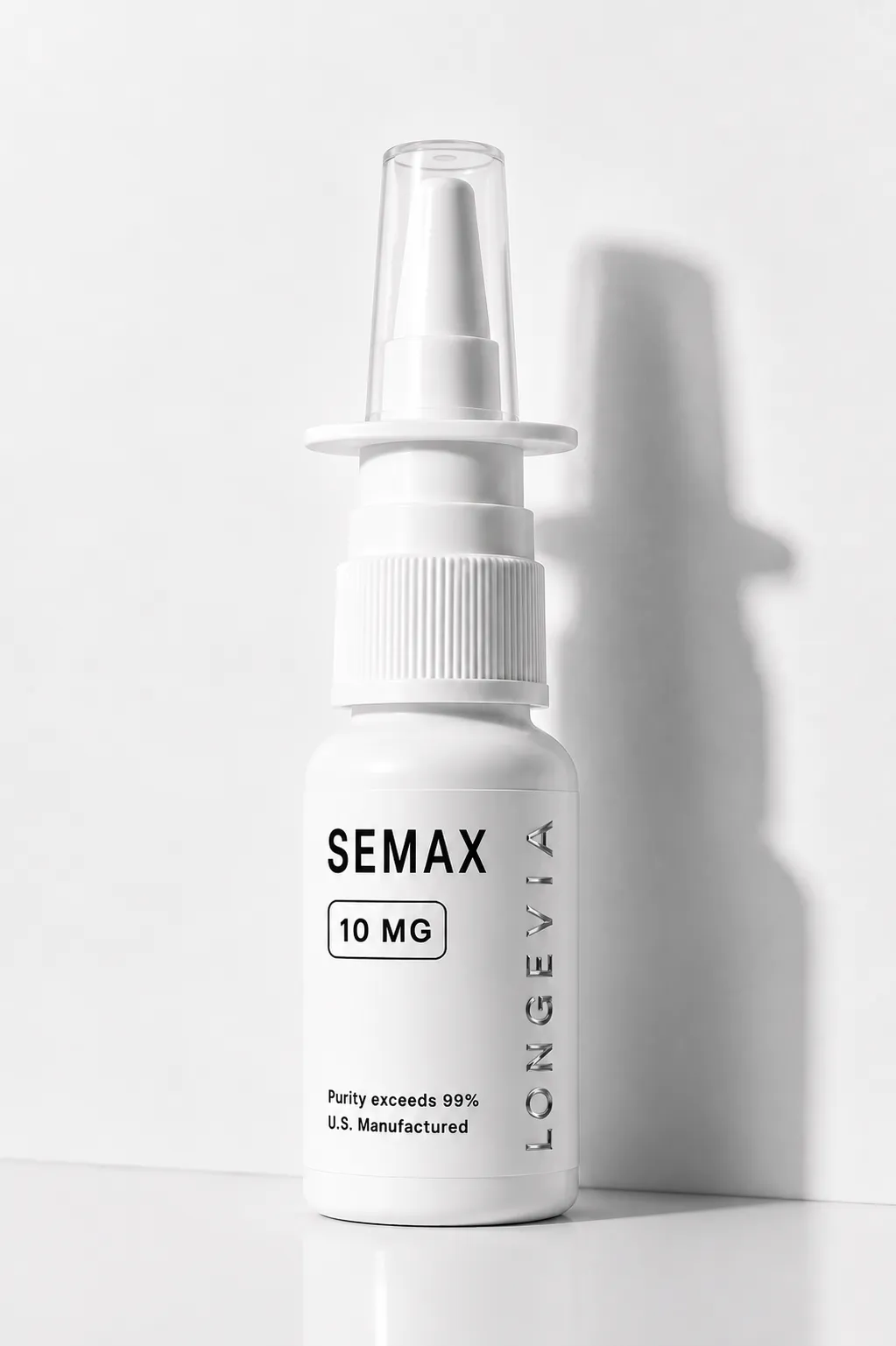
Semax — Spray
Longevia Research supplies Semax in 10mg and 30mg quantities, 90-spray format, for qualified laboratory research. Semax is a synthetic heptapeptide derived from ACTH(4–7) investigated in neurobiology, neurotrophic signaling, BDNF research, and cerebral ischemia models. Research Use Only.
$148.50
Slide to add
Product FAQs
Find answers to common questions regarding storage, reconstitution, and testing guidelines for this specific compound.