Immune Regulation
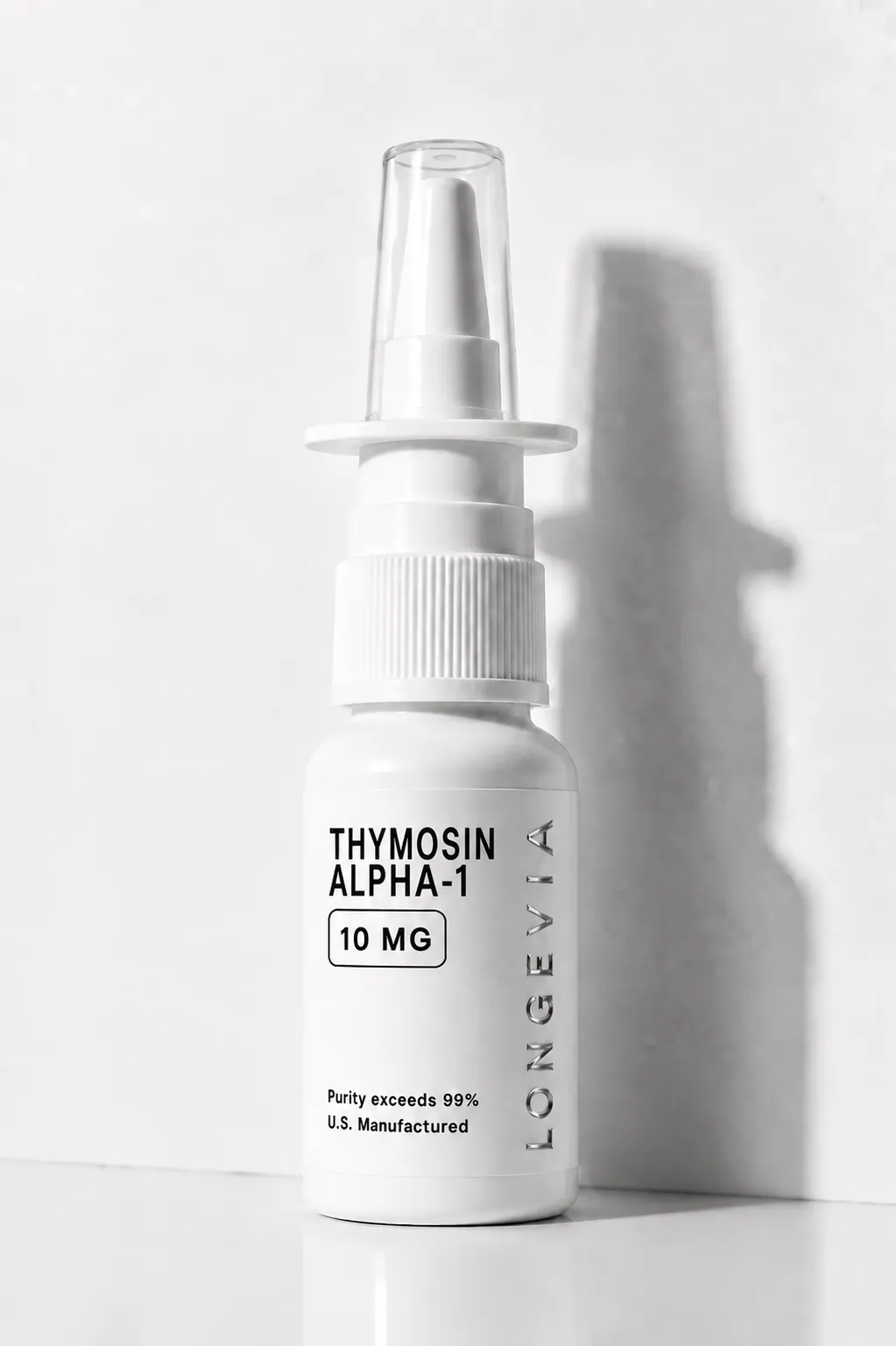
Thymosin Alpha-1 — Spray
$189.00
1
Slide to Add
Purity≥99% Tested
TestingLC-MS Verified
LocationUS Based
Thymosin Alpha-1 (Tα1, TA-1) is a synthetic 28-amino-acid research compound corresponding to the N-terminal region of prothymosin alpha — a 113-amino-acid nuclear protein encoded by the PTMA gene. Tα1 carries a defining Nα-acetylation at its N-terminal serine residue (Ac-Ser¹) and was first isolated from calf thymus tissue and characterized by Allan Goldstein and colleagues in 1977. It has been among the most extensively studied synthetic immunomodulatory compounds in the scientific literature, with research spanning four decades across innate immune signaling, adaptive immune responses, Toll-like receptor biology, dendritic cell function, T-cell maturation, cytokine and interferon-associated signaling, and multiple clinical research programmes. Research interest centers primarily on Tα1's investigated interactions with TLR9 and TLR2 on dendritic cells, with downstream signaling through MyD88-dependent pathways and a dual profile characterized by Romani and colleagues — Th1-polarizing dendritic cell activation alongside IDO-mediated tryptophan catabolism providing an immunoregulatory counterbalance. Longevia Research supplies Thymosin Alpha-1 as 10mg per bottle in a liquid spray format — 45 sprays per bottle — for qualified laboratory and scientific research purposes only.
Standard Delivery3-4 Working Days
Free ShippingOn all orders above $300
Product Details
Scientific identity: Thymosin Alpha-1 / thymalfasin (CAS 62304-98-7, free peptide; CAS 69440-99-9, acetate salt/thymalfasin); sequence Ac-Ser-Asp-Ala-Ala-Val-Asp-Thr-Ser-Ser-Glu-Ile-Thr-Thr-Lys-Asp-Leu-Lys-Glu-Lys-Lys-Glu-Val-Val-Glu-Glu-Ala-Glu-Asn-OH (Ac-SDAAVDTSSEITTKDLKEKKEVVEEAEN-OH); molecular formula C₁₂₉H₂₁₅N₃₃O₅₅; molecular weight 3,108.28–3,108.32 g/mol; 28-residue synthetic compound with N-terminal Nα-acetylation on Ser¹ and free-acid C-terminus.
Compound class: Synthetic immunomodulatory compound; N-terminally acetylated 28-residue synthetic fragment of prothymosin alpha; Research Use Only — not a drug, dietary supplement, food, or cosmetic.
Structural notes
N-terminal Nα-acetylation on Ser¹ is analytically defining and distinguishes Tα1 from unacetylated SDAAVDTSSEITTKDLKEKKEVVEEAEN; the two represent distinct chemical entities; CAS 62304-98-7 designates the free peptide and CAS 69440-99-9 designates thymalfasin (acetate salt form used in pharmaceutical preparations) — the underlying peptide sequence is identical between the two, with the distinction being salt form and counter-ion; synthetic Tα1 is produced by solid-phase peptide synthesis (SPPS) and should not be conflated with crude thymic extracts or full-length prothymosin alpha.
Relationship to prothymosin alpha: Tα1 corresponds to the N-terminal 28 residues of prothymosin alpha (ProTα, UniProt P06454, 113 amino acids) — the immunologically characterized domain of ProTα; ProTα itself is not thymus-specific and has roles in chromatin remodeling, cell cycle regulation, and apoptosis; full-length ProTα and synthetic Tα1 are distinct research entities.
Critical distinction from Thymosin Beta-4 / TB-500: Thymosin Alpha-1 (28 AA, parent protein: ProTα, primary research context: immunology/TLR signaling/dendritic cells) and Thymosin Beta-4/TB-500 (full Tβ4: 43 AA; TB-500 fragment: 7 AA Ac-LKKTETQ; parent protein: distinct from ProTα; primary research context: actin binding/cytoskeletal biology/cell migration) are entirely distinct compounds with different parent proteins, different molecular targets, and independent research literatures; evidence from one does not apply to the other and they are not interchangeable research reagents.
Primary research targets: TLR9 (primary; innate immune signaling, dendritic cell activation, MyD88-dependent pathway); TLR2 (reported by Romani et al. and confirmed by Giacomini et al.); downstream: MyD88/NF-κB/p38 MAPK/IRF3; IDO-mediated tryptophan catabolism; cytokine endpoints: IFN-γ, IFN-α, IL-2, IL-12, TNF-α.
Regulatory note: Thymalfasin (Zadaxin) is approved in more than 35 countries for chronic hepatitis B; in the US, 503A Category 2 status (February 2026) limits access to prescription-only compounding; no broad FDA drug approval exists for any indication; this regulatory history applies to pharmaceutical thymalfasin and does not extend to this research spray.
Product content: 10mg per bottle; 45 sprays per bottle.
Physical form: Liquid research spray.
Purity: Research-grade.
Analytical documentation
A batch-specific Certificate of Analysis is available on the Longevia Research website, covering compound identity, purity, and lot traceability; identity confirmation should include mass spectrometric verification at 3,108.28–3,108.32 g/mol and confirmation of the N-terminal Nα-acetylation — the approximately 42 Da mass difference between acetylated and unacetylated forms is analytically significant and should be verified; chromatographic purity assessment separates Tα1 from truncated fragments, deletion products, and synthesis-related impurities.
Research-use classification
Research Use Only; not approved for human or veterinary use; not intended for administration to humans or animals.
Research Focus & Mechanism Overview
Research background
The scientific investigation of Thymosin Alpha-1 traces to Allan Goldstein and colleagues' work at the National Cancer Institute in the 1960s and 1970s on thymic extracts and immune reconstitution in thymectomized animal models — establishing that thymic factors could restore T-cell immune function. Tα1 was first isolated from calf thymus tissue and characterized as a 28-amino-acid compound in 1977, with N-terminal acetylation as part of its structural identity; the synthetic form produced by SPPS was established as structurally equivalent to the endogenous sequence. A 2007 review by Goldstein and Badamchian (Annals of the New York Academy of Sciences) traces the research trajectory from this 1974–1977 discovery period through pharmaceutical development as thymalfasin (Zadaxin). The subsequent research history encompasses immunological characterization across cell-based and animal systems, clinical development across hepatitis B, hepatitis C, and oncology-adjacent contexts, and the landmark mechanistic elucidation of the TLR-dendritic cell signaling axis in studies by Romani and colleagues.
TLR biology and dendritic cell research
The most precisely characterized mechanistic aspect of Tα1 biology concerns its reported interactions with TLR9 and TLR2 on dendritic cells. Romani and colleagues (Blood, 2004) reported a landmark finding that Tα1 activates TLR signaling on dendritic cells, promoting maturation and cytokine production with a Th1-polarizing profile — increasing IL-12 and IFN-γ production while supporting cellular immune responses. A subsequent study by the same group (Blood, 2006) characterized an additional mechanistic layer: Tα1 simultaneously activates IDO (indoleamine 2,3-dioxygenase) in dendritic cells, generating kynurenines that support immune tolerance through regulatory T-cell mechanisms — a dual Th1-activating and IDO-engaging profile described as immunoregulatory rather than simply immunostimulatory. Giacomini and colleagues (Expert Opinion on Biological Therapy, 2015) confirmed these effects in human monocyte-derived dendritic cells stimulated with viral and bacterial TLR agonists. Downstream signaling characterized in these studies includes MyD88 → IRAK/TRAF6 → IKK complex → NF-κB, parallel p38 MAPK activation contributing to dendritic cell maturation and cytokine gene expression, and IRF3-mediated type I interferon gene induction. These mechanistic observations were established in defined experimental systems and should not be presented as a complete or universal mechanism applicable across all physiological contexts.
Key research areas
Dendritic cell research has examined Tα1 as a modulator of maturation markers (MHC class II, CD80, CD86), IL-12 secretion, and Th1-polarizing cytokine environments in primary human peripheral blood monocyte-derived and murine bone marrow-derived dendritic cell cultures under defined stimulation conditions. T-cell and adaptive immune research — beginning with thymectomized animal model immune reconstitution studies — has examined T-cell differentiation, Th1/Th2 polarization, CD4+ and CD8+ T-cell activation, and antigen-specific responses; the Romani mechanistic framework positions Tα1-matured dendritic cells as Th1-polarizing, supporting cellular immune responses relevant to antiviral research contexts. Cytokine and interferon research has measured IFN-γ, IFN-α, IL-2, IL-12, and TNF-α in TLR-stimulated immune cell cultures, with the IDO/tryptophan catabolism pathway representing the anti-inflammatory regulatory counterpart.
Human clinical research and regulatory context
Human clinical research on thymalfasin is more extensive than for most research compounds, spanning decades across multiple indications. Hepatitis B: randomized controlled trials published in Hepatology demonstrated statistically significant virological response endpoint improvements in studied populations using subcutaneous thymalfasin injection. Sepsis: the TESTS trial (2025) — a multicenter randomized controlled trial — evaluated thymosin alpha-1 in a sepsis population and reported no clear 28-day mortality benefit, illustrating the importance of population-specific outcome evaluation in interpreting clinical evidence. Oncology-adjacent research: combination studies in non-small cell lung cancer, hepatocellular carcinoma, and melanoma examined immunological rather than direct anticancer endpoints. Vaccine-response research: studies in elderly and immunocompromised populations examined antibody and T-cell response parameters following influenza vaccination. Infectious-disease research: retrospective COVID-19 analyses from China examined associations with reduced mortality in severe immunologically vulnerable subgroups — findings subject to the standard interpretive constraints appropriate to retrospective observational data. All human clinical research was conducted with pharmaceutical thymalfasin (subcutaneous injection, defined doses, defined patient populations under controlled conditions); pharmacokinetic parameters, bioavailability values, and clinical outcome findings apply to the pharmaceutical formulation and administration route and cannot be assumed to apply to the Longevia Research spray, which uses a different format with unstated systemic exposure characteristics.
Quality & Purity Standards
For a 28-amino-acid peptide such as Thymosin Alpha-1, research-grade analytical characterization serves the critical function of confirming both compound identity and the analytically defining N-terminal acetylation. The Nα-acetylation of the N-terminal serine residue is not merely a structural modification — it is a defining feature of the compound's chemical identity (differentiating CAS 62304-98-7 from an unacetylated version of the same 28-amino-acid sequence) and has been implicated in the peptide's biological activity profile. A preparation lacking the N-terminal acetylation would be a distinct chemical entity; mass spectrometry with the resolution to detect the +42 Da acetyl group is necessary to confirm the correct compound.
Research-grade quality assessment for Thymosin Alpha-1 appropriately involves:
Molecular mass confirmation: High-resolution mass spectrometry (HRMS or LC-MS/MS) confirming a molecular weight consistent with 3108.28 g/mol (C₁₂₉H₂₁₅N₃₃O₅₅). This mass is the primary identity marker for the compound and allows immediate distinction from unacetylated SDAAVDTSSEITTKDLKEKKEVVEEAEN-OH (~3066 g/mol, missing the 42 Da acetyl increment).
N-terminal acetylation verification: Specific confirmation that the N-terminus carries an acetyl group through mass spectrometric characterization — essential for confirming CAS 62304-98-7 identity versus related but distinct unacetylated peptide preparations.
Sequence verification: LC-MS/MS tandem fragmentation analysis covering the 28-residue sequence, with particular attention to the acidic N-terminal region (Ser-Asp-Ala-Ala-Val-Asp-Thr-Ser-Ser-) and the lysine-rich middle region (Thr-Lys-Asp-Leu-Lys-Glu-Lys-Lys-) which determines charge state and is relevant to receptor interaction studies.
Purity assessment: Reversed-phase HPLC (RP-HPLC or UHPLC) quantifying the principal peptide peak against related substances, truncated sequences, deletion products, and synthesis byproducts. The 28-amino-acid length, predominantly hydrophilic character, and abundance of aspartate and glutamate residues are relevant to HPLC method selection for Tα1 analysis.
Batch documentation and traceability: Lot-specific certificate of analysis documenting CAS number, molecular weight or mass spectrum data, sequence confirmation (where available), purity, and lot number, enabling traceability for research documentation purposes.
Longevia Research's quality approach is oriented toward providing researchers with analytically characterized research compounds supported by appropriate documentation. Researchers should consult current product documentation and available certificates of analysis for batch-specific data. No specific purity grade, third-party certification, cGMP status, or independent laboratory verification is stated for this listing; researchers requiring specific quality parameters should contact Longevia Research directly.
Compliance Notice
FOR RESEARCH USE ONLY. NOT FOR HUMAN CONSUMPTION. NOT FOR VETERINARY USE.
Thymosin Alpha-1 10mg — 45 Sprays, as supplied by Longevia Research, is intended exclusively for qualified laboratory and scientific research conducted by trained professionals in appropriate research settings. This product is not a drug, dietary supplement, food, or cosmetic. It has not been evaluated or approved by the U.S. Food and Drug Administration, the European Medicines Agency, or any other regulatory authority for use as a therapeutic, prophylactic, or diagnostic agent in humans or animals.
This product is not intended to diagnose, treat, cure, or prevent any disease, condition, or health-related outcome.
Distinction from pharmaceutical thymalfasin (Zadaxin): Thymalfasin (Zadaxin, SciClone Pharmaceuticals) is a pharmaceutical product approved in more than 35 countries for the treatment of chronic hepatitis B. In the United States, thymalfasin holds FDA 503A Category 2 status and is accessible only by prescription through licensed compounding pharmacies. These regulatory statuses apply to the pharmaceutical preparations in their approved or compounded forms under specific regulatory frameworks. They do not extend to the Longevia Research Thymosin Alpha-1 spray, which is a separately supplied research compound in a spray format with no regulatory approval, no pharmaceutical validation, and no equivalence to any approved or compounded thymalfasin product.
Evidence scope: Clinical evidence from thymalfasin trials — including hepatitis B RCTs, hepatitis C combination studies, sepsis trials, oncology combination research, and vaccine-response studies — concerns pharmaceutical thymalfasin formulations administered by subcutaneous injection in defined patient populations under controlled conditions. These findings do not establish the safety, efficacy, bioavailability, pharmacokinetics, or clinical significance of the Longevia Research spray for any purpose. Animal research does not establish human outcomes. Mechanistic immune-signaling research does not establish clinical efficacy.
Evidence concerning other thymosin peptides: Research involving Thymosin Beta-4, TB-500, or other thymosin-related compounds does not apply to Thymosin Alpha-1. These are distinct peptides with distinct molecular identities, distinct research contexts, and entirely separate evidence bases.
Purchasers are solely responsible for ensuring that acquisition, possession, storage, handling, use, and disposal of this product comply with all applicable local, state, national, and international laws and regulations governing research compounds. By purchasing this product, the purchaser confirms that they are a qualified researcher or research professional acquiring this compound for legitimate scientific research purposes only.
Continue Exploring
Also Considered.
VIP Spray
Longevia Research supplies VIP (Vasoactive Intestinal Peptide, CAS 40077-57-4) 10mg in a 90-spray research format. A naturally occurring 28-amino-acid endogenous neuropeptide studied in VPAC1/VPAC2 receptor pharmacology, gastrointestinal neurobiology, vascular signaling, neuroendocrine research, circadian biology, and immunological signaling. Research Use Only.
$211.50
Slide to add
Selank — Spray
Longevia Research supplies Selank 10mg in a 90-spray format for qualified laboratory research. Selank is a synthetic heptapeptide analog related to tuftsin and investigated in neurobiology, GABAergic signaling, neuroimmune research, and behavioral neuroscience. Research Use Only.
$148.50
Slide to add
LL-37 — Spray
LL-37 is the 37-residue mature cathelicidin peptide released from hCAP18, the only mature cathelicidin peptide humans produce. Investigated in membrane biology, innate immune signaling, and epithelial research. Available from Longevia Research as 1mg — 45 sprays — for qualified laboratory research use only.
$157.50
Slide to add
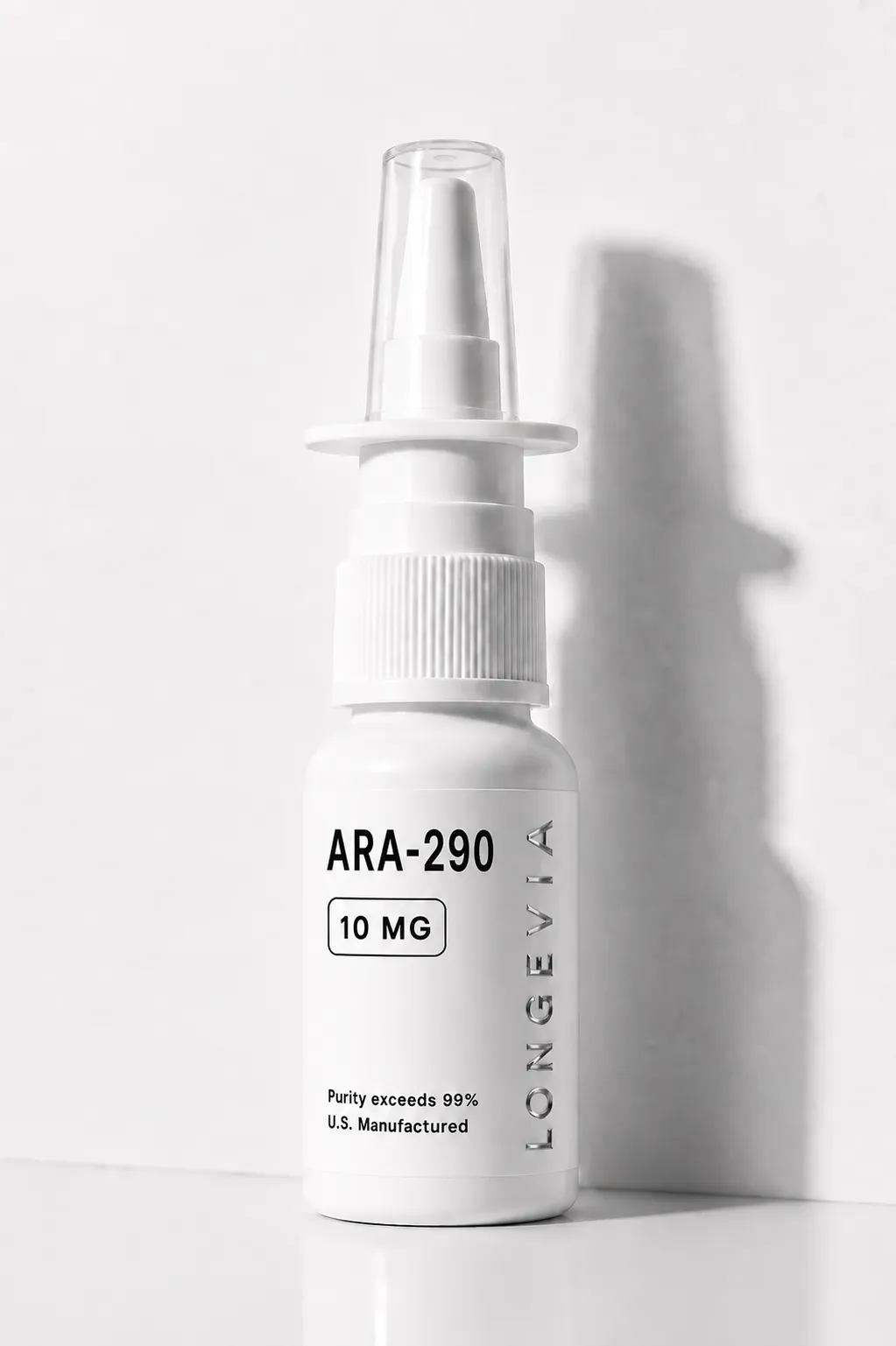
ARA-290 — Spray
ARA-290 (cibinetide) 10mg spray — 45 sprays of the synthetic 11-residue EPO helix-B surface peptide. CAS 1208243-50-8. Supplied by Longevia Research for laboratory use only.
$90.00
Slide to add
Product FAQs
Find answers to common questions regarding storage, reconstitution, and testing guidelines for this specific compound.