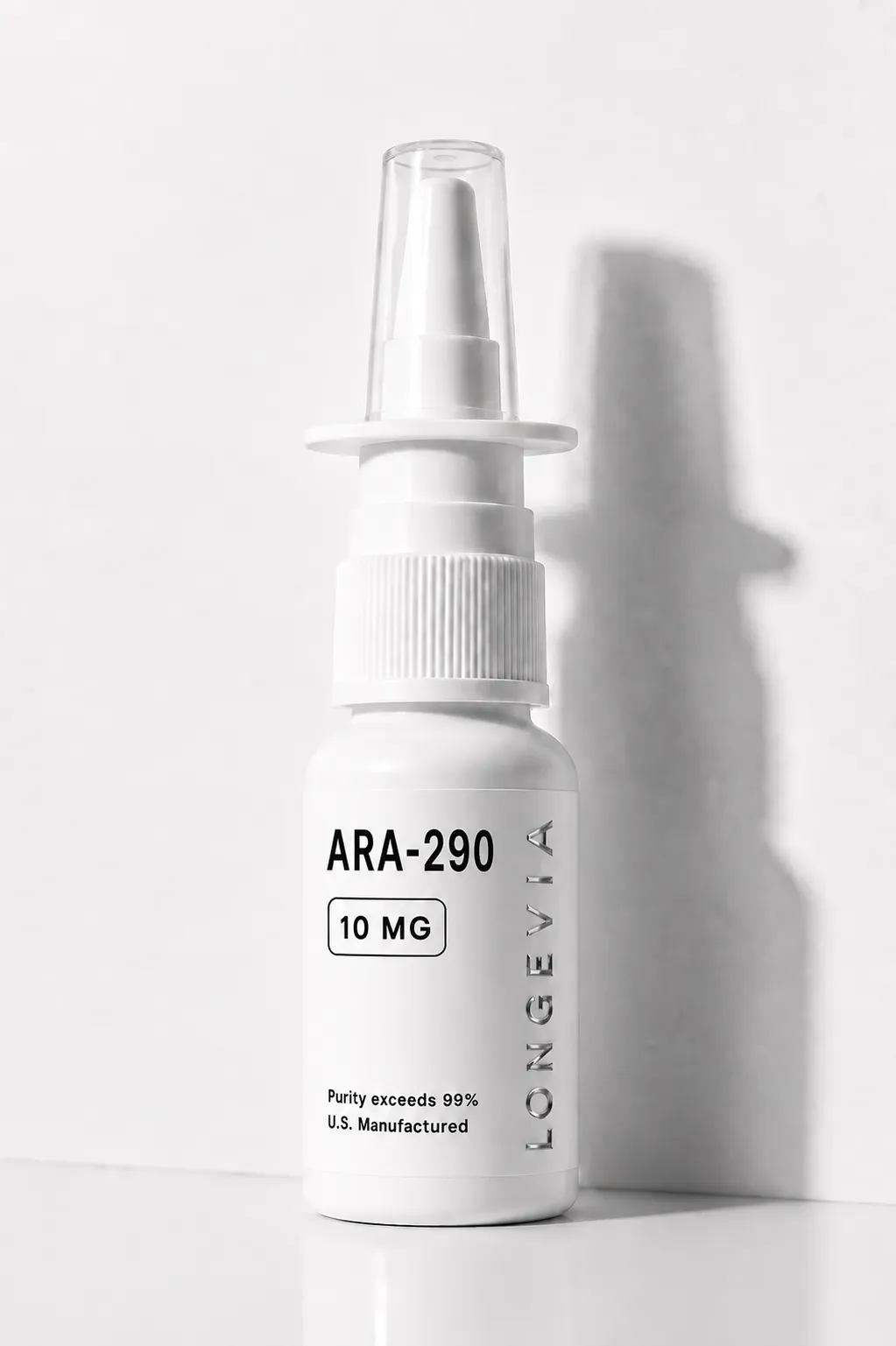
Immune Regulation
ARA-290 10mg Spray
$90.00
1
Slide to Add
Purity≥99% Tested
TestingLC-MS Verified
LocationUS Based
ARA-290 is a synthetic 11-amino-acid research compound derived from the helix-B surface domain of erythropoietin (EPO) — the endogenous glycoprotein hormone that regulates red blood cell production and exerts tissue-protective effects through distinct receptor systems. ARA-290, also designated cibinetide in the clinical literature, was developed to engage the non-hematopoietic arm of EPO signalling — the innate repair receptor (IRR) — without activating the classical EPO receptor homodimer responsible for erythropoiesis. In experimental systems, this receptor selectivity means that the compound can be studied as a research tool for investigating tissue-protective and anti-inflammatory signalling pathways independently of the haematological effects produced by full-length EPO. The compound carries an N-terminal pyroglutamate residue — a cyclised glutamine that forms spontaneously during or after synthesis — giving the sequence the designation pyroglutamate-Glu-Gln-Leu-Glu-Arg-Ala-Leu-Asn-Ser-Ser (abbreviated UEQLERALNSS using the pyroglutamate designation U, or pGlu-EQLERALNSS). ARA-290 has been examined in both preclinical model systems and human clinical research settings, representing one of the more extensively published research profiles in the erythropoietin-derived peptide class. Longevia Research supplies ARA-290 in a 10mg, 45-spray format for qualified laboratory research use only. This product is not a drug, dietary supplement, food ingredient, or cosmetic. It is not intended for human or veterinary use, and no dosing, spray-frequency, or administration guidance is provided.
Standard Delivery3-4 Working Days
Free ShippingOn all orders above $300
Product Details
Scientific Identity
ARA-290 (cibinetide) is a synthetic linear undecapeptide — an 11-residue compound derived from the aqueous-exposed surface of helix B of the erythropoietin molecule. It is classified as a non-hematopoietic, non-erythropoietic EPO-derived peptide, designed to activate the innate repair receptor (IRR) without engaging the classical EPO receptor homodimer that drives red blood cell production.
Structural and Sequence Information
Sequence: pyroglutamate-Glu-Gln-Leu-Glu-Arg-Ala-Leu-Asn-Ser-Ser-OH
The N-terminal residue is pyroglutamate — a cyclic form of glutamine produced by intramolecular cyclisation of the α-amine onto the side-chain amide. This N-terminal modification is standard for this class of EPO-derived helix-B peptides and contributes to the compound's metabolic stability relative to a linear glutamine-initiated sequence.
Alternative Names and Designations
ARA-290 · Cibinetide · pHBSP (pyroglutamate helix-B surface peptide) · HBSP · UEQLERALNSS (single-letter notation with U = pyroglutamate)
Molecular Information
Note on molecular weight discrepancies. Some commercial sources report different molecular formulas and weights for ARA-290 (values ranging from approximately 1,257 g/mol to 1,259 g/mol appear in the literature and commercial databases). These discrepancies likely reflect different computational conventions for the pyroglutamate residue or hydration states of the reported form. The values above correspond to the compound as indexed at PubChem CID 91810664 and the DrugBank database (DB13006), which are the most consistently authoritative reference sources. The batch Certificate of Analysis confirms identity and analytical molecular weight for the specific lot supplied.
Product Format
The quantity per individual spray is documented on the product label and batch Certificate of Analysis. Longevia provides no dosing, spray-frequency, or administration guidance.
Research Focus & Mechanism Overview
ARA-290 and Erythropoietin-Derived Research
Erythropoietin is best known as the hormone that regulates erythropoiesis — the production of red blood cells — through the classical EPO receptor (EPOR) homodimer on erythroid progenitor cells. However, research beginning in the late 1990s and early 2000s established that EPO also exerts biological effects on non-haematopoietic tissues — including neurons, cardiac cells, and other cell types — through a receptor system distinct from the erythropoietic homodimer. Leist and colleagues, publishing in Science in 2004, demonstrated that carbamylated erythropoietin (CEPO) retained neuroprotective properties in experimental models despite lacking erythropoietic activity, providing foundational evidence that tissue-protective EPO signalling could be separated pharmacologically from haematopoietic signalling.
This separation of function created a research objective: to identify the minimal structural unit of EPO responsible for tissue-protective signalling without engaging the erythropoietic pathway. Work by Brines, Cerami, and colleagues identified the helix-B surface of EPO — a surface-exposed region of the protein — as associated with these tissue-protective properties, and synthesised the 11-residue peptide corresponding to that surface as a research tool. The resulting compound, designated ARA-290 or cibinetide, was designed as a selective activator of what the investigators termed the innate repair receptor (IRR) — a proposed heteromeric complex formed by the EPO receptor and the β-common receptor subunit (CD131, also known as β-c).
Proposed Mechanism: The Innate Repair Receptor
The innate repair receptor (IRR) is a research concept developed principally by Brines, Cerami, and colleagues to describe the proposed tissue-protective signalling complex in non-haematopoietic cells. The IRR is defined in the literature as a heterocomplex of the EPO receptor (EPOR) and the β-common receptor (βcR/CD131), distinct from the EPOR homodimer that drives erythropoiesis. In experimental systems, this IRR complex is proposed to be upregulated by cellular stress — particularly hypoxia and inflammation — and to activate intracellular protective cascades including JAK2/STAT signalling, PI3K/Akt, and NF-κB modulation when engaged by appropriate ligands.
ARA-290 is proposed to selectively activate this IRR complex without meaningfully engaging the classical EPOR homodimer. This selectivity is the basis for its research interest as a compound that may allow tissue-protective EPO signalling to be studied in isolation from haematopoietic stimulation.
Important qualification. The IRR concept and ARA-290's mechanism remain areas of active scientific investigation. The heteromeric EPOR/βcR complex as a fully characterised receptor system is not universally accepted in the literature, and the precise molecular mechanism of ARA-290's tissue-protective activity in experimental models is not resolved at the same level of certainty as, for example, the classical EPOR homodimer signalling cascade. Researchers using ARA-290 should frame its proposed mechanism as a working hypothesis rather than established pharmacology.
Preclinical Research
Neuropathic pain models. Swartjes and colleagues published a study in Molecular Pain (2014) examining ARA-290 in a spared nerve injury (SNI) rat model — a standard preclinical model for peripheral neuropathic pain. Investigators administered ARA-290 on days 1, 3, 6, 8, and 10 following nerve injury and evaluated mechanical and cold allodynia responses over 20 weeks. ARA-290 produced dose-dependent reductions in both allodynia endpoints in that model relative to vehicle controls, along with reduced spinal cord microglial activation (measured by iba-1 immunoreactivity). These are rodent model observations; they describe changes in experimental endpoints in a defined animal system and do not establish equivalent effects in human neuropathic pain conditions.
Autoimmune neuropathy models. Experimental autoimmune neuritis (EAN) is a rat model used to study inflammatory demyelinating neuropathies. A study published in the European Journal of Neurology (PMC3946253) reported that ARA-290 administration in EAN rats improved nerve regeneration and remyelination parameters, suppressed inflammatory T-cell responses, and promoted Schwann cell behaviour relative to controls, without inducing haematopoiesis — consistent with the proposed non-erythropoietic profile.
TRPV1 receptor research. Zhang and colleagues (Peptides, 2016, PMID 26742584) examined ARA-290's interaction with transient receptor potential vanilloid 1 (TRPV1) — a nociceptive ion channel involved in pain signalling. In rodent and cell models, the investigators reported that ARA-290 modulated TRPV1-related nociceptive signalling, proposing that TRPV1 pathway involvement contributes to ARA-290's pain-related effects in preclinical models.
Hepatic ischaemia-reperfusion models. Tan and colleagues (Scientific Reports, 2018, PMC 6168561) examined helix-B surface peptide (HBSP/ARA-290) in a mouse hepatic ischaemia-reperfusion injury model. The study reported that HBSP intervention was associated with enhanced autophagy and Akt signalling changes in the injured liver in that experimental system, attenuating model-specific injury parameters.
Diabetic neuropathy models. Schmidt and colleagues (Experimental Neurology, 2011) examined ARA-290 in Akita diabetic mouse sympathetic ganglia — a genetic model of insulin-deficient diabetes — and reported effects on established autonomic neuritic dystrophy parameters.
Metabolic research. Preclinical metabolic models have also been used to examine ARA-290's effects on glucose tolerance, insulin sensitivity, and related parameters in rodent systems.
Human Clinical Research
ARA-290 / cibinetide has been evaluated in human clinical research conducted by Araim Pharmaceuticals — a more extensive human research programme than is typical for this class of experimental research compounds. The following summarises the published clinical work; the conclusions are not product claims and should not be interpreted as establishing human therapeutic efficacy.
Sarcoidosis / small-fibre neuropathy (Phase 2 pilot). Heij and colleagues conducted a double-blind, placebo-controlled pilot study in 22 patients with sarcoidosis and symptoms of small-fibre neuropathy (SFN), administering ARA-290 intravenously three times per week for four weeks (Molecular Medicine, 2012; PMID 23168581). The ARA-290 group showed statistically significant improvement in the SFN Symptom List (SFNSL) score at week 4 compared with placebo, as well as changes in pain and physical functioning dimensions of the SF-36. No significant safety concerns were identified across clinical or laboratory assessments.
Sarcoidosis / corneal nerve fibre density (Phase 2 RCT). A subsequent randomised controlled study — the results of which were reported in Investigative Ophthalmology and Visual Science (2017, by Brines, Dahan, and colleagues) — examined 28 days of daily subcutaneous ARA-290 in sarcoidosis patients with documented corneal nerve fibre loss. Investigators reported an improvement in corneal nerve fibre area (a surrogate measure of small-fibre nerve density measurable by confocal microscopy) alongside reduced neuropathic symptom scores in the treatment arm versus placebo.
Type 2 diabetes neuropathy (Phase 2 RCT). Brines and colleagues (Molecular Medicine, 2015; PMID 25369851) examined 28 days of daily subcutaneous ARA-290 in a randomised study in patients with type 2 diabetes and neuropathic symptoms. Treated subjects showed changes in HbA1c, lipid measures, and neuropathic symptom scores relative to placebo controls over the study period. Corneal confocal microscopy showed increased nerve fibre density in the treatment group.
Important limitations of the clinical evidence. All clinical ARA-290 trials were small, with the largest studies enrolling a few dozen participants. Study duration was uniformly short (28 days in the RCTs). Endpoints included validated symptom questionnaires and corneal nerve fibre density measured by confocal microscopy — a surrogate biomarker for small-fibre nerve integrity rather than a hard clinical outcome. No Phase 3 trial was completed. Araim Pharmaceuticals, the developer, is no longer operating. ARA-290 received orphan drug designation from the FDA for sarcoidosis-associated small-fibre neuropathy but was never submitted for full approval.
Regulatory Status
ARA-290 is not approved by the FDA, EMA, or any other major regulatory authority for any human therapeutic indication. The orphan drug designation it received does not confer approval and does not imply that the compound has been found safe or effective for clinical use. No current pharmaceutical development programme for ARA-290 is known to be active.
Quality & Purity Standards
ARA-290 is structurally more complex than many short-chain synthetic research peptides because of its N-terminal pyroglutamate modification. Correct synthesis requires that the pyroglutamate ring be formed — whether through cyclisation of an N-terminal glutamine or through incorporation of a pre-formed pyroglutamate residue — and confirmed analytically. Incorrect or incomplete cyclisation produces a distinct compound with a different molecular mass and potentially different behaviour in experimental systems.
Identity confirmation. Each production lot of Longevia's ARA-290 spray is characterised by mass spectrometric analysis, verifying the observed molecular ion against the expected mass for the pyroglutamate-Glu-Gln-Leu-Glu-Arg-Ala-Leu-Asn-Ser-Ser sequence at approximately 1,257.3 g/mol. Mass spectrometric confirmation identifies the pyroglutamate modification and distinguishes the compound from the linear glutamine-initiated sequence.
Purity assessment. Chromatographic purity analysis quantifies ARA-290 relative to all other UV-absorbing species in the chromatogram, including uncyclised precursor material, deletion sequences, and other synthesis-related impurities. Purity data is documented on the batch Certificate of Analysis.
Batch traceability and Certificate of Analysis. Every production lot of ARA-290 10mg Spray is traceable to a specific batch. A batch-specific Certificate of Analysis is accessible on the Longevia Research website, covering identity, purity, and lot information. Researchers are encouraged to review current batch documentation before use.
Storage. Specific storage conditions and stability information for this lot are confirmed on the batch Certificate of Analysis and product labelling. Researchers should follow the COA's lot-specific guidance and institutional protocols for synthetic research peptides containing modified N-termini, which may have specific sensitivities to temperature, pH, and moisture.
Compliance Notice
Longevia Research supplies ARA-290 10mg Spray for laboratory and in-vitro research use only. The product is intended for qualified researchers and trained laboratory personnel working in appropriate controlled research environments.
ARA-290 is a synthetic research compound supplied strictly as a laboratory research tool. It is not a drug, not a dietary supplement, not a food or food ingredient, and not a cosmetic. No regulatory authority has approved ARA-290 for human or veterinary therapeutic use. Longevia does not supply this product for administration to humans or animals, for clinical diagnostics, or for any therapeutic application.
The existence of published Phase 2 clinical research on ARA-290 (cibinetide) does not establish the Longevia research material as safe or effective for human use, nor does it imply that this product is equivalent to the investigational compound studied in those trials. Clinical trial findings apply to the compound studied under specific research protocols and do not constitute claims about this product.
No dosing instructions, spray-frequency guidance, administration protocols, or usage recommendations are provided. The purchaser assumes full responsibility for lawful acquisition, handling, storage, use, and disposal of this material, and for compliance with all applicable local, state, federal, and institutional regulations.
Continue Exploring
Also Considered.
TB-500
Buy TB-500 research peptide — Thymosin Beta-4 active fragment. COA-verified, HPLC tested, 99%+ purity. Research use only.
$144.00
Slide to add
Semax / Selank
Semax/Selank Blend combines 10mg of Semax (ACTH(4–7) analogue) and 10mg of Selank (tuftsin analogue) in a single research vial, investigated in neuropeptide signalling, BDNF pathway, and GABAergic/anxiolytic biology research. Research Use Only — Longevia Research.
$139.50
Slide to add
LL-37
LL-37 is a synthetic 37-amino-acid human cathelicidin antimicrobial peptide investigated in research involving innate immune signaling, antimicrobial biology, immunomodulatory pathway research, and wound biology models. 1mg vial. Research Use Only — Longevia Research.
$112.50
Slide to add
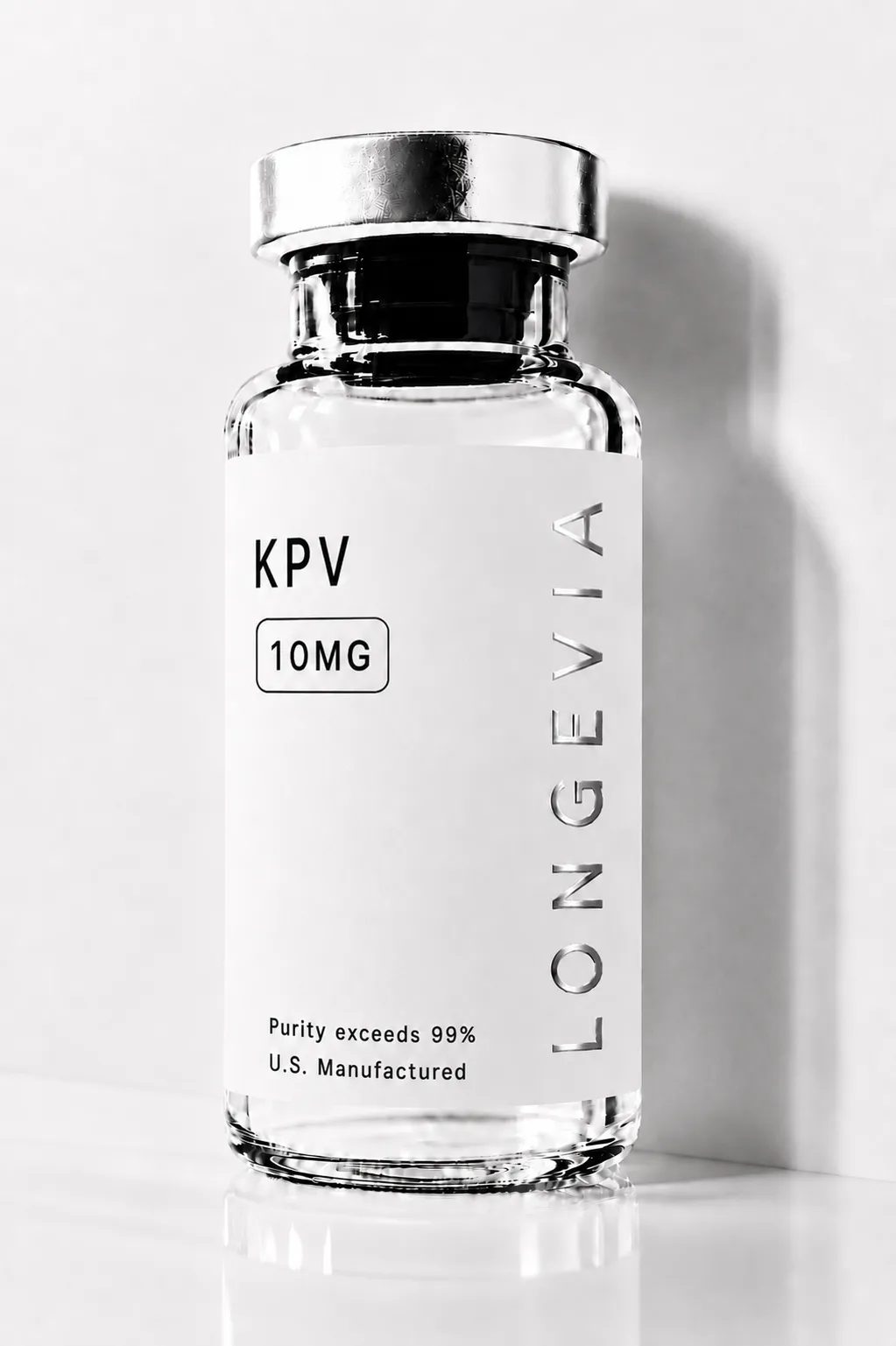
KPV
KPV is a synthetic tripeptide corresponding to the C-terminal sequence of α-melanocyte-stimulating hormone (α-MSH) investigated in research involving melanocortin receptor signaling, anti-inflammatory biology, gastrointestinal mucosal research, and NF-κB pathway modulation. 10mg vial. Research Use Only — Longevia Research.
$121.50
Slide to add
Product FAQs
Find answers to common questions regarding storage, reconstitution, and testing guidelines for this specific compound.