Immune RegulationRecovery & Tissue Repair
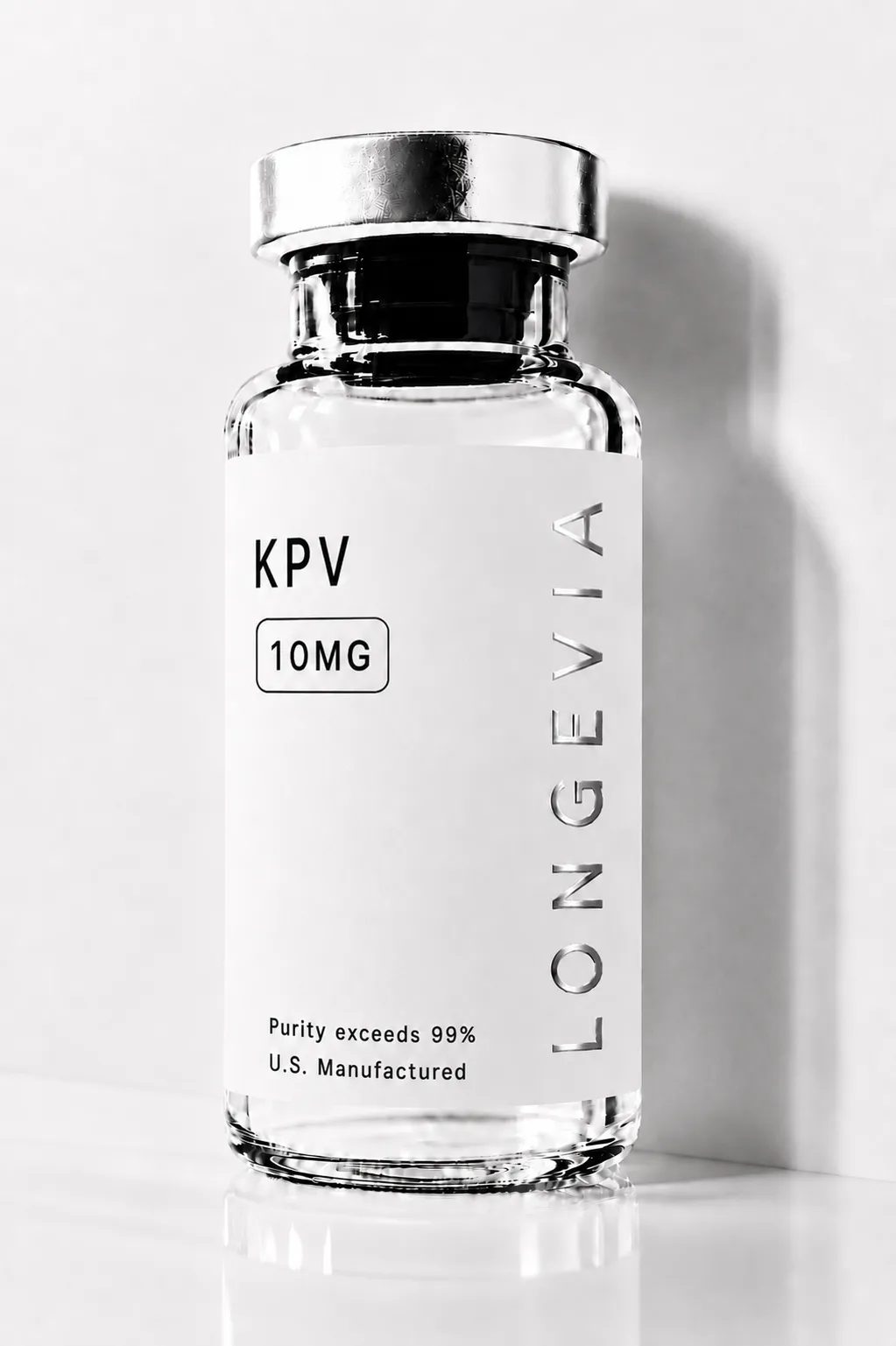
KPV
$121.50
1
Slide to Add
Purity≥99% Tested
TestingLC-MS Verified
LocationUS Based
KPV is a synthetic tripeptide with the sequence Lys-Pro-Val, corresponding to the C-terminal three amino acids (residues 11–13) of α-melanocyte-stimulating hormone (α-MSH). It has been investigated in research involving melanocortin receptor-related signaling, NF-κB pathway modulation, anti-inflammatory biology in cell-based models, and gastrointestinal mucosal research. Longevia Research supplies KPV in a 10mg research-grade vial for qualified laboratory use. KPV is derived from the same POMC-derived α-MSH sequence that underpins the melanocortin research peptides Melanotan 1 and Melanotan 2, but represents the minimal C-terminal fragment rather than a full-length analogue. Its small size — three residues, molecular weight approximately 340 g/mol — places it at the boundary between tripeptide and small-molecule pharmacology. Research has examined KPV as a research tool for investigating α-MSH-related anti-inflammatory signaling pathways independently of melanocortin receptor activation, with proposed mechanisms involving direct intracellular NF-κB pathway modulation in some experimental systems. This product is supplied for Research Use Only and is not intended for human or veterinary use.
Standard Delivery3-4 Working Days
Free ShippingOn all orders above $300
Product Details
Scientific identity. KPV is a tripeptide with the sequence Lys-Pro-Val — lysine, proline, and valine — corresponding to residues 11–13 of the 13-amino-acid α-MSH sequence (Ac-Ser-Tyr-Ser-Met-Glu-His-Phe-Arg-Trp-Gly-Lys-Pro-Val-NH₂). The C-terminal valine in native α-MSH carries an amide group (Val-NH₂); the research literature on KPV uses both the free acid form (Lys-Pro-Val-OH) and the amide form (Lys-Pro-Val-NH₂) across different studies — researchers should verify which form is supplied in the Longevia vial from the batch Certificate of Analysis. KPV lacks the N-terminal acetylation and the His-Phe-Arg-Trp core sequence responsible for melanocortin receptor binding in full-length α-MSH, which has motivated research into whether its proposed anti-inflammatory activity involves melanocortin receptor-independent mechanisms.
Peptide class. Synthetic tripeptide; α-MSH C-terminal fragment; POMC-derived peptide fragment; melanocortin-related research peptide.
Primary research contexts. α-MSH C-terminal fragment pharmacology; NF-κB pathway modulation research; gastrointestinal mucosal tissue biology; anti-inflammatory signaling in cell-based systems; melanocortin-related intracellular signaling research.
Research areas. Melanocortin peptide biology, NF-κB signaling research, gastrointestinal mucosal research, anti-inflammatory pathway research, POMC-derived peptide pharmacology, inflammatory bowel disease cell models, intracellular signaling research.
Product quantity. 10mg per vial.
Physical form. Supplied as a lyophilised solid in a sealed research vial.
Purity. Greater than 99%, confirmed by HPLC and LC-MS analysis at the batch level.
Analytical documentation. A batch-specific Certificate of Analysis is available on the Longevia Research website, covering compound identity, purity, and lot traceability.
Research-use classification. For laboratory research use only. Not for human or veterinary use, clinical diagnostics, or any in-vivo application in humans.
Research Focus
α-MSH Biology and the KPV Fragment
α-MSH is a 13-amino-acid POMC-derived neuropeptide that exerts its classical effects through melanocortin receptors — particularly MC1R and MC4R — via the His-Phe-Arg-Trp core pharmacophore at residues 6–9. The C-terminal tripeptide KPV (residues 11–13) lacks this receptor-binding pharmacophore and does not engage melanocortin receptors with significant affinity in the manner of full-length α-MSH or synthetic analogues such as Melanotan 1 and Melanotan 2. Research has investigated whether KPV's proposed anti-inflammatory activity in experimental systems operates through melanocortin receptor-independent mechanisms — potentially involving direct intracellular signaling pathway modulation — making it a research tool for investigating α-MSH-derived biology independently of classical MC receptor engagement.
NF-κB Pathway Research
NF-κB (nuclear factor kappa-light-chain-enhancer of activated B cells) is a central transcription factor complex regulating pro-inflammatory gene expression in immune and epithelial cells. Cell-based research has examined KPV in models of NF-κB activation — using inflammatory stimuli including LPS and pro-inflammatory cytokines — measuring NF-κB nuclear translocation, IκB degradation, and downstream inflammatory gene expression as endpoints. Published findings from these cell-based systems have reported KPV-associated modulation of NF-κB pathway activity in defined experimental conditions. These are cell-based observations in specific experimental systems and should not be interpreted as establishing anti-inflammatory outcomes in humans.
Gastrointestinal Mucosal Research
A significant area of KPV research has focused on gastrointestinal mucosal biology — specifically cell-based and animal models relevant to inflammatory bowel disease (IBD) and intestinal epithelial barrier function. Research has examined KPV in intestinal epithelial cell models and rodent colitis models, measuring inflammatory markers, epithelial barrier integrity parameters, and histological endpoints. These findings are model-specific preclinical observations in defined experimental systems. KPV's small size and relative stability compared to larger peptides have also motivated research into oral delivery strategies for gastrointestinal research applications.
Research Status
KPV is a preclinical research compound. Published findings are primarily from cell-based and rodent experimental systems. No completed human clinical trial of KPV appears in peer-reviewed literature, and it holds no regulatory approval for any therapeutic indication in any jurisdiction. It is supplied for Research Use Only.
Quality & Purity
Reliable research begins with accurately characterised material. For a tripeptide such as KPV, the small size means that even a single amino acid error produces a completely different compound. Additionally, the distinction between the free acid and C-terminal amide forms — which carry different molecular weights and may have different activity profiles in experimental systems — makes form verification from the batch COA particularly important for this compound.
Purity assessment. Each production lot is characterised to greater than 99% purity by high-performance liquid chromatography (HPLC). Chromatographic purity data is reported on the batch Certificate of Analysis.
Identity confirmation. Peptide identity, full three-residue sequence, and C-terminal form (free acid or amide) are confirmed by mass spectrometry (LC-MS), providing molecular-weight verification consistent with the supplied form. HPLC and LC-MS data together confirm that the material supplied corresponds to the labelled compound at the labelled purity.
Batch traceability and Certificate of Analysis. Every vial of KPV 10mg is traceable to a specific production lot. A batch-specific Certificate of Analysis is accessible directly on the Longevia Research website, covering purity, identity, and lot information. Researchers are particularly encouraged to verify the C-terminal form from the batch COA before use in experimental designs where this distinction is relevant.
Handling. This material should be handled by qualified personnel using appropriate laboratory technique and personal protective equipment, consistent with institutional protocols for research-grade synthetic tripeptides.
Compliance Notice
Longevia Research supplies KPV 10mg for laboratory and in-vitro research use only. The product is intended for use by qualified researchers and trained laboratory personnel in appropriate controlled research environments.
KPV is a synthetic research tripeptide supplied strictly as a research tool. It is not a drug, not a dietary supplement, not a food or food ingredient, and not a cosmetic. No regulatory authority has approved KPV for any human or veterinary therapeutic use, and Longevia does not supply it for administration to humans or animals, for clinical diagnostics, or for any therapeutic purpose.
Longevia provides no dosing instructions, administration guidance, treatment protocols, or reconstitution recommendations for this compound. The scientific literature summarised on this product page describes experimental observations in defined cell-based and animal model systems. Those findings are not medical claims and should not be interpreted as evidence of human efficacy, human safety, or fitness for any clinical application.
The purchaser assumes full responsibility for lawful acquisition, handling, storage, use, and disposal of this material, and for compliance with all applicable local, state, federal, and institutional regulations. By purchasing this product, the buyer confirms that it will be used solely for legitimate laboratory research purposes by qualified personnel, and that its acquisition and intended use comply with applicable laws in the buyer's jurisdiction.
Continue Exploring
Also Considered.
VIP Spray
Longevia Research supplies VIP (Vasoactive Intestinal Peptide, CAS 40077-57-4) 10mg in a 90-spray research format. A naturally occurring 28-amino-acid endogenous neuropeptide studied in VPAC1/VPAC2 receptor pharmacology, gastrointestinal neurobiology, vascular signaling, neuroendocrine research, circadian biology, and immunological signaling. Research Use Only.
$211.50
Slide to add
Thymosin Alpha-1 — Spray
Longevia Research supplies Thymosin Alpha-1 (Tα1 / TA-1, CAS 62304-98-7) 10mg in a 45-spray research format. A synthetic 28-amino-acid N-terminally acetylated peptide corresponding to the N-terminal region of prothymosin alpha, studied in TLR signaling, innate immunity, adaptive immune responses, dendritic cell biology, and clinical immunology research. Research Use Only.
$189.00
Slide to add
TB-500 — Spray
Longevia Research supplies TB-500 in 5mg and 10mg quantities in a 45-spray format for qualified laboratory research. TB-500 is a synthetic acetylated heptapeptide (Ac-LKKTETQ, CAS 885340-08-9) corresponding to the actin-binding domain of thymosin beta-4, investigated in G-actin sequestration, cytoskeletal dynamics, cell migration, and tissue biology research. Research Use Only.
$189.00
Slide to add
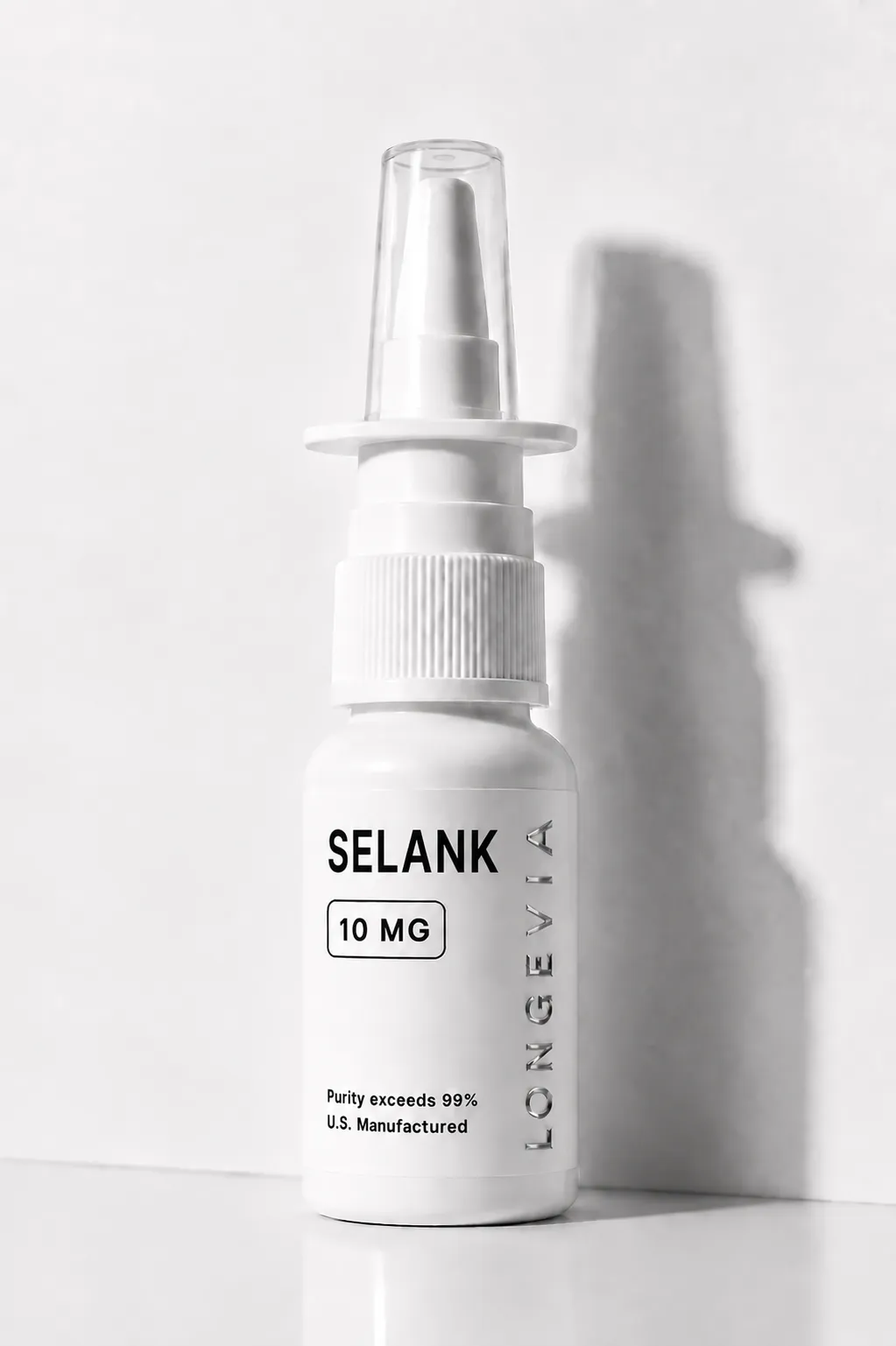
Selank — Spray
Longevia Research supplies Selank 10mg in a 90-spray format for qualified laboratory research. Selank is a synthetic heptapeptide analog related to tuftsin and investigated in neurobiology, GABAergic signaling, neuroimmune research, and behavioral neuroscience. Research Use Only.
$148.50
Slide to add
Product FAQs
Find answers to common questions regarding storage, reconstitution, and testing guidelines for this specific compound.