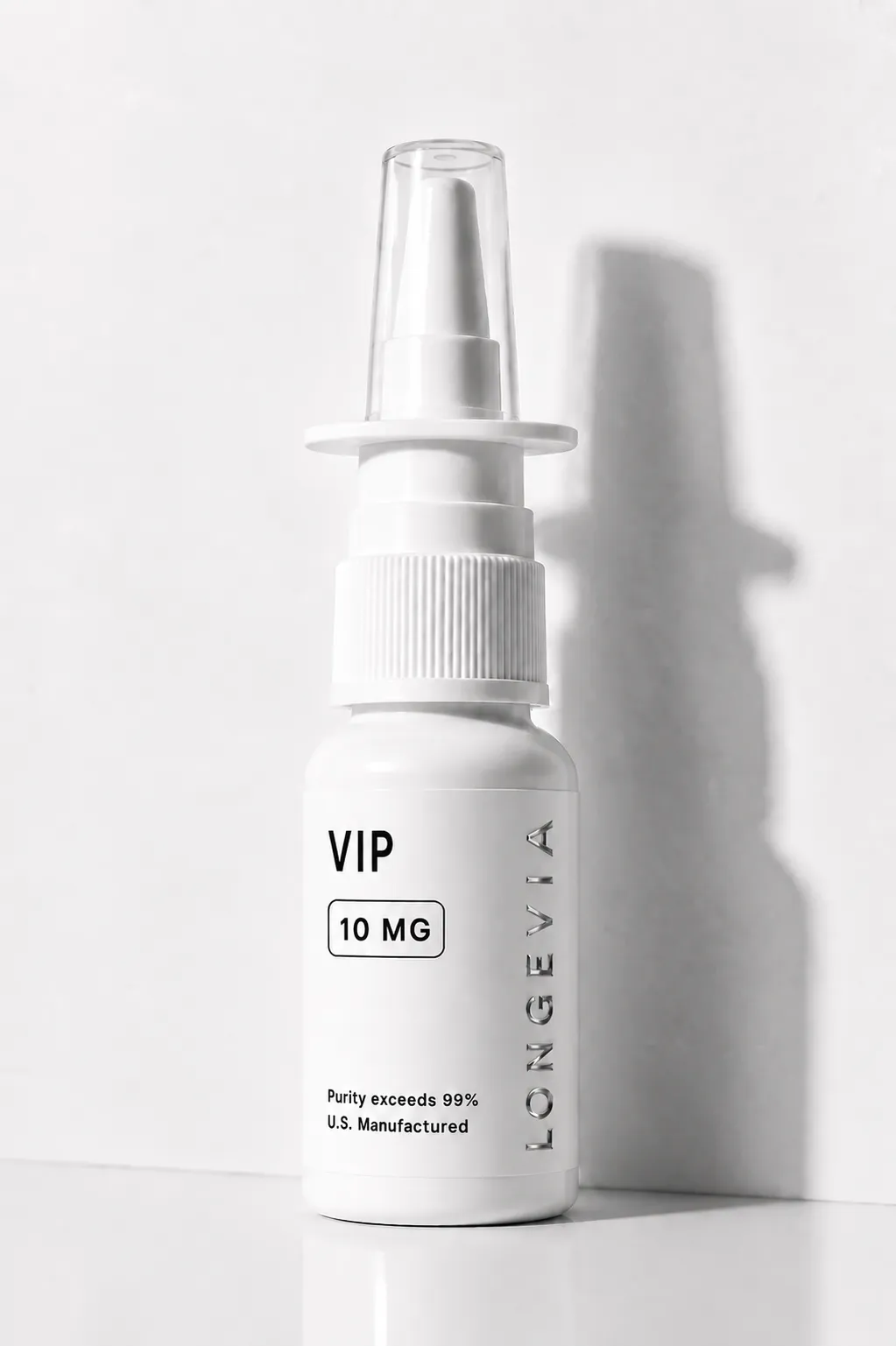
Immune Regulation
VIP Spray
$211.50
1
Slide to Add
Purity≥99% Tested
TestingLC-MS Verified
LocationUS Based
VIP — vasoactive intestinal peptide — is a naturally occurring 28-amino-acid endogenous neuropeptide and member of the secretin peptide superfamily, first isolated from porcine intestinal tissue by Said and Mutt in 1970. It carries a defining C-terminal primary amide (-NH₂), required for full biological activity at its receptors, and is widely distributed across the central and peripheral nervous systems, the enteric nervous system, and a range of peripheral tissues including the gastrointestinal tract, pancreas, respiratory system, immune organs, and vasculature. VIP exerts its biological effects primarily through two Class B1 G protein-coupled receptors — VPAC1 and VPAC2 — both coupled predominantly to Gαs, adenylyl cyclase stimulation, and intracellular cAMP elevation. Research into VIP biology spans gastrointestinal neuropharmacology, vascular smooth-muscle physiology, neuroendocrine signaling, immunology, circadian biology, and respiratory physiology — making it one of the more extensively studied endogenous neuropeptides in peptide pharmacology. Longevia Research supplies VIP as 10mg per bottle in a liquid spray format — 90 sprays per bottle — for qualified laboratory and scientific research purposes only.
Standard Delivery3-4 Working Days
Free ShippingOn all orders above $300
Product Details
Scientific identity: Vasoactive Intestinal Peptide / VIP (CAS 40077-57-4); molecular formula C₁₄₇H₂₃₇N₄₃O₄₃S (free peptide; values vary slightly by salt form convention across sources); molecular weight approximately 3,323–3,326 g/mol (free base); 28-residue endogenous neuropeptide with C-terminal primary amide (Asn28-NH₂); full sequence: His-Ser-Asp-Ala-Val-Phe-Thr-Asp-Asn-Tyr-Thr-Arg-Leu-Arg-Lys-Gln-Met-Ala-Val-Lys-Lys-Tyr-Leu-Asn-Ser-Ile-Leu-Asn-NH₂.
Compound class: Endogenous neuropeptide; peptide hormone; neuromodulator; secretin-family peptide; Research Use Only — not a drug, dietary supplement, food, or cosmetic.
C-terminal amidation: The C-terminal amide (-Asn-NH₂) is structurally defining and required for full biological activity at VPAC receptors; the free-acid form (-Asn-OH) shows substantially reduced receptor-binding affinity; these are distinct chemical entities with altered pharmacology; analytical confirmation of C-terminal amidation is therefore an essential quality checkpoint for research-grade VIP preparations.
Species conservation: Human, porcine, and rat VIP sequences are identical — facilitating broad cross-species research use as a reference compound.
Precursor and endogenous stability: Derived from prepro-VIP (170 amino acids); endogenous circulatory half-life approximately 2 minutes due to rapid proteolytic inactivation by DPP-IV (at the N-terminal His-Ser bond) and by neutral endopeptidase (neprilysin/NEP 24.11) at multiple internal sites; this rapid proteolysis has important implications for research design, as biological activity of exogenously administered VIP depends critically on route of administration, concentration, protease inhibitor presence, and the experimental endpoint measured.
Primary receptors
VPAC1 (VIPR1, chromosome 3p22) — Class B1 GPCR; broadly expressed in lung, liver, intestine, lymphocytes and immune cells, CNS cortex, hippocampus, and cerebellum; primary coupling: Gαs → adenylyl cyclase → cAMP. VPAC2 (VIPR2, chromosome 7q36.3) — Class B1 GPCR; more restricted distribution with prominent expression in pancreatic islets (particularly beta cells), smooth muscle, suprachiasmatic nucleus (SCN), hippocampus, thalamus, and uterus; primary coupling: Gαs → adenylyl cyclase → cAMP; VPAC2's SCN expression is central to VIP's role in circadian pacemaker synchronization.
Distinction from PACAP: VIP activates VPAC1 and VPAC2 with high affinity but does not meaningfully engage PAC1; PACAP-38 activates VPAC1, VPAC2, and PAC1 with high affinity; PACAP-27 activates VPAC1 and VPAC2 with high affinity; in systems where PAC1 is expressed, PACAP-38 activates signaling through three receptors while VIP activates only two — VIP is the preferred pharmacological tool for studying VPAC1 and VPAC2 biology in the absence of PAC1 receptor contributions.
Product content: 10mg per bottle; 90 sprays per bottle.
Physical form: Liquid research spray.
Purity: Research-grade.
Analytical documentation
A batch-specific Certificate of Analysis is available on the Longevia Research website, covering compound identity, purity, and lot traceability; identity confirmation should include mass spectrometric verification at approximately 3,323–3,326 g/mol and explicit confirmation of the C-terminal amide form — distinguishing the biologically active amidated species from the free-acid variant; the methionine residue at position 17 (Met17) represents a potential oxidation site (+16 Da) relevant to storage stability and analytical characterization; chromatographic purity assessment should resolve VIP from truncated fragments, sequence-related impurities, and oxidized variants.
Research-use classification
Research Use Only; not approved for human or veterinary use; not intended for administration to humans or animals.
Research Focus & Mechanism Overview
Research background. VIP was first isolated from porcine intestine by Said and Mutt in 1970 and initially characterized for its potent vasodilatory activity — the origin of its name. Its full 28-amino-acid sequence was established by Mutt and Said in 1974, confirming the C-terminal amide and identical cross-species sequence. Recognition of VIP as a widely distributed neuroendocrine signaling molecule generated research interest across multiple disciplines; VPAC1 and VPAC2 were characterized in the 1990s through molecular cloning, and their differential tissue distributions explained the pleiotropic nature of VIP's physiological effects. The closely related neuropeptide PACAP, identified by Miyata and colleagues in 1989, shares VPAC1 and VPAC2 but additionally engages the selective PAC1 receptor — a discovery that clarified the receptor pharmacology landscape for both neuropeptides and established VIP as the preferred tool for selective VPAC1/VPAC2 research.
Receptor biology and signaling. Both VPAC1 and VPAC2 are Class B1 GPCRs characterized by large N-terminal extracellular domains serving as the primary ligand-binding interface — the ECD of both receptors has been crystallized and structurally characterized, providing insight into VIP-receptor binding geometry with His¹ critical for receptor engagement. Canonical Gαs coupling activates adenylyl cyclase, elevating intracellular cAMP and activating PKA — phosphorylating downstream substrates including CREB (regulating gene transcription) and components of the secretory machinery in endocrine and exocrine cells; Epac (exchange protein directly activated by cAMP) provides an additional cAMP effector activating Rap1 GTPase pathways independent of PKA. VPAC receptors can also signal through Gq-coupled PLC/IP₃/Ca²⁺ pathways, Gi, and β-arrestin-mediated internalization in some cell types — making the specific downstream consequence of VPAC activation highly cell-type- and tissue-context-dependent.
Key research areas. Gastrointestinal neuropharmacology research has characterized VIP as a principal inhibitory enteric neurotransmitter — released from inhibitory motor neurons in the myenteric plexus to promote smooth-muscle relaxation and peristalsis coordination, and from submucosal plexus neurons to regulate intestinal secretion through cAMP-dependent CFTR chloride channel activation; VIP also influences mesenteric vascular tone and pancreatic water and bicarbonate secretion. Vascular research has characterized VIP's potent vasodilatory effects across multiple vascular beds — cerebral, coronary, pulmonary, and mesenteric — through cAMP-mediated inhibition of myosin light-chain kinase and calcium-dependent contractility, with research also examining neurovascular coupling given VIP's co-localization in perivascular nerve fibers. Circadian biology research has established VIP as the principal synchronizing peptide signal in the suprachiasmatic nucleus (SCN) — acting through VPAC2/cAMP to couple individual neuronal oscillators; VPAC2 and VIP knockout mouse studies by Colwell, Aton, and colleagues demonstrated that loss of VIP or VPAC2 signaling severely disrupts SCN circadian synchrony, with individual neurons continuing to oscillate but losing coordinated output. Neuroimmune research has examined VIP's effects on cytokine profiles in immune cell systems — including influences on IL-10, TGF-β, and TNF-α in LPS-stimulated macrophage models and Foxp3 expression in regulatory T-cell contexts — through VPAC1 signaling on T lymphocytes, macrophages, and dendritic cells; these findings characterize VIP's pharmacological effects on immune cells under specific experimental conditions and do not establish anti-inflammatory therapeutic effects for any VIP preparation. Pancreatic islet research has examined VPAC2-mediated glucose-dependent insulin secretion in beta cells and potential VIP roles in beta-cell proliferation and survival through FoxM1 transcription factor pathways. Respiratory research has investigated VIP's bronchospasmolytic and pulmonary vasodilatory effects in airway smooth-muscle preparations and animal models.
Research pharmacokinetics and evidence limitations. VIP's approximately 2-minute endogenous circulatory half-life — from rapid DPP-IV and neutral endopeptidase proteolysis — is directly relevant to research design: biological activity of exogenously administered VIP depends critically on route, concentration, experimental matrix, and endpoint timing. Research on endogenous VIP biology characterizes VIP in its native context of tightly regulated local concentrations and co-release with other neurotransmitters; research on experimentally administered VIP (intravenous infusion, tissue preparation application, intracerebroventricular injection) characterizes pharmacology under defined conditions and concentrations including human intravenous infusion studies examining hemodynamic and endocrine effects. VIPoma studies — pancreatic or intestinal neuroendocrine tumors producing large quantities of VIP and causing Verner-Morrison syndrome (watery diarrhea, hypokalemia, achlorhydria) — provide a natural human model for understanding VIP excess physiology. Neither endogenous biology nor experimental administration data automatically establishes the properties of VIP in the Longevia Research spray format; the spray's formulation characteristics, peptide stability, absorption profile, and any pharmacological activity following spray administration are not stated and should not be inferred from the endogenous or parenteral experimental literature.
Quality & Purity Standards
For a 28-amino-acid endogenous neuropeptide such as VIP, research-grade analytical characterization centers on two critical quality parameters: identity confirmation of the full primary sequence including the C-terminal amide, and purity assessment separating the principal peptide from structurally related fragments, synthesis impurities, and oxidized species. The C-terminal amide (-Asn-NH₂) is not only structurally defining but pharmacologically essential — amidated VIP has full VPAC receptor-binding activity, while des-amido VIP (C-terminal free acid) shows markedly reduced affinity. Any ambiguity about C-terminal amidation status must be resolved by mass spectrometry before a preparation is used in VPAC receptor pharmacology experiments.
VIP also contains a methionine residue at position 17 (Met¹⁷) — a potential oxidation site that, if modified, produces a +16 Da mass shift detectable by mass spectrometry and alters the local conformation of the peptide at a position relevant to receptor interaction. Monitoring for methionine oxidation is a standard quality consideration for VIP preparations, particularly after extended storage or exposure to oxidizing conditions.
Research-grade quality assessment for VIP appropriately involves:
Molecular mass confirmation: High-resolution mass spectrometry (HRMS or LC-MS/MS) confirming the molecular weight consistent with the full 28-residue amidated peptide (~3323–3326 g/mol depending on free base vs. salt form convention) and distinguishing it from des-amido VIP (~3324–3327 g/mol free acid, +1 Da shift) and from VIP fragment impurities.
C-terminal amide verification: Specific mass spectrometric confirmation that the C-terminus is amidated (-NH₂) rather than free acid (-OH) — the defining pharmacological identity checkpoint. Tandem MS fragmentation of the C-terminal region provides direct evidence for amide status.
Sequence verification: LC-MS/MS tandem fragmentation confirming the 28-residue sequence His-Ser-Asp-Ala-Val-Phe-Thr-Asp-Asn-Tyr-Thr-Arg-Leu-Arg-Lys-Gln-Met-Ala-Val-Lys-Lys-Tyr-Leu-Asn-Ser-Ile-Leu-Asn-NH₂, with particular attention to the N-terminal His¹ (critical for receptor binding) and the Met¹⁷ oxidation status.
Purity assessment: Reversed-phase HPLC (RP-HPLC or UHPLC) quantifying the principal peptide peak relative to related impurities. VIP's largely hydrophilic character and mixed charge (multiple arginine and lysine residues alongside acidic Asp and Tyr residues) require appropriate HPLC method selection for adequate resolution.
Batch documentation and traceability: Lot-specific documentation including CAS number (40077-57-4), molecular weight confirmation, sequence verification data (where available), and purity assessment enabling research documentation traceability.
Longevia Research's quality approach is oriented toward providing researchers with analytically characterized research compounds. Researchers should consult current product documentation and available certificates of analysis for batch-specific data. No specific purity grade, third-party certification, cGMP status, or independent laboratory verification is stated for this listing; researchers requiring specific quality parameters should contact Longevia Research directly.
Compliance Notice
FOR RESEARCH USE ONLY. NOT FOR HUMAN CONSUMPTION. NOT FOR VETERINARY USE.
VIP 10mg — 90 Sprays, as supplied by Longevia Research, is intended exclusively for qualified laboratory and scientific research conducted by trained professionals in appropriate research settings. This product is not a drug, dietary supplement, food, or cosmetic. It has not been evaluated or approved by the U.S. Food and Drug Administration, the European Medicines Agency, or any other regulatory authority for use as a therapeutic, prophylactic, or diagnostic agent in humans or animals.
This product is not intended to diagnose, treat, cure, or prevent any disease, condition, or health-related outcome.
Evidence scope: Research on endogenous VIP — including its well-characterized physiological roles as an enteric neurotransmitter, circadian synchronizer, vascular signal, and neuroimmune mediator — concerns the naturally occurring peptide in its biological context. Research on experimentally administered VIP in specific formulations (intravenous infusion, smooth-muscle superfusion, topical tissue application) characterizes VIP's pharmacology in those defined experimental conditions. Neither category establishes the safety, efficacy, pharmacokinetics, bioavailability, stability, or biological activity of the Longevia Research VIP spray. Research findings from a particular formulation, route, concentration, or experimental model cannot automatically be transferred to this product.
Rapid proteolysis consideration: Endogenous VIP has a circulatory half-life of approximately 2 minutes due to rapid DPP-IV and neutral endopeptidase inactivation. The behavior of VIP in any specific research context — including stability, exposure, and biological activity — depends critically on the formulation, route, and experimental conditions used. No stability or exposure data for this spray are stated.
Purchasers are solely responsible for ensuring that acquisition, possession, storage, handling, use, and disposal of this product comply with all applicable local, state, national, and international laws and regulations governing research compounds. By purchasing this product, the purchaser confirms that they are a qualified researcher or research professional acquiring this compound for legitimate scientific research purposes only.
Continue Exploring
Also Considered.
Thymosin Alpha-1 — Spray
Longevia Research supplies Thymosin Alpha-1 (Tα1 / TA-1, CAS 62304-98-7) 10mg in a 45-spray research format. A synthetic 28-amino-acid N-terminally acetylated peptide corresponding to the N-terminal region of prothymosin alpha, studied in TLR signaling, innate immunity, adaptive immune responses, dendritic cell biology, and clinical immunology research. Research Use Only.
$189.00
Slide to add
Selank — Spray
Longevia Research supplies Selank 10mg in a 90-spray format for qualified laboratory research. Selank is a synthetic heptapeptide analog related to tuftsin and investigated in neurobiology, GABAergic signaling, neuroimmune research, and behavioral neuroscience. Research Use Only.
$148.50
Slide to add
LL-37 — Spray
LL-37 is the 37-residue mature cathelicidin peptide released from hCAP18, the only mature cathelicidin peptide humans produce. Investigated in membrane biology, innate immune signaling, and epithelial research. Available from Longevia Research as 1mg — 45 sprays — for qualified laboratory research use only.
$157.50
Slide to add
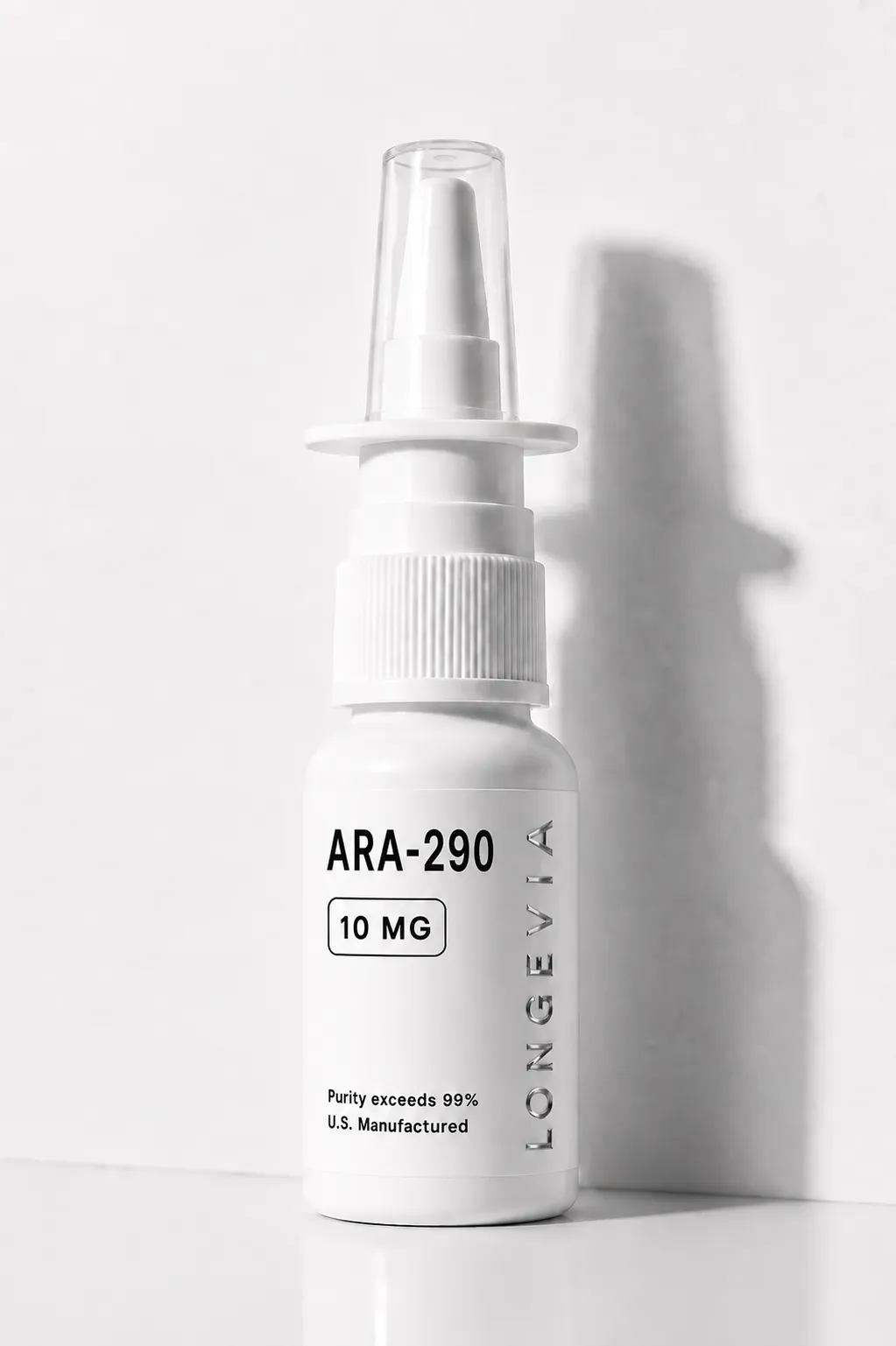
ARA-290 — Spray
ARA-290 (cibinetide) 10mg spray — 45 sprays of the synthetic 11-residue EPO helix-B surface peptide. CAS 1208243-50-8. Supplied by Longevia Research for laboratory use only.
$90.00
Slide to add
Product FAQs
Find answers to common questions regarding storage, reconstitution, and testing guidelines for this specific compound.