- Tirzepatide is a dual GIP/GLP-1 receptor agonist, mechanistically distinct from single-pathway GLP-1 compounds like semaglutide.
- The FDA removed tirzepatide from its drug shortage list in October 2024, ending the shortage-based legal basis for large-scale compounding.
- Nominal concentration is calculated by dividing total peptide amount by final solution volume; the same vial can yield very different concentrations depending on diluent volume added.
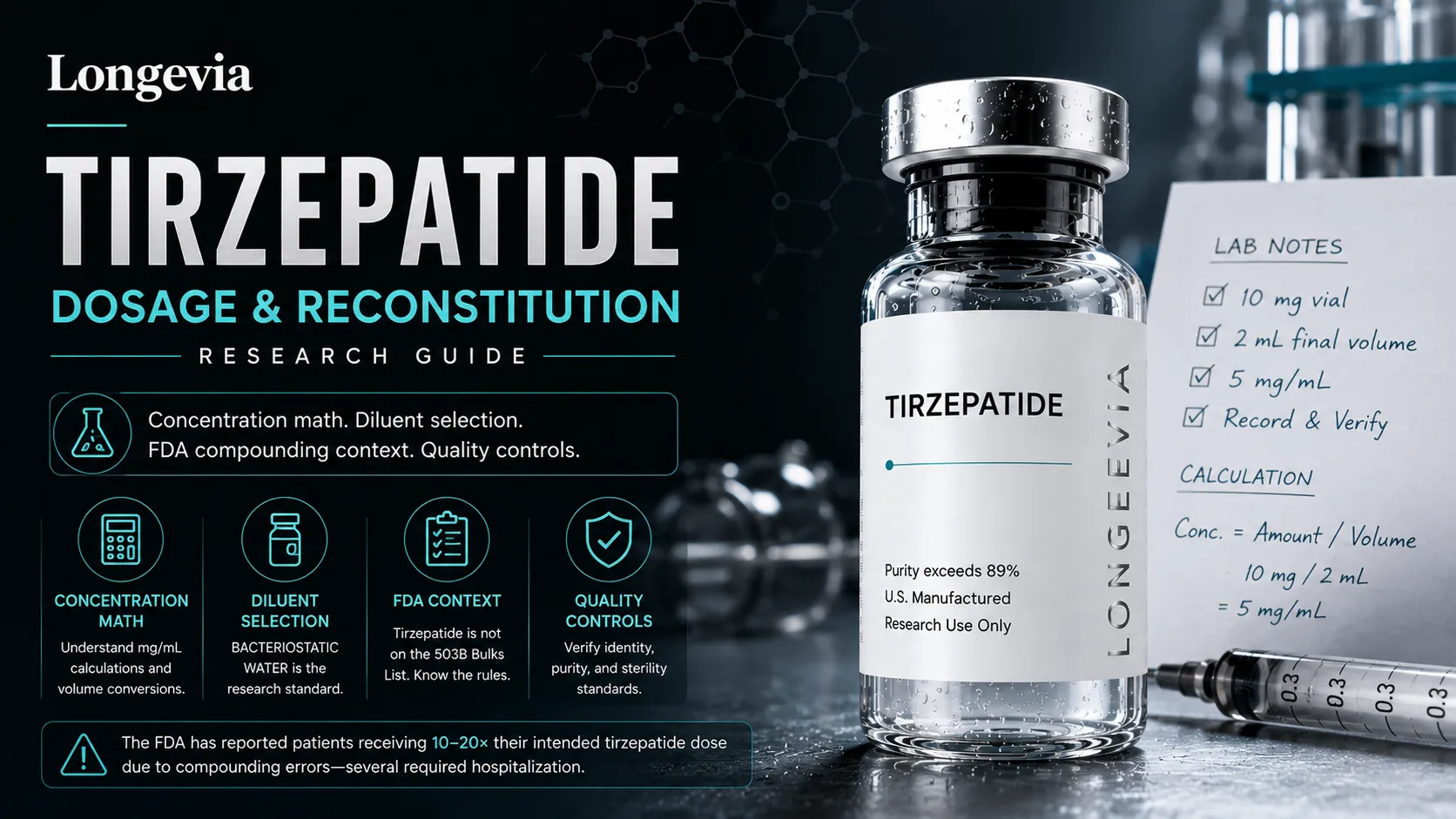
- The FDA has documented cases of patients receiving 10 to 20 times their intended dose due to unit and concentration confusion between differently concentrated vials.
- A syringe "unit" is a volume marking, not a fixed drug quantity — its meaning changes with concentration.
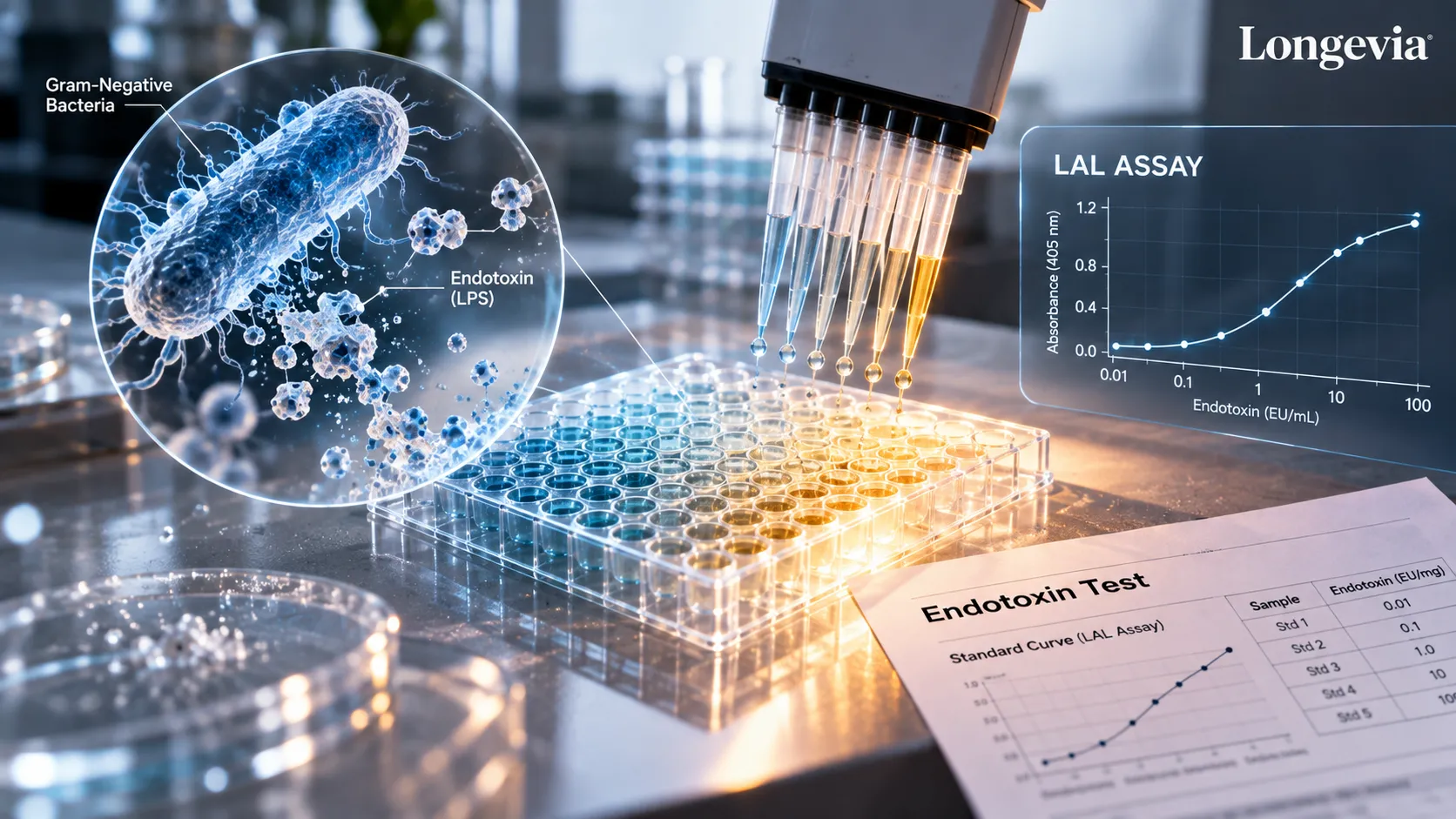
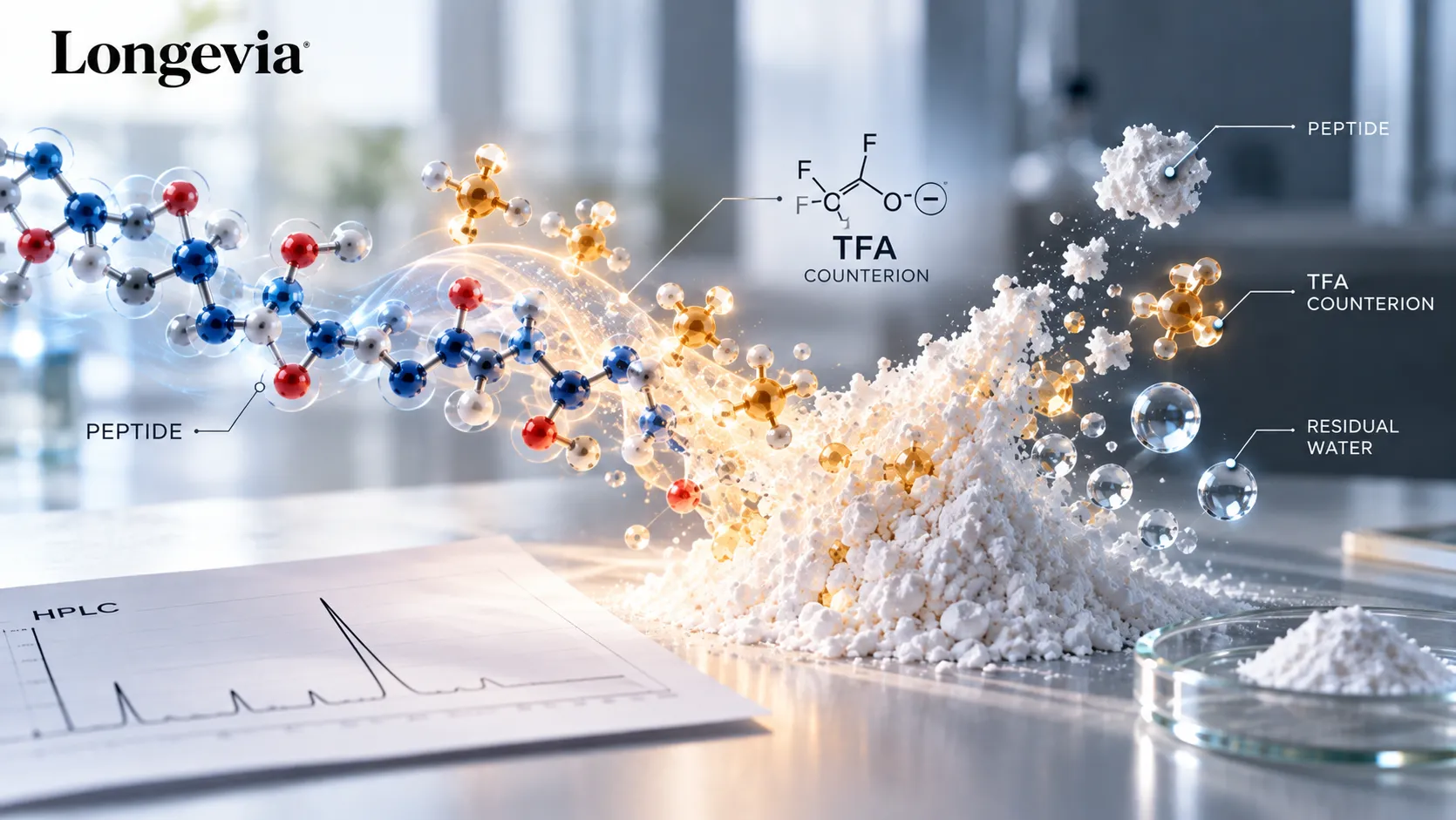
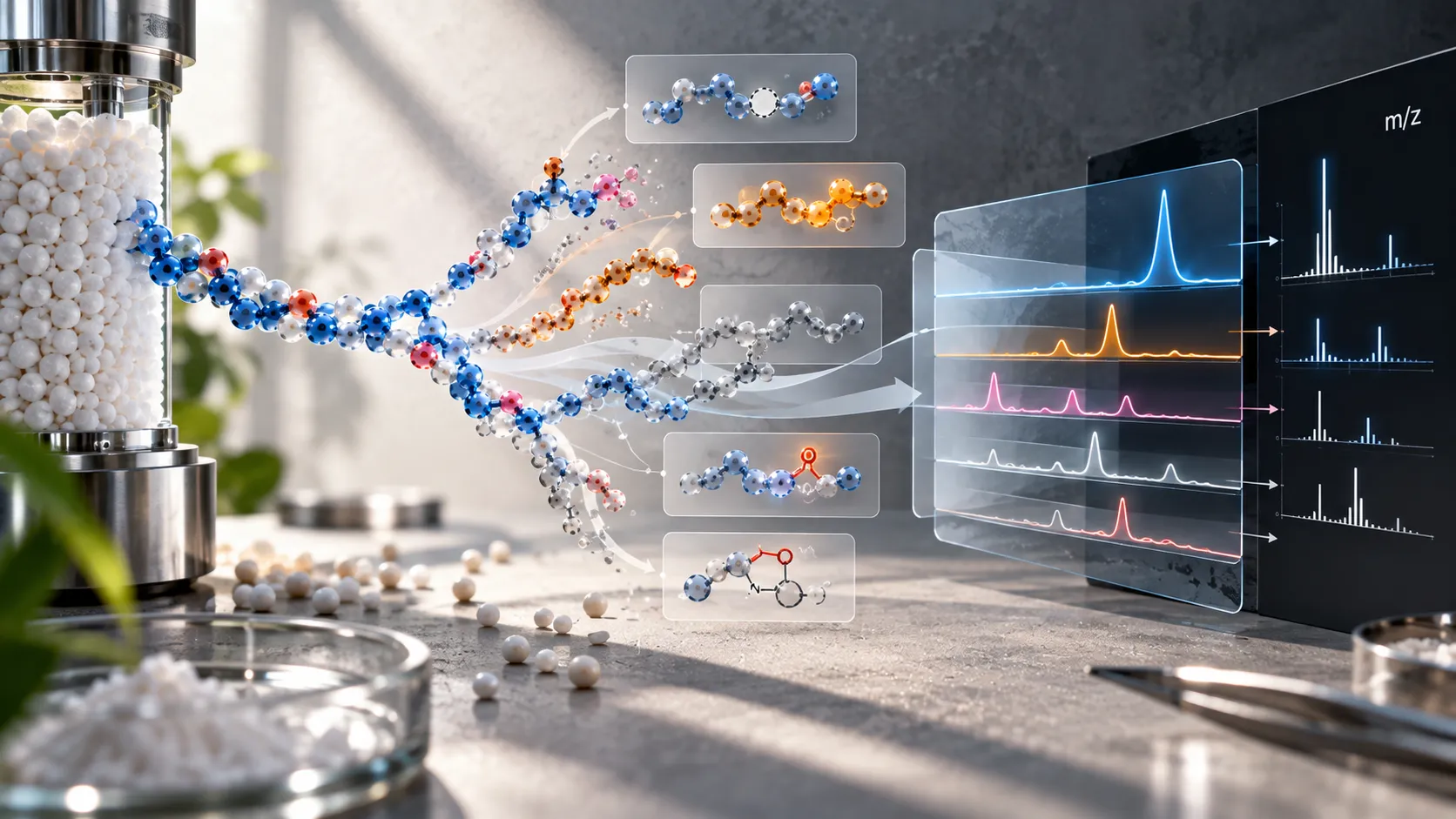
- HPLC purity, mass spectrometry identity, and endotoxin testing are three separate quality questions; none substitutes for the others.
- Research-use tirzepatide is not equivalent to the FDA-approved Mounjaro or Zepbound products and is not evaluated for human use.
Tirzepatide reconstitution questions dominate research-peptide forums for one simple reason: it is currently the single most-searched GLP-1/GIP compound in the category, and the FDA has been explicit that dosing-error hospitalizations tied to compounded tirzepatide are a real, documented problem rather than a theoretical risk. This guide separates the concentration mathematics — which is straightforward and worth understanding precisely — from clinical dosing advice, which this article does not provide.
Tirzepatide is a dual GIP/GLP-1 receptor agonist studied extensively in the SURMOUNT and SURPASS clinical trial programs and approved by the FDA under the brand names Mounjaro and Zepbound for specific indications. [1][2] Research-grade tirzepatide sold for laboratory use is a chemically related but regulatorily distinct product: it has not been evaluated by the FDA for identity, purity, or safety in the way an approved pharmaceutical batch has, and it is not intended for human administration.
This article documents concentration mathematics and quality-control principles for laboratory record-keeping. It is not a self-injection schedule. The FDA has reported patients receiving 10 to 20 times their intended tirzepatide dose because of unit and concentration confusion between compounded vials — several requiring hospitalization. [3]
What tirzepatide research actually shows
Tirzepatide's dual-agonist mechanism is what separates it mechanistically from single-pathway GLP-1 compounds like semaglutide. The SURMOUNT-1 trial, published in the New England Journal of Medicine, reported that participants receiving the highest studied dose (15 mg weekly) achieved a mean weight reduction of 20.9% over 72 weeks compared with 3.1% for placebo, in adults with obesity or overweight and weight-related comorbidities. [1] The SURPASS program separately established tirzepatide's efficacy on glycemic endpoints in type 2 diabetes research. [2]
Mechanistically, tirzepatide binds both the GIP receptor and the GLP-1 receptor, and preclinical work suggests the GIP component may act synergistically with GLP-1 agonism to improve insulin sensitivity and produce greater weight reduction than GLP-1 agonism alone achieves in comparable trial populations. This dual-pathway hypothesis is one of the most frequently cited research angles for why tirzepatide's trial effect sizes have generally outpaced single-agonist compounds in cross-trial comparisons — though cross-trial comparisons are not the same as head-to-head randomized data.
Why the FDA's regulatory position changed
Tirzepatide was compounded legally for a period under Section 503A of the Federal Food, Drug, and Cosmetic Act while it appeared on the FDA's drug shortage list. That changed in October 2024, when the FDA removed tirzepatide from the shortage list, which ended the specific legal basis that had permitted large-scale compounding of a copy of an approved drug. Compounding a copy of an FDA-approved product remains tightly restricted outside of shortage conditions, patient-specific formulation needs, or bulk-substance listing. Neither tirzepatide nor semaglutide currently appears on the FDA's 503B Bulks List. This regulatory shift is directly relevant to any researcher trying to understand why "compounded tirzepatide" sourcing has become more legally contested since 2024, and why research-use-only material occupies a different regulatory lane entirely from either the approved product or a legally compounded copy.
The concentration equation
Every reconstitution calculation reduces to the same relationship, regardless of compound:
Concentration = total peptide amount ÷ final solution volume
If a vial is documented as containing M milligrams and is reconstituted to a final volume of V millilitres, the nominal concentration is:
C = M ÷ V mg/mL
The corresponding volume for any target quantity is calculated by rearranging the equation:
Volume = target quantity ÷ concentration
Worked example
Assume a hypothetical research vial is documented as containing 10 mg of tirzepatide, reconstituted to a final volume of 2 mL. The nominal concentration is:
10 mg ÷ 2 mL = 5 mg/mL
A hypothetical analytical aliquot corresponding to 2.5 mg would then be:
2.5 mg ÷ 5 mg/mL = 0.5 mL
This is a mathematical example only. It does not establish that the underlying material is sterile, correctly identified, stable at this concentration, or suitable for any particular use. Longevia's peptide dosage calculator can help verify this type of arithmetic once a concentration and target quantity have been independently confirmed against actual lot documentation.
Common concentration presentations
Different labs and pharmacies document tirzepatide reconstitution at different target concentrations depending on vial size and intended final volume. The table below summarizes commonly documented presentations for reference — it is not a recommendation for any specific preparation.
Vial nominal amount | Final volume | Resulting concentration |
|---|---|---|
5 mg | 1 mL | 5 mg/mL |
10 mg | 2 mL | 5 mg/mL |
10 mg | 1 mL | 10 mg/mL |
20 mg | 1 mL | 20 mg/mL |
30 mg | 3 mL | 10 mg/mL |
The same vial can therefore correspond to several different concentrations depending entirely on the diluent volume added — which is precisely the variable the FDA identified as the source of the most serious documented dosing errors. [3]
Why unit confusion happens
The FDA's review of adverse events tied to compounded semaglutide and tirzepatide identified a recurring pattern: patients or caregivers converting between milligrams, millilitres, and syringe "units" without confirming the specific concentration of the vial in front of them. [3][4] A syringe unit is a volume marking, not a fixed drug quantity — the amount of tirzepatide represented by "10 units" changes completely depending on the concentration of the solution being drawn.
Inspectors have also documented content-accuracy failures independent of user error: one inspected product labeled as containing a specific milligram amount was found on analysis to contain a meaningfully different quantity, illustrating that even a mathematically correct calculation is only as reliable as the underlying label's accuracy. [3]
Never assume a syringe "unit" has a fixed drug meaning. Confirm the concentration in mg/mL first, and treat the unit marking purely as a volume conversion after that number is established.
Reconstitution as a documented process
A defensible reconstitution record treats preparation as a controlled laboratory step, not an informal mixing task. At minimum, the record should capture:
- Compound identity and supplier lot number.
- Nominal vial amount and its documentation source.
- Diluent identity, lot number, and volume added.
- Calculated final concentration, shown as an equation rather than a bare number.
- Preparation date, operator, and storage condition immediately afterward.
- Visual inspection result at the time of preparation.
Tirzepatide is typically supplied as a lyophilized powder intended for reconstitution with bacteriostatic water or bacteriostatic sodium chloride. Sterile water without a preservative is sometimes used instead, but has a shorter documented in-use window than bacteriostatic diluents in most compounding references, since it lacks the antimicrobial preservative that extends handling time. Any diluent choice should be documented explicitly rather than assumed, because the diluent affects both the beyond-use timeline and the preparation's compatibility profile.
Handling technique
Reconstitution technique affects protein and peptide integrity. Directing the diluent stream gently along the interior wall of the vial rather than directly onto the lyophilized cake reduces foaming and mechanical stress on the peptide structure. Aggressive shaking should be avoided in favor of gentle swirling or rolling, continued until the solution is visibly clear and free of particulate matter. Any haze, discoloration, or visible particulate should be treated as a quarantine event rather than something to filter past or work around.
Storage and stability documentation
Storage guidance for a research-created solution should never be inferred from a different compound's chart or a generic peptide-forum recommendation. Stability depends on the specific formulation, concentration, container, diluent, and handling history of that exact preparation.
Storage state | Typical documented range | Key variable |
|---|---|---|
Lyophilized powder | -20°C, protected from light | Long-term stability before reconstitution |
Reconstituted solution (bacteriostatic diluent) | 2-8°C (refrigerated) | Preservative extends in-use window versus sterile water |
Reconstituted solution (sterile water, no preservative) | 2-8°C, shorter window | No antimicrobial preservative present |
A reconstituted solution should be inspected before each use for cloudiness, color change, or precipitate — any of which should trigger quarantine rather than continued use. For a broader walkthrough of storage and shelf-life principles that apply across research compounds generally, see Longevia's peptide reconstitution and storage guide and how long peptides last after reconstitution.
Quality documentation beyond the label
A vial label states what the manufacturer or compounder intends the contents to be. It does not, by itself, prove identity, purity, sterility, or endotoxin status. Those require independent analytical verification:
- HPLC (High-Performance Liquid Chromatography) quantifies relative purity by separating the sample into its component peaks.
- Mass spectrometry confirms molecular weight and sequence identity, catching substitution or truncation errors that HPLC alone can miss.
- Endotoxin testing addresses bacterial byproduct contamination — a separate question from chemical purity entirely.
A certificate of analysis that reports all three, tied to a specific batch and lot number rather than a generic product-level document, is the standard a research supplier should be able to produce on request. Longevia publishes lot-specific COAs for exactly this reason — see our broader guide on why peptide purity matters for how to evaluate a supplier's documentation more generally, and our peptide dosage calculations guide for unit-conversion principles that apply to compounds beyond tirzepatide specifically.
Tirzepatide compared with other GLP-1/GIP research compounds
Tirzepatide is frequently discussed alongside semaglutide as the two dominant compounds in GLP-1-pathway research. The core mechanistic distinction is receptor targeting: semaglutide is a selective GLP-1 receptor agonist, while tirzepatide engages both the GLP-1 and GIP receptors. For a full comparative breakdown including GLP-3 (Rt) triple-agonist research, see Longevia's Semaglutide vs. Tirzepatide vs. GLP-3 (Rt) comparison. Researchers specifically documenting semaglutide-side concentration math may also find the parallel structure of Longevia's semaglutide reconstitution guide useful for cross-reference.
Common documentation mistakes
The most frequent error is treating the vial's total labeled amount as though it were already a concentration — a 10 mg vial does not mean 10 mg/mL unless the final volume happens to be exactly 1 mL. The second most common error is copying a concentration number from an unrelated vial or an online chart rather than calculating it from the specific lot in hand. A third error is rounding a calculated volume beyond what the measuring device can reliably resolve — a calculated draw smaller than a syringe's reliable graduation should prompt a redesigned dilution, not a falsely precise reading.
A less obvious but equally serious mistake is failing to record which diluent was used. Bacteriostatic water, bacteriostatic saline, and preservative-free sterile water are not interchangeable, and a record that only says "reconstituted" without specifying the diluent cannot support a stability claim later.
Regulatory and safety context
Tirzepatide research materials sold for laboratory use should carry a Research Use Only (RUO) designation and should not be represented as equivalent to the FDA-approved Mounjaro or Zepbound products, nor to a legally compounded pharmacy preparation. The FDA has issued dozens of warning letters in 2026 to telehealth and compounding operations over misleading claims associated with compounded GLP-1 products, reflecting active regulatory scrutiny of this exact category. [5] See Longevia's research-use disclaimer for the site's complete compliance position.
Any question involving human administration, dosing, or a suspected adverse reaction should be directed to a licensed clinician, pharmacist, or emergency service — never resolved by an online calculator or forum protocol.
Practical documentation checklist
- Confirm compound identity, lot number, and nominal vial amount from source documentation.
- Convert all values to a single consistent unit system before calculating.
- Calculate concentration as total amount divided by final volume, and show the equation in the record.
- Record the diluent identity, lot number, and volume added.
- Document preparation date, operator, and post-preparation visual inspection.
- Store according to the specific diluent's documented in-use window, not a generic assumption.
- Quarantine any preparation with unexpected color, haze, or particulate.
- Treat HPLC, mass spectrometry, and endotoxin results as three separate quality questions, not one.
- Route any human-use question to qualified clinical or pharmacy oversight.
The most reliable tirzepatide reconstitution record is not the one that produces the fastest number — it is the one that preserves a clear line from lot documentation through the concentration equation to the final preparation, so that any reviewer can retrace exactly how a number was reached and verify it independently.
Frequently Asked Questions
- Jastreboff AM et al. Tirzepatide Once Weekly for the Treatment of Obesity. New England Journal of Medicine. 2022;387:205-216.
- Frias JP et al. Tirzepatide versus Semaglutide Once Weekly in Patients with Type 2 Diabetes. New England Journal of Medicine. 2021;385:503-515.
- U.S. Food and Drug Administration. Compounding Risk Alerts: dosing errors associated with compounded injectable semaglutide and tirzepatide products.
- U.S. Food and Drug Administration semaglutide and tirzepatide dosing-error safety communication.
- U.S. Food and Drug Administration. Ready Med warning letter regarding compounded semaglutide and tirzepatide marketing claims. 06/08/2026.