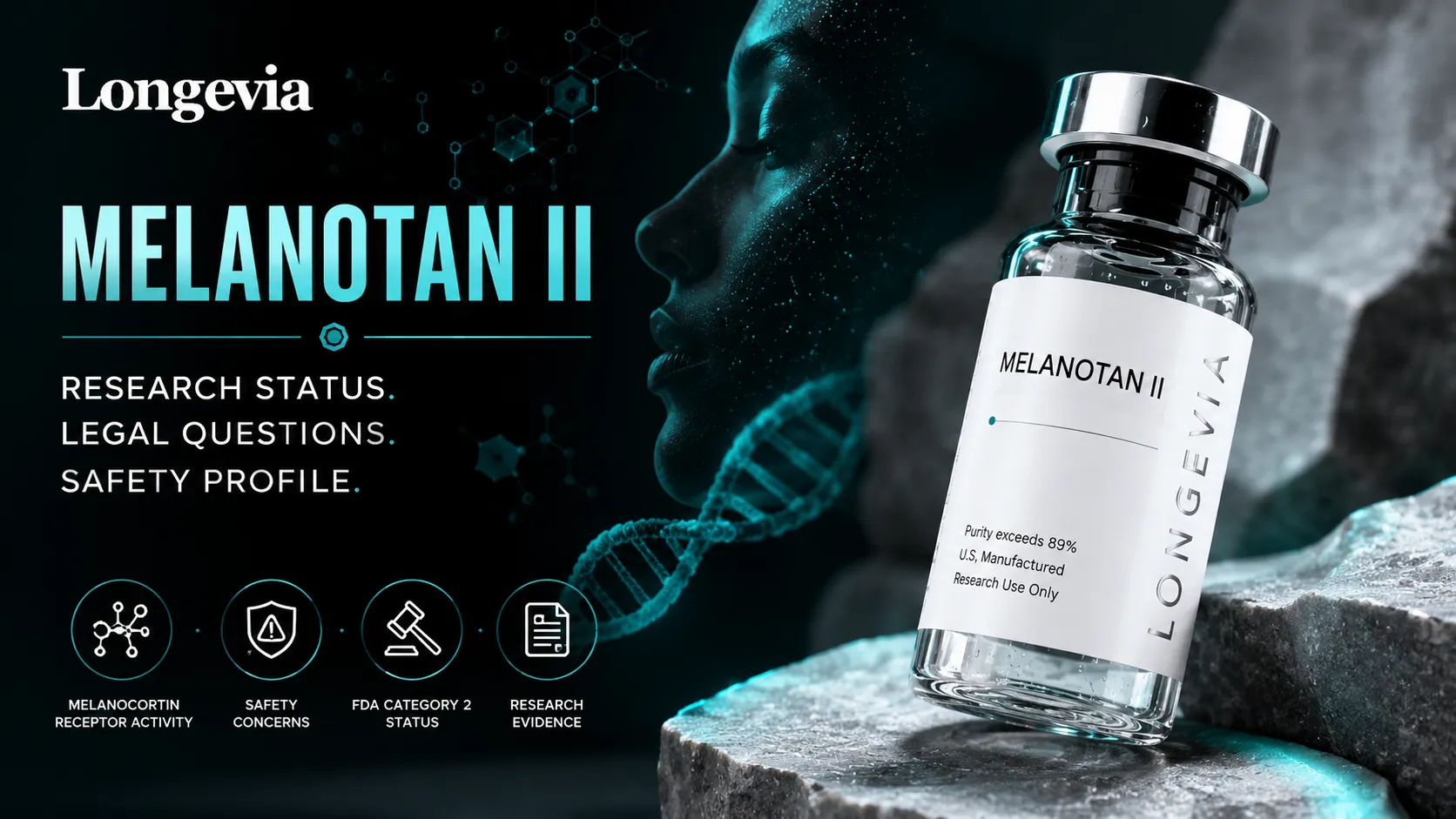
- Melanotan II is a non-selective analog of alpha-MSH that activates four melanocortin receptors (MC1R, MC3R, MC4R, MC5R), not just the pigmentation-associated receptor.
- As of 2026, Melanotan II is classified in FDA 503A bulk substances Category 2, reflecting a significant-safety-risk determination specific to compounding.
- Melanotan II has never received FDA approval for any indication, unlike the related compound Melanotan I (afamelanotide/Scenesse), approved in 2019 for erythropoietic protoporphyria.
- Case reports document melanoma, nevus changes, and rare severe adverse events including rhabdomyolysis following Melanotan II use.
- No available consumer test predicts in advance who will respond with unremarkable tanning versus melanocyte proliferation.
- A certificate of analysis verifies identity and purity but does not change the compound’s underlying receptor pharmacology or documented safety signal.
- Melanotan II research directly led to bremelanotide (Vyleesi), FDA-approved in 2019 as the first centrally-acting treatment for hypoactive sexual desire disorder.
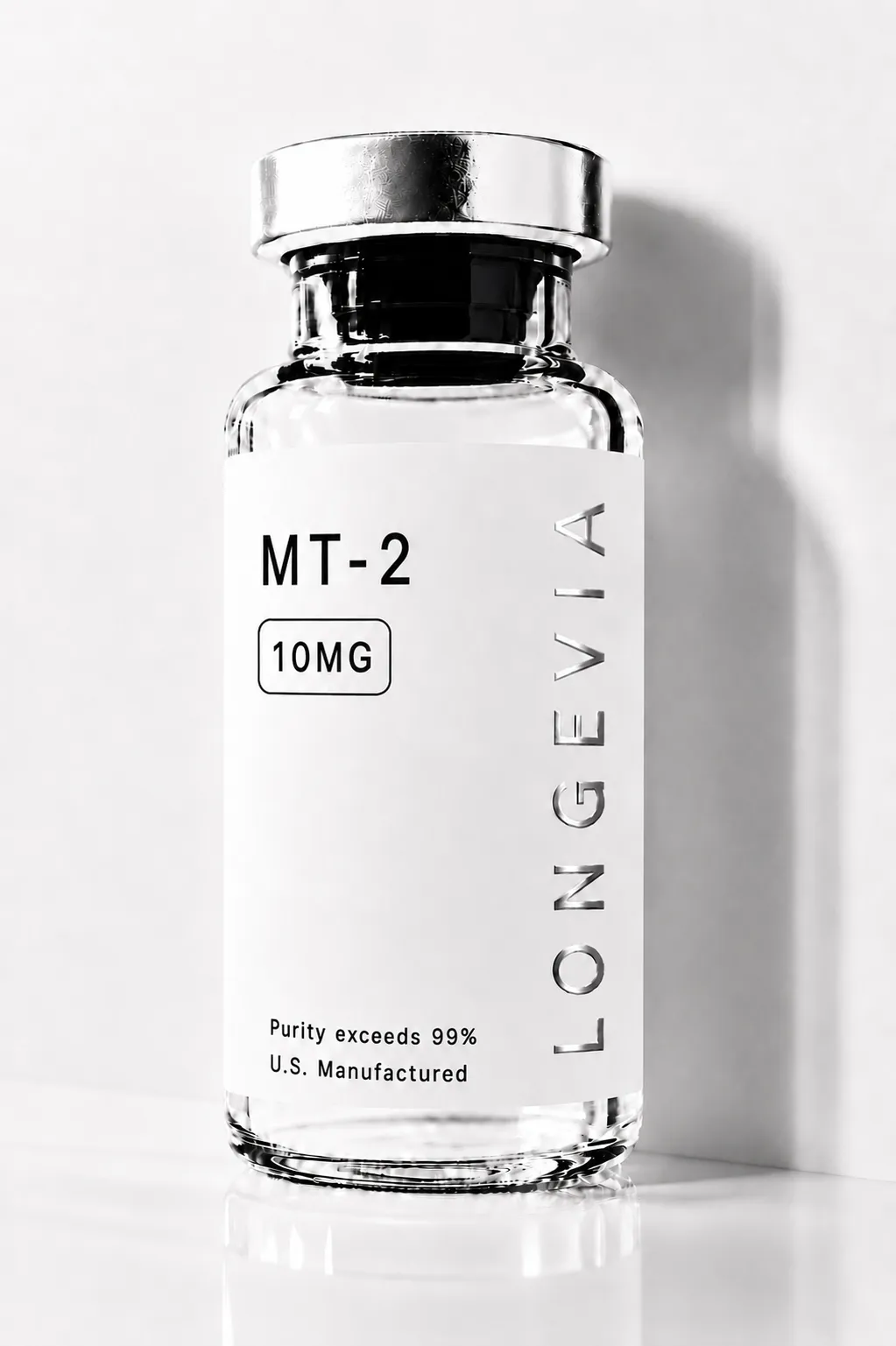
Melanotan II
Melanotan 2 (MT-II) is a synthetic cyclic heptapeptide analogue of α-MSH investigated in research involving melanocortin receptor pharmacology, MC1R and MC4R signalling, melanogenesis, and sexual behaviour neuroscience models. 10mg vial. Research Use Only — Longevia Research.
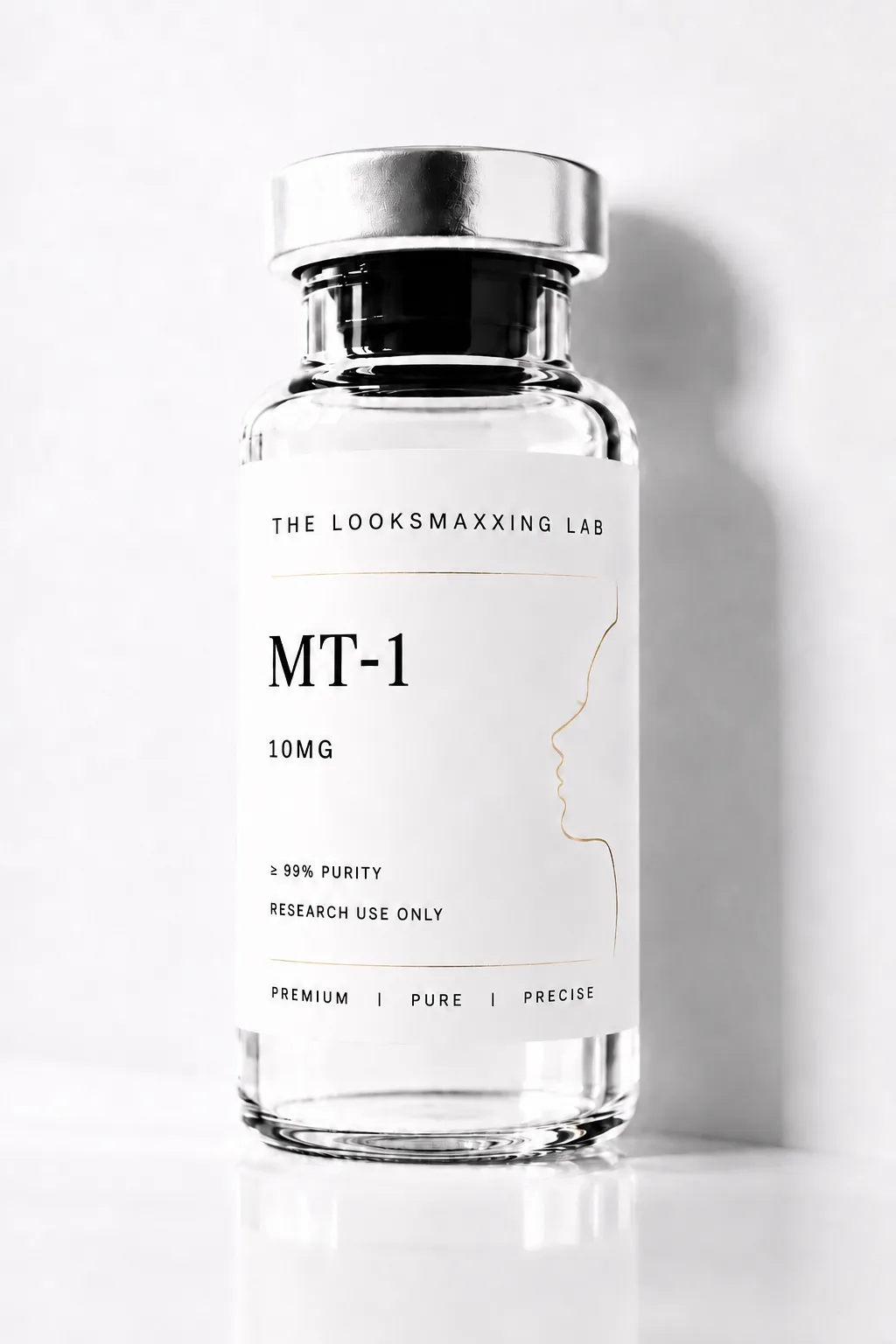
Melanotan I
Buy Melanotan I (Afamelanotide) 10mg research peptide. MC1R-selective melanocortin agonist. COA-verified, HPLC tested. Research use only.
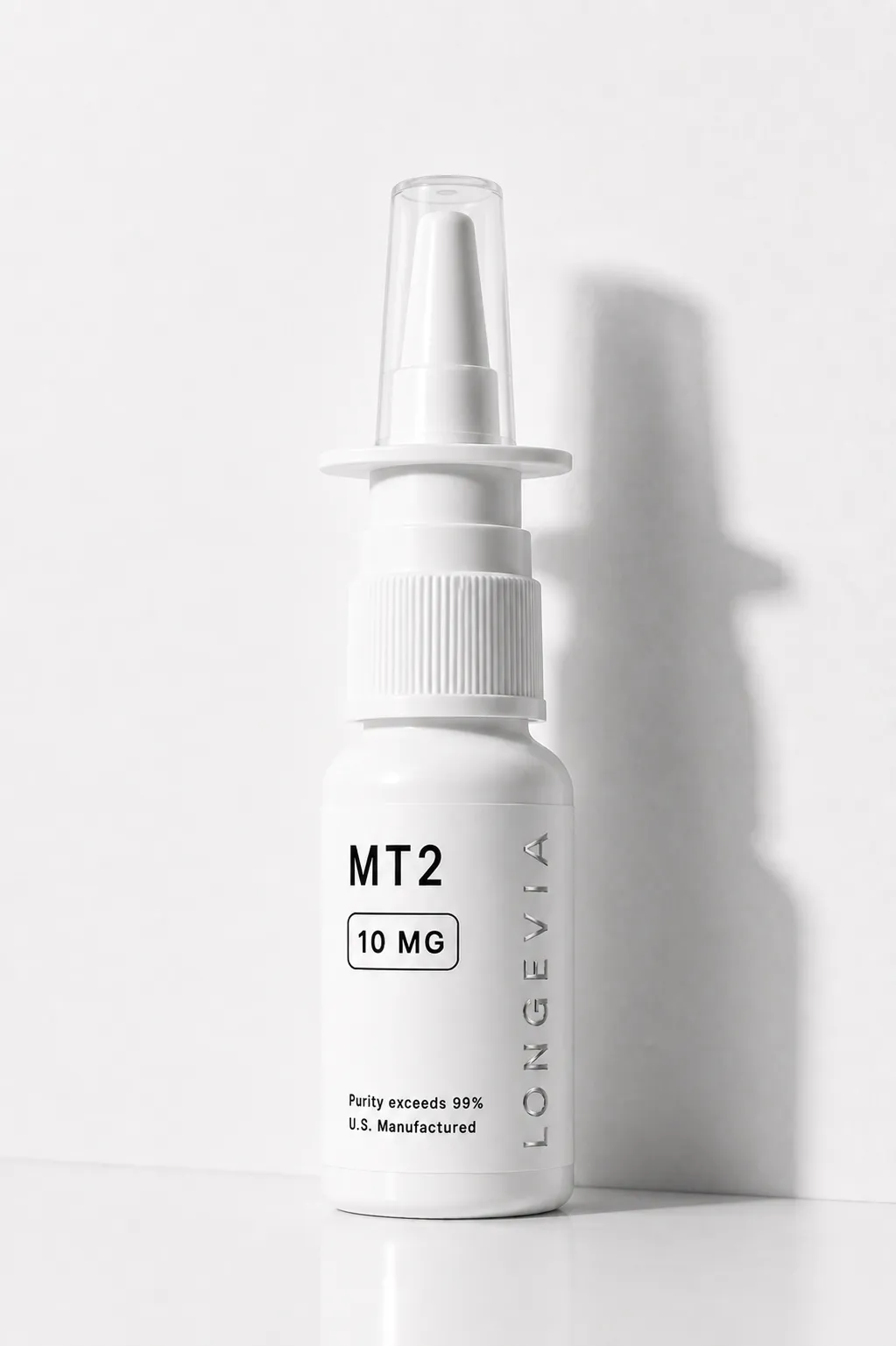
MT-2 Spray
Buy MT-2 Spray, a research-grade Melanotan II preparation in a convenient spray format for melanocortin receptor and pigmentation pathway research. COA-verified, 99%+ purity. Research use only.
Melanotan II
Melanotan 2 (MT-II) is a synthetic cyclic heptapeptide analogue of α-MSH investigated in research involving melanocortin receptor pharmacology, MC1R and MC4R signalling, melanogenesis, and sexual behaviour neuroscience models. 10mg vial. Research Use Only — Longevia Research.
Melanotan I
Buy Melanotan I (Afamelanotide) 10mg research peptide. MC1R-selective melanocortin agonist. COA-verified, HPLC tested. Research use only.
MT-2 Spray
Buy MT-2 Spray, a research-grade Melanotan II preparation in a convenient spray format for melanocortin receptor and pigmentation pathway research. COA-verified, 99%+ purity. Research use only.
Melanotan II occupies an unusual position in peptide research: it is one of the most searched compounds in the entire category, widely discussed in tanning and bodybuilding communities, and simultaneously one of the most heavily flagged compounds in current FDA regulatory activity. Understanding why requires separating three distinct questions that online discussions routinely blur together — what the compound does mechanistically, what its documented safety profile actually shows, and what its current regulatory status is in the United States.
Melanotan II (MT-2) is a synthetic cyclic heptapeptide analog of alpha-melanocyte-stimulating hormone (α-MSH). Unlike the endogenous hormone it mimics, Melanotan II is not receptor-selective — it activates all four peripheral melanocortin receptors (MC1R, MC3R, MC4R, and MC5R) rather than binding preferentially to the pigmentation-specific MC1R. [1] This non-selectivity is the single most important fact for understanding both its studied effects and its safety concerns, because MC3R and MC4R activation extends its biological activity well beyond skin pigmentation into appetite regulation and sexual response pathways — effects users report as secondary but which researchers consider central to understanding the compound's full receptor pharmacology.
Melanotan II has never received regulatory approval for any indication, anywhere. As of 2026 it is classified in Category 2 of the FDA's 503A bulk drug substances list — a designation the agency applies specifically because it considers the compound to raise significant safety concerns for compounding. [2]
Mechanism of action
The melanocortin receptor family that Melanotan II activates is involved in far more than skin color. MC1R, expressed on melanocytes, drives eumelanin (dark pigment) synthesis when activated — this is the receptor responsible for the tanning effect that gives the compound its popular use case. MC3R and MC4R, expressed predominantly in the hypothalamus, are central regulators of appetite and energy homeostasis, which is why appetite suppression is one of the most consistently reported effects in both research literature and user reports. MC4R activation is also mechanistically linked to sexual arousal pathways, which is the basis for Melanotan II's secondary research interest in that domain.
Because Melanotan II does not discriminate between these receptor subtypes, a single dose produces effects across all four pathways simultaneously. This is mechanistically distinct from newer, more selective melanocortin research compounds under development, which aim to isolate the pigmentation effect from the appetite and sexual-response effects — an active area of receptor-selectivity research specifically motivated by Melanotan II's non-selective profile. [1]
Melanocortin receptor activity at a glance
Receptor | Primary tissue | Documented association |
|---|---|---|
MC1R | Melanocytes | Eumelanin synthesis, pigmentation |
MC3R | Hypothalamus | Energy homeostasis, appetite |
MC4R | Hypothalamus, CNS | Appetite suppression, sexual arousal pathways |
MC5R | Exocrine glands | Sebum and exocrine gland regulation |
What the pigmentation research shows
Melanotan II's pigmentation effect is its best-characterized property: activation of MC1R upregulates tyrosinase activity within melanocytes, increasing eumelanin production independent of ultraviolet exposure. This is mechanistically different from a sunless tanning product like DHA-based sprays, which stain the stratum corneum rather than triggering biological melanin synthesis. Because the effect operates through actual melanocyte stimulation, pigmentation changes from Melanotan II affect the full depth of the skin's pigment-producing layer, not just the surface.
This same mechanism is the basis for the compound's research interest in erythropoietic protoporphyria and related photosensitivity conditions, where increasing baseline pigmentation has been studied as a way to reduce light-triggered symptoms — a legitimate area of dermatological research interest that predates and is distinct from cosmetic tanning use.
Documented safety concerns
The safety literature on Melanotan II is more extensive than for many research peptides, largely because of its established period of unregulated consumer use. Case reports and observational data describe a range of effects:
- Common, dose-related effects: nausea (frequently reported, often diminishing with continued use), facial flushing, and transient increases in blood pressure shortly after administration.
- Pigmentation changes beyond intended tanning: darkening, enlargement, or new formation of nevi (moles) has been repeatedly documented in case reports, attributed to MC1R activation extending to existing melanocytic lesions, not just baseline skin. [3]
- Melanoma case reports: multiple published case reports describe melanoma diagnosed following Melanotan II use, including at least one case of melanoma in situ diagnosed within four weeks of starting a compounded product. [4] These are case reports rather than controlled epidemiological studies, so they establish an association requiring further investigation rather than a proven causal incidence rate — but the consistency of the signal across independently published cases is why dermatologists flag it specifically.
- Rare, severe adverse events: isolated reports describe rhabdomyolysis and renal infarction associated with Melanotan II use, alongside documented changes in oral mucosal pigmentation. [5]
No currently available consumer test can predict in advance whether a given individual will respond to Melanotan II with unremarkable tanning versus melanocyte proliferation that raises melanoma risk. This unpredictability, not just the average-case side-effect profile, is central to why dermatology literature treats the compound cautiously.
Regulatory status in 2026
Melanotan II has never been approved by the FDA or any other national regulatory authority for any indication. The FDA's enforcement history with this compound dates back to at least 2007, when it issued a formal warning letter to a distributor marketing it as an injectable tanning product with claims of skin-cancer protection — claims the agency explicitly rejected given the compound's unapproved status. [6] That enforcement posture has continued and intensified: as of the FDA's most recent 503A bulk drug substances review, Melanotan II sits in Category 2, the classification reserved for substances the agency determines raise significant safety risk specifically in the compounding context — a stricter designation than compounds simply awaiting review. [2]
This Category 2 status is directly relevant to sourcing questions researchers frequently ask: it means Melanotan II cannot be legally used as an ingredient in compounded (patient-specific pharmacy-prepared) products in the United States, independent of its status as a research chemical sold under Research Use Only labeling. These are two separate regulatory questions, and conflating them is one of the most common misunderstandings in online discussions of the compound's legal status.
Melanotan I versus Melanotan II
Melanotan I (afamelanotide) is a related but distinct compound with a meaningfully different regulatory history — it received FDA approval in 2019 under the brand name Scenesse, specifically for erythropoietic protoporphyria, making it the only melanocortin-pathway compound in this family with an approved indication. Melanotan I is more MC1R-selective than Melanotan II, which is consistent with its narrower, better-tolerated effect profile in the approved clinical context. Researchers comparing the two should not assume safety or regulatory findings transfer between them — they are related peptides with materially different receptor selectivity and materially different regulatory status.
Attribute | Melanotan I (afamelanotide) | Melanotan II |
|---|---|---|
Receptor selectivity | MC1R-selective | Non-selective (MC1R, MC3R, MC4R, MC5R) |
FDA status | Approved (Scenesse, 2019) for EPP | Not approved for any indication; Category 2 bulk substance |
Secondary effects | Minimal beyond pigmentation | Appetite, sexual-response, cardiovascular effects reported |
Research interest | Photodermatosis, EPP | Pigmentation, appetite, receptor-selectivity comparison research |
Melanotan II's most significant research legacy: bremelanotide
One of the most substantively important facts in Melanotan II's research history rarely appears in tanning-focused discussions: Melanotan II is the direct ancestor of an FDA-approved drug. During early clinical work on Melanotan II in the 1990s, researchers at the University of Arizona and later Palatin Technologies observed that study participants consistently reported increased sexual arousal alongside pigmentation changes — an observation that redirected an entire research program.
By 2000, the compound's original developer had shifted focus away from Melanotan II itself toward a structurally modified derivative called bremelanotide (also known as PT-141), engineered specifically to concentrate its activity at the centrally-expressed MC3R and MC4R receptors while reducing the MC1R-mediated tanning effect. [7] After a clinical hold in 2007 over blood-pressure signal concerns and a subsequent redevelopment path, bremelanotide received FDA approval in June 2019 under the brand name Vyleesi, for acquired, generalized hypoactive sexual desire disorder (HSDD) in premenopausal women. [7] It remains notable in pharmacology as the first centrally-acting (rather than hormonal or vascular) approved treatment in its category.
This history matters for two reasons beyond trivia. First, it demonstrates that Melanotan II's non-selective receptor activity, while a safety liability in its own right, was scientifically productive: it revealed a druggable pathway that a more selective molecule could isolate. Second, it illustrates precisely why receptor selectivity is the organizing theme of current melanocortin research — bremelanotide succeeded clinically in part *because* it was engineered away from Melanotan II's broad, unselected receptor engagement, not despite it.
Reconstitution and handling as research material
Where Melanotan II or Melanotan I is used in laboratory research settings, the same documentation discipline that applies to any lyophilized peptide applies here: record the lot number, nominal vial amount, diluent identity and volume, calculated concentration, preparation date, and storage condition. Longevia's peptide dosage calculations guide and peptide calculator cover the underlying concentration mathematics that applies across compounds, and our reconstitution and storage guide covers general stability documentation principles.
A certificate of analysis verifying identity and purity is a baseline expectation for any research peptide, but — as the safety data above makes clear — purity documentation answers a different question from safety. A 99% pure sample of a non-selective melanocortin agonist is still a non-selective melanocortin agonist; purity does not change the receptor pharmacology or the documented case-report signal for pigmented-lesion changes.
What responsible research coverage requires
Given the case-report signal for melanocytic changes, any research protocol involving Melanotan II should include baseline dermatological documentation of existing nevi where applicable, and should treat any new or changing pigmented lesion during a study period as an event requiring dermatological evaluation rather than an expected side effect to monitor passively. This is consistent with how the dermatology literature has approached the compound: not as disqualifying it from research interest, but as requiring monitoring protocols proportionate to a documented, if incompletely characterized, risk signal.
This distinction is also why Longevia's product catalog carries Melanotan I, Melanotan II, and MT-2 Spray as separate, individually documented items rather than treating "melanotan" as a single generic entry — the receptor-selectivity and regulatory differences between the variants are substantive enough that conflating them in a research record would obscure exactly the information a reviewer most needs.
Common misunderstandings
Online discussions of Melanotan II frequently compress several distinct legal and scientific questions into one another, which makes the compound harder to research responsibly than its popularity would suggest. Separating those questions explicitly is useful before drawing any conclusion about sourcing, handling, or study design.
The most frequent misunderstanding is treating "not FDA-approved" and "illegal to research" as the same statement — they are not. Research Use Only material occupies a distinct regulatory category from both an approved drug and a compounded pharmacy product, though it is also not authorized for human administration under that RUO label. A second common error is assuming Melanotan I and Melanotan II share a safety and regulatory profile because of their similar names; their receptor selectivity and regulatory histories are materially different, as the comparison table above shows. A third misunderstanding is treating case reports as if they established a precise incidence rate — case reports establish that an association exists and is worth investigating further; they do not, by themselves, quantify how common an outcome is across the full population of users.
References and evidence limits
The case-report literature on Melanotan II documents a real and repeated signal for pigmented-lesion changes and, in rare cases, melanoma diagnosis following use. [3][4] This evidence base is sufficient to warrant caution and monitoring but does not establish a precise incidence rate, and it should not be read as either "proven safe" or "proven to cause melanoma" in any individual case. The FDA's Category 2 bulk substance classification reflects the agency's own risk assessment specifically in the compounding context. [2] Research Use Only material remains subject to the same general RUO framework described in Longevia's research-use disclaimer — it is not evaluated for human safety or efficacy by the FDA, and any human-use question should be directed to a qualified clinician.
Frequently Asked Questions
- Receptor pharmacology review of melanocortin agonists MC1R-MC5R and Melanotan II non-selectivity.
- U.S. Food and Drug Administration. 503A Bulk Drug Substances Nominated for Review, Category 2 safety determinations.
- Eruptive dysplastic nevi following Melanotan use. Actas Dermo-Sifiliograficas.
- Melanoma associated with the use of Melanotan-II, case report.
- Changes in oral mucosa associated with Melanotan II injections: a case report.
- U.S. Food and Drug Administration warning letter regarding unapproved marketing of Melanotan II as an injectable tanning product.
- U.S. Food and Drug Administration. VYLEESI (bremelanotide injection) prescribing information, initial approval 2019.