- CJC-1295 and ipamorelin should be documented as separate compounds unless a combined formulation has been validated.
- CJC-1295 DAC and non-DAC variants may differ in pharmacokinetic behaviour and must be identified precisely.
- Each compound requires its own concentration calculation based on its own vial amount and final volume.
- A visually clear mixture does not prove chemical compatibility, sterility, or stability.
- Human CJC-1295 studies reported sustained GH and IGF-1 changes, but those findings do not establish a general treatment protocol.
- Ipamorelin research includes early pharmacological and pharmacokinetic studies, but clinical evidence remains limited.
- Combination claims should be described as hypotheses unless controlled comparative evidence demonstrates an interaction.
- Separate lot, assay, preparation, and storage records improve reproducibility and traceability.
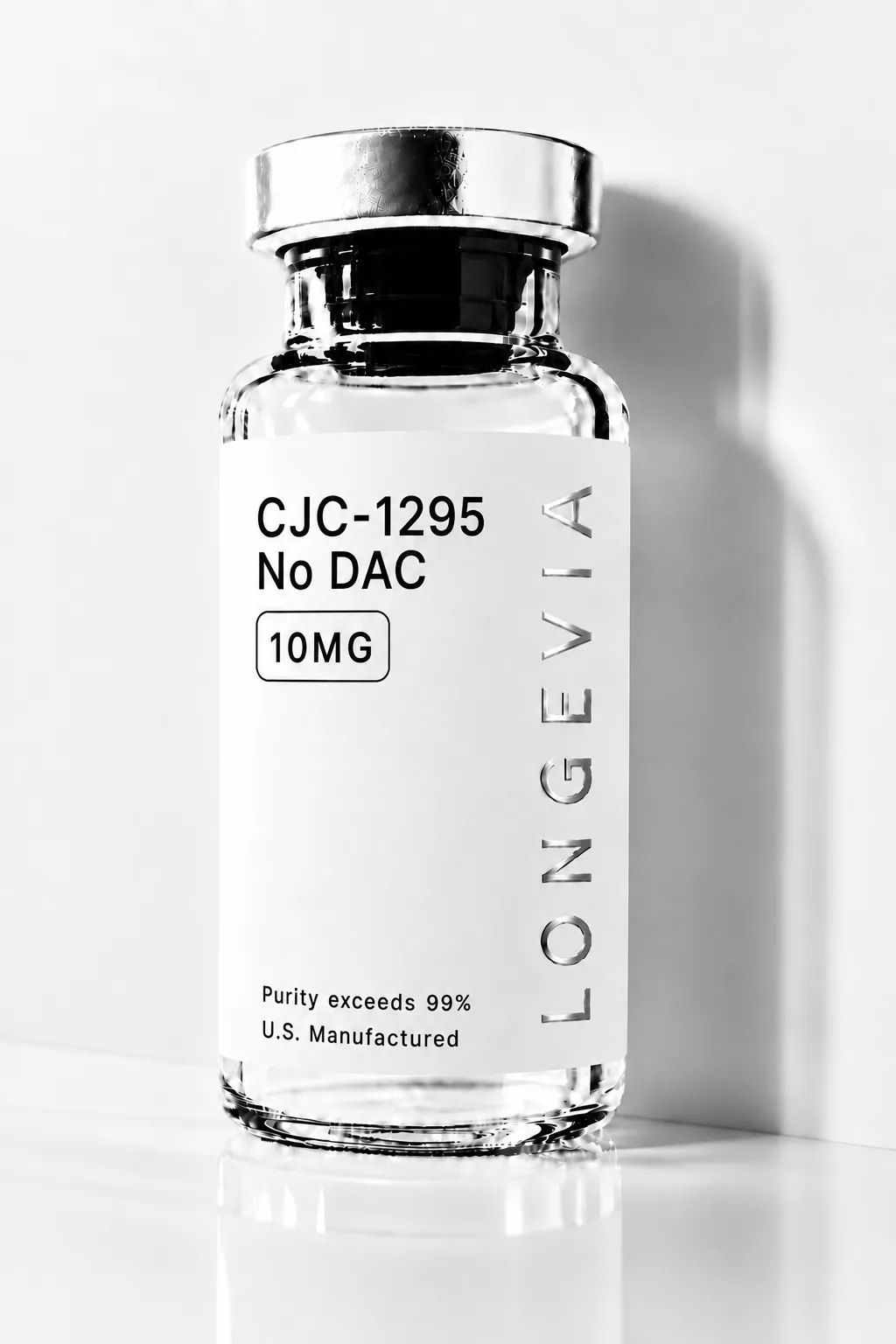
CJC-1295 No DAC
CJC-1295 No DAC (Modified GRF 1-29) is a synthetic 29-amino-acid GHRH analogue investigated in research involving growth hormone-releasing hormone receptor signalling, pulsatile GH secretion models, and pituitary biology. 10mg vial. Research Use Only — Longevia Research.
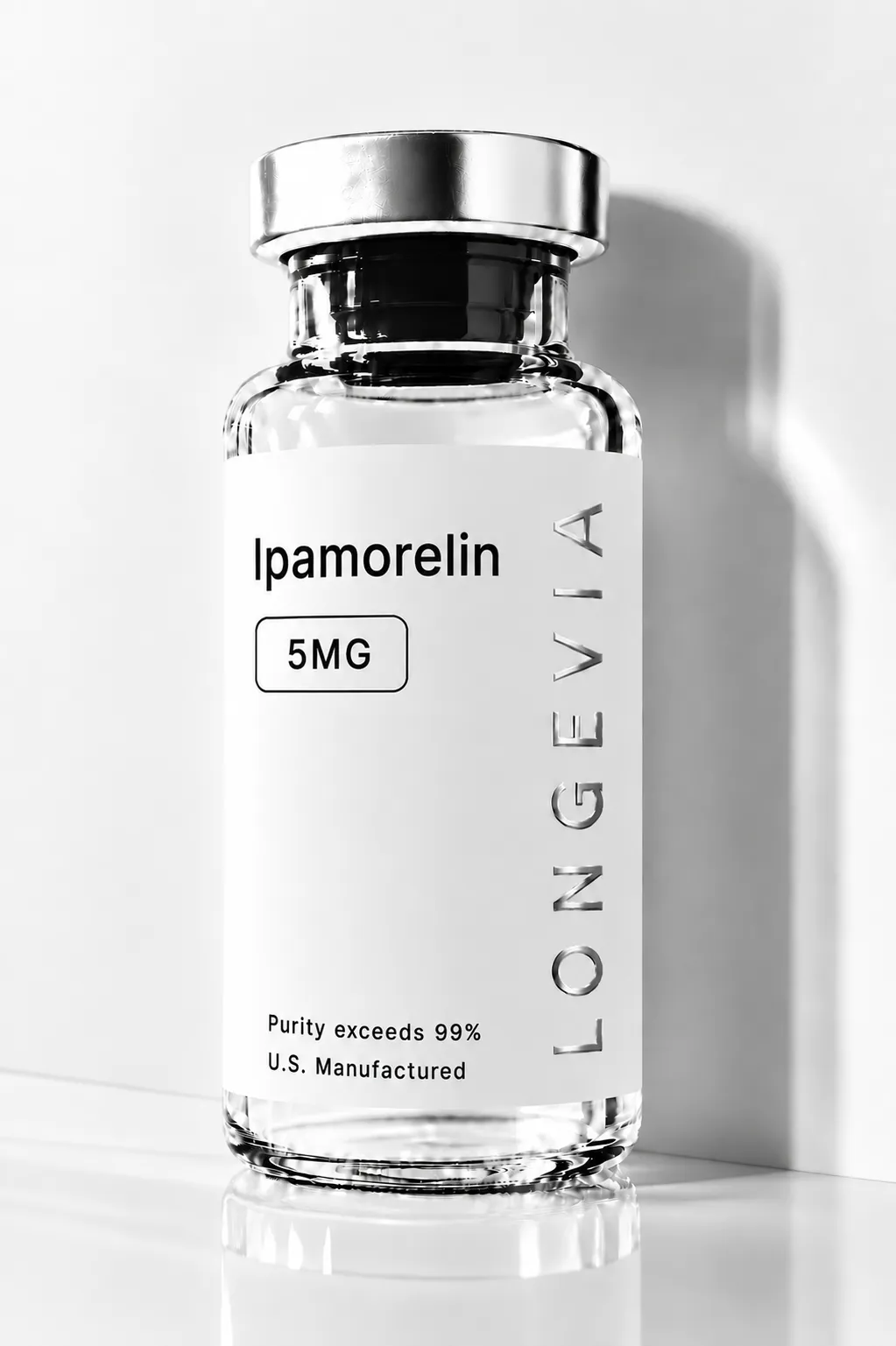
Ipamorelin
Ipamorelin is a synthetic pentapeptide GH secretagogue investigated in research involving GHSR-1a pharmacology, selective pulsatile GH secretion models, ghrelin receptor biology, and pituitary somatotroph signaling. Available in 5mg and 10mg vials. Research Use Only — Longevia Research.
CJC-1295 No DAC
CJC-1295 No DAC (Modified GRF 1-29) is a synthetic 29-amino-acid GHRH analogue investigated in research involving growth hormone-releasing hormone receptor signalling, pulsatile GH secretion models, and pituitary biology. 10mg vial. Research Use Only — Longevia Research.
Ipamorelin
Ipamorelin is a synthetic pentapeptide GH secretagogue investigated in research involving GHSR-1a pharmacology, selective pulsatile GH secretion models, ghrelin receptor biology, and pituitary somatotroph signaling. Available in 5mg and 10mg vials. Research Use Only — Longevia Research.
CJC-1295 and ipamorelin are frequently discussed as a combined peptide protocol, but “dual-vial mixing” can mean two very different things. It may refer to preparing each compound separately, or it may refer to combining both compounds in one container or syringe. Those procedures are not equivalent and should not be treated as interchangeable.
This guide explains the research evidence, concentration mathematics, vial documentation, compatibility questions, and quality controls relevant to CJC-1295 and ipamorelin. For the underlying muscle-recovery and body-composition research context, see Longevia's CJC-1295 + Ipamorelin growth hormone axis guide. It does not provide a self-administration schedule or authorize the preparation of an injectable combination. Any human-use protocol requires qualified medical oversight, pharmacy review, and applicable regulatory and ethics approvals.
How the two compounds differ
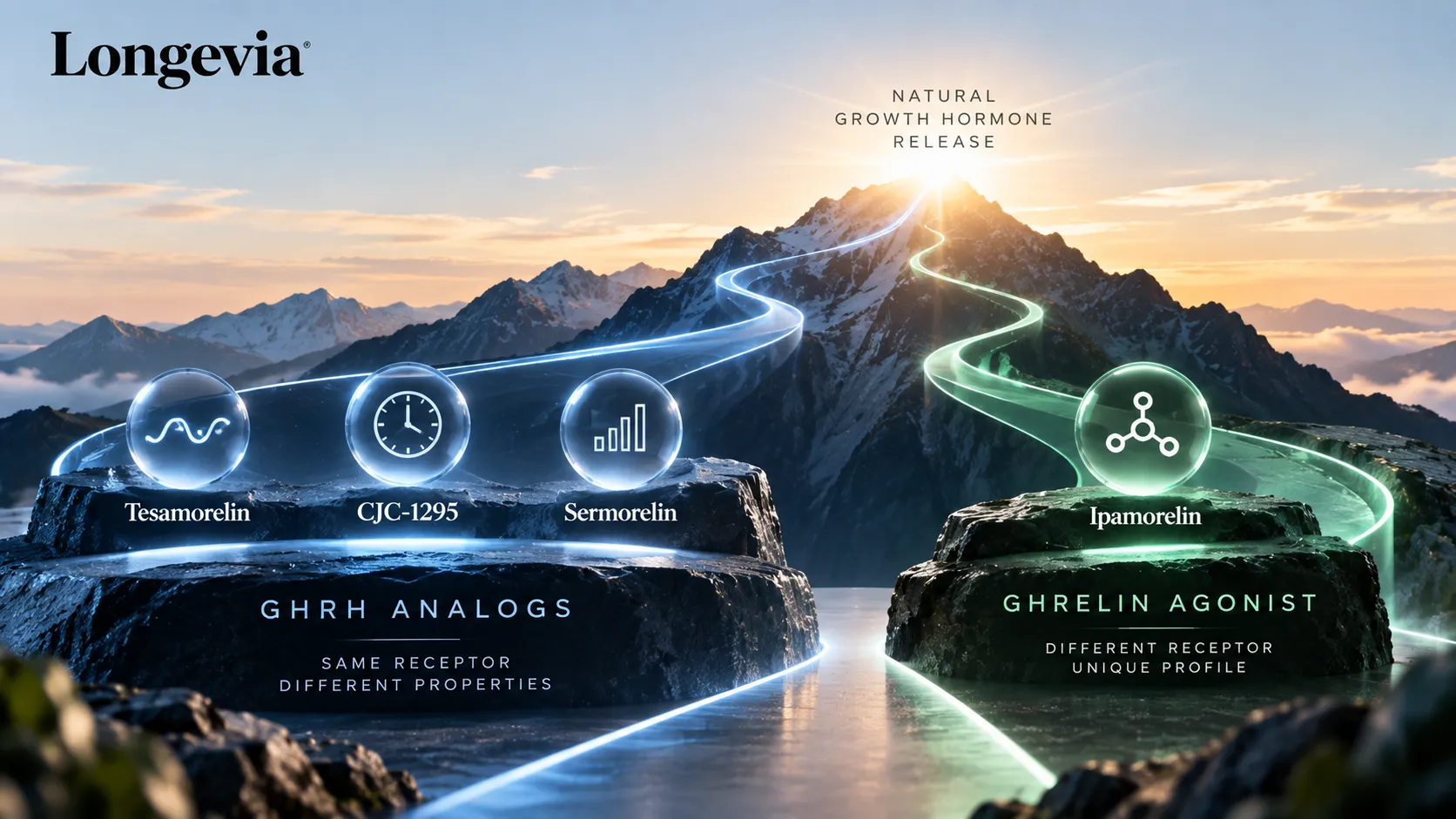
CJC-1295 is a growth-hormone-releasing hormone analogue. The DAC form was developed to extend exposure compared with shorter-acting GHRH analogues. A 2006 randomized, placebo-controlled human study reported dose-dependent increases in growth hormone and IGF-1 after subcutaneous CJC-1295, with an estimated half-life of approximately 5.8 to 8.1 days in the study context. [54][59]
Ipamorelin is a growth-hormone secretagogue studied for its ability to stimulate growth hormone release through a different pharmacological pathway. Early pharmacology work described ipamorelin as a potent and selective GH secretagogue in experimental systems, while human pharmacokinetic and pharmacodynamic modelling examined its disposition and GH response. [53][55]
The different mechanisms are the reason some researchers have proposed studying the compounds together. Mechanistic plausibility, however, is not proof that a combination is clinically effective, compatible in one vial, or safe for repeated human use.
CJC-1295 and ipamorelin should be treated as separate research materials unless a qualified laboratory has validated their compatibility, stability, sterility, container system, and intended use.
What dual-vial mixing means
In a dual-vial workflow, each compound remains in its original container or in a separately prepared container. The CJC-1295 record and ipamorelin record should each identify the compound, lot, nominal amount, diluent, final volume, concentration, storage condition, and preparation date.
A combined-syringe workflow is a separate procedure. Even if two solutions appear visually compatible, the mixture may experience changes in pH, ionic strength, adsorption, aggregation, degradation, or microbial risk. Compatibility cannot be inferred from the fact that each vial dissolves separately.
A combined-vial workflow is more complex still because the final product requires validated formulation development, sterility assurance, stability testing, container-closure evaluation, and a defined beyond-use period. It should not be created from an internet “stacking chart.”
Workflow | What it means | Main scientific question |
|---|---|---|
Separate vials | Each compound is prepared and documented independently. | Are both preparations individually suitable for the research protocol? |
Same syringe, separate withdrawals | Solutions are not stored together but may be drawn sequentially. | Has compatibility and administration safety been assessed? |
Combined container | Both compounds are placed in one final solution. | Has the mixture been validated for formulation, sterility, and stability? |
The concentration equation
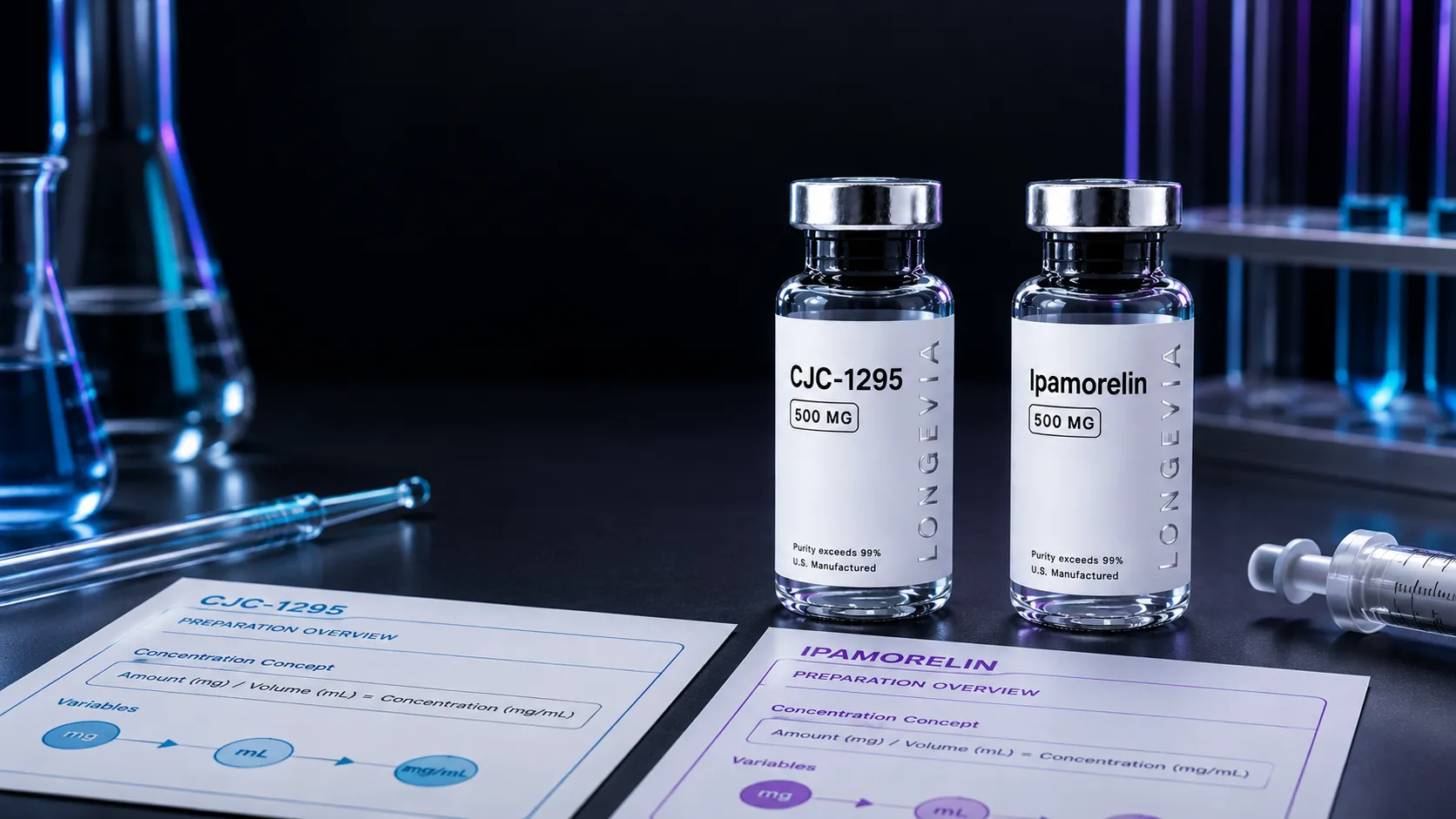
For each compound, concentration is calculated independently:
Concentration = total compound amount ÷ final solution volume
If a CJC-1295 vial contains M_c micrograms and the final volume is V_c millilitres, then:
CJC-1295 concentration = M_c ÷ V_c mcg/mL
If an ipamorelin vial contains M_i micrograms and the final volume is V_i millilitres, then:
Ipamorelin concentration = M_i ÷ V_i mcg/mL
A target analytical aliquot is then calculated separately for each compound:
Aliquot volume = target quantity ÷ concentration
Do not add the two vial amounts together unless a validated combined formulation is being prepared. The total volume of one vial is not the concentration of the other vial, and the two concentrations may be completely different.
Mathematical example
Assume a hypothetical CJC-1295 research vial contains 2,000 mcg in a final volume of 2 mL. Its nominal concentration is 1,000 mcg/mL.
Assume a separate hypothetical ipamorelin vial contains 1,000 mcg in a final volume of 2 mL. Its nominal concentration is 500 mcg/mL.
These calculations show that equal liquid volumes do not mean equal concentrations. A laboratory worksheet should list each compound on its own line and should never combine the numbers into one generic “stack concentration.” Longevia's peptide dosage calculator can help verify these per-compound calculations.
DAC and non-DAC identity
CJC-1295 should not be described as a single uniform material without identifying the variant. CJC-1295 with DAC and non-DAC forms can differ in pharmacokinetic behaviour, duration of exposure, and research interpretation. A protocol that omits the variant may be impossible to reproduce.
The 2006 human study of CJC-1295 reported sustained hormone changes and an estimated half-life of several days in healthy adults. [54] These findings apply to the studied material and conditions; they should not be transferred automatically to a different sequence, formulation, source, or route.
A certificate of analysis should identify the compound variant, molecular mass, purity method, and lot number. If the documentation does not distinguish the variant, researchers should resolve the discrepancy before using the material.
Evidence for ipamorelin
Ipamorelin’s early pharmacology research described potent GH secretagogue activity in vitro and in vivo. [53] Human modelling studies evaluated pharmacokinetics and pharmacodynamics, but early-phase findings do not establish a general treatment indication or a validated consumer dosing schedule. [55]
The growth-hormone axis is biologically active and clinically important. Altering GH or IGF-1 can affect glucose metabolism, fluid balance, tissue growth, and other systems. A compound that changes a biomarker is not automatically beneficial, and sustained biomarker elevation may have different implications from a physiological pulse.
Researchers should therefore define the endpoint before selecting a protocol. Possible endpoints include hormone concentrations, receptor signalling, body-composition measures, tissue outcomes, or safety biomarkers. Each endpoint requires appropriate controls and monitoring.
Record the exact CJC-1295 variant, the exact ipamorelin identity, and the assay documentation for both compounds. “CJC” and “ipamorelin” alone are not sufficiently specific identifiers for a reproducible study.
Why combination evidence is limited
A proposed CJC-1295 and ipamorelin combination is often justified by the idea that a GHRH analogue and a GH secretagogue act through complementary pathways. That hypothesis may be scientifically interesting, but it does not establish the size, timing, duration, or safety of any combined response.
A 2026 review of injectable peptide therapy noted that CJC-1295 and ipamorelin findings in combination include animal-model evidence, while human evidence for the combined protocol remains limited. [40] Animal findings cannot define a human dose, long-term risk, or suitable reconstitution method.
Combination protocols can also increase interpretive difficulty. If GH or IGF-1 changes, researchers must determine whether the response came from one compound, the other compound, an interaction, or an exposure difference caused by formulation and sampling time.
Reconstitution records for separate vials
Each vial should have a separate preparation record. The record should include:
- Compound name and specific variant.
- Supplier and lot number.
- Nominal amount in mg or mcg.
- Purity and identity documentation.
- Diluent identity and lot number.
- Final volume.
- Calculated concentration.
- Preparation date and operator.
- Storage condition and container information.
- Visual inspection results.
- Stability or beyond-use source.
If an aliquot from both vials is used in the same experiment, the experiment record should reference both preparation identifiers. This preserves traceability and prevents a future reviewer from mistaking the combination for a single formulated product.
Compatibility and stability questions
Compatibility testing should consider pH, ionic strength, peptide concentration, adsorption to container surfaces, aggregation, oxidation, and degradation products. The visible appearance of a mixture is not enough to establish compatibility.
Stability should be evaluated under the actual storage and handling conditions. Freeze-thaw cycles, repeated punctures, light exposure, temperature excursions, and time in the syringe can all become relevant variables. Data from one peptide cannot be assumed to apply to another peptide or to a mixture.
A laboratory should define acceptance criteria before testing. Depending on the study, criteria may include identity, purity, potency, particulate matter, sterility, endotoxin, and degradation profile.
Storage and handling
Lyophilized material and reconstituted solution should have separate storage requirements and separate records. For general cold-chain and shelf-life principles that apply across compounds, see Longevia's peptide reconstitution and storage guide. The supplier’s documentation should be reviewed for the exact product and formulation.
A reconstituted solution should be inspected before use. Unexpected cloudiness, visible particles, colour change, precipitation, or incomplete dissolution should trigger quarantine. Do not attempt to correct an abnormal preparation by adding more diluent or by filtering it without a validated procedure.
A research-use product should not be described as clinically safe merely because it was stored cold or because the vial appears intact. Storage controls protect quality but do not replace identity, sterility, endotoxin, or stability testing.
Growth-hormone axis safety
CJC-1295 and ipamorelin are relevant to the GH/IGF-1 axis. Changes in this axis can have downstream effects on glucose regulation, fluid retention, tissue growth, and metabolic markers. The clinical relevance depends on exposure, duration, baseline physiology, comorbidities, and concomitant medicines.
The 2006 CJC-1295 trial reported hormone changes lasting several days after a dose and evidence of cumulative effects after repeated exposure. [54] That finding is important for study design because repeated dosing may not behave like repeated isolated single exposures.
Researchers should predefine safety monitoring and stopping criteria. Human studies require appropriate medical oversight, informed consent, adverse-event reporting, and institutional approval.
Common dual-vial mistakes
The first mistake is assuming that two vials with the same volume have the same concentration. The second is confusing CJC-1295 DAC with a different CJC-1295 variant. The third is combining the compounds without testing compatibility. The fourth is copying a community protocol without verifying the lot, assay, formulation, or intended endpoint.
Another mistake is using the word “synergy” as though it were established fact. A mechanistic hypothesis should be described as a hypothesis until controlled comparative data demonstrate an interaction.
A final mistake is reporting the combined liquid volume without reporting the amount of each compound. A reproducible report must state the independent amount, concentration, and preparation identity for each compound.
Research protocol checklist
- Identify the exact CJC-1295 variant.
- Confirm the exact ipamorelin sequence or product identity.
- Review lot-specific identity and purity documentation.
- Prepare and document each vial independently unless a validated formulation exists.
- Calculate each concentration separately.
- Record the diluent, final volume, date, operator, and storage condition.
- Do not assume that a clear mixture is chemically compatible.
- Define hormone, metabolic, and safety endpoints before starting.
- Obtain ethics, biosafety, animal-care, or clinical approval as applicable.
- Report negative findings and formulation limitations transparently.
CJC-1295 and ipamorelin can be discussed together as a research hypothesis, but they should not be treated as a universally validated injectable stack. The strongest content and the strongest protocol both make the distinction between mechanism, early evidence, formulation mathematics, and clinical proof explicit.
References and evidence limits
Human research supports biological activity for CJC-1295 and early pharmacological characterization for ipamorelin, but the evidence does not establish a general consumer treatment protocol. [53][54][55] Combination evidence remains limited, and formulation compatibility must be validated separately from biological rationale. [40]
This guide is educational and should not replace product-specific instructions, qualified pharmacy review, medical supervision, institutional approval, or regulatory requirements. See Longevia's research-use disclaimer for the site's compliance position.
Frequently Asked Questions
- Teichman SL et al. Prolonged stimulation of growth hormone and IGF-I secretion by CJC-1295 in healthy adults. Journal of Clinical Endocrinology & Metabolism. 2006;91(3):799-805.
- Melin M et al. Ipamorelin, the first selective growth hormone secretagogue. European Journal of Endocrinology. 1998.
- Pharmacokinetic-pharmacodynamic modeling of ipamorelin disposition and growth hormone response in healthy volunteers.
- Mayfield CK et al. Injectable Peptide Therapy: A Primer for Orthopaedic and Sports Medicine Physicians. American Journal of Sports Medicine. 2026;54(1):223-229.