Growth Hormone SecretagoguesRecovery & Tissue Repair
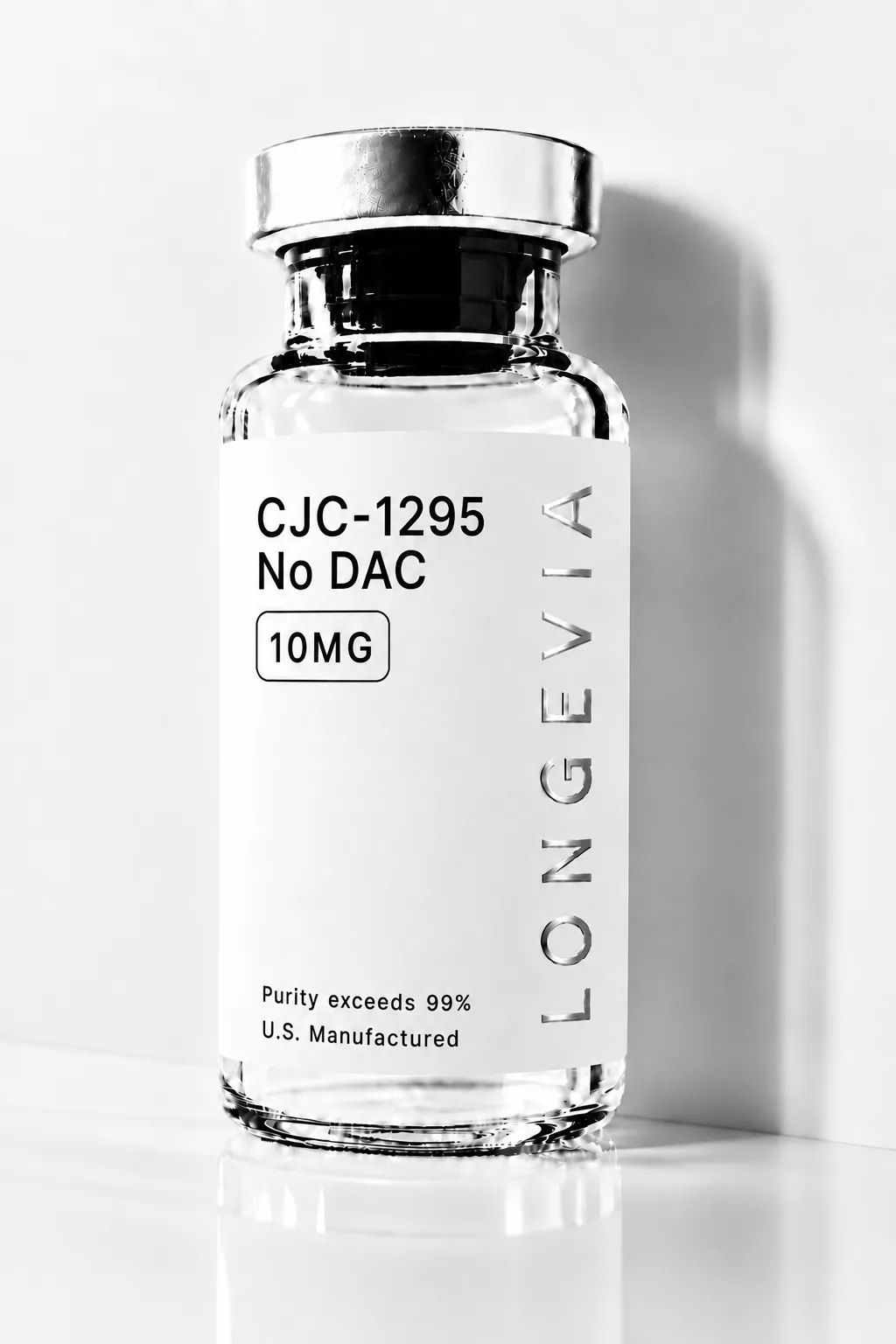
CJC-1295 No DAC
$162.00
1
Slide to Add
Purity≥99% Tested
TestingLC-MS Verified
LocationUS Based
CJC-1295 No DAC (also known as Modified GRF 1-29) is a synthetic analog of Growth Hormone Releasing Hormone comprising the first 29 amino acids of endogenous GHRH with amino acid substitutions to increase metabolic stability. Unlike the DAC-conjugated version, this preparation does not include the Drug Affinity Complex modification, resulting in a shorter biological half-life that more closely mimics endogenous GHRH pulsatility in research models. Each batch is verified to ≥99% purity by third-party HPLC. Research Use Only.
Standard Delivery3-4 Working Days
Free ShippingOn all orders above $300
Comprehensive Product Details
Scientific identity. CJC-1295 No DAC is a synthetic analogue of GHRH(1-29) — the biologically active N-terminal 29-residue fragment of native 44-amino-acid growth hormone-releasing hormone. Four substitutions are introduced relative to the native GHRH(1-29) sequence: Ala² → D-Ala², Gln⁸ → Aib⁸ (α-aminoisobutyric acid), Gly¹⁵ → Ala¹⁵, and Arg¹⁶ → Leu¹⁶. These substitutions collectively reduce susceptibility to dipeptidyl peptidase IV (DPP-IV) cleavage at the N-terminus and increase conformational stability, extending the functional half-life relative to native GHRH(1-29) while preserving GHRHR binding activity in experimental systems.
Important note on molecular identifiers. CJC-1295 No DAC may be encountered under varying molecular weight figures in supplier documentation due to differences in salt form (acetate or trifluoroacetate) and water of hydration. The molecular weight, molecular formula, and CAS number applicable to this Longevia vial correspond to the supplied form and are confirmed on the batch Certificate of Analysis. Researchers should verify form-specific identifiers from the batch COA before use in assay calculations.
Primary research target. Growth hormone-releasing hormone receptor (GHRHR) — a class B G protein-coupled receptor (GPCR) expressed predominantly on pituitary somatotroph cells, where it mediates cAMP-dependent signalling and growth hormone secretion in response to GHRH stimulation.
Research areas. GHRHR pharmacology, pituitary biology, pulsatile growth hormone secretion research, somatotroph signalling, GH/IGF-1 axis research, DPP-IV stability studies, GHRH analogue structure-activity research.
Product quantity. 10mg per vial.
Purity. Greater than 99%, confirmed by HPLC and LC-MS analysis at the batch level.
Analytical documentation. A batch-specific Certificate of Analysis is available on the Longevia Research website, covering compound identity, purity, and lot traceability.
Research-use classification. For laboratory research use only. Not for human or veterinary use, clinical diagnostics, or any in-vivo application in humans.
Advanced Research Focus
CJC-1295 No DAC, also called Modified GRF (1-29) or Mod GRF 1-29, is a synthetic 29-amino-acid analog of growth hormone-releasing hormone (GHRH). It is built on GRF (1-29), the shortest fully functional fragment of GHRH, with four amino acid substitutions at positions 2, 8, 15, and 27. In the original literature, "CJC-1295" refers to the albumin-binding version of this peptide. "No DAC" means the same peptide without that albumin-binding group.
GHRH Receptor Signaling
GHRH acts through the GHRH receptor (GHRHR), a class B G protein-coupled receptor found mainly on anterior pituitary somatotrophs. When the receptor is activated, it raises cAMP levels, which activates protein kinase A (PKA). PKA then increases calcium influx, which triggers GH release, and also switches on genes that make more GH.
Why the Four Substitutions Matter
Native GHRH breaks down quickly. In human subjects, intact GHRH had a half-life of about 7 minutes after intravenous injection. It is also degraded chemically at Asn8 and Met27. Each substitution in Mod GRF (1-29) addresses one of these weaknesses:
D-Ala² blocks the main enzymatic cleavage site. A D-amino acid at this position prevented the cleavage in plasma studies.
Gln⁸ was introduced to reduce breakdown of the asparagine at position 8.
Ala¹⁵ was included to enhance bioactivity.
Leu²⁷ was introduced to prevent methionine oxidation.
Most of this evidence comes from studies of related GRF analogs. Published data on the unconjugated tetrasubstituted peptide itself are limited.
How It Differs from CJC-1295 With DAC and Sermorelin
CJC-1295 With DAC adds a reactive group that binds albumin in the blood, which greatly extends how long it circulates. In healthy men, it increased GH secretion while normal GH pulses continued, with a marked rise in baseline GH. The No DAC form lacks this albumin-binding group, so the long-acting profile of the DAC version does not apply to it.
Sermorelin is the unmodified native sequence, GHRH(1-29)-NH2. Its former FDA approval, as GEREF, ended when the product was discontinued in 2008. That approval does not extend to Mod GRF (1-29).
Research Status
CJC-1295 No DAC has no approved therapeutic indication. Published human studies under the CJC-1295 name used the DAC form, and those findings should not be attributed to the No DAC peptide. CJC-1295 No DAC is supplied for Research Use Only.
Uncompromising Quality Standards
Reliable research begins with accurately characterised material. For a 29-amino-acid synthetic peptide such as CJC-1295 No DAC, that means confirming sequence integrity, purity, and molecular identity at the batch level — because sequence errors or truncated fragments can confound receptor binding assays, cell-based signalling studies, and in-vivo pharmacology experiments.
Purity assessment. Each production lot is characterised to greater than 99% purity by high-performance liquid chromatography (HPLC). Chromatographic purity data is reported on the batch Certificate of Analysis.
Identity confirmation. Peptide identity is confirmed by mass spectrometry (LC-MS), providing molecular-weight verification consistent with the specified sequence and molecular formula. HPLC and LC-MS data together confirm that the material supplied corresponds to the labelled compound at the labelled purity.
Batch traceability and Certificate of Analysis. Every vial of CJC-1295 No DAC 10mg is traceable to a specific production lot. A batch-specific Certificate of Analysis is accessible directly on the Longevia Research website, covering purity, identity, and lot information. Researchers evaluating this material for assay work are encouraged to review the current batch documentation before use, since analytical specifications are applied at the lot level.
Handling. This material should be handled by qualified personnel using appropriate laboratory technique and personal protective equipment, consistent with institutional protocols for research-grade synthetic peptides.
Legal & Compliance Notice
Longevia Research supplies CJC-1295 No DAC 10mg for laboratory and in-vitro research use only. The product is intended for use by qualified researchers and trained laboratory personnel in appropriate controlled research environments.
CJC-1295 No DAC is a synthetic research peptide supplied strictly as a research tool. It is not a drug, not a dietary supplement, not a food or food ingredient, and not a cosmetic. No regulatory authority has approved this compound for human or veterinary therapeutic use, and Longevia does not supply it for administration to humans or animals, for clinical diagnostics, or for any therapeutic purpose.
Longevia provides no dosing instructions, administration guidance, treatment protocols, or reconstitution recommendations for this compound. The scientific literature summarised on this product page describes experimental observations in defined cell-based, tissue, and animal model systems. Those findings are not medical claims and should not be interpreted as evidence of human efficacy, human safety, or fitness for any clinical application.
The purchaser assumes full responsibility for lawful acquisition, handling, storage, use, and disposal of this material, and for compliance with all applicable local, state, federal, and institutional regulations. By purchasing this product, the buyer confirms that it will be used solely for legitimate laboratory research purposes by qualified personnel, and that its acquisition and intended use comply with applicable laws in the buyer's jurisdiction.
Continue Exploring
Also Considered.
Tesa/IPA — Spray
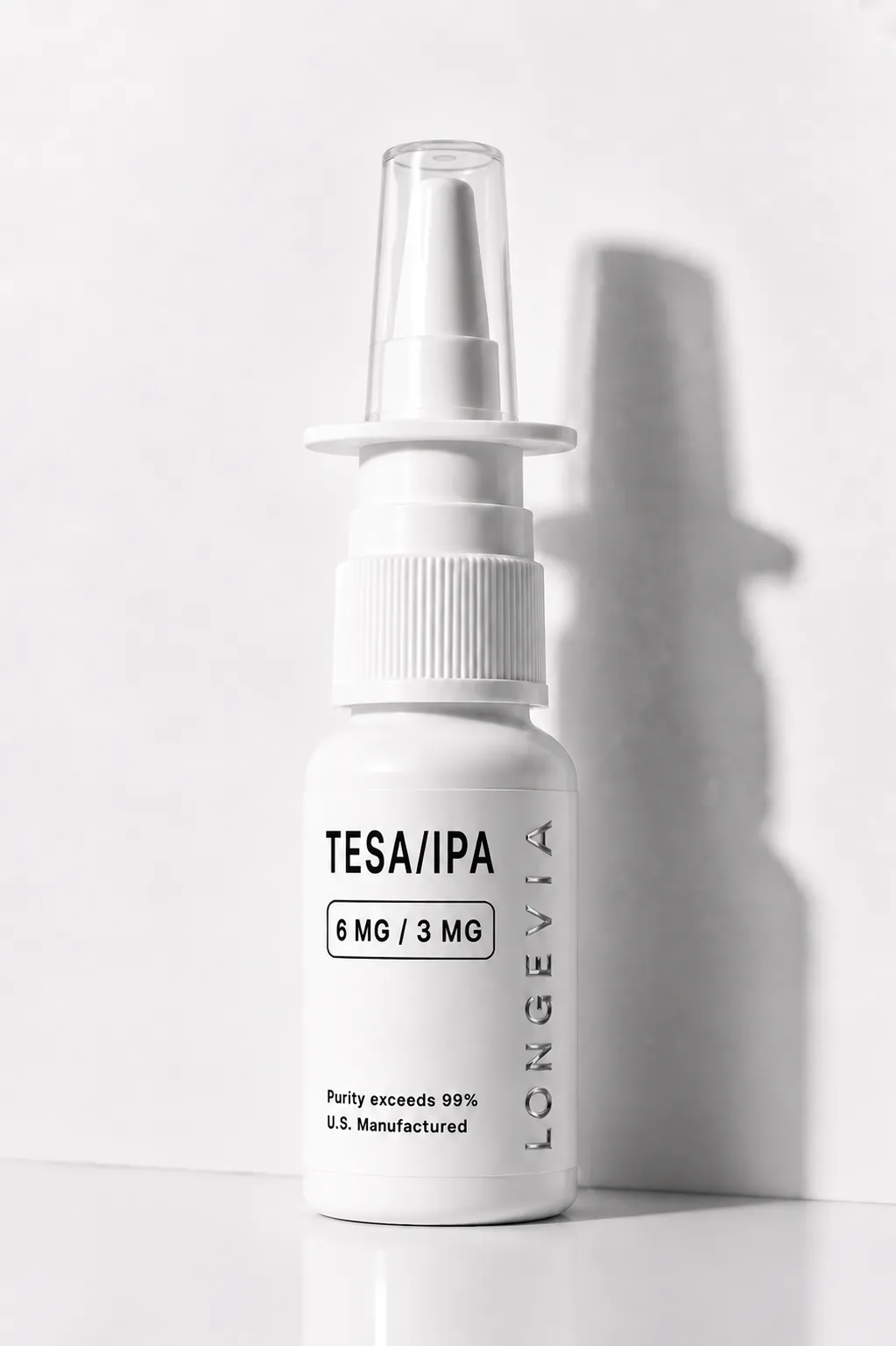
Longevia Research supplies Tesa/IPA — a two-peptide research formulation containing Tesamorelin (CAS 218949-48-5), a synthetic GHRH analog, and Ipamorelin (CAS 170851-70-4), a growth hormone secretagogue associated with GHS-R/ghrelin receptor signaling. Available in 6mg/3mg and 13mg/3mg compositions, 45 sprays. Research Use Only.
$225.00
Slide to add
Tesamorelin Spray
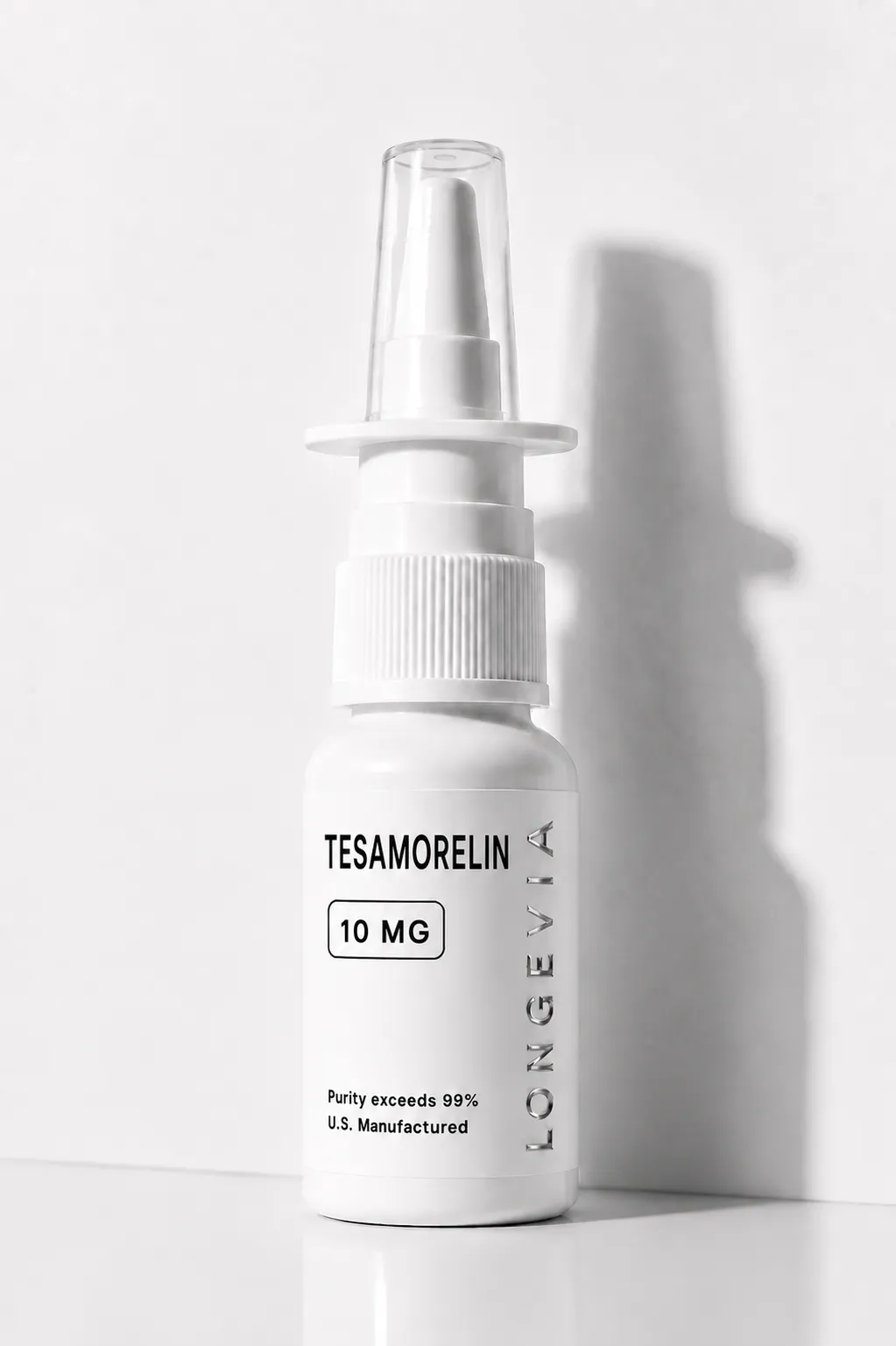
Longevia Research supplies Tesamorelin in 10mg and 20mg quantities in a 45-spray format for qualified laboratory research. Tesamorelin (CAS 218949-48-5) is a synthetic GHRH analog and Class B GPCR agonist investigated in GHRH receptor pharmacology, pituitary somatotroph signaling, and GH/IGF-1 axis research. Research Use Only.
$270.00
Slide to add
TB-500 — Spray
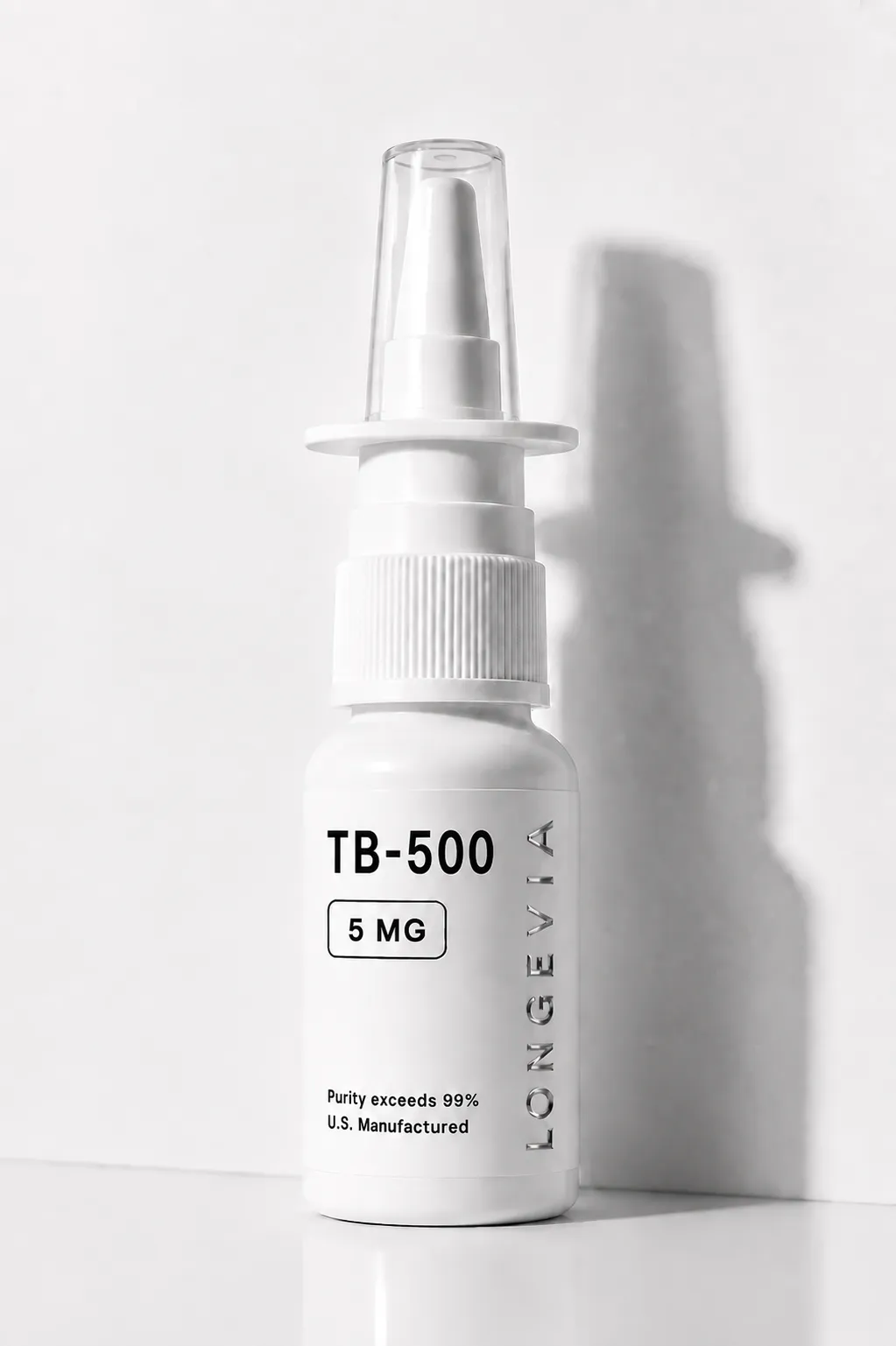
Longevia Research supplies TB-500 in 5mg and 10mg quantities in a 45-spray format for qualified laboratory research. TB-500 is a synthetic acetylated heptapeptide (Ac-LKKTETQ, CAS 885340-08-9) corresponding to the actin-binding domain of thymosin beta-4, investigated in G-actin sequestration, cytoskeletal dynamics, cell migration, and tissue biology research. Research Use Only.
$189.00
Slide to add
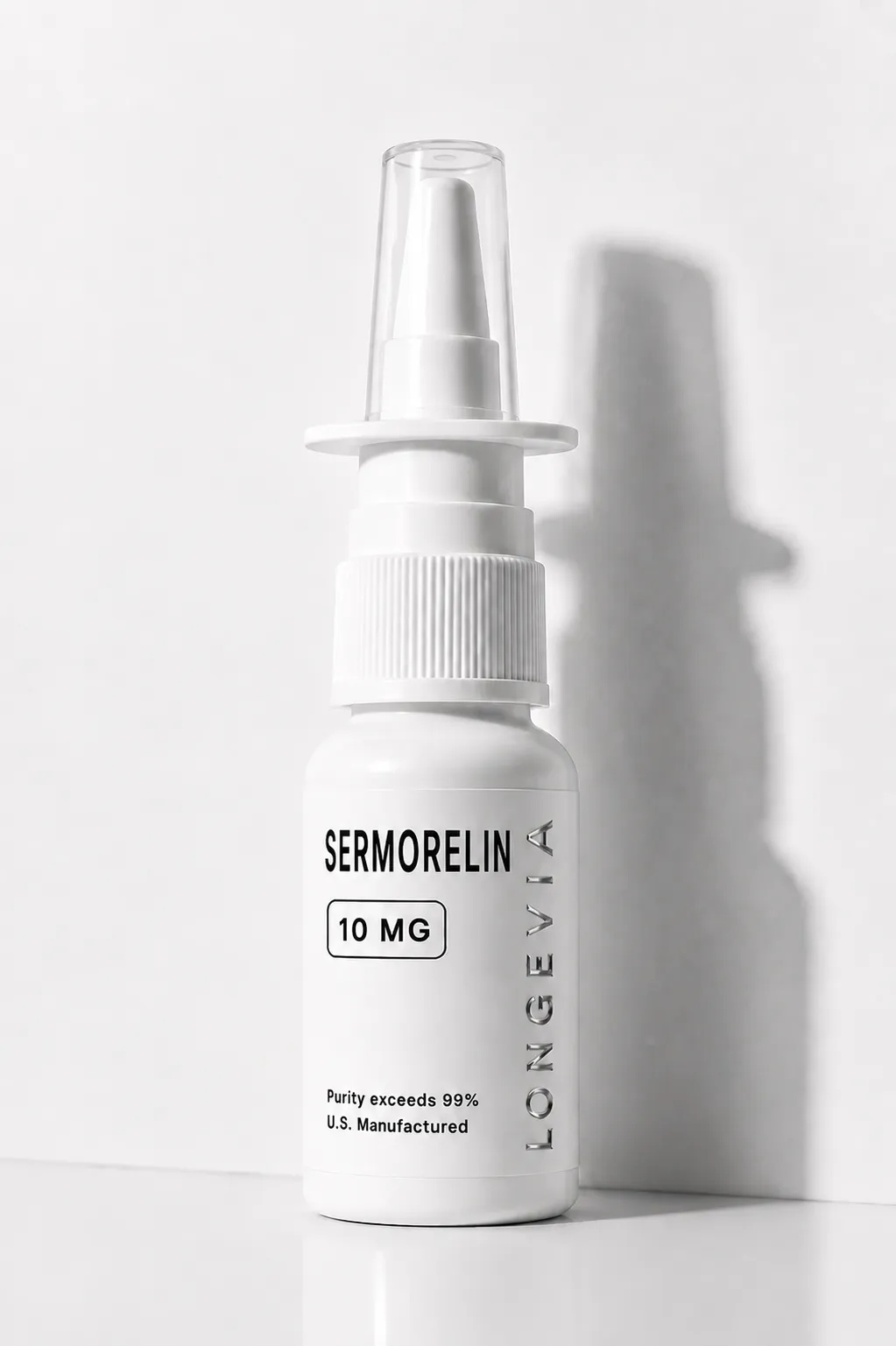
Sermorelin — Spray
Longevia Research supplies Sermorelin in 10mg and 20mg quantities, 45-spray format, for qualified laboratory research. Sermorelin is a synthetic GHRH(1–29) peptide investigated in GHRH receptor signaling, pituitary somatotroph biology, and somatotropic axis research. Research Use Only.
$189.00
Slide to add
Product FAQs
Find answers to common questions regarding storage, reconstitution, and testing guidelines for this specific compound.