Growth Hormone Secretagogues
Tesa/IPA — Spray
$225.00
1
Slide to Add
Purity≥99% Tested
TestingLC-MS Verified
LocationUS Based
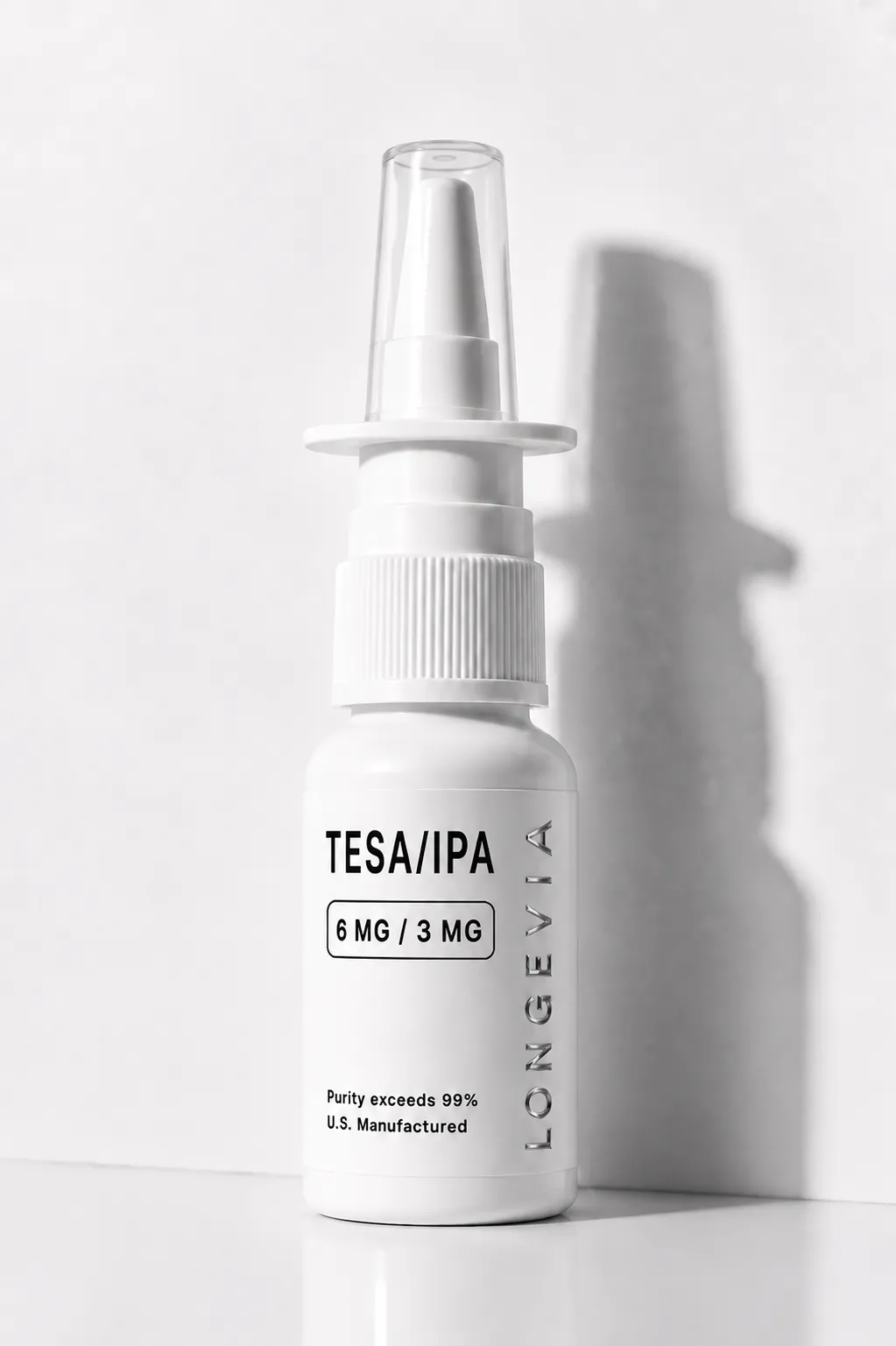
Tesa/IPA is a two-component research formulation from Longevia Research containing two distinct synthetic compounds — Tesamorelin and Ipamorelin — each with its own molecular identity, receptor target, signaling mechanism, and independent research literature. Tesamorelin is a synthetic 44-amino-acid GHRH analogue with an N-terminal trans-3-hexenoyl modification conferring DPP-IV resistance, acting as a GHRH receptor (GHRHR) agonist at anterior pituitary somatotroph cells through the Class B Gαs/cAMP/PKA signaling cascade. Ipamorelin is a synthetic pentapeptide (Aib-His-D-2-Nal-D-Phe-Lys-NH₂) acting as a selective growth hormone secretagogue receptor 1a (GHS-R1a) agonist through the Class A Gαq/PLC/Ca²⁺ pathway — the ghrelin receptor system, which is mechanistically distinct from the GHRH receptor. Both compounds participate in the physiological regulation of growth hormone secretion from pituitary somatotrophs but engage entirely different receptor families, activate different intracellular signaling cascades, and have separate research and regulatory histories; they are not pharmacologically interchangeable and neither is a version of the other. Evidence for Tesamorelin and Ipamorelin individually does not automatically establish properties of their combination; individual-compound studies do not constitute direct evidence for the Tesa/IPA formulation as a combined preparation. Longevia Research supplies Tesa/IPA in two stated composition variants — 6mg Tesamorelin/3mg Ipamorelin and 13mg Tesamorelin/3mg Ipamorelin — each in a liquid spray format containing 45 sprays per bottle, for qualified laboratory and scientific research purposes only.
Standard Delivery3-4 Working Days
Free ShippingOn all orders above $300
Product Details
Product classification: Two-component research formulation containing two distinct synthetic compounds; not a single molecular entity; does not have a single molecular formula, molecular weight, or CAS number.
Tesamorelin — scientific identity: Tesamorelin (CAS 218949-48-5, free base; CAS 901758-09-6, acetate salt); molecular formula C₂₂₁H₃₆₆N₇₂O₆₇S; molecular weight 5,135.9 g/mol (free base); PubChem CID 16137828; 44-residue synthetic GHRH analogue with N-terminal trans-3-hexenoyl modification and C-terminal amide (Leu44-NH₂); full sequence: trans-3-hexenoyl-Tyr-Ala-Asp-Ala-Ile-Phe-Thr-Asn-Ser-Tyr-Arg-Lys-Val-Leu-Gly-Gln-Leu-Ser-Ala-Arg-Lys-Leu-Leu-Gln-Asp-Ile-Met-Ser-Arg-Gln-Gln-Gly-Glu-Ser-Asn-Gln-Glu-Arg-Gly-Ala-Arg-Ala-Arg-Leu-NH₂.
Ipamorelin — scientific identity: Ipamorelin (CAS 170851-70-4); INN: ipamorelin; development code NNC 26-0161; sequence Aib-His-D-2-Nal-D-Phe-Lys-NH₂ (where Aib = α-aminoisobutyric acid; D-2-Nal = D-2-naphthylalanine; D-Phe = D-phenylalanine); molecular formula C₃₈H₄₉N₉O₅; molecular weight 711.86 g/mol; PubChem CID 20754357; UNII Y9M3S784Z6; 5-residue synthetic pentapeptide with C-terminal primary amide.
Receptor and signaling distinction
Tesamorelin engages GHRHR (Class B GPCR, Gαs → adenylate cyclase → cAMP → PKA — promoting GH granule exocytosis; endogenous counterpart: GHRH); Ipamorelin engages GHS-R1a (Class A GPCR, Gαq → PLC → IP₃/DAG → intracellular Ca²⁺ — promoting GH granule exocytosis through a distinct pathway; endogenous counterpart: ghrelin); these are complementary but mechanistically distinct stimulatory inputs converging on somatotroph GH secretion as a shared downstream output; neither compound overrides the opposing inhibitory somatostatin (SRIF) tone that co-determines net GH secretory responses under any experimental condition.
GHS-R1a constitutive activity note: GHS-R1a exhibits constitutive signaling in the absence of ligand at approximately 50% of maximum — a notable feature distinguishing it from most GPCRs and relevant to the design and interpretation of GHS-R1a pharmacology experiments.
Key research distinctions
Among GHRH analogs: Tesamorelin (full 44-residue sequence, hexenoyl modification, DPP-IV resistant) is distinct from Sermorelin (GHRH 1–29, no stabilizing modification) and CJC-1295 (30-residue sequence with amino acid substitutions, available with or without DAC albumin linker); among GHS-R1a agonists: Ipamorelin is characterized by relative selectivity for GH release without substantial cortisol, prolactin, or ACTH stimulation in studied experimental systems, distinguishing it from GHRP-2 and GHRP-6.
Pharmaceutical distinction: Egrifta® (tesamorelin acetate for subcutaneous injection) — FDA-approved November 2010 for reduction of excess abdominal fat in HIV-infected adults with lipodystrophy — applies exclusively to the pharmaceutical formulation and does not extend to this research spray or to the Tesa/IPA combination; Ipamorelin has no regulatory approval for any indication.
Product content
Composition Option A: 6mg Tesamorelin + 3mg Ipamorelin per bottle; 45 sprays per bottle.
Composition Option B: 13mg Tesamorelin + 3mg Ipamorelin per bottle; 45 sprays per bottle.
Per-spray quantities are not stated and should not be calculated or assumed.
Physical form: Liquid research spray.
Purity: Research-grade. Analytical documentation should address each component independently.
Analytical documentation
A batch-specific Certificate of Analysis is available on the Longevia Research website, covering compound identity, purity, and lot traceability; the mass difference between Tesamorelin (~5,135.9 Da) and Ipamorelin (~711.86 Da) — approximately 4,424 Da — ensures that both components can be individually confirmed and resolved by standard mass spectrometry in a two-peptide preparation; identity confirmation for Tesamorelin should include verification of the trans-3-hexenoyl N-terminal modification (approximately +96 Da relative to unmodified GHRH(1–44)-NH₂); Met²⁷ in Tesamorelin is a potential oxidation site (+16 Da) relevant to storage stability and analytical characterization.
Research-use classification
Research Use Only; not approved for human or veterinary use; not intended for administration to humans or animals.
Research Focus & Mechanism Overview
Research background
The investigation of pituitary GH secretion through multiple receptor pathways has been a central objective in endocrinology research since the characterization of hypothalamic GHRH in the early 1980s. The subsequent discovery that ghrelin — and synthetic GHS-R agonists designed to engage its receptor — could stimulate GH secretion through an independent pathway established two complementary stimulatory receptor systems at the somatotroph level. Tesa/IPA brings together one representative of each system: Tesamorelin (GHRH analogue, GHRHR/Gαs/cAMP pathway) and Ipamorelin (GHS-R1a agonist, Gαq/PLC/Ca²⁺ pathway). Preclinical research examining co-administration of GHRH analogues with GHS-R agonists — including GHRP-6 and GHRP-2 — has documented additive or supra-additive GH secretory responses under specific experimental conditions in animal models; these observations reflect the convergence of two independent stimulatory inputs on a shared secretory output and represent active preclinical research context rather than established clinical evidence for any specific combination formulation. No peer-reviewed research directly examining Tesamorelin and Ipamorelin in combination, in the specific doses represented in this product, and in spray delivery format, has been identified in the available scientific literature; combination-specific research questions require independent experimental investigation.
Tesamorelin research profile
Tesamorelin's pharmaceutical development by Theratechnologies Inc. progressed through Phase 2 and Phase 3 clinical trials in HIV-infected adults with abdominal fat accumulation associated with lipodystrophy, with Falutz and colleagues (JAMA, 2010) reporting statistically significant visceral adipose tissue reduction in the studied population relative to placebo — the primary evidence basis for FDA approval of Egrifta® in November 2010. Pharmacokinetic studies established subcutaneous bioavailability of approximately 4% and an elimination half-life of 26–38 minutes for the pharmaceutical injection formulation. All clinical and pharmacokinetic findings are specific to the pharmaceutical subcutaneous injection formulation in those enrolled populations; they do not apply to Tesamorelin in this spray preparation or to the Tesa/IPA combination. GHRHR receptor pharmacology studies, pituitary primary culture systems, and preclinical in-vivo GH secretory response characterization constitute the mechanistic evidence base.
Ipamorelin research profile
Ipamorelin was developed from the GHRP-1 pharmacophore series through systematic medicinal chemistry at Novo Nordisk (development code NNC 26-0161); Raun and colleagues (1998) characterized it as a selective GHS-R agonist with high GH-releasing potency in vitro and in vivo and minimal effects on cortisol, prolactin, or ACTH compared to earlier GHS-R agonists — a selectivity profile making it a frequently used research tool for studying selective GHS-R1a pharmacology. Johansen and colleagues (1999) examined ipamorelin's effects on longitudinal bone growth in animal models. Ipamorelin's evidence base is primarily preclinical: in-vitro receptor-binding and functional assay characterization (cAMP, Ca²⁺), animal studies examining GH secretory responses, and mechanistic receptor pharmacology investigations. No pharmaceutical approval has been granted for ipamorelin for any indication; the human clinical evidence base for ipamorelin is substantially more limited than that of tesamorelin, and researchers should not assume equivalent evidence depth for the two components.
Combination research framework
Individual-compound evidence does not establish combination-specific properties. Three critical implications apply: no synergistic or additive biological activity in humans is established for this combination — preclinical observations of additive GH responses to dual GHRHR/GHS-R agonism under specific experimental conditions are mechanistically informative but do not constitute clinical evidence; potential pharmacokinetic interactions between Tesamorelin and Ipamorelin when co-formulated in a spray — including effects on absorption, distribution, or stability of either component — are unknown; and the spray formulation's bioavailability, systemic exposure, and pharmacokinetics for either component are not stated and should not be inferred from the pharmaceutical injection data for either compound. Researchers using Tesa/IPA should design experiments specifically addressing combination-specific research questions rather than applying conclusions from single-compound studies to the combination without independent experimental justification.
Quality & Purity Standards
For a two-peptide research formulation such as Tesa/IPA, analytical quality standards must apply to each component independently and to the combined preparation as a whole. The large mass difference between Tesamorelin (~5135.9 Da) and Ipamorelin (~711.86 Da) — approximately 4,424 Da — means that each component can be unambiguously distinguished and independently confirmed by mass spectrometry in any preparation containing both. This mass separation provides an inherent analytical advantage for quality confirmation of two-peptide combination preparations, allowing identity verification of both components in a single LC-MS/MS analysis.
For Tesamorelin in the combination, quality considerations include: molecular mass confirmation of the 5135.9 Da free-base peptide and verification of the N-terminal trans-3-hexenoyl modification (which contributes a defined mass increment distinguishing Tesamorelin from unmodified hGHRH(1-44)); sequence verification by tandem MS fragmentation covering the 44-residue backbone; purity assessment by RP-HPLC; and monitoring for methionine oxidation at Met²⁷ (+16 Da). For Ipamorelin, quality considerations include: molecular mass confirmation of 711.86 Da (C₃₈H₄₉N₉O₅); sequence confirmation of the Aib-His-D-2-Nal-D-Phe-Lys-NH₂ pentapeptide; verification of the C-terminal amide and the non-standard residues (Aib and D-2-Nal) that define the compound's identity; and purity assessment by RP-HPLC.
Additional quality considerations specific to combination preparations include: verification that both components are present at or near the stated compositional ratios; assessment of potential peptide-peptide interaction or co-formulation stability; and batch-specific documentation enabling traceability of both components from synthesis through supply.
Longevia Research's quality approach is oriented toward providing researchers with analytically characterized research compounds supported by appropriate documentation. Researchers should consult current product documentation and available certificates of analysis for batch-specific data on both components. No specific purity grade, third-party certification, cGMP status, or independent laboratory verification is stated for this listing; researchers requiring specific quality parameters should contact Longevia Research directly.
Compliance Notice
FOR RESEARCH USE ONLY. NOT FOR HUMAN CONSUMPTION. NOT FOR VETERINARY USE.
Tesa/IPA 6mg/3mg and 13mg/3mg — 45 Sprays, as supplied by Longevia Research, is intended exclusively for qualified laboratory and scientific research conducted by trained professionals in appropriate research settings. This product is not a drug, dietary supplement, food, or cosmetic. It has not been evaluated or approved by the U.S. Food and Drug Administration, the European Medicines Agency, or any other regulatory authority for use as a therapeutic, prophylactic, or diagnostic agent in humans or animals.
This product is not intended to diagnose, treat, cure, or prevent any disease, condition, or health-related outcome.
Distinction from pharmaceutical Tesamorelin (Egrifta): The FDA-approved pharmaceutical product Egrifta (tesamorelin acetate for injection, subcutaneous) was approved in November 2010 for the reduction of excess abdominal fat in HIV-infected adults with lipodystrophy. This approval applies specifically to that pharmaceutical formulation, administration route, dose, indication, and patient population. It does not extend to the Longevia Research Tesa/IPA spray, which is a separately supplied two-peptide research compound in a spray format with an unstated formulation, no regulatory approval, and no clinical validation of any kind.
Ipamorelin regulatory status: Ipamorelin has not received regulatory approval from the FDA or any equivalent regulatory body for any indication. It is supplied in this product as a research compound only.
Combination-specific evidence: Research involving Tesamorelin individually and research involving Ipamorelin individually do not together establish the safety, efficacy, bioavailability, pharmacokinetics, or biological properties of the Tesa/IPA combination formulation. Separate evidence for two compounds does not establish their combination's properties; combination-specific research is required for such conclusions.
Formulation and route distinction: Clinical and pharmacokinetic data established for pharmaceutical Tesamorelin via subcutaneous injection do not apply to this spray. No pharmacokinetic, bioavailability, or systemic exposure data are stated for either component in this spray formulation.
Purchasers are solely responsible for ensuring that acquisition, possession, storage, handling, use, and disposal of this product comply with all applicable local, state, national, and international laws and regulations governing research compounds. By purchasing this product, the purchaser confirms that they are a qualified researcher or research professional acquiring this compound for legitimate scientific research purposes only.
Continue Exploring
Also Considered.
Tesamorelin Spray
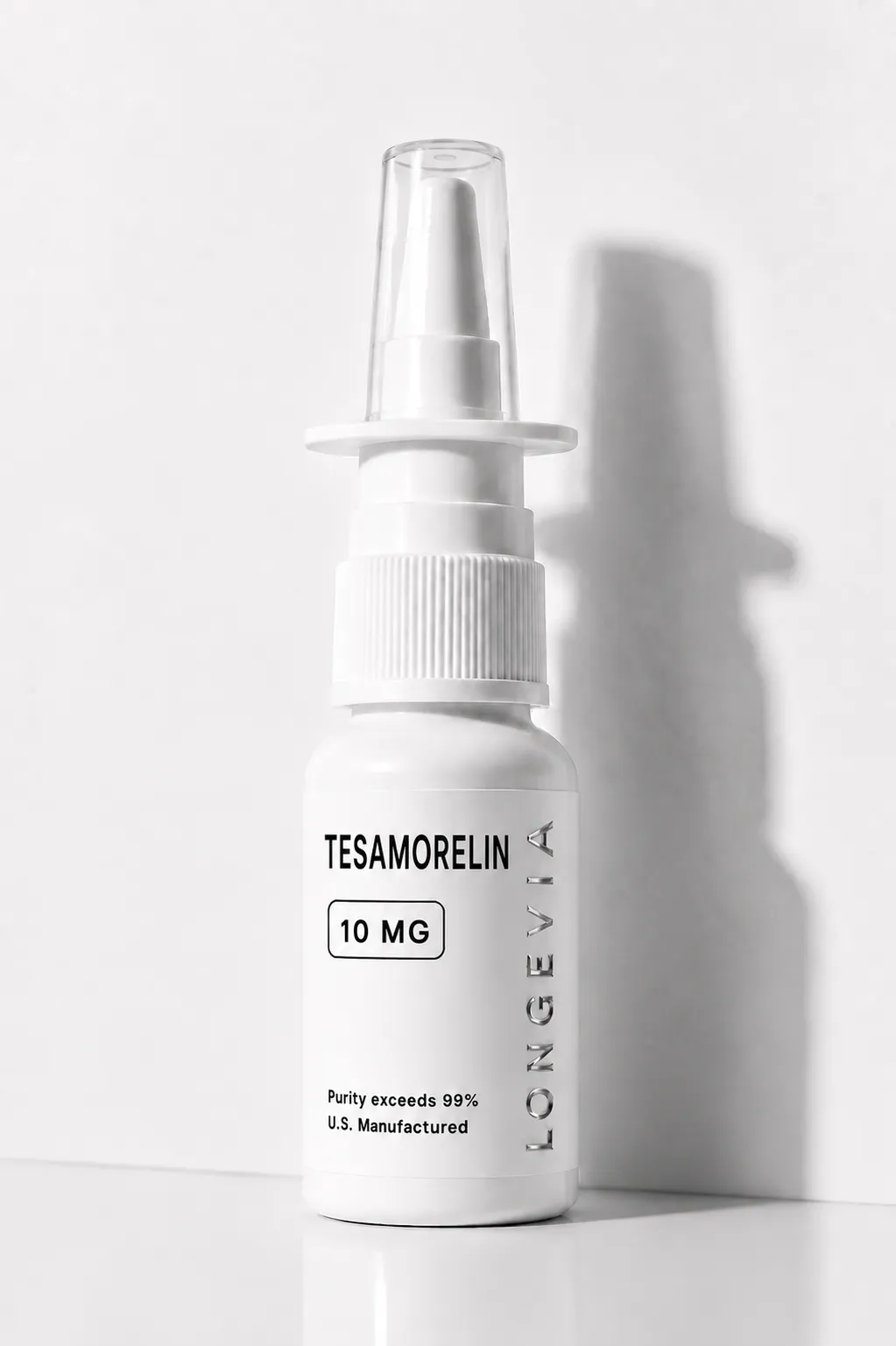
Longevia Research supplies Tesamorelin in 10mg and 20mg quantities in a 45-spray format for qualified laboratory research. Tesamorelin (CAS 218949-48-5) is a synthetic GHRH analog and Class B GPCR agonist investigated in GHRH receptor pharmacology, pituitary somatotroph signaling, and GH/IGF-1 axis research. Research Use Only.
$270.00
Slide to add
Sermorelin — Spray
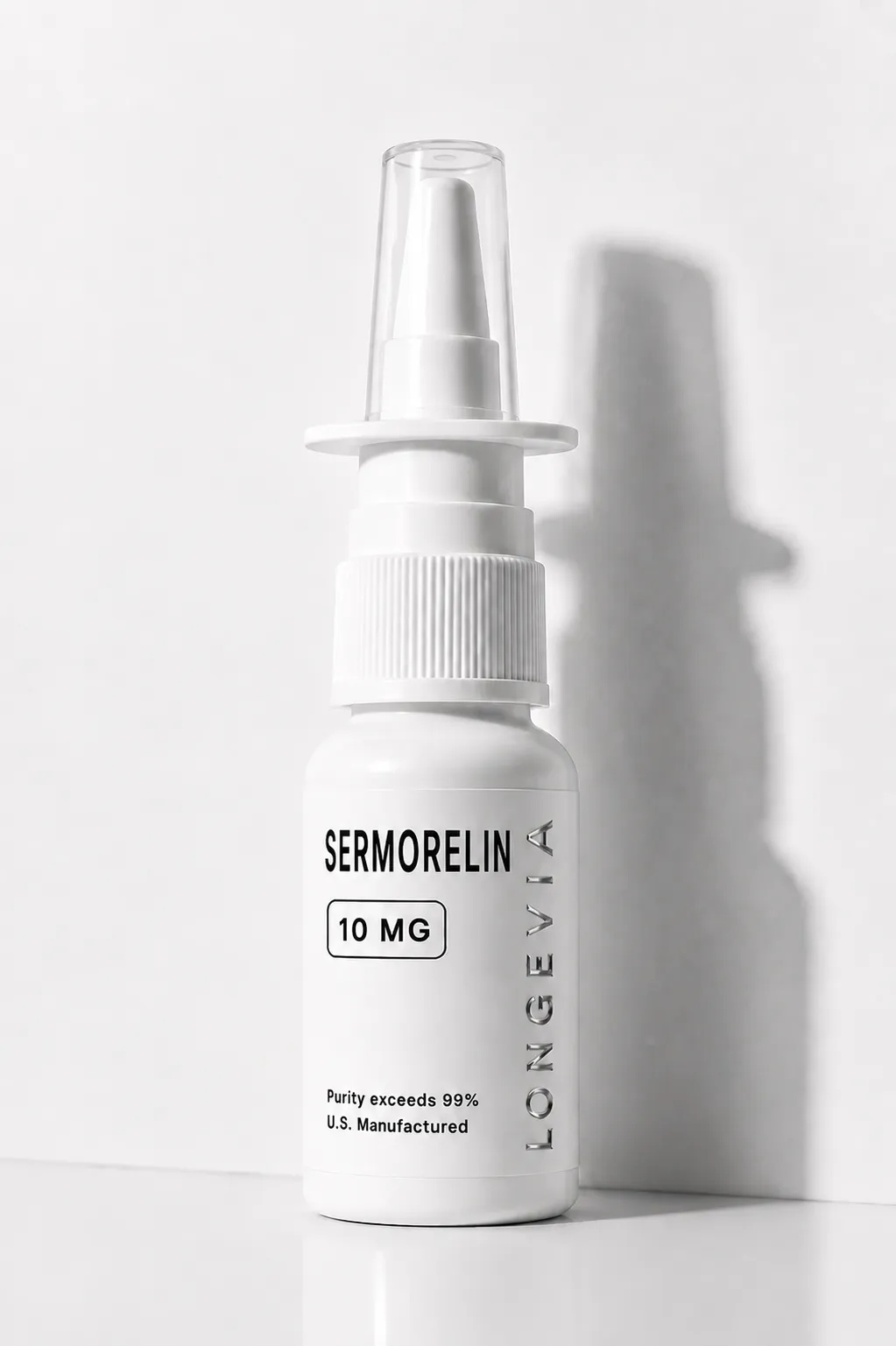
Longevia Research supplies Sermorelin in 10mg and 20mg quantities, 45-spray format, for qualified laboratory research. Sermorelin is a synthetic GHRH(1–29) peptide investigated in GHRH receptor signaling, pituitary somatotroph biology, and somatotropic axis research. Research Use Only.
$189.00
Slide to add
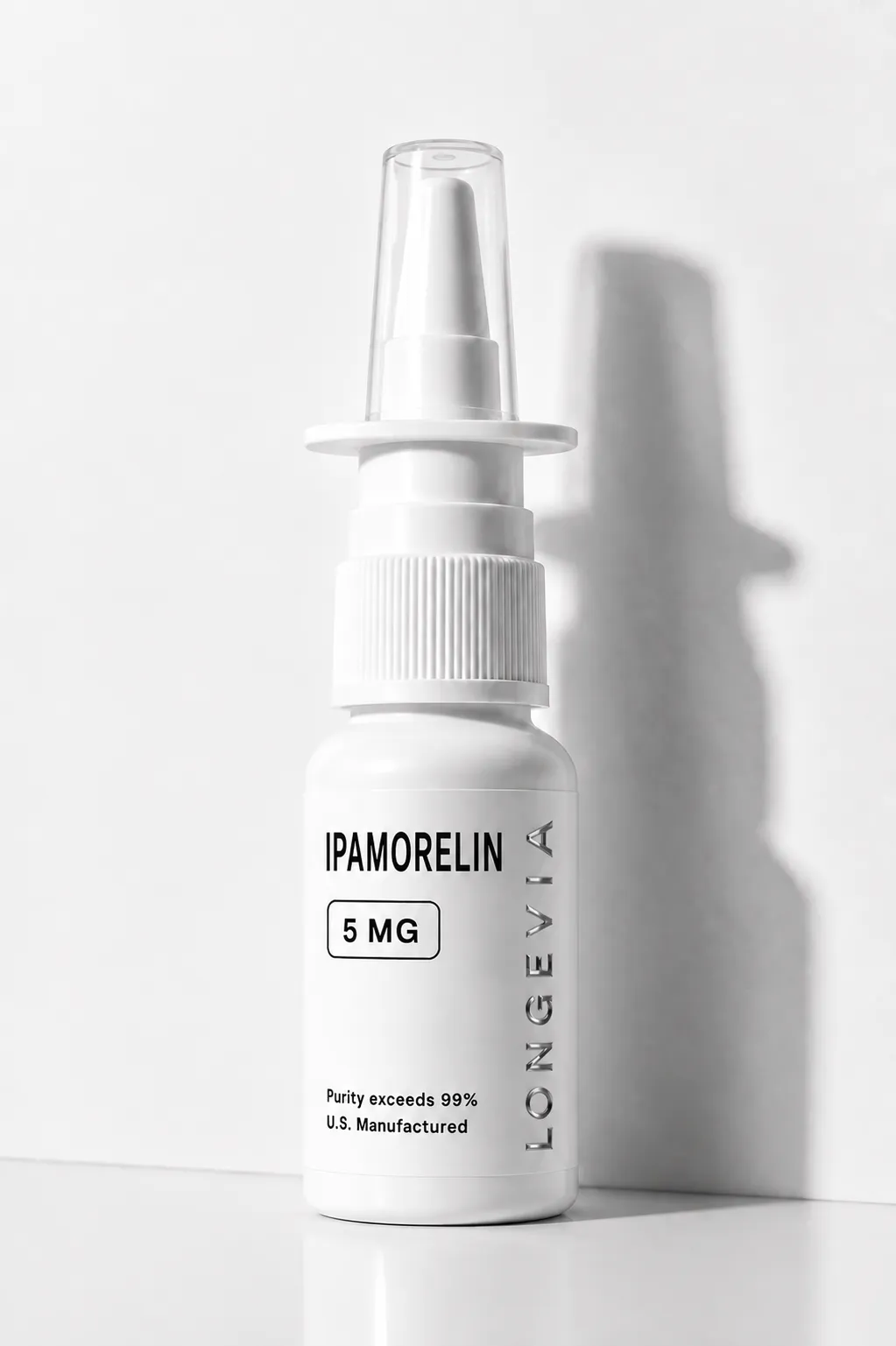
Ipamorelin — Spray
Ipamorelin is a synthetic pentapeptide and selective growth hormone secretagogue investigated in experimental research examining GHSR/ghrelin receptor biology, pituitary somatotroph signaling, and endocrine pharmacology. Available from Longevia Research in 5mg and 10mg — 45 sprays — for qualified laboratory research use only.
$135.00
Slide to add
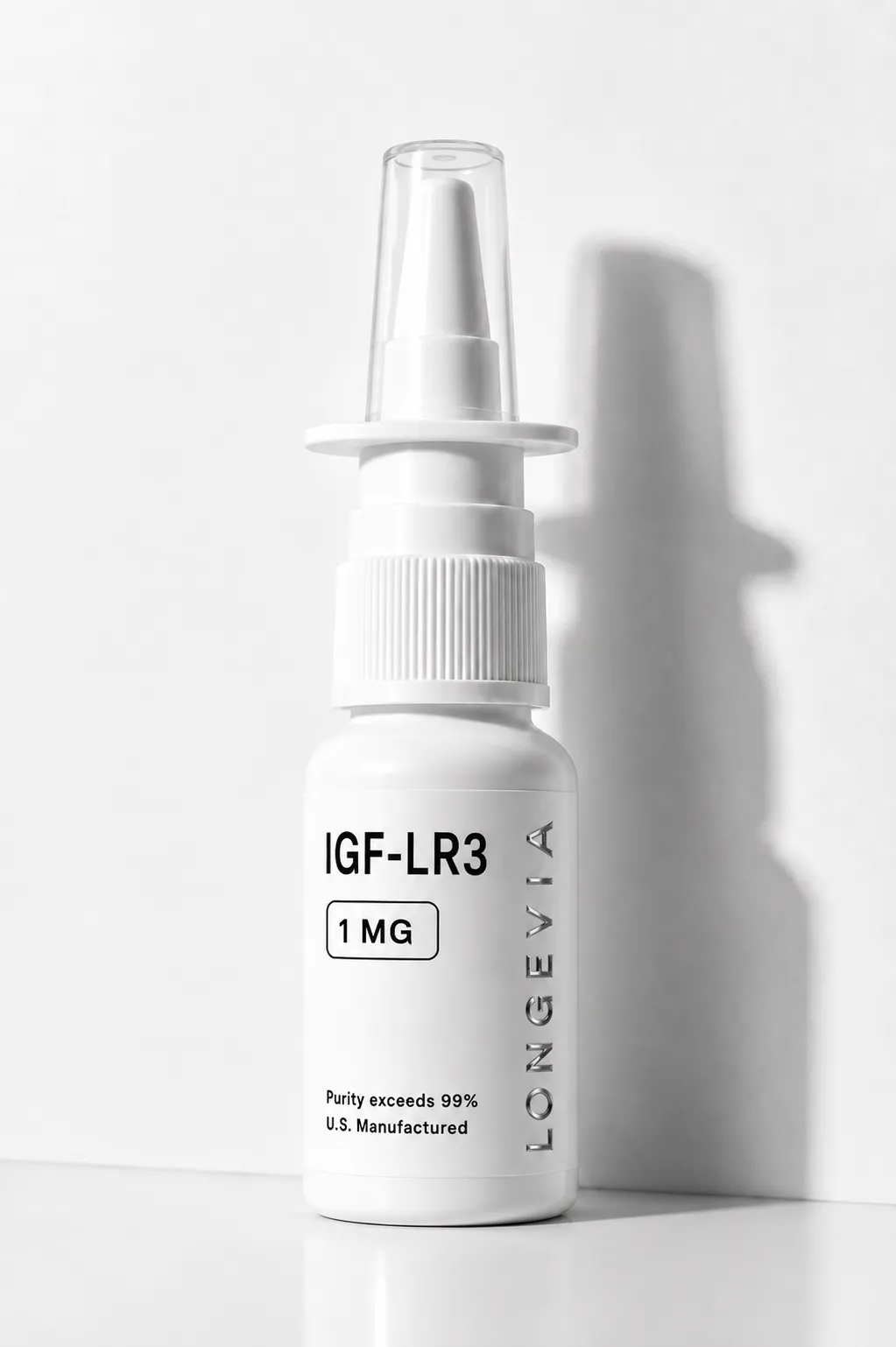
IGF-LR3 — Spray
IGF-LR3 (Long R3 IGF-1) is a modified synthetic 83-amino-acid IGF-1 analogue with reduced IGF binding protein affinity, investigated in cell-based research examining IGF1R signaling, PI3K/AKT and MAPK/ERK pathways, and cellular biology. Available from Longevia Research as 1mg — 45 sprays — for qualified laboratory research use only.
$198.00
Slide to add
Product FAQs
Find answers to common questions regarding storage, reconstitution, and testing guidelines for this specific compound.