Mitochondrial & Cellular EnergyLongevity Research
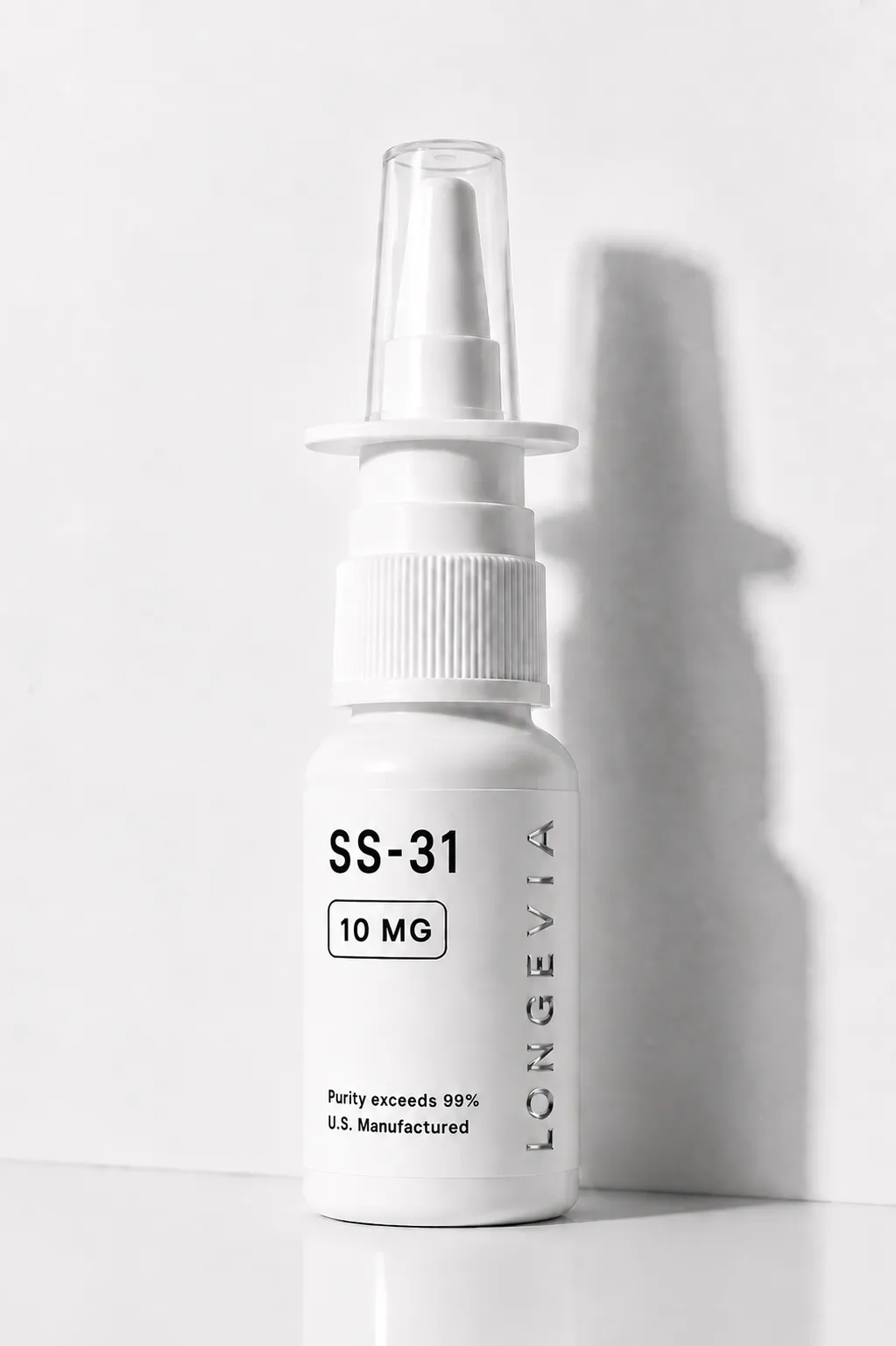
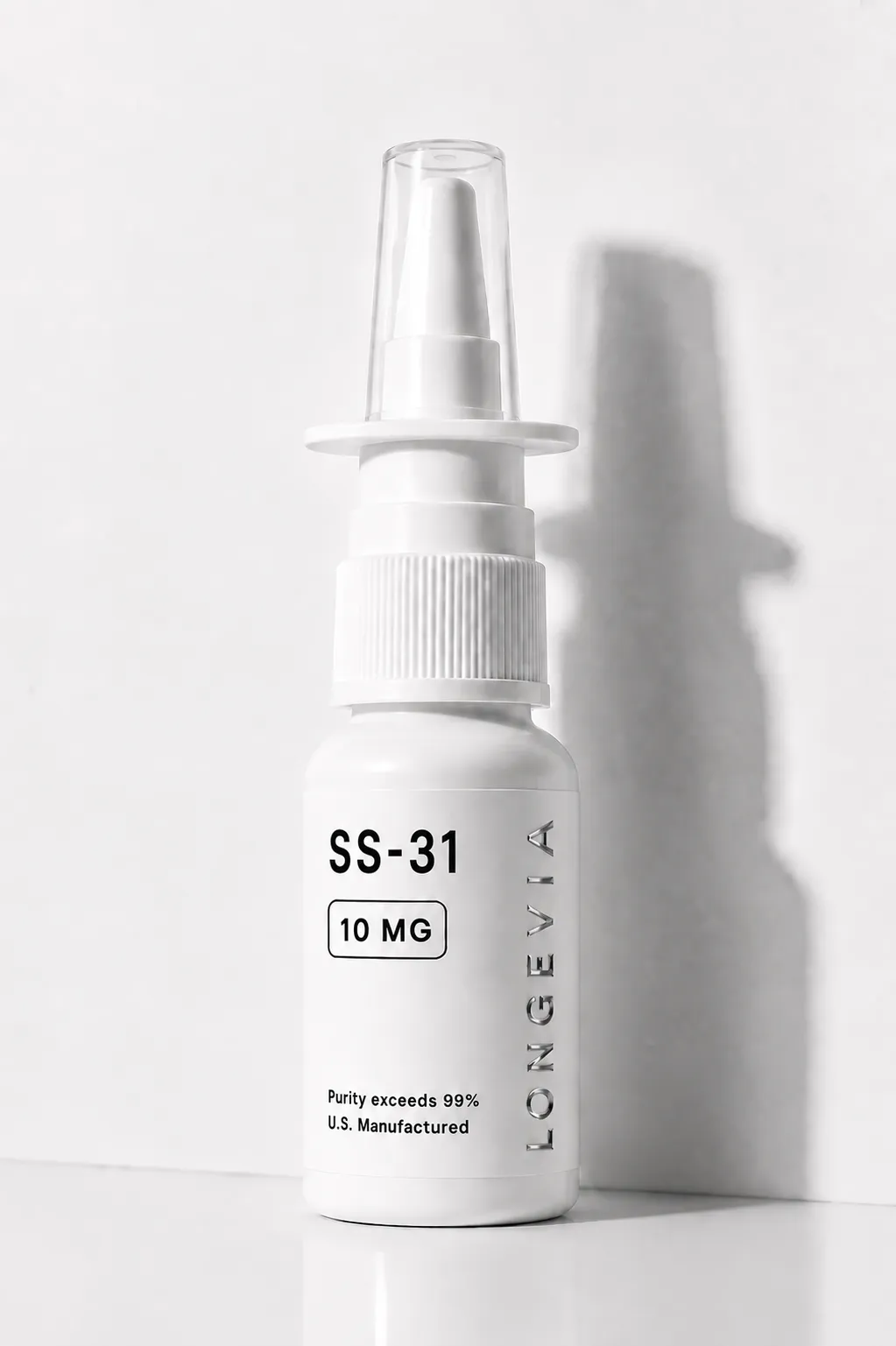
SS-31 — Spray
$198.00
1
Slide to Add
Purity≥99% Tested
TestingLC-MS Verified
LocationUS Based
SS-31 is a synthetic mitochondria-targeted tetrapeptide — also designated MTP-131, elamipretide, and in earlier pharmaceutical development literature, Bendavia — investigated primarily in research concerning mitochondrial membrane biology, cardiolipin, and mitochondrial bioenergetics. Developed as part of the Szeto-Schiller (SzPep) family of aromatic-cationic compounds by Hazel Szeto and Peter Schiller at New York Medical College, SS-31 incorporates a designed alternating aromatic-cationic sequence — D-Arg-Dmt-Lys-Phe-NH₂, where Dmt is the non-standard residue 2′,6′-dimethyl-L-tyrosine — proposed to support preferential accumulation at the inner mitochondrial membrane through interactions with cardiolipin, the distinctive anionic phospholipid enriched in that membrane, rather than through the conventional membrane-potential-dependent accumulation mechanism used by other cationic mitochondria-targeting agents. Research on SS-31 has examined its molecular interactions with cardiolipin and the downstream consequences for mitochondrial membrane organization, respiratory-chain supercomplex stability, oxidative phosphorylation, and mitochondrial reactive oxygen species in cell-based and preclinical model systems. Elamipretide — the INN designation for SS-31 — has been evaluated in human clinical trials by Stealth BioTherapeutics using subcutaneous injection formulations; the PROGRESS-HF trial (Phase 2, heart failure with reduced ejection fraction) and the MMPOWER-3 trial (mitochondrial myopathy) did not meet their primary endpoints, and elamipretide has not received regulatory approval from the FDA, EMA, or any major regulatory authority for any indication. These clinical findings should be accurately understood when characterizing the state of SS-31's clinical research record. Longevia Research supplies SS-31 in two stated quantity variants — 10mg and 50mg — each in a liquid spray format containing 45 sprays per bottle, for qualified laboratory and scientific research purposes only.
Standard Delivery3-4 Working Days
Free ShippingOn all orders above $300
Product Details
Scientific identity
SS-31 (CAS 736992-21-5, most widely cited; CAS 675891-40-4 also reported — researchers requiring precise CAS identification should verify against the specific chemical form supplied through direct consultation with Longevia Research); also designated MTP-131; INN: elamipretide; sequence D-Arg-Dmt-Lys-Phe-NH₂; molecular formula C₃₂H₄₉N₉O₅; molecular weight 639.79 g/mol; 4-residue tetrapeptide with free N-terminal amine and C-terminal primary amide.
Compound class: Synthetic tetrapeptide; mitochondria-targeted aromatic-cationic research compound; cardiolipin-associated research tool; Research Use Only — not a drug, dietary supplement, food, or cosmetic.
Sequence design rationale
The alternating aromatic-cationic motif — D-Arg (cationic) / Dmt (aromatic) / Lys (cationic) / Phe (aromatic) — is the defining structural feature of SS-31 within the Szeto-Schiller family and has been associated with membrane-partitioning behavior in experimental research; D-arginine at position 1 (rather than L-arginine) improves resistance to aminopeptidase degradation; 2′,6′-dimethyltyrosine (Dmt) at position 2 modifies the electronic properties of the aromatic ring compared to standard tyrosine and has been associated with modified interactions with the electron transport chain in mitochondrial membrane preparations; C-terminal amide eliminates the negative charge of a carboxylate at the C-terminus and has been proposed to contribute to membrane interaction characteristics.
Proposed mitochondrial targeting
SS-31 is proposed to associate with the inner mitochondrial membrane through electrostatic interactions between cationic residues (D-Arg, Lys) and anionic cardiolipin headgroups and hydrophobic interactions between aromatic residues (Dmt, Phe) and the lipid acyl chains — distinct from membrane-potential-dependent cationic probe accumulation; research has investigated whether this association is independent of mitochondrial membrane potential (ΔΨm), which would allow use in experimental systems where membrane potential is compromised; these proposed targeting characteristics have been validated in specific experimental contexts and should not be assumed to operate identically across all biological systems.
Product content: Available in two variants — 10mg per bottle and 50mg per bottle; 45 sprays per bottle for both variants.
Physical form: Liquid research spray.
Purity: Research-grade.
Analytical documentation
A batch-specific Certificate of Analysis is available on the Longevia Research website, covering compound identity, purity, and lot traceability; identity confirmation should include mass spectrometric verification at 639.79 g/mol; confirmation of D-arginine stereochemistry at position 1 and the Dmt non-standard residue at position 2 are analytically relevant distinctions from standard L-amino-acid peptides; chromatographic purity assessment separates SS-31 from synthesis-related impurities and related Szeto-Schiller peptide analogues.
Research-use classification
Research Use Only; not approved for human or veterinary use; not intended for administration to humans or animals.
Research Focus & Mechanism Overview
Research background
SS-31 was designed in the late 1990s and early 2000s as part of systematic research into short aromatic-cationic compounds capable of interacting with mitochondrial membranes in a manner distinct from earlier membrane-potential-dependent cationic probe approaches. The scientific interest in SS-31 reflects the recognition that cardiolipin plays a central structural and functional role in organizing respiratory-chain supercomplexes and supporting oxidative phosphorylation efficiency — and that cardiolipin changes, including oxidation of its polyunsaturated acyl chains and reductions in cardiolipin content, have been implicated in the mitochondrial dysfunction characterized in multiple experimental disease and aging models. SS-31 is the most extensively studied member of the Szeto-Schiller family and has progressed from early cell-based research through preclinical animal studies to pharmaceutical clinical development under the elamipretide designation.
Cardiolipin and mitochondrial membrane biology
Cardiolipin (CL) — the tetra-acylated anionic phospholipid uniquely enriched in the inner mitochondrial membrane at approximately 20% of total phospholipid content — plays multiple roles characterized in extensive biochemical research: it stabilizes respiratory-chain supercomplexes (respirasomes — organized assemblies of complexes I, III, and IV) that facilitate efficient electron channeling; it binds cytochrome c and retains it at the inner membrane surface under normal conditions, with oxidized cardiolipin having reduced cytochrome c binding capacity and permitting cytochrome c release into the intermembrane space as an early event in the intrinsic apoptotic pathway; and it contributes to cristae membrane architecture through its biophysical effects on membrane curvature. SS-31 research has characterized peptide interactions with cardiolipin in biophysical model membrane systems (isothermal titration calorimetry, surface plasmon resonance, cardiolipin-containing liposomes), in isolated mitochondrial preparations, and in intact cell experimental systems — examining whether these interactions influence cardiolipin-dependent mitochondrial properties. Research has also investigated whether SS-31 reduces cardiolipin peroxidation by the cardiolipin-cytochrome c peroxidase complex in biochemical model systems, and whether this affects cytochrome c retention under stress conditions; these are biochemical and cell-based research observations that do not establish that SS-31 prevents apoptosis in human tissues.
Key preclinical research areas
Cardiac ischemia-reperfusion rodent models have examined SS-31's effects on myocardial endpoints including infarct size, left ventricular function, mitochondrial respiration measurements, and oxidative stress markers — findings specific to the rodent cardiac physiology, protocol, dose, and measured endpoints that cannot be directly extrapolated to human outcomes. Heart failure models using transverse aortic constriction, skeletal muscle models of aging and disuse, renal ischemia-reperfusion and nephrotoxicity models, and neurological models including rotenone-induced and MPTP neurotoxin Parkinson's disease systems have each examined SS-31 as a mitochondria-targeted pharmacological tool in their respective experimental contexts. Aged rodent tissue preparations — cardiac, skeletal muscle, and renal — have investigated aging-associated mitochondrial changes as experimental endpoints; these findings characterize SS-31's activity in experimental aging contexts and do not establish that SS-31 reverses, slows, or prevents aging in humans. Cell-based research has used cardiomyocyte, myotube, neuronal, and vascular endothelial cell systems to examine mitochondrial respiration (Seahorse XF OCR measurements), membrane potential (fluorescent probe assays), ATP production, and complex activity under defined experimental stress conditions — each finding specific to the cell type, stressor, concentration, and endpoint studied.
Human clinical research and regulatory status
Elamipretide has been evaluated in Phase 1, Phase 2, and Phase 3 clinical activities by Stealth BioTherapeutics. The PROGRESS-HF Phase 2 randomized controlled trial in adults with heart failure with reduced ejection fraction (reported in NEJM, 2020) did not meet its prespecified primary endpoint of change in left ventricular end-systolic volume at 28 weeks; the MMPOWER-3 trial in mitochondrial myopathy also did not meet its primary and secondary endpoints. Clinical investigations in Barth syndrome (a rare cardiolipin remodeling disorder), peripheral artery disease, and other mitochondrial dysfunction conditions have provided safety and pharmacokinetic characterization of the subcutaneous injection formulation in those populations. All clinical findings are specific to the subcutaneous injection pharmaceutical formulation, the enrolled patient populations, the defined doses and protocols, and the measured endpoints — they do not establish the properties of the Longevia Research spray, for which no pharmacokinetic or bioavailability data are stated. Elamipretide has not received regulatory approval from the FDA, EMA, or any major regulatory authority for any indication as of the date of this listing.
Quality & Purity Standards
For a structurally defined synthetic tetrapeptide such as SS-31, research-grade quality requires confident confirmation of the exact amino-acid sequence — including the stereochemical identity of the D-arginine residue at position 1 and the non-standard 2′,6′-dimethyltyrosine (Dmt) residue at position 2. Both of these features are critical to SS-31's identity: replacing D-arginine with L-arginine, or Dmt with standard tyrosine, would produce a different peptide with potentially different mitochondrial-targeting and membrane-interaction properties in research systems. Analytical methods capable of distinguishing SS-31 from related Szeto-Schiller peptides or from substituted analogs are therefore fundamental to quality assurance.
Research-grade quality assessment for SS-31 appropriately involves:
Peptide identity and sequence verification: Confirmation of the four-residue sequence D-Arg-Dmt-Lys-Phe-NH₂ using LC-MS/MS tandem mass spectrometry capable of identifying each residue and distinguishing SS-31 from related compounds. The Dmt residue's mass (+28 Da relative to Tyr) provides a distinctive mass-spectrometric signature useful for identity confirmation.
Stereochemical verification: Confirmation of D-arginine at position 1, distinguishing SS-31 from a peptide carrying L-arginine at that position (which would have the same molecular mass but different stereochemistry). Chiral HPLC or appropriate MS-based approaches may be required for confident D/L arginine verification.
Molecular mass confirmation: High-resolution mass spectrometry (HRMS) to confirm the molecular formula C₃₂H₄₉N₉O₅ and molecular weight of 639.79 g/mol.
C-terminal amide verification: Analytical confirmation that the C-terminus carries an amide (Phe-NH₂) rather than a free carboxylic acid (Phe-OH), distinguishing SS-31 from its des-amide analog. The amidated form is approximately 1 Da lighter than the free-acid form.
Purity assessment: Reversed-phase HPLC or UHPLC to evaluate chemical purity and quantify related substances, synthesis-related impurities, or degradation products.
Dmt residue integrity: Verification that the 2′,6′-dimethyltyrosine residue has not undergone oxidation of its phenolic ring or loss of the dimethyl substituents during synthesis or storage.
Batch documentation and traceability: Provision of batch-specific analytical records enabling traceability from synthesis through supply.
Longevia Research's quality approach is oriented toward providing researchers with well-characterized peptides supported by appropriate analytical documentation. Researchers should consult current product documentation and available certificates of analysis for batch-specific data.
No specific purity grade, third-party certification, cGMP status, or independent laboratory verification is stated for this listing. Researchers requiring documentation of specific quality parameters should contact Longevia Research directly.
Compliance Notice
FOR RESEARCH USE ONLY. NOT FOR HUMAN CONSUMPTION. NOT FOR VETERINARY USE.
SS-31 10mg / 50mg — 45 Sprays, as supplied by Longevia Research, are intended exclusively for qualified laboratory and scientific research conducted by trained professionals in appropriate research settings. These products are not drugs, dietary supplements, food, or cosmetics. They have not been evaluated or approved by the U.S. Food and Drug Administration, the European Medicines Agency, or any other regulatory authority for use as therapeutic, prophylactic, or diagnostic agents in humans or animals.
These products are not intended to diagnose, treat, cure, or prevent any disease, condition, or health-related outcome.
Regulatory and development status of elamipretide: As of the date of this listing, elamipretide has not received regulatory approval from any major international regulatory authority. It has been evaluated in human clinical trials in specific patient populations, and key Phase 2 and Phase 3 trials (including PROGRESS-HF in heart failure and MMPOWER-3 in mitochondrial myopathy) did not meet their prespecified primary endpoints. The current investigational status of elamipretide does not extend to the Longevia Research SS-31 spray, which is a separately supplied research compound with no regulatory approval, no clinical validation, and no equivalence to any elamipretide formulation studied in clinical trials.
Formulation and route distinction: Clinical research on elamipretide has used subcutaneous injection formulations with characterized pharmacokinetics and systemic bioavailability. Findings from those formulations and routes — including pharmacokinetic data, safety data, and clinical outcomes — cannot be assumed to apply to a spray product. Longevia Research has not stated the solvent, excipients, concentration, or delivery characteristics of this spray, and no pharmacokinetic data for this spray formulation has been established.
Evidence scope: Research on SS-31 — including molecular interaction studies, cell-based research, animal model studies, and human clinical trials — does not establish the safety, efficacy, bioavailability, or pharmacokinetics of the Longevia Research spray products. Animal model findings do not establish human efficacy or safety. Cell-based findings do not constitute in vivo evidence. Mitochondrial biology research does not automatically establish SS-31-specific effects.
No therapeutic claims: Research examining SS-31 or elamipretide in experimental models of mitochondrial disease, heart failure, skeletal muscle mitochondrial dysfunction, neurological conditions, or aging-associated mitochondrial changes does not establish that these products treat, prevent, reverse, or mitigate any such condition in human users.
Purchasers are solely responsible for ensuring that acquisition, possession, storage, handling, use, and disposal of these products comply with all applicable local, state, national, and international laws and regulations governing research compounds. Longevia Research makes no warranties regarding the suitability of these products for any specific research application. These products should be handled by qualified personnel following appropriate laboratory safety protocols.
By purchasing these products, the purchaser confirms that they are a qualified researcher or research professional acquiring this compound for legitimate scientific research purposes only.
Continue Exploring
Also Considered.
SNAP-8 — Spray
Longevia Research supplies SNAP-8 (Acetyl Octapeptide-3) in 10mg and 20mg quantities, 45-spray format, for qualified laboratory research. SNAP-8 is a synthetic acetylated octapeptide associated with SNAP-25 and SNARE-complex biology, investigated in neurotransmitter-release and vesicle-fusion research. Research Use Only.
$130.50
Slide to add
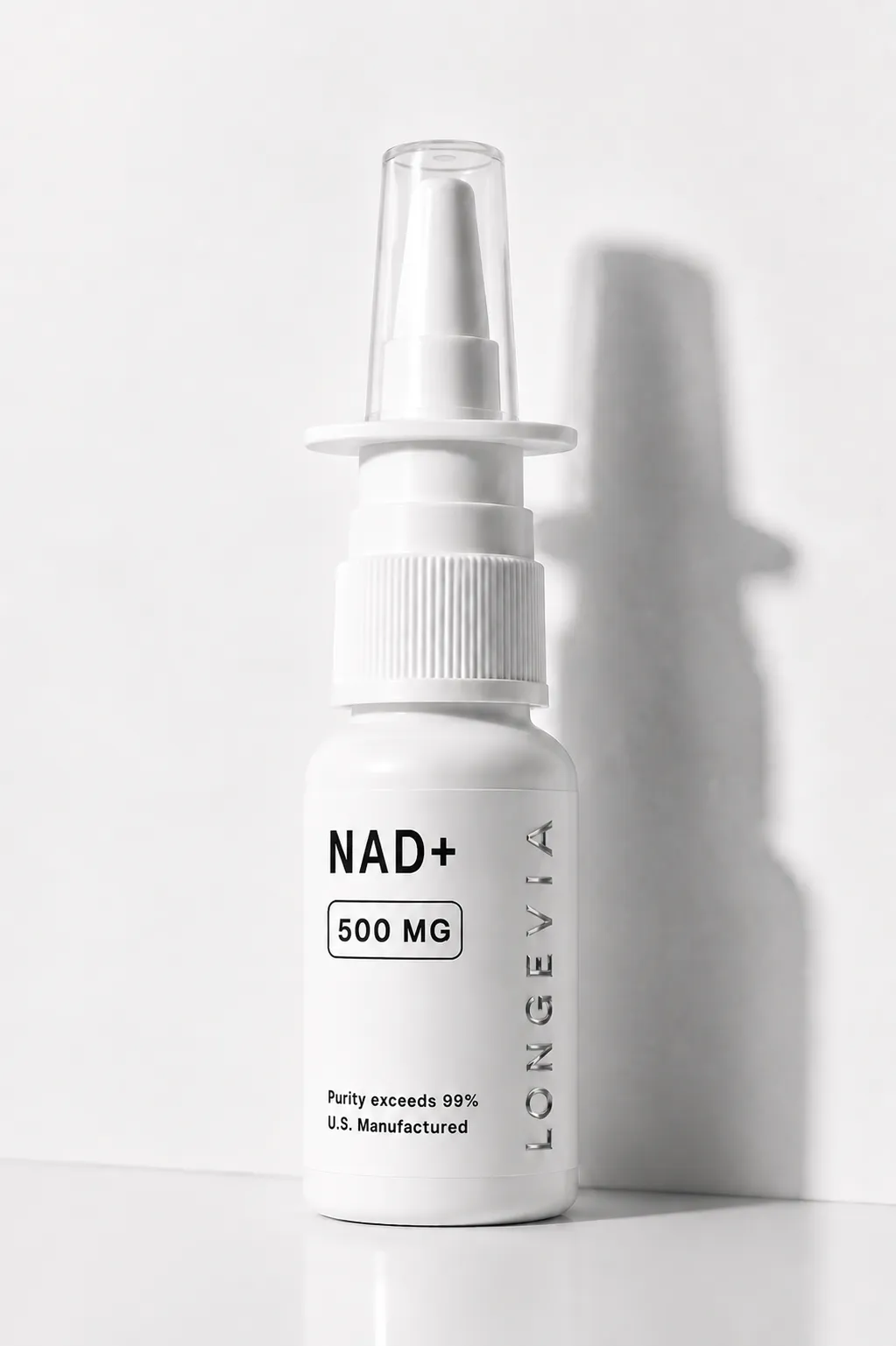
NAD+ Spray
Longevia Research supplies NAD+ (nicotinamide adenine dinucleotide) in 500mg and 1000mg quantities, 45-spray format, for qualified laboratory research. NAD+ is a redox-active dinucleotide coenzyme central to cellular metabolism, mitochondrial biology, sirtuin and PARP research. Research Use Only.
$162.00
Slide to add
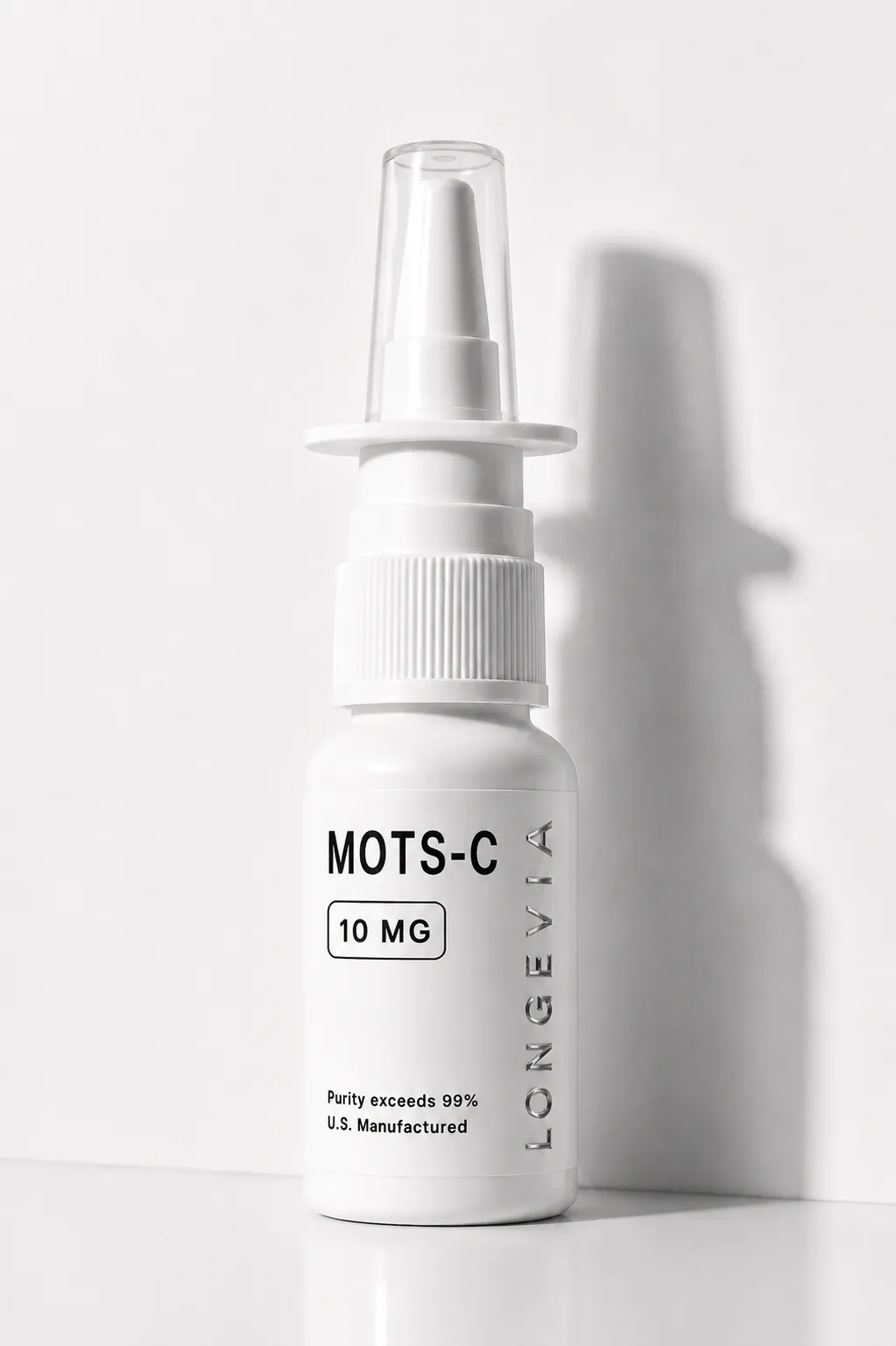
MOTS-C Spray
Longevia Research supplies MOTS-C in 10mg and 40mg quantities, 45-spray format, for qualified laboratory research. MOTS-C is a mitochondrial-derived peptide (MDP) investigated in research involving mitochondrial biology, cellular metabolism, AMPK-related signaling, and stress-response pathways. Research Use Only.
$162.00
Slide to add

L-Carnitine — Spray
Longevia Research supplies L-Carnitine (levocarnitine) 400mg in a 45-spray format for qualified laboratory research. L-Carnitine is a quaternary ammonium compound central to the carnitine shuttle and mitochondrial fatty-acid transport. Research Use Only.
$180.00
Slide to add
Product FAQs
Find answers to common questions regarding storage, reconstitution, and testing guidelines for this specific compound.