Mitochondrial & Cellular EnergyMetabolic ResearchLongevity Research
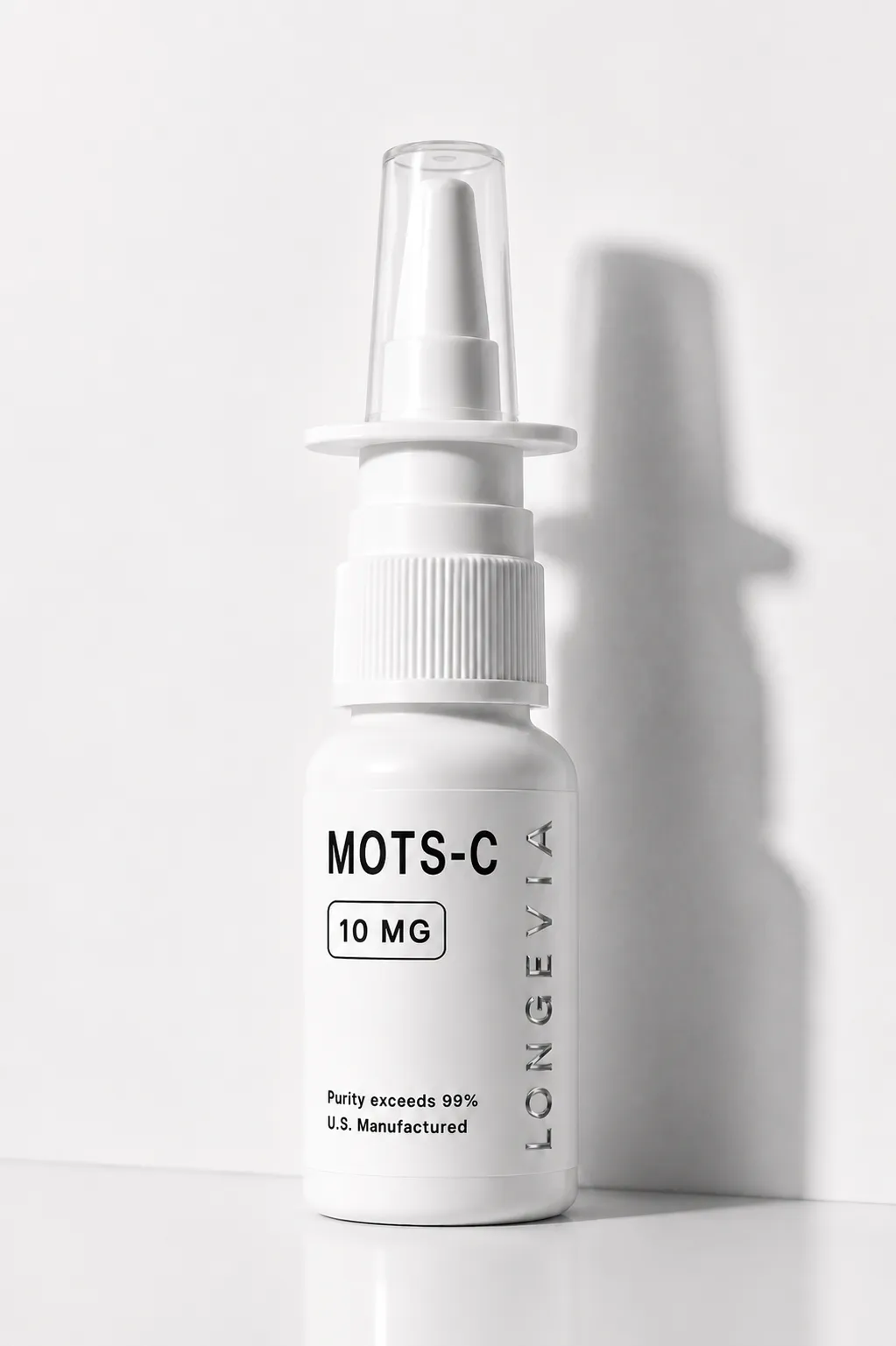
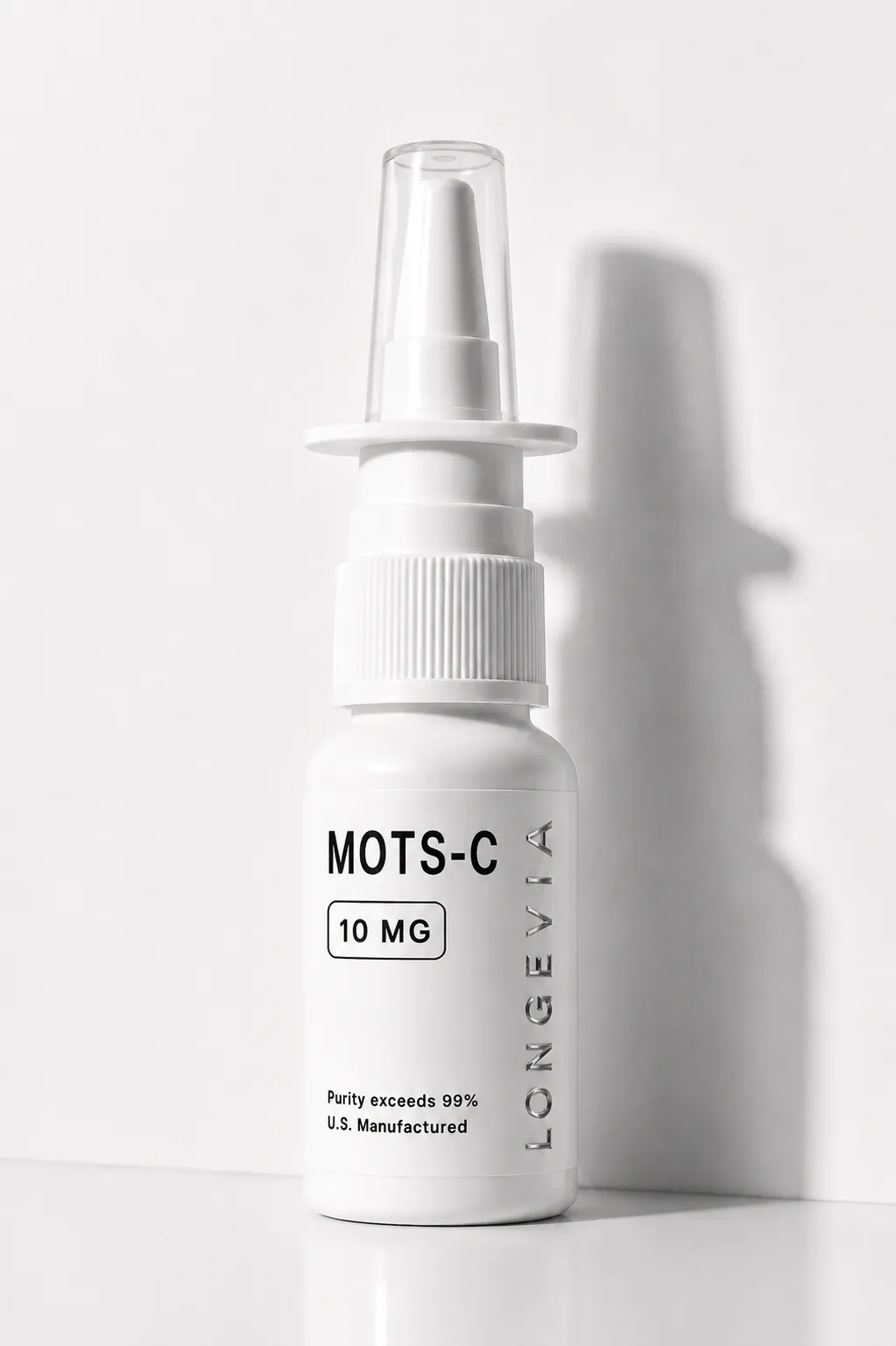
MOTS-C Spray
$162.00
1
Slide to Add
Purity≥99% Tested
TestingLC-MS Verified
LocationUS Based
MOTS-C (Mitochondrial Open Reading Frame of the 12S rRNA-C) is a mitochondrial-derived peptide (MDP) encoded within a short open reading frame located in the 12S rRNA gene region of the human mitochondrial genome. Unlike nuclear-genome-encoded compounds, MOTS-C is translated from mitochondrial DNA and has been investigated as a signaling molecule participating in cellular metabolic regulation and stress-response biology. Research on MOTS-C has examined its relationships with AMPK-associated cellular energy sensing, glucose and insulin-related metabolic pathways, mitochondrial-nuclear communication, and cellular adaptation to metabolic stress. MOTS-C belongs to an emerging class of mitochondrial-derived peptides — which also includes Humanin and small Humanin-like peptides (SHLPs) — that challenges earlier assumptions that the mitochondrial genome encodes only structural and respiratory chain proteins and rRNAs. Longevia Research supplies MOTS-C in two stated quantity variants — 10mg and 40mg — each in a liquid spray format containing 45 sprays per bottle, for qualified laboratory and scientific research purposes only.
Standard Delivery3-4 Working Days
Free ShippingOn all orders above $300
Product Details
Scientific identity
MOTS-C (CAS 1627580-64-6) is a 16-amino-acid mitochondrial-derived peptide with the sequence Met-Arg-Trp-Gln-Glu-Met-Gly-Tyr-Ile-Phe-Tyr-Pro-Arg-Lys-Leu-Arg (one-letter: MRWQEMGYIFYPRKLR). Molecular formula C₁₀₁H₁₅₂N₂₈O₂₂S₂; molecular weight 2,174.63 g/mol. Encoded by a 51-nucleotide ORF within the MT-RNR1 locus — the gene encoding mitochondrial 12S ribosomal RNA.
Compound class
Mitochondrial-derived peptide (MDP); mitochondrially encoded bioactive research compound. Classified as a Research Use Only material and is not a drug, dietary supplement, food, or cosmetic.
Genomic origin and classification
MOTS-C is translated by mitochondrial ribosomes using the mitochondrial genetic code and is distinct from nuclear-encoded mitochondrial proteins imported from the cytoplasm and from peptides produced by proteolytic processing of larger precursor proteins. Its identification established that a protein-coding ORF can reside within an rRNA-encoding gene — an unconventional finding that contributed to the delayed recognition of MOTS-C as a functional peptide. Each MDP has a distinct sequence, structure, and experimental research profile; findings from Humanin, SHLPs, or other MDPs should not be generalized to MOTS-C without independent justification.
Analytical note
The two methionine residues at positions 1 and 6 represent potential oxidation sites; methionine oxidation state is a relevant quality parameter for research-grade preparations, as oxidation may influence biological activity in experimental systems.
Product content
Available in two variants: 10mg per bottle and 40mg per bottle; 45 sprays per bottle for both variants.
Physical form: Liquid research spray.
Purity: Research-grade.
Analytical documentation
A batch-specific Certificate of Analysis is available on the Longevia Research website, covering peptide identity, purity, and lot traceability. Identity confirmation should include LC-MS/MS sequence verification of the full 16-residue sequence and high-resolution mass spectrometric confirmation of the molecular formula C₁₀₁H₁₅₂N₂₈O₂₂S₂ at 2,174.63 g/mol, distinguishing MOTS-C from related MDPs and from methionine-oxidized variants.
Research-use classification
Research Use Only. Not approved for human or veterinary use. Not intended for administration to humans or animals.
Research Focus & Mechanism Overview
Research background
The discovery of MOTS-C was reported in 2015 by Lee and colleagues in Cell Metabolism, arising from systematic re-examination of the mitochondrial genome for short open reading frames capable of encoding functional peptides. This work established that MOTS-C is translated from an ORF within the 12S rRNA gene, is detectable in human plasma, and is capable of influencing cellular metabolic signaling in experimental systems. MOTS-C research fits within the broader scientific reappraisal of mitochondria as active signaling hubs that communicate with the nucleus, cytoplasm, and other cells through multiple mechanisms — including reactive oxygen species, metabolites, and, as MOTS-C exemplifies, peptides derived from the mitochondrial genome itself. The full biological significance of MOTS-C in human physiology remains an active research question.
AMPK and energy-sensing research
The most investigated proposed mechanism for MOTS-C involves a link to AMP-activated protein kinase (AMPK) — a central cellular energy sensor activated by increases in the AMP:ATP or ADP:ATP ratio under conditions of energy depletion or metabolic stress. Cell-based studies have investigated whether MOTS-C influences one-carbon metabolic pathways — including folate cycle flux — with downstream effects on AICAR (5-aminoimidazole-4-carboxamide ribonucleotide) production and consequent AMPK activation. These are experimental mechanistic proposals characterized in specific cell culture systems representing a research hypothesis about how MOTS-C may interface with metabolic sensing machinery; they do not represent an established physiological mechanism confirmed across all biological contexts. Additionally, research has observed MOTS-C cytoplasmic-to-nuclear translocation under conditions of cellular stress — including metabolic and oxidative stress — raising research questions about whether MOTS-C participates in transcriptional regulation in the nucleus under these conditions. This research is at an early stage and requires validation across additional experimental models.
Key research areas
Cell-based studies have examined MOTS-C in insulin-responsive cell lines — including 3T3-L1 adipocytes and C2C12 skeletal muscle cells — investigating glucose uptake, insulin signaling intermediates, and related metabolic parameters under experimental conditions. Animal studies using murine models have examined MOTS-C administration in high-fat diet-induced and aging metabolic contexts, measuring glucose tolerance, insulin sensitivity, and tissue-level metabolic gene expression; these findings are specific to the experimental conditions and administration routes studied and cannot be directly extrapolated to human outcomes. Human observational research has examined circulating MOTS-C levels in relation to age, exercise, sex, and metabolic parameters in defined study populations — describing associations between endogenous MOTS-C levels and physiological context rather than establishing the effects of administering exogenous MOTS-C. The distinction between endogenous MOTS-C as a biomarker and administered MOTS-C as an experimental intervention is scientifically fundamental and must be maintained when interpreting any research finding. Human intervention research involving exogenous MOTS-C administration is more limited in scope than the preclinical literature.
Aging and geroscience context
Circulating MOTS-C levels have been reported to decline with aging in human observational studies, raising research questions about biological significance and associations with age-related metabolic changes. In animal models, experimental MOTS-C administration has been examined in aging-associated metabolic contexts. MOTS-C is not an established anti-aging treatment, longevity therapeutic, or life-extension compound; no such characterization is appropriate for a research-grade preparation. MOTS-C has no regulatory approval as a pharmaceutical product, no approved therapeutic indication, and no established clinical dosing or pharmacokinetic profile in the context of exogenous administration.
Quality & Purity Standards
For a mitochondrial-derived peptide such as MOTS-C, research-grade quality depends on accurate identity verification, sequence confirmation, and molecular characterization. Because MOTS-C is a 16-amino-acid peptide with two methionine residues (at positions 1 and 6) and a specific sequence confirmed in the scientific literature, confident identity assignment requires analytical methods capable of establishing both the amino acid composition and the sequential order. Confirming that the supplied material is specifically MOTS-C — and not a truncated fragment, a structurally related mitochondrial-derived peptide, or an unrelated peptide — is a foundational quality requirement.
Research-grade quality assessment for MOTS-C appropriately involves:
Peptide identity and sequence verification: Confirmation of the full 16-residue sequence (MRWQEMGYIFYPRKLR) using LC-MS/MS with tandem mass spectrometric fragmentation capable of resolving the full sequence and distinguishing positional isomers.
Molecular mass confirmation: High-resolution mass spectrometry (HRMS) to confirm the molecular formula C₁₀₁H₁₅₂N₂₈O₂₂S₂ and molecular weight of 2174.63 g/mol, verifying that the supplied compound matches the established MOTS-C specification and can be distinguished from related mitochondrial-derived peptides.
Purity assessment: Reversed-phase HPLC or UHPLC to evaluate chemical purity and identify related substances, synthesis-related impurities, or degradation products — including potential oxidation products at the two methionine residues, which represent common oxidative modifications in sulfur-containing peptides.
Methionine oxidation assessment: Given the presence of two methionine residues in the MOTS-C sequence, analytical evaluation of methionine oxidation state (methionine vs. methionine sulfoxide) is a relevant quality parameter for research-grade preparations intended for cell-based and in vivo studies where oxidation state may influence biological activity.
Batch documentation and traceability: Provision of batch-specific analytical records enabling traceability from synthesis through supply.
Longevia Research's quality approach is oriented toward providing researchers with well-characterized peptides supported by appropriate analytical documentation. Researchers should consult current product documentation and available certificates of analysis for batch-specific data.
No specific purity grade, third-party certification, cGMP status, or independent laboratory verification is stated for this listing. Researchers requiring documentation of specific quality parameters should contact Longevia Research directly.
Compliance Notice
FOR RESEARCH USE ONLY. NOT FOR HUMAN CONSUMPTION. NOT FOR VETERINARY USE.
MOTS-C 10mg and 40mg — 45 Sprays, as supplied by Longevia Research, are intended exclusively for qualified laboratory and scientific research conducted by trained professionals in appropriate research settings. These products are not drugs, dietary supplements, food, or cosmetics. They have not been evaluated or approved by the U.S. Food and Drug Administration, the European Medicines Agency, or any other regulatory authority for use as therapeutic, prophylactic, or diagnostic agents in humans or animals.
These products are not intended to diagnose, treat, cure, or prevent any disease, condition, or health-related outcome.
Evidence scope — endogenous vs. administered MOTS-C: Research measuring endogenous MOTS-C as a circulating biomarker does not establish outcomes from administration of an exogenous MOTS-C research spray. These represent distinct scientific questions; observational findings about circulating MOTS-C levels should not be interpreted as evidence of product effect.
Evidence scope — preclinical to human: Animal model findings involving experimental MOTS-C administration do not establish human efficacy or safety. Cell-based findings do not constitute clinical evidence. Neither provides a basis for inferring that the Longevia Research spray produces any specific biological outcome in humans.
Evidence scope — MDP class: Research on Humanin, SHLPs, or other mitochondrial-derived peptides is not direct evidence for MOTS-C. Each MDP has a distinct sequence, biological context, and experimental literature.
No metabolic or anti-aging claims: Research involving MOTS-C in experimental models of glucose metabolism, insulin signaling, aging, or exercise does not establish that these products produce metabolic, anti-aging, or performance-related outcomes in human users.
Purchasers are solely responsible for ensuring that acquisition, possession, storage, handling, use, and disposal of these products comply with all applicable local, state, national, and international laws and regulations governing research compounds. Longevia Research makes no warranties regarding the suitability of these products for any specific research application. These products should be handled by qualified personnel following appropriate laboratory safety protocols.
By purchasing these products, the purchaser confirms that they are a qualified researcher or research professional acquiring this compound for legitimate scientific research purposes only.
Continue Exploring
Also Considered.
Sale
Tirzepatide - 10 Kits Bundle
High-purity research peptide for laboratory use.
$699.99$799.99
Slide to add
Sale
Tirzepatide - 5 Kits Bundle
High-purity research peptide for laboratory use.
$399.99$449.99
Slide to add
Tirzepatide — Spray
Longevia Research supplies Tirzepatide (LY3298176, CAS 2023788-19-2) in 10mg, 20mg, 30mg, and 60mg quantities in a 45-spray research format. A synthetic 39-amino-acid dual GIP and GLP-1 receptor agonist peptide investigated in incretin biology, pancreatic islet signaling, glucose homeostasis, metabolic research, and cardiometabolic pharmacology. Research Use Only.
$129.99
Slide to add

Semaglutide — Sprays
Longevia Research supplies Semaglutide in 5mg, 10mg, 20mg, and 30mg quantities, 45-spray format, for qualified laboratory research. Semaglutide is a synthetic modified GLP-1 analog and GLP-1 receptor agonist investigated in metabolic, endocrine, and incretin signaling research. Research Use Only.
$135.00
Slide to add
Product FAQs
Find answers to common questions regarding storage, reconstitution, and testing guidelines for this specific compound.