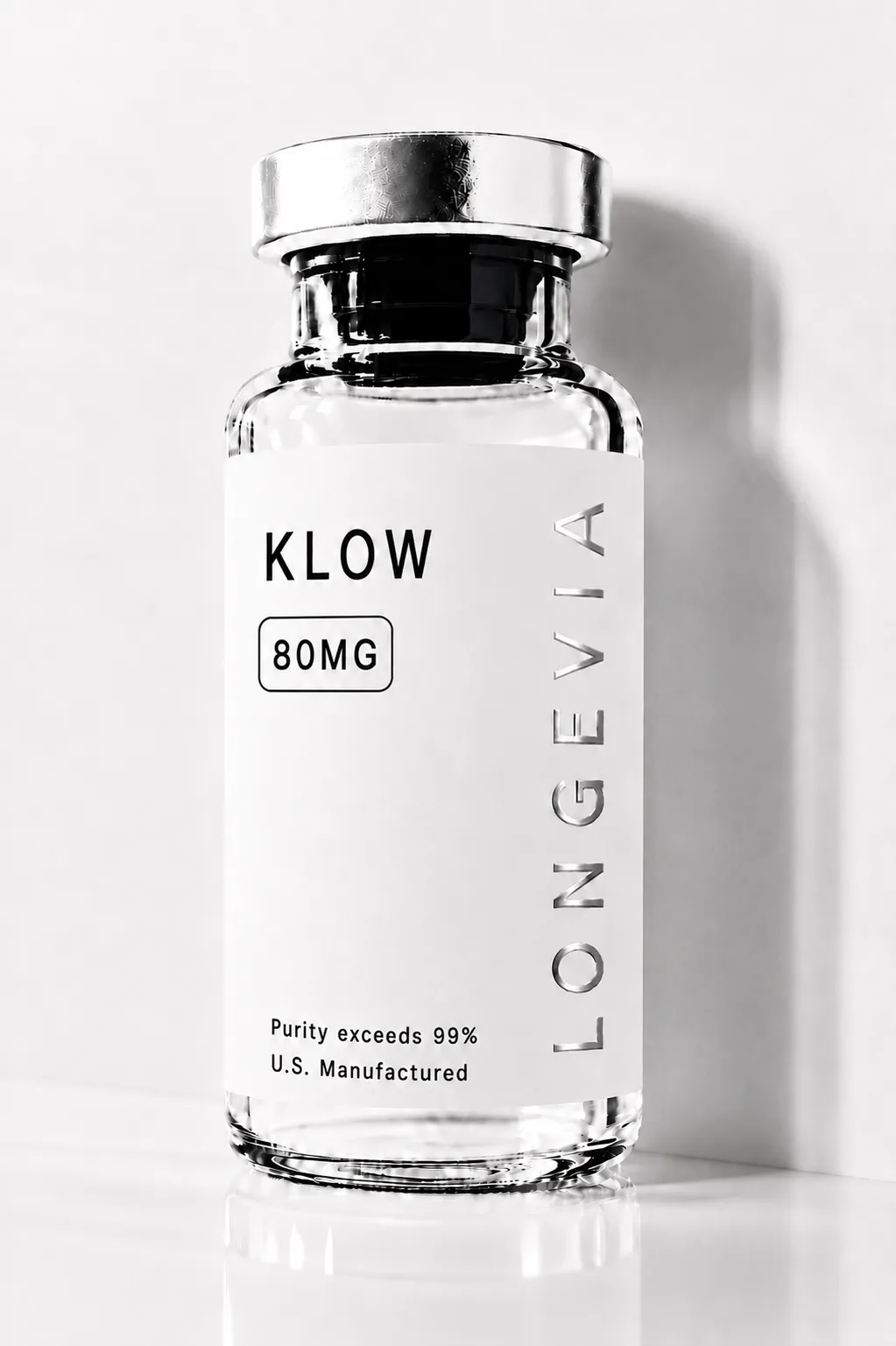
KLOW
$207.00
1
Slide to Add
Purity≥99% Tested
TestingLC-MS Verified
LocationUS Based
KLOW 80mg is a four-component synthetic research peptide blend supplied by Longevia Research as a lyophilised vial for laboratory use only. The formulation combines four individually characterised research compounds — GHK-Cu, BPC-157, TB-500, and KPV — in a fixed mass ratio, providing a single co-formulated research material for investigators studying multi-compound peptide interactions and overlapping signalling pathways within a single controlled experimental system. The four components address distinct but interconnected areas of preclinical research: extracellular matrix remodelling and copper coordination biology (GHK-Cu), gastrointestinal and soft-tissue cytoprotective signalling (BPC-157), actin-regulation and cell-migration biology (TB-500), and melanocortin receptor-associated anti-inflammatory signalling (KPV). Researchers studying tissue biology, cellular signalling, or multi-pathway experimental models have used individual members of this compound class; KLOW provides access to all four within a single documented formulation.
Standard Delivery3-4 Working Days
Free ShippingOn all orders above $300
Comprehensive Product Details
Scientific Identity
KLOW 80mg is a co-formulated research blend containing four distinct synthetic peptide compounds. It is not a single chemical entity and therefore cannot be characterised by a single molecular formula, molecular weight, or CAS number. Each component retains its own chemical identity, CAS registry number, molecular characteristics, and independent research literature. The components and their quantities per vial are:
GHK-Cu — 50mg Glycyl-L-histidyl-L-lysine copper(II) complex. A naturally occurring copper-binding tripeptide first isolated from human plasma in the early 1970s. GHK-Cu is the dominant component by mass in this formulation at 50mg per vial.
BPC-157 — 10mg Body Protection Compound-157. A synthetic 15-amino acid peptide derived from a partial sequence of the human gastric juice protein BPC. Not present endogenously in isolation; studied as a research compound.
TB-500 — 10mg A synthetic peptide derived from thymosin beta-4 (Tβ4), a 43-amino acid intracellular protein involved in actin polymerisation and cell motility. TB-500 as supplied in research contexts corresponds to the actin-binding fragment of Tβ4 that contains the core LKKTET motif central to Tβ4's reported cell-migration and angiogenic activity in experimental models.
KPV — 10mg Lys-Pro-Val. A synthetic tripeptide representing the C-terminal sequence of alpha-melanocyte-stimulating hormone (α-MSH). Studied for its interaction with melanocortin receptors, particularly MC₁R, in the context of inflammatory signalling research.
Total formulation: 80mg (50mg GHK-Cu + 10mg BPC-157 + 10mg TB-500 + 10mg KPV)
Product Quantity: The 80mg designation refers to the total combined mass of all four peptide components in this vial. Researchers working with multi-component blends should note that each aliquot drawn from a reconstituted vial will contain all four components in the fixed 50:10:10:10 mass ratio.
Purity and Analytical Documentation: Each component in the KLOW formulation is characterised individually. A batch-specific Certificate of Analysis is available on the Longevia Research website, covering identity and purity data for the formulation. Researchers evaluating this material for experimental work are encouraged to review the batch documentation before use.
Research-Use Classification: For laboratory research use only. Not for human or veterinary use, clinical diagnostics, or any in-vivo application in humans.
Advanced Research Focus
KLOW is a co-formulated research material containing GHK-Cu, BPC-157, TB-500, and KPV. These compounds have been investigated individually across several areas of experimental biology, including extracellular-matrix biology, cellular migration, inflammatory signalling, vascular research, and tissue-remodelling models.
The available literature primarily concerns the individual components, rather than the KLOW formulation itself. Researchers evaluating the blend should therefore interpret findings within the specific experimental system and account for the presence of multiple active compounds.
GHK-Cu
GHK-Cu is a copper(II) complex of glycyl-L-histidyl-L-lysine (GHK). Research has examined its interaction with extracellular-matrix processes, including fibroblast activity and collagen synthesis, as well as inflammatory and gene-expression pathways.
Cell-based studies have reported effects on collagen production and other extracellular-matrix components, while preclinical research has investigated GHK-Cu in models involving oxidative stress, inflammation, and tissue remodelling. These findings provide a basis for continued research into copper-peptide biology but do not establish therapeutic effects in humans.
BPC-157
BPC-157 is a synthetic 15-amino-acid sequence derived from a gastric protein fragment. It has been extensively investigated in preclinical research involving gastrointestinal, vascular, connective-tissue, and musculoskeletal models.
Animal and cell studies have examined BPC-157 in relation to vascular signalling, tissue repair parameters, inflammatory pathways, and gastrointestinal injury models. Human evidence remains very limited; a small 2025 pilot study examined intravenous administration in only two participants, which is insufficient to establish efficacy or safety.
TB-500
TB-500 is commonly identified in analytical literature as the N-acetylated thymosin beta-4 fragment Ac-LKKTETQ, corresponding to residues 17–23 of thymosin beta-4. It should not be treated as interchangeable with the full-length 43-amino-acid thymosin beta-4 protein.
Research surrounding thymosin beta-4 and related fragments has examined actin-associated cellular processes, migration, angiogenesis, and tissue-repair models. However, evidence generated with full-length thymosin beta-4 should not automatically be attributed to TB-500. Recent analytical research has also highlighted uncertainty regarding the biological contribution of TB-500 metabolites.
KPV
KPV (Lys-Pro-Val) is the C-terminal tripeptide sequence of α-melanocyte-stimulating hormone (α-MSH). It has been investigated primarily in preclinical inflammatory and mucosal models, including experimental gastrointestinal inflammation.
Research has examined KPV in relation to inflammatory mediator production and melanocortin-associated signalling. However, the precise mechanism and receptor involvement remain an area of investigation, and preclinical findings should not be interpreted as evidence of established human therapeutic effects.
Blend Rationale
The four components of KLOW represent distinct but partially overlapping areas of research:
GHK-Cu: copper coordination, extracellular-matrix and collagen research
BPC-157: gastrointestinal, vascular and tissue-repair models
TB-500: actin-associated cellular migration and tissue-research models
KPV: α-MSH-related inflammatory and mucosal research
The co-formulated format provides a consistent multi-component research material for experimental systems in which several pathways are being investigated simultaneously. However, research on the individual compounds should not be interpreted as evidence for the KLOW combination itself. Published evidence specifically evaluating this four-component formulation is limited, making appropriate controls and compound-specific interpretation particularly important.
Research & Regulatory Context
KLOW is supplied as a research-use material and is not presented as an approved therapeutic product. The individual components have different research histories and regulatory considerations, and the presence of preclinical literature does not establish human efficacy, approved medical use, or an established clinical dosing protocol.
Researchers should distinguish between studies of the individual compounds, studies of related molecules such as full-length thymosin beta-4, and evidence specifically concerning the KLOW formulation.
Uncompromising Quality Standards
A four-component research blend requires analytical documentation that goes beyond a single purity figure. For KLOW to be fit for purpose in controlled laboratory research, identity and purity must be confirmed for each individual component, not merely for the combined material.
Component identity confirmation: Each of the four peptides — GHK-Cu, BPC-157, TB-500, and KPV — can be confirmed by mass spectrometry, verifying that the molecular ion observed is consistent with the expected molecular weight of each compound. This distinguishes each component from truncated sequences, structural analogues, or synthesis-related impurities, and confirms that the co-formulated vial contains the specified four compounds.
Purity assessment: HPLC analysis assesses chromatographic purity, quantifying the target compound against all UV-absorbing species in the chromatogram. For a blend, purity assessment ideally captures each component individually to confirm that no single constituent is substantially below specification.
Batch traceability and Certificate of Analysis. Every vial of KLOW 80mg is traceable to a specific production lot. A batch-specific Certificate of Analysis is accessible on the Longevia Research website, covering identity and purity data for the formulation. Researchers evaluating this material for experimental work are encouraged to consult the batch documentation before use.
Synthesis and preparation: Each of the four peptide components is produced by solid-phase peptide synthesis (SPPS) and individually purified before blending. GHK-Cu additionally requires copper coordination chemistry to form the active Cu²⁺ complex. The components are combined at the specified mass ratio and lyophilised together to produce the final research vial.
Storage: Lyophilised peptide blends should be stored to protect against moisture uptake and photodegradation. Specific storage conditions for this lot are confirmed on the batch Certificate of Analysis and product labelling. Longevia recommends consulting the COA for lot-specific guidance.
Legal & Compliance Notice
Longevia Research supplies KLOW 80mg for laboratory and in-vitro research use only. The product is intended for qualified researchers and trained laboratory personnel working in appropriate controlled research environments.
KLOW is a synthetic research peptide blend supplied strictly as a laboratory research tool. It is not a drug, not a dietary supplement, not a food or food ingredient, and not a cosmetic. No regulatory authority has approved the KLOW formulation or any of its four components for human or veterinary therapeutic use in this research presentation, and Longevia does not supply this product for administration to humans or animals, for clinical diagnostics, or for any therapeutic purpose.
No therapeutic, diagnostic, or efficacy claims are made for this product or its components. The scientific literature referenced on this page describes experimental observations in cell-based and animal model systems. Those findings do not establish human efficacy or safety for any component of this blend, individually or in combination.
Longevia provides no dosing instructions, reconstitution guidance for administration, treatment protocols, or cycle recommendations. The purchaser assumes full responsibility for lawful acquisition, handling, storage, use, and disposal of this material, and for compliance with all applicable local, state, federal, and institutional regulations. By purchasing this product, the buyer confirms it will be used solely for legitimate laboratory research purposes by qualified personnel in compliance with applicable law.
Continue Exploring
Also Considered.
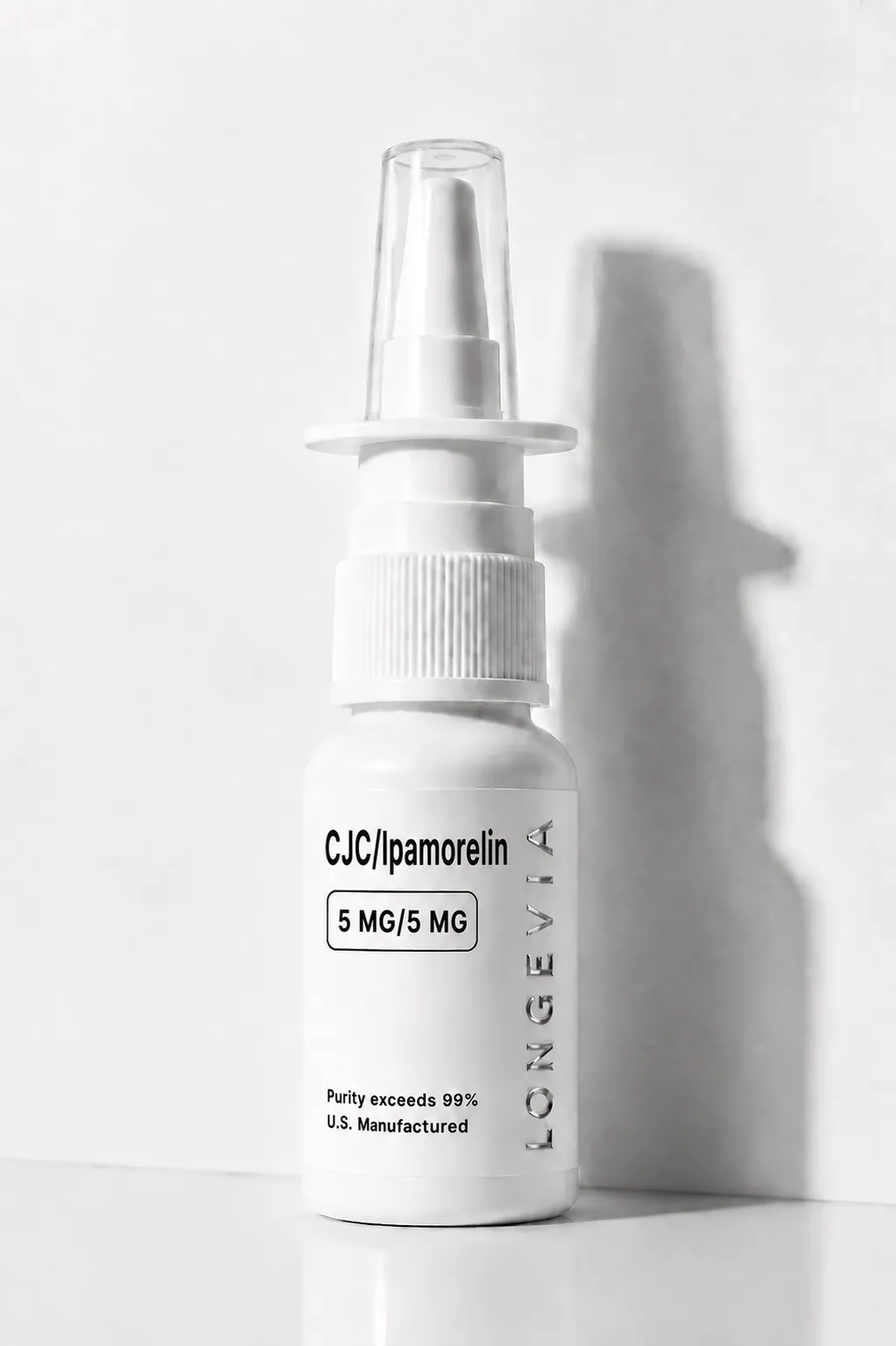
CJC/Ipamorelin 5mg/5mg Spray
CJC/Ipamorelin 5mg/5mg spray — 45 sprays of two distinct synthetic research peptides targeting separate GH-axis receptor systems. Supplied by Longevia Research for laboratory use only. Batch COA available.
$166.50
Slide to add
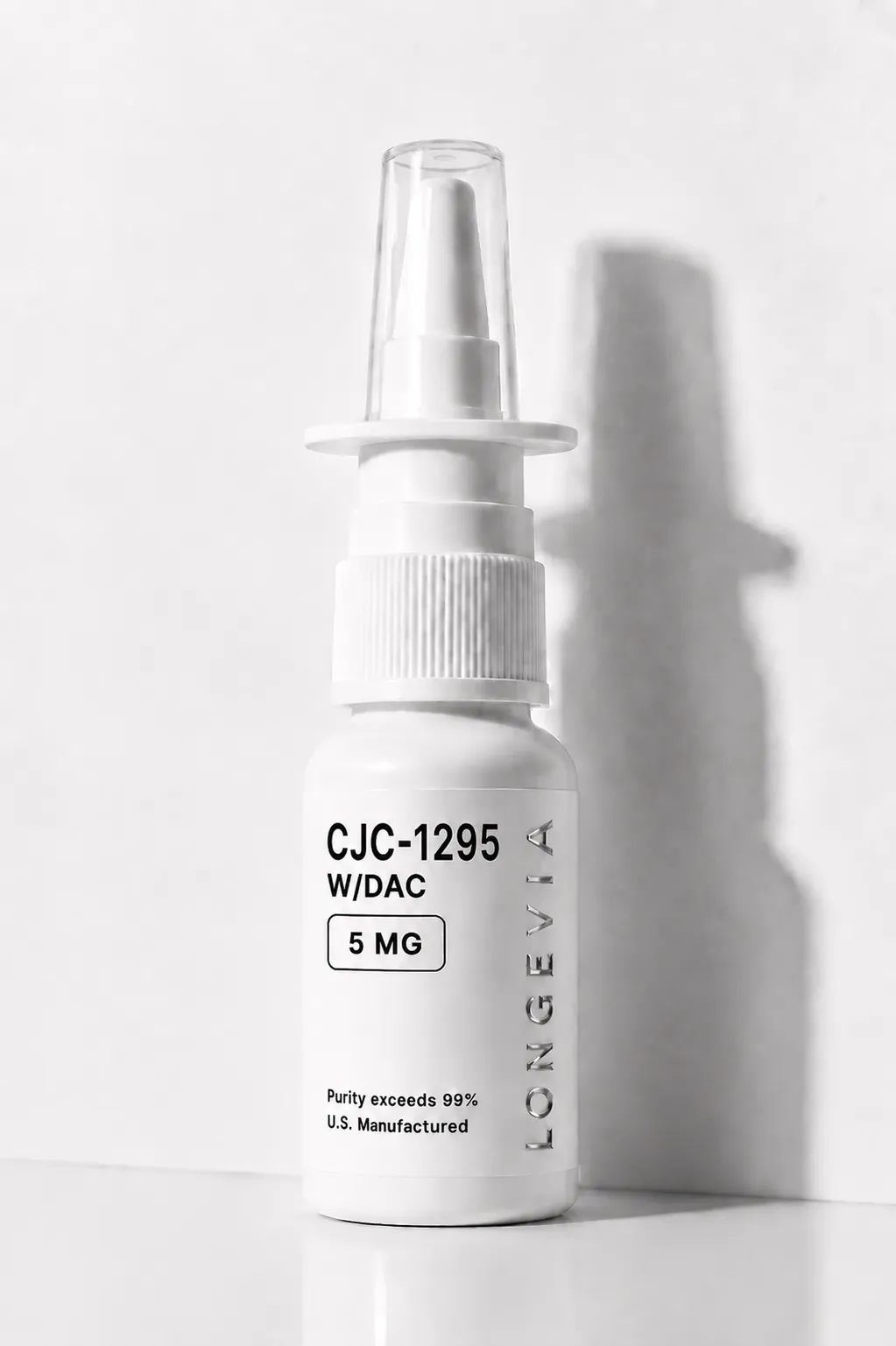
CJC-1295 With DAC 5mg Spray
CJC-1295 with DAC 5mg spray — 45 sprays of the synthetic albumin-binding GHRH analogue (CAS 446262-90-4, ~3,647 Da). Supplied by Longevia Research for laboratory use only. Batch COA available.
$220.50
Slide to add
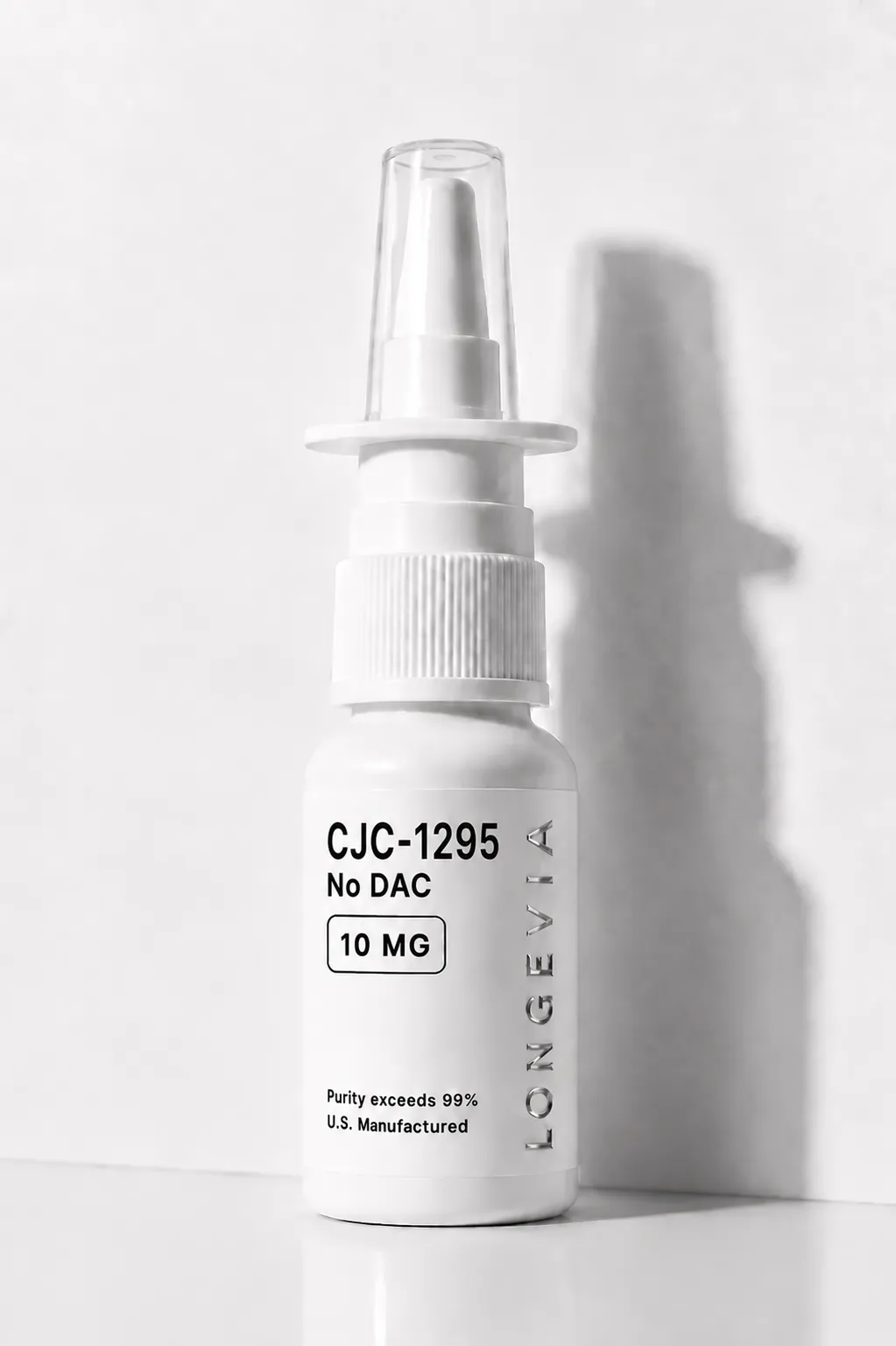
CJC-1295 No DAC 10mg Spray
CJC-1295 No DAC 10mg spray — 45 sprays of Modified GRF (1-29), a synthetic 29-residue GHRH analogue (CAS 446036-97-1, ~3,368 Da). Supplied by Longevia Research for laboratory use only.
$207.00
Slide to add
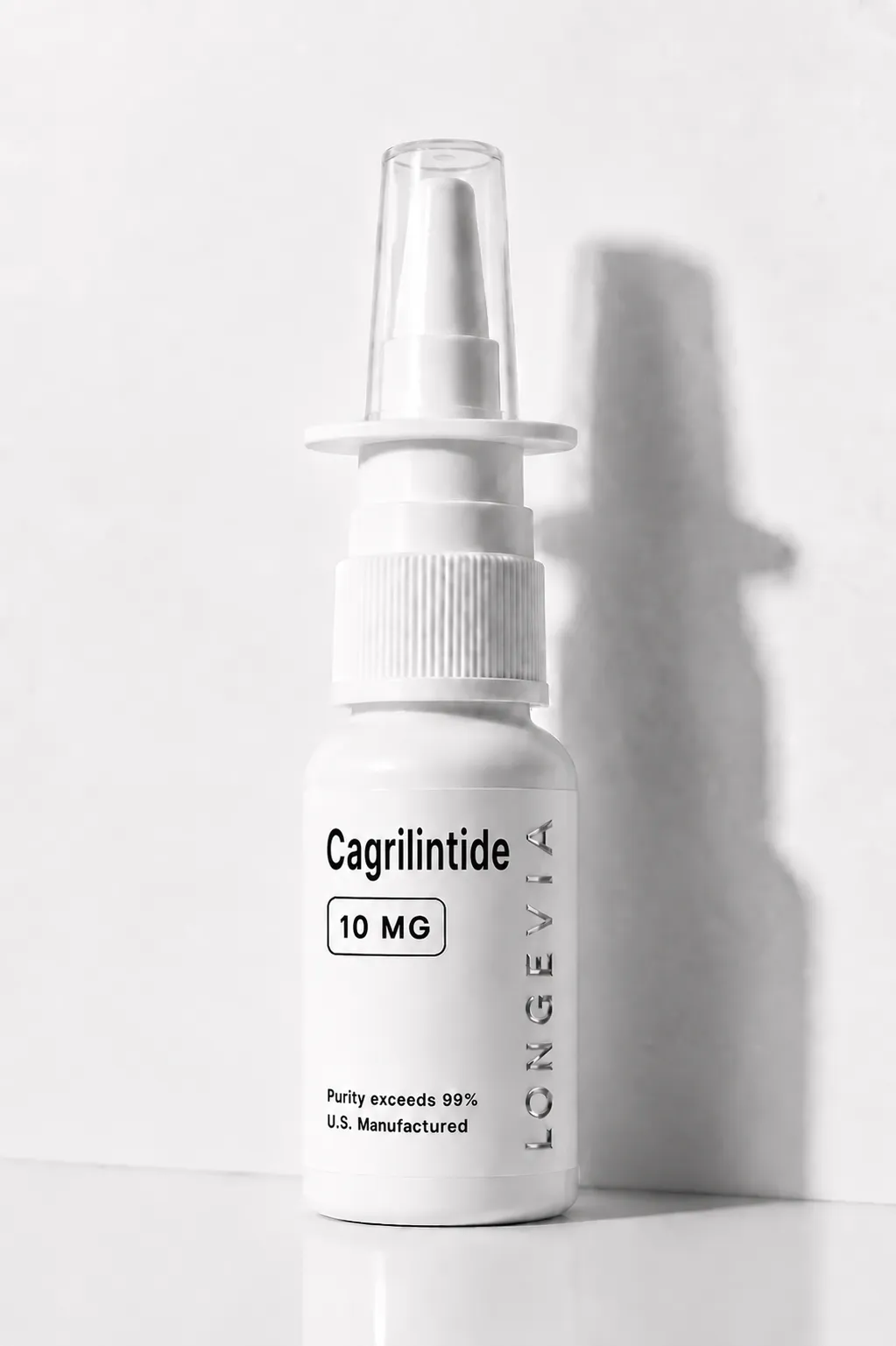
Cagrilintide 10mg Spray
Cagrilintide 10mg spray — 45 sprays of long-acting acylated amylin analogue (AM833, CAS 1415456-99-3, ~4,409 Da). Supplied by Longevia Research for laboratory use only. Batch COA available.
$202.50
Slide to add
Product FAQs
Find answers to common questions regarding storage, reconstitution, and testing guidelines for this specific compound.