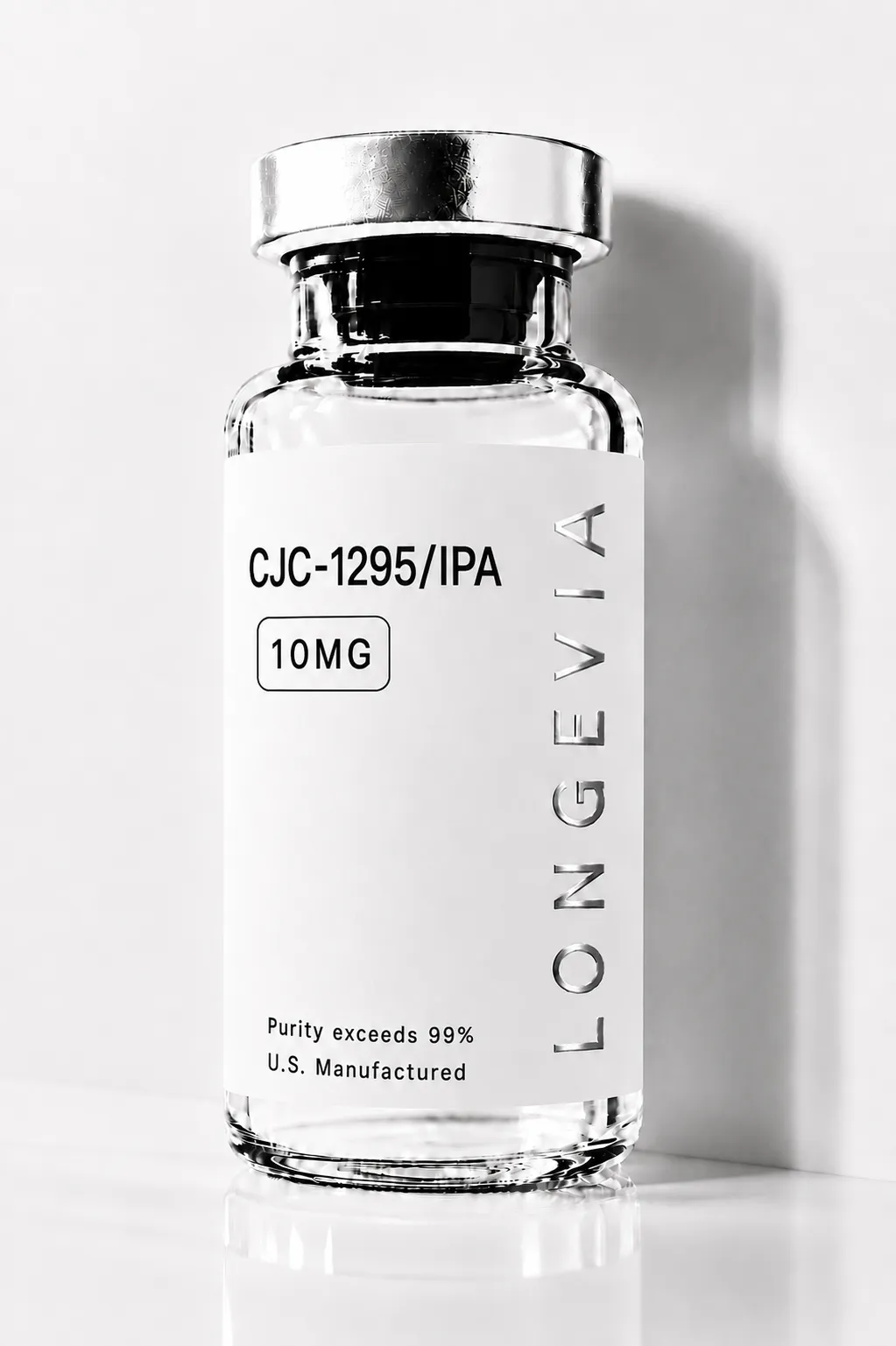
Growth Hormone SecretagoguesRecovery & Tissue Repair
CJC-1295 / Ipamorelin
$121.50
1
Slide to Add
Purity≥99% Tested
TestingLC-MS Verified
LocationUS Based
CJC / Ipamorelin 5mg / 5mg is a dual-peptide research combination supplied by Longevia Research for laboratory use only. The product pairs two distinct synthetic research peptides — a growth hormone-releasing hormone (GHRH) analogue and a selective growth hormone secretagogue receptor (GHSR-1a) agonist — each supplied at 5mg, for use in in-vitro, analytical, and other controlled non-clinical research settings. The CJC component is a synthetic analogue of the N-terminal fragment of human GHRH, engineered with targeted amino acid substitutions to improve enzymatic stability relative to native GHRH(1-29). It is studied as an agonist of the pituitary GHRH receptor. Ipamorelin (H-Aib-His-D-2-Nal-D-Phe-Lys-NH₂) is a synthetic pentapeptide first characterised at Novo Nordisk and is studied for its selective agonism at the ghrelin/GHSR-1a receptor. The two compounds target distinct receptor populations within the GH secretory axis, which has made their combined study a recognised approach in growth hormone axis research.
Standard Delivery3-4 Working Days
Free ShippingOn all orders above $300
Comprehensive Product Details
CJC Component
Scientific identity. The CJC component in this research combination is a synthetic 29-amino acid peptide analogue of human growth hormone-releasing hormone (GHRH), formally designated Modified GRF (1-29) and also known as CJC-1295 without DAC. It corresponds to the first 29 residues of endogenous GHRH with four targeted amino acid substitutions: D-Ala at position 2 (to resist DPP-IV cleavage), Gln at position 8 (to prevent asparagine rearrangement), Ala at position 15 (to improve binding characteristics), and Leu at position 27 (to prevent methionine oxidation). These modifications extend the peptide's functional stability relative to native GHRH while preserving full agonist activity at the GHRH receptor.
Ipamorelin Component
Scientific identity. Ipamorelin (INN: ipamorelin) is a synthetic pentapeptide with the sequence H-Aib-His-D-2-Nal-D-Phe-Lys-NH₂. It was originally developed and characterised at Novo Nordisk A/S under the designation NNC 26-0161. Aib (α-aminoisobutyric acid) at the N-terminus is a non-proteinogenic gem-dimethyl amino acid; D-2-Nal is D-2-naphthylalanine. The C-terminus is a carboxamide. These structural features confer selectivity at the ghrelin/GHSR-1a receptor and resistance to proteolytic degradation.
Classification. Synthetic pentapeptide · selective GHSR-1a agonist · growth hormone secretagogue
Finished Product
Product composition: 5mg CJC (Modified GRF 1-29 / CJC-1295 without DAC) + 5mg Ipamorelin, supplied as separate lyophilised research material per vial.
Analytical documentation: A batch-specific Certificate of Analysis is available on the Longevia Research website, covering peptide identity, purity, and lot traceability for each component.
Research-use classification: For laboratory research use only. Not for human or veterinary use, clinical diagnostics, or any in-vivo application in humans.
Advanced Research Focus
CJC Research — Modified GRF (1-29) / CJC-1295 without DAC
GHRH receptor pharmacology. Endogenous GHRH(1-29) is the natural ligand of the pituitary GHRH receptor, but its utility as a research tool is limited by rapid enzymatic inactivation — primarily by dipeptidyl peptidase-IV (DPP-IV), which cleaves the Tyr¹-Ala² N-terminal bond within minutes. Modified GRF (1-29) was engineered to address this: substitution of D-Ala at position 2 blocks DPP-IV cleavage, and the three additional substitutions (positions 8, 15, and 27) stabilise other vulnerable sites. The result is a peptide that retains full GHRHR agonist activity with a functional half-life of approximately 30 minutes in experimental models, compared to approximately 7 minutes for native GHRH.
Pharmacokinetic profile. Because Modified GRF (1-29) lacks the Drug Affinity Complex present in CJC-1295 with DAC, it does not conjugate to serum albumin and does not produce sustained circulating levels. Its shorter residence time means that receptor engagement is discrete rather than continuous, producing a GH release pattern closer to endogenous pulsatility. This pharmacokinetic characteristic makes it a useful research tool for investigators studying pulsatile GH axis dynamics rather than sustained tonic stimulation.
Published research. Foundational work on the CJC-1295 / albumin-conjugated (with DAC) variant by Jetté and colleagues (Endocrinology, 2005; PMID 15817669) established that GHRH(1-29) analogues could activate the GHRHR in rat anterior pituitary and in vivo. Teichman and colleagues (Journal of Clinical Endocrinology and Metabolism, 2006; PMID 16352683) reported in human subjects that CJC-1295 with DAC produced dose-dependent GH and IGF-1 increases sustained over days — findings specific to the albumin-conjugated form and not directly attributable to the non-DAC analogue. Research using Modified GRF (1-29) specifically has examined pulsatile receptor engagement and short-duration GH pulse augmentation in experimental models.
Ipamorelin Research
Peptide identity and receptor biology. Ipamorelin (H-Aib-His-D-2-Nal-D-Phe-Lys-NH₂) is a growth hormone secretagogue that acts as a selective agonist at the ghrelin receptor, GHSR-1a. Unlike the GHRH receptor, GHSR-1a is expressed on somatotroph cells but is also found in the hypothalamus and other tissues. Activation of GHSR-1a by endogenous ghrelin and by synthetic secretagogues such as Ipamorelin triggers GH release through a distinct intracellular pathway involving phospholipase C and protein kinase C, operating in parallel to the adenylyl cyclase cascade engaged by GHRH receptor activation.
Selectivity. Ipamorelin's defining characteristic among growth hormone secretagogues is its receptor selectivity. First characterised by Raun and colleagues (European Journal of Endocrinology, 1998; PMID 9849822), Ipamorelin was found to stimulate GH release at levels comparable to earlier secretagogues such as GHRP-6, while producing substantially smaller elevations in cortisol, prolactin, and ACTH. This selectivity profile — GH axis activation without marked HPA axis or lactotroph co-activation — was demonstrated in preclinical models and has been a primary focus of subsequent Ipamorelin research.
Structural basis of selectivity. The non-proteinogenic residues incorporated into Ipamorelin's sequence (Aib at position 1, D-2-Nal at position 3, D-Phe at position 4) are understood to confer both the compound's receptor-binding characteristics and its resistance to proteolytic degradation. These structural features are the focus of ongoing structure-activity relationship research in the GH secretagogue field.
Preclinical research. Animal studies have examined Ipamorelin's effects on longitudinal bone growth (Johansen and colleagues, Growth Hormone and IGF Research, 1999), GH pulse dynamics, and pituitary somatotroph pharmacology. In rat models, investigators reported increased GH pulse amplitude without the prolactin or cortisol co-secretion observed with GHRP-2 and GHRP-6. Human pharmacokinetic-pharmacodynamic modelling of Ipamorelin was conducted by Gobburu and colleagues (Pharmaceutical Research, 1999; PMID 10496658), establishing PK parameters in healthy volunteers. A clinical study by Beck and colleagues (Diseases of the Colon and Rectum, 2014) examined Ipamorelin in a postoperative gastrointestinal context in humans, providing some clinical pharmacology data outside the context of GH axis research specifically.
Combination Research
Scientific rationale. GHRH receptor agonism and GHSR-1a agonism act through non-competing receptor populations and partially distinct intracellular signalling cascades. Studies examining their co-activation in preclinical models have reported additive amplification of GH pulse amplitude relative to either compound administered alone — an outcome that corresponds to simultaneous engagement of both stimulatory inputs to the somatotroph. Alba and colleagues (2006) demonstrated that GHRH analogue and GHSR agonist co-administration in GH-deficient animal models restored IGF-1 more effectively than either compound alone, while maintaining the physiological pulsatile release pattern rather than producing continuous GH elevation. Ionescu and Frohman (2006) separately confirmed that pulsatile GH secretion is preserved during sustained GHRH axis stimulation, a finding relevant to understanding combination experimental designs.
Evidence scope. Most published combination research involves the GHRH analogue class broadly rather than the specific non-DAC Modified GRF (1-29) form. The mechanistic rationale for the combination is established at the receptor pharmacology level. Direct published studies specifically pairing Modified GRF (1-29) with Ipamorelin in controlled experimental settings are limited in number; the combination's prevalence in research catalogues reflects its pharmacological logic more than a deep independent clinical evidence base for this exact formulation.
Uncompromising Quality Standards
Accurate analytical characterisation is the foundation of reproducible research, particularly for synthetic peptide combinations where identity confirmation must extend to each component individually.
Peptide identity. Each batch of CJC / Ipamorelin is subjected to mass spectrometric analysis, confirming molecular weight consistency with the specified peptide for both the CJC component and Ipamorelin. Identity confirmation at the mass level distinguishes the correct peptide from truncation sequences, oxidised variants, or sequence isomers that can arise during synthesis.
Purity assessment. Each peptide component is characterised to greater than 99% purity by high-performance liquid chromatography (HPLC). Chromatographic purity data is reported on the batch Certificate of Analysis and reflects the proportion of the target peptide relative to all UV-absorbing species in the chromatogram.
Synthesis and purification. CJC-1295 without DAC and Ipamorelin are produced by solid-phase peptide synthesis (SPPS) — the standard method for synthetic research peptides of this size. Following synthesis, each peptide undergoes preparative HPLC purification to achieve the specified purity, followed by lyophilisation to yield a stable, analytically characterised solid.
Batch traceability and Certificate of Analysis. Every vial is traceable to a specific production lot. A batch-specific Certificate of Analysis covering peptide identity, purity, and lot number for each component is accessible on the Longevia Research website. Researchers are encouraged to review the current batch COA before use.
Storage. Lyophilised peptides should be stored under conditions that prevent moisture ingress and photodegradation. Specific storage recommendations are stated on the batch Certificate of Analysis and product labelling. Longevia recommends consulting the COA for lot-specific guidance, and advises that the lyophilised material be handled in a controlled laboratory environment consistent with best practices for synthetic peptide research compounds.
Legal & Compliance Notice
Longevia Research supplies CJC / Ipamorelin 5mg / 5mg for laboratory and in-vitro research use only. The product is intended for use by qualified researchers and trained laboratory personnel in appropriate controlled research environments.
This product consists of synthetic research peptides supplied strictly as laboratory research tools. It is not a drug, not a dietary supplement, not a food or food ingredient, and not a cosmetic. No regulatory authority has approved either component for human or veterinary therapeutic use in this research formulation, and Longevia does not supply this product for administration to humans or animals, for clinical diagnostics, or for any therapeutic application.
Longevia provides no dosing instructions, reconstitution guidance for administration, treatment protocols, or cycle recommendations. The scientific literature referenced on this product page describes experimental observations in defined preclinical and cell-based model systems. Those descriptions are not medical claims and should not be interpreted as evidence of human efficacy, human safety, or fitness for any clinical application.
The purchaser assumes full responsibility for lawful acquisition, handling, storage, use, and disposal of this material, and for compliance with all applicable local, state, federal, and institutional regulations. By purchasing this product, the buyer confirms that it will be used solely for legitimate laboratory research purposes by qualified personnel, and that its acquisition and intended use comply with applicable laws in the buyer's jurisdiction.
Continue Exploring
Also Considered.
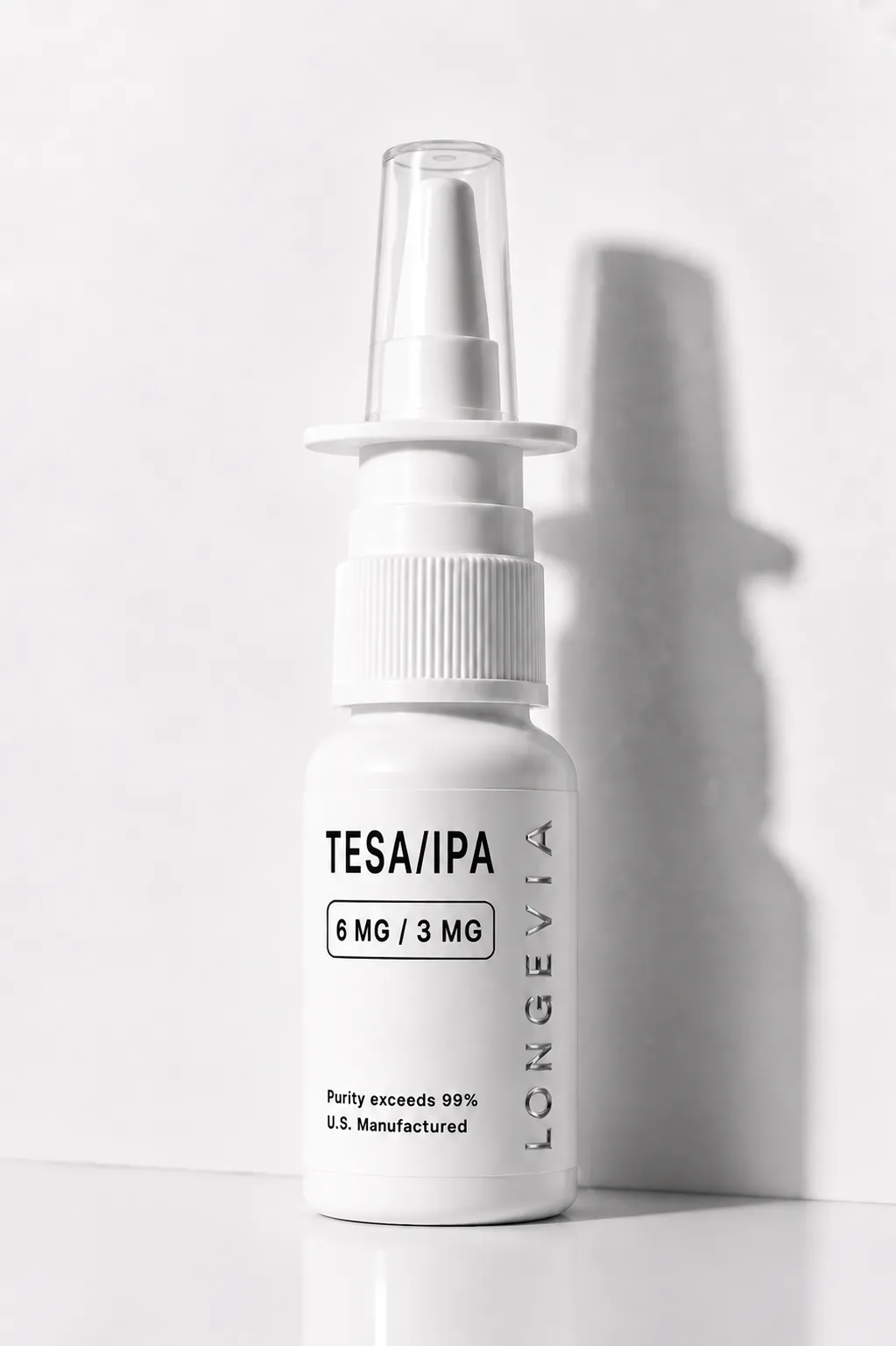
Tesa/IPA — Spray
Longevia Research supplies Tesa/IPA — a two-peptide research formulation containing Tesamorelin (CAS 218949-48-5), a synthetic GHRH analog, and Ipamorelin (CAS 170851-70-4), a growth hormone secretagogue associated with GHS-R/ghrelin receptor signaling. Available in 6mg/3mg and 13mg/3mg compositions, 45 sprays. Research Use Only.
$225.00
Slide to add
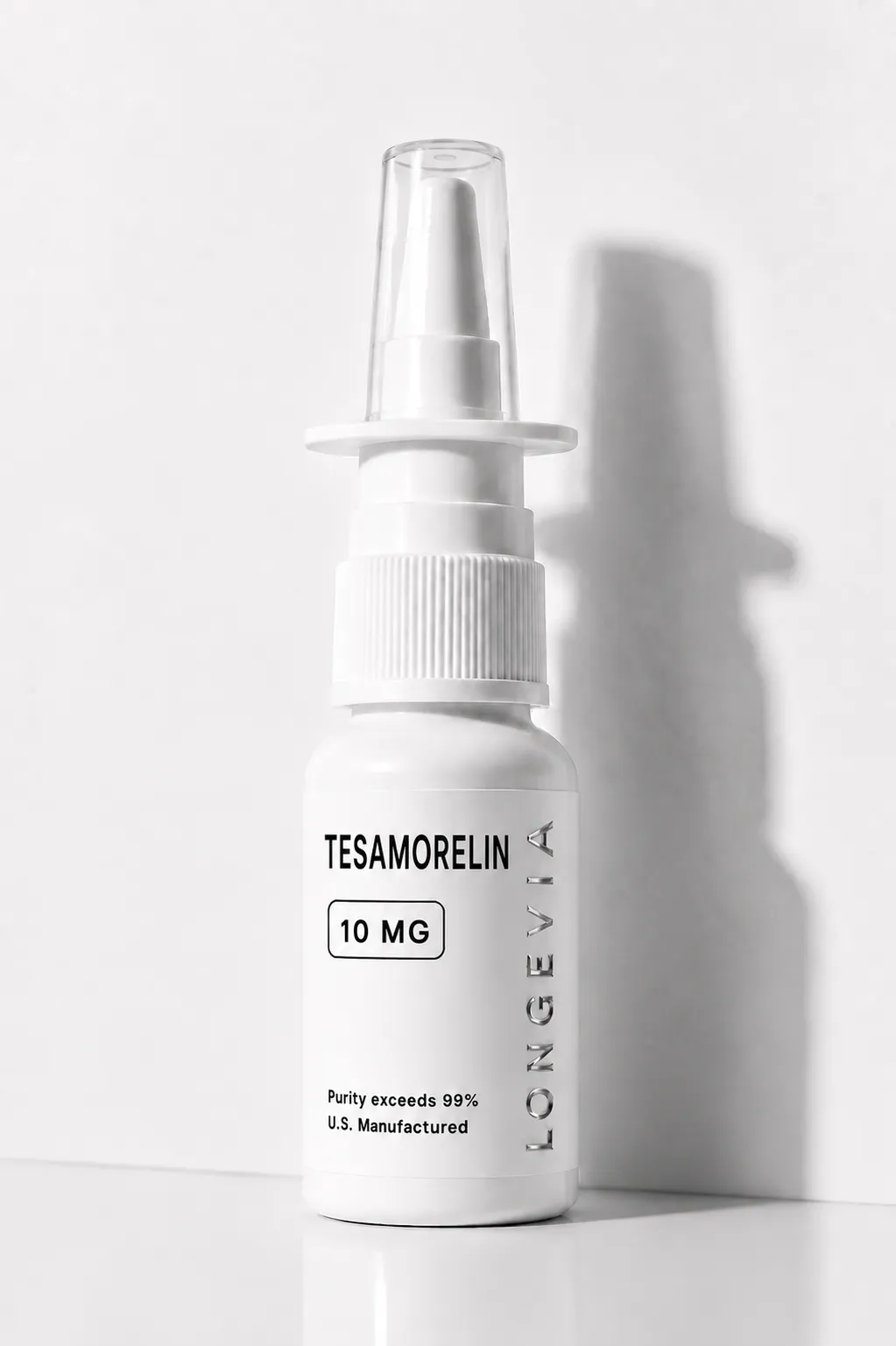
Tesamorelin Spray
Longevia Research supplies Tesamorelin in 10mg and 20mg quantities in a 45-spray format for qualified laboratory research. Tesamorelin (CAS 218949-48-5) is a synthetic GHRH analog and Class B GPCR agonist investigated in GHRH receptor pharmacology, pituitary somatotroph signaling, and GH/IGF-1 axis research. Research Use Only.
$270.00
Slide to add
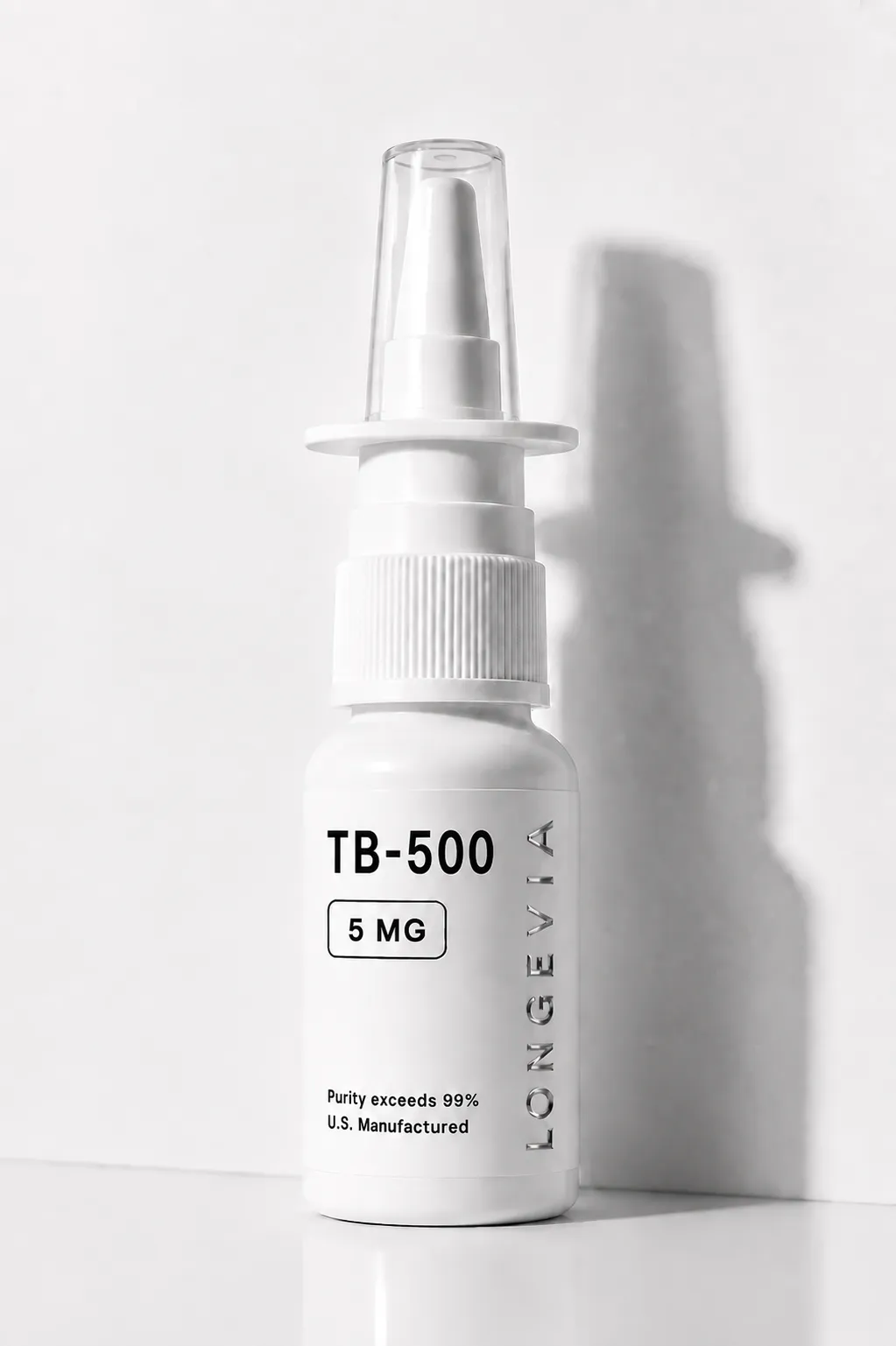
TB-500 — Spray
Longevia Research supplies TB-500 in 5mg and 10mg quantities in a 45-spray format for qualified laboratory research. TB-500 is a synthetic acetylated heptapeptide (Ac-LKKTETQ, CAS 885340-08-9) corresponding to the actin-binding domain of thymosin beta-4, investigated in G-actin sequestration, cytoskeletal dynamics, cell migration, and tissue biology research. Research Use Only.
$189.00
Slide to add
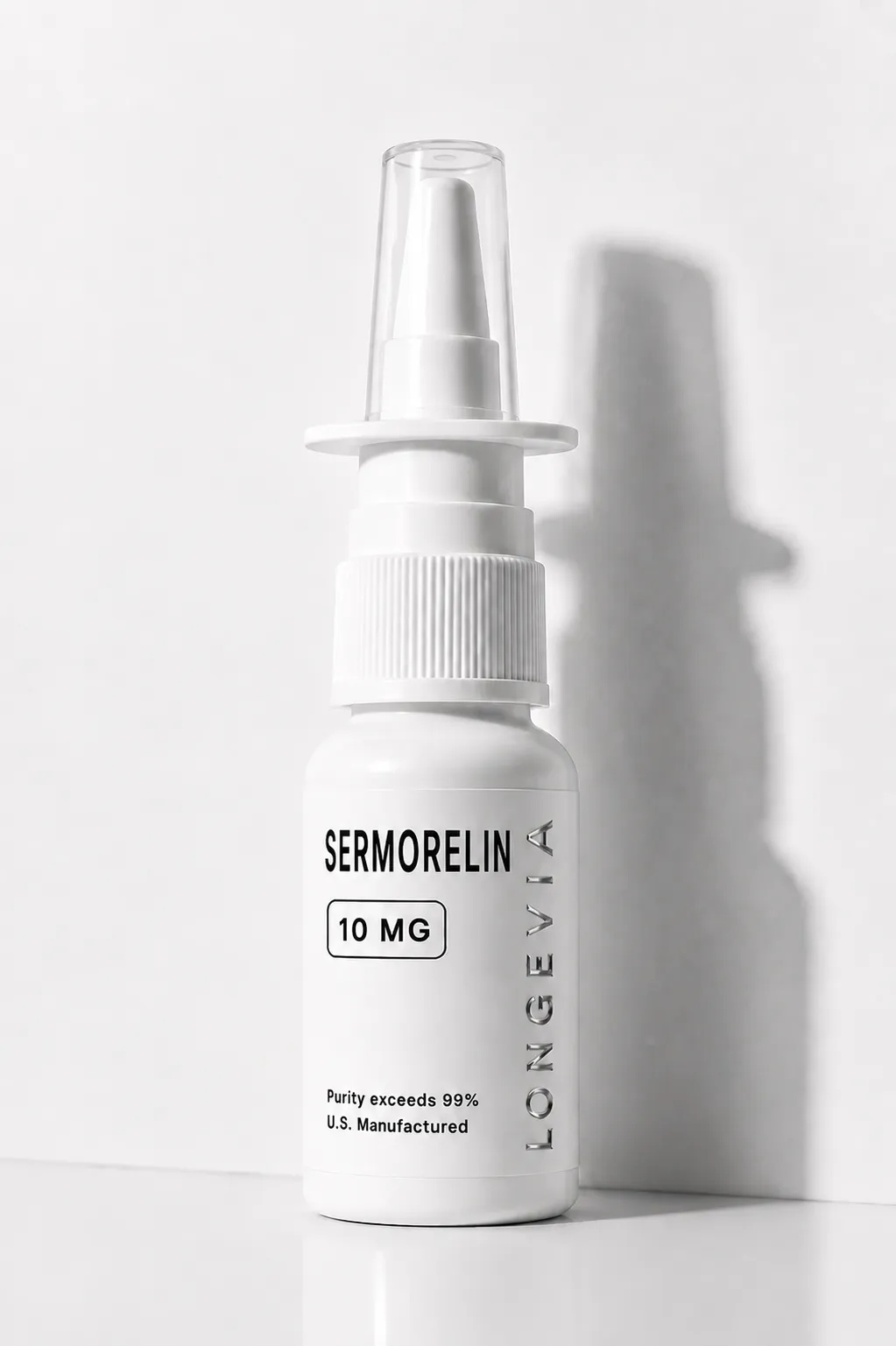
Sermorelin — Spray
Longevia Research supplies Sermorelin in 10mg and 20mg quantities, 45-spray format, for qualified laboratory research. Sermorelin is a synthetic GHRH(1–29) peptide investigated in GHRH receptor signaling, pituitary somatotroph biology, and somatotropic axis research. Research Use Only.
$189.00
Slide to add
Product FAQs
Find answers to common questions regarding storage, reconstitution, and testing guidelines for this specific compound.