- BPC-157 does not have a universally validated human therapeutic dose.
- Nominal concentration is calculated by dividing the total peptide amount by the final solution volume.
- Analytical draw volume is calculated by dividing the target quantity by the measured concentration.
- A high HPLC purity result does not prove sterility, endotoxin control, stability, or clinical suitability.
- The 2025 human BPC-157 infusion report involved only two adults and cannot establish chronic safety or efficacy.
- Reconstitution records should include lot number, assay data, diluent, final volume, preparation date, operator, and storage conditions.
- Compounds should not be combined unless compatibility, sterility, and stability have been validated.
- Any human-use protocol requires review by qualified clinical, pharmacy, ethics, and regulatory professionals.
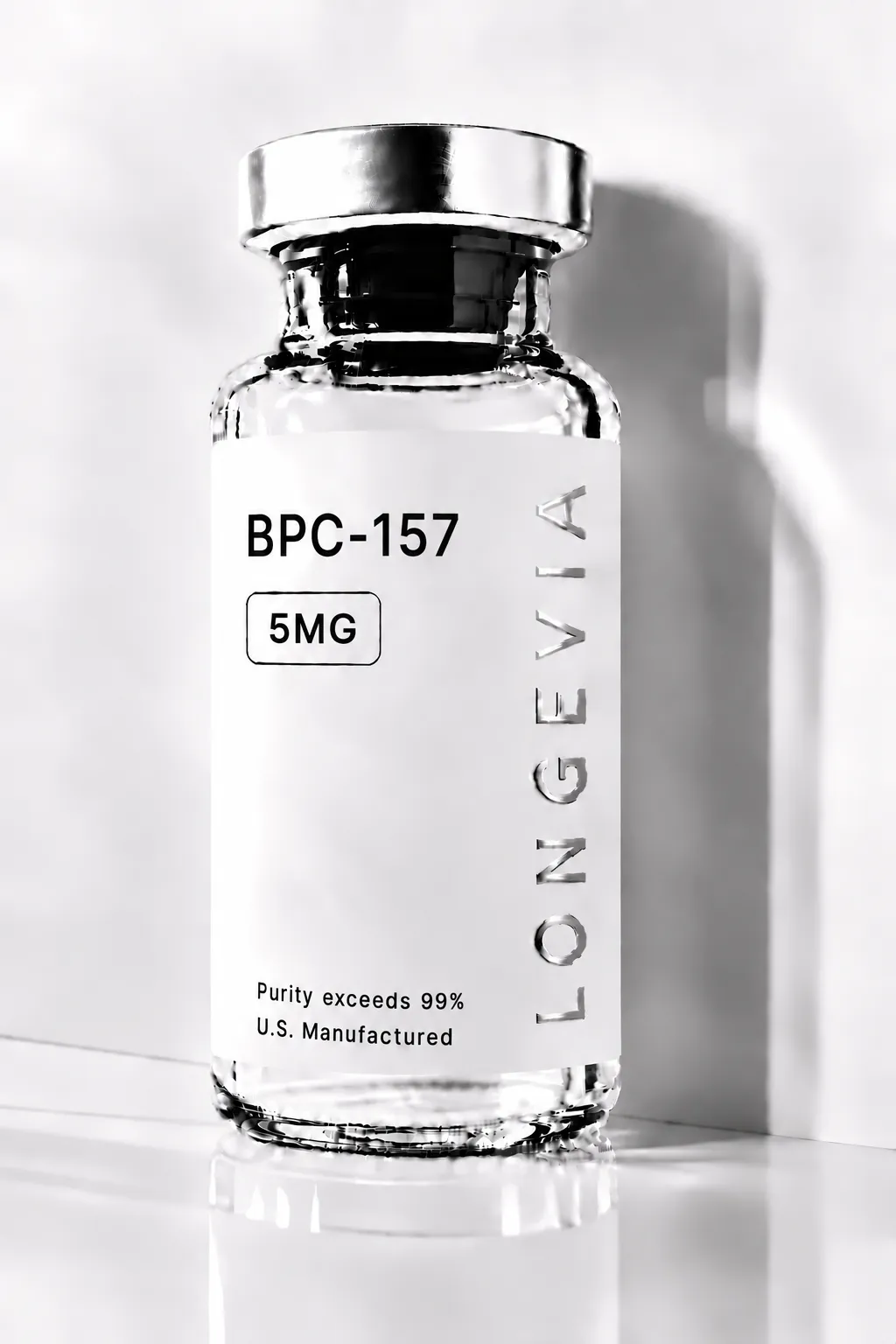
BPC-157
BPC-157 is a synthetic 15-amino-acid peptide fragment derived from human gastric juice protein BPC investigated in research involving tendon and ligament biology, nitric oxide signalling, growth factor receptor pathways, and gastrointestinal tissue models. Available in 5mg and 10mg vials. Research Use Only — Longevia Research.
BPC-157
BPC-157 is a synthetic 15-amino-acid peptide fragment derived from human gastric juice protein BPC investigated in research involving tendon and ligament biology, nitric oxide signalling, growth factor receptor pathways, and gastrointestinal tissue models. Available in 5mg and 10mg vials. Research Use Only — Longevia Research.
BPC-157 dosage and reconstitution questions are common in peptide research, but a responsible protocol must separate mathematical concentration planning from human treatment advice. This guide explains how to document vial strength, diluent volume, final concentration, target analytical quantity, and draw-volume calculations for controlled laboratory work. It also explains why online dosing charts should not be treated as validated clinical protocols: BPC-157 is not an FDA-approved therapeutic drug, and published human evidence remains very limited.
Researchers should use this article as a documentation and calculation framework rather than as instructions for self-administration. Any material intended for administration to humans must be reviewed by an appropriately qualified clinician, pharmacist, institutional review board, and applicable regulatory authority. A calculation can be mathematically correct while the underlying material, route, sterility, stability, or clinical rationale remains unsuitable.
What BPC-157 research shows
BPC-157 is a synthetic peptide derived from a sequence associated with gastric pentadecapeptide research. Preclinical publications have investigated angiogenesis, inflammatory signaling, tissue repair, gastrointestinal models, and musculoskeletal injury models. These findings are hypothesis-generating and do not establish a validated human dose, route, treatment duration, or long-term safety profile.
A 2025 pilot report described intravenous BPC-157 exposure in two healthy adults, with doses up to 20 mg reported as tolerated and without measurable changes in selected biomarkers. The sample was extremely small, the exposure was not a dose-finding efficacy trial, and the findings cannot establish a recommended clinical regimen. [1]
A 2026 narrative review concluded that BPC-157 evidence for orthopaedic and sports applications remains largely unvalidated in humans and that information about indications, dosing, frequency, and duration remains unknown. [40]
A small human safety signal is not the same as proof of efficacy or a validated dosing protocol. Do not convert animal doses, online community protocols, or a two-person pilot study into self-treatment instructions.
The concentration calculation
The central calculation in a reconstitution record is the relationship between the amount of peptide in the vial and the final liquid volume. The general equation is:
Concentration = total peptide amount ÷ final solution volume
If a research vial contains M micrograms and the final solution volume is V millilitres, the concentration is:
C = M ÷ V mcg/mL
A second equation converts a defined analytical quantity into a volume:
Draw volume = target quantity ÷ concentration
If the target quantity is Q micrograms and the concentration is C micrograms per millilitre, then:
Draw volume = Q ÷ C mL
These equations are simple, but errors often occur because researchers mix milligrams, micrograms, millilitres, insulin-syringe units, and labelled vial amounts. A robust worksheet should keep all calculations in one unit system until the final reporting step. For a broader walkthrough of unit conversion across other compounds, see Longevia's peptide dosage calculations guide.
Unit conversion
Conversion | Equivalent |
|---|---|
1 milligram | 1,000 micrograms |
1 microgram | 0.001 milligrams |
1 millilitre | 1,000 microlitres |
0.1 millilitre | 100 microlitres |
For example, a vial labelled 5 mg contains 5,000 mcg before accounting for assay value, counter-ion content, residual moisture, or any manufacturer-specific expression of purity. A laboratory record should identify whether the labelled amount represents nominal peptide mass, salt-adjusted mass, or another specification.
Worked mathematical example
Assume a hypothetical research vial is documented as containing 5,000 mcg of peptide and the validated final volume is 2 mL. The nominal concentration is:
5,000 mcg ÷ 2 mL = 2,500 mcg/mL
A hypothetical analytical aliquot of 250 mcg would therefore correspond to:
250 mcg ÷ 2,500 mcg/mL = 0.1 mL
This is a mathematical example only. It does not establish that 250 mcg is an appropriate human dose, that the solution is sterile, that the peptide is stable at that concentration, or that the product is suitable for injection. Longevia's peptide dosage calculator can help check this type of arithmetic once your own concentration and target quantity have been confirmed.
Why labelled strength is not enough
A vial label is not a substitute for independent quality documentation. Researchers should record the product name, lot number, nominal mass, stated purity, analytical method, date received, storage condition, and lot-specific certificate of analysis when available.
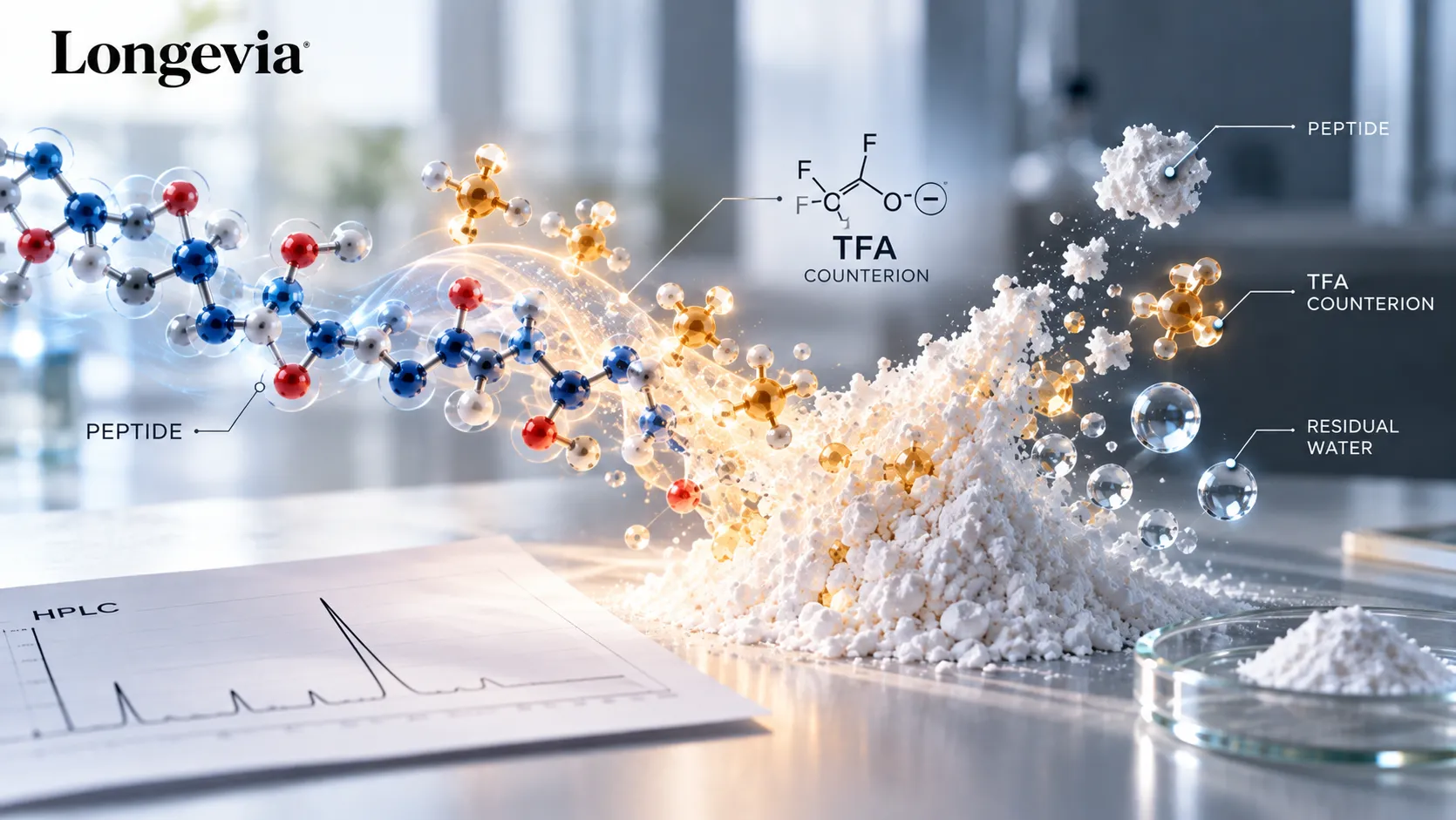
A purity percentage can also affect the estimated peptide mass. If a vial contains 5 mg nominal material and an assay reports 98% peptide content, a basic mass-adjusted estimate would be 4.9 mg. However, researchers should not apply a purity correction casually because HPLC area percentage, LC-MS identity, water content, counter-ion content, and net peptide mass are different measurements.
Record element | Why it matters |
|---|---|
Lot number | Links the vial to test results and chain-of-custody records. |
HPLC result | Helps assess chromatographic purity but does not prove sterility. |
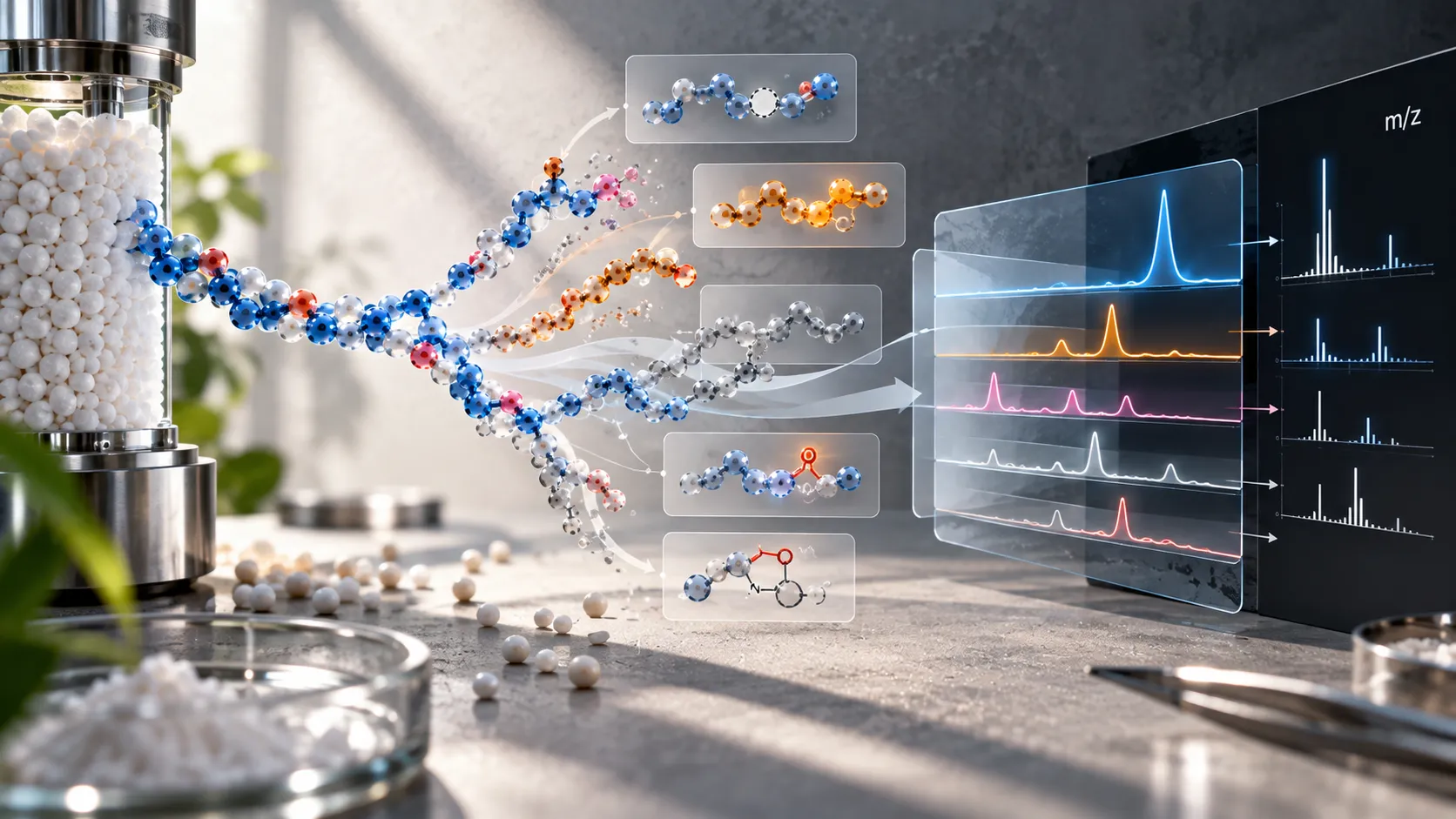
LC-MS identity | Helps confirm expected molecular mass or identity. |
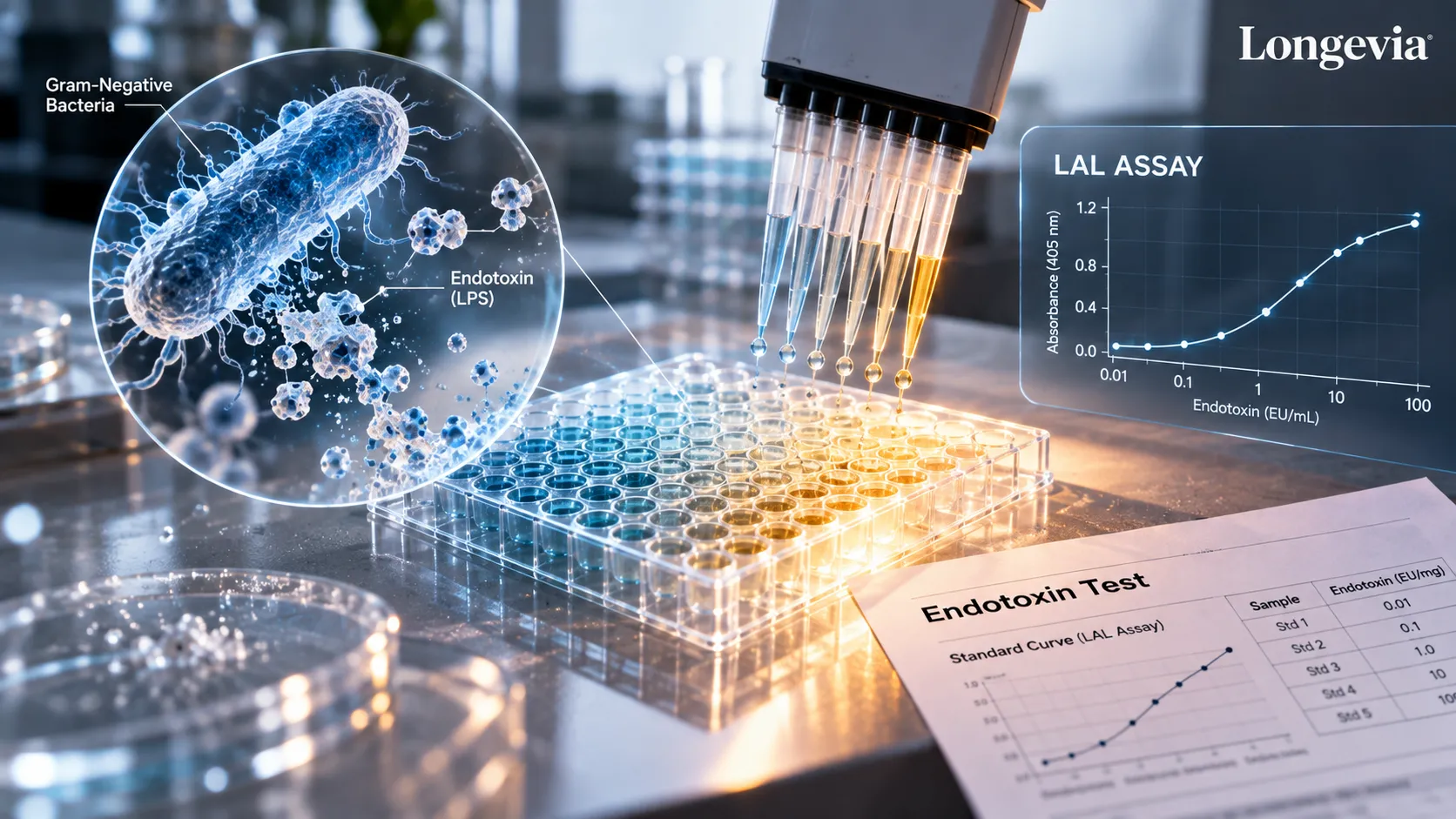
Endotoxin result | Addresses a separate pyrogen-risk question. |
Sterility result | Must be interpreted according to the applicable validated method. |
Storage history | Helps assess whether temperature excursions may affect quality. |
Reconstitution date | Establishes the beginning of the in-use stability record. |
Treat HPLC purity, LC-MS identity, sterility, and endotoxin testing as separate quality questions. A high HPLC percentage does not prove that a preparation is sterile or suitable for human administration.
Reconstitution as a research variable
Reconstitution is not merely a matter of adding a convenient amount of liquid. The selected diluent, pH, ionic strength, mixing method, container surface, temperature, and time before analysis can affect peptide behaviour. A research protocol should therefore define the diluent and volume before the experiment begins and should record any deviation.
For laboratory research, the protocol should identify whether the liquid is intended for analytical dissolution, in-vitro work, or a regulated sterile preparation. These uses are not interchangeable. A diluent that is acceptable for a benchtop experiment may not be acceptable for injection, and a sterile diluent does not automatically make a non-sterile peptide product suitable for administration.
Researchers should avoid vigorous agitation when the compound’s handling instructions advise against it. Gentle mixing, controlled temperature, visual inspection, and documented dissolution time are preferable to informal shaking. Any haze, unexpected colour, visible particles, precipitate, or incomplete dissolution should trigger a quarantine and investigation rather than an assumption that the vial is usable.
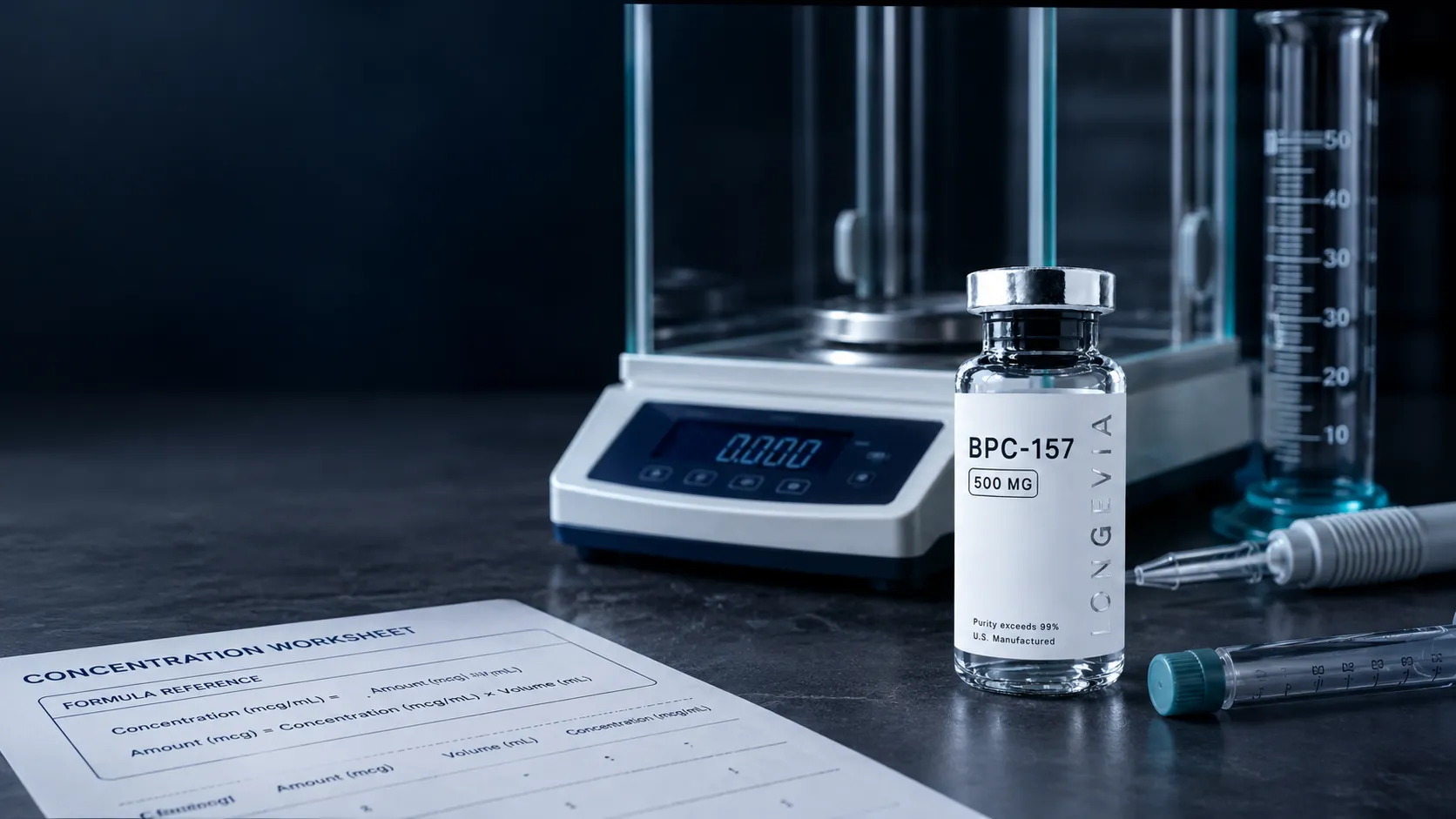
Designing a calculation worksheet
A good worksheet begins with the source data and shows each conversion. The following fields are useful:
- Vial nominal amount in mg and mcg.
- Lot-specific assay or certificate reference.
- Selected final volume in mL.
- Calculated nominal concentration in mcg/mL.
- Any documented assay correction and its justification.
- Target analytical quantity in mcg.
- Calculated aliquot volume in mL or microlitres.
- Operator, date, instrument or syringe specification, and reviewer.
- Disposal, deviation, and stability notes.
The worksheet should display the equation rather than only the final number. A reviewer can detect a unit error more easily when the record shows “5,000 mcg ÷ 2 mL = 2,500 mcg/mL” than when it only shows “2,500.”
Common calculation failures
The most common error is confusing the vial’s total peptide amount with the concentration after reconstitution. A vial labelled 5 mg does not mean the liquid contains 5 mg/mL unless the final volume is exactly 1 mL.
Another error is treating syringe graduations as universal. Some syringes display millilitres, some display units, and markings can differ by device. A laboratory record should identify the actual device and convert volume using the manufacturer’s scale rather than assuming that “10 units” always means the same volume across devices.
A third error is rounding too early. Keep several significant figures through the calculation and round only at the final reporting stage based on the accuracy of the measuring device. A calculated volume smaller than the reliable measurement capability of the device should be redesigned by a qualified professional rather than measured with false precision.
Stability and storage documentation
Peptide stability depends on the specific molecule, formulation, concentration, container, diluent, temperature, light exposure, freeze-thaw history, and microbial controls. Researchers should not assume that a general internet “beyond-use” period applies to every BPC-157 preparation.
The original lyophilized material and the reconstituted solution should have separate storage records. The record should include receipt temperature, storage temperature, exposure to light, container integrity, reconstitution date, appearance after reconstitution, and any freeze-thaw events.
A research supplier’s certificate of analysis can support identity and lot quality, but it does not establish the stability of a researcher-created solution. Stability claims should come from validated data for the exact formulation and container system or from a qualified pharmacy or laboratory.
Human-safety and regulatory context
BPC-157 should be treated as an investigational research compound unless a jurisdiction-specific authority states otherwise. The absence of an approved therapeutic indication means there is no universally accepted human dosing standard for tendon injury, gastrointestinal disease, recovery, or athletic performance.
The 2026 orthopaedic review specifically noted that BPC-157 findings are largely preclinical and that human information remains insufficient for definitive recommendations. [40] The 2025 human infusion report is informative but cannot answer questions about chronic exposure, repeated administration, different routes, vulnerable populations, interactions, or clinical benefit. [1]
Researchers should also distinguish between “research use only” material and pharmacy-compounded or approved medicine. A research-use label does not provide permission for human administration, and a certificate of analysis does not replace regulatory oversight. See Longevia's research-use disclaimer for the site's full compliance position.
Quality controls before analysis
Before using a reconstituted sample in a study, confirm the identity and condition of the material against the protocol. A minimum quality review may include lot verification, inspection for visible particles, container integrity, documented diluent, controlled preparation environment, and appropriate analytical testing.
For experiments involving cells or animals, the relevant institutional biosafety, ethics, and animal-care approvals should be in place before work begins. For human research, informed consent, medical monitoring, adverse-event reporting, and institutional review are essential.
A chain-of-custody log can prevent the wrong vial or wrong concentration from entering a study. The log should use the lot number and a unique preparation identifier instead of relying only on a handwritten compound name.
BPC-157 and combination protocols
Online discussions frequently combine BPC-157 with other peptides, growth-hormone secretagogues, or metabolic drugs. Longevia's BPC-157 vs. TB-500 research comparison reviews one of the most frequently discussed combinations in more depth. Such combinations introduce additional uncertainties because interaction data, additive adverse effects, compatibility, stability, and pharmacokinetics may not have been established.
Combining compounds in one syringe or vial creates a separate formulation question. Chemical compatibility cannot be inferred from the fact that two powders dissolve in the same liquid. Unless compatibility, sterility, adsorption, pH, and stability have been validated, compounds should not be mixed for administration.
A study involving multiple compounds should define each compound independently, use separate lot records, and identify the prespecified rationale for the combination. Researchers should not interpret anecdotal “stacking” reports as clinical evidence.
How to report results responsibly
A high-quality research article should clearly distinguish established findings, preliminary findings, and unknowns. It should report the species, sample size, route, exposure, endpoints, comparator, duration, and limitations of each cited study.
Avoid phrases such as “proven to heal tendons” or “safe at any dose.” Better language is: “Preclinical studies have reported biological activity in selected models, while controlled human evidence remains limited.” This distinction improves scientific accuracy and protects readers from mistaking marketing language for evidence.
Longevia Research publishes lot-specific certificates of analysis through its COA Library, allowing researchers to connect a product lot with available testing documentation. Researchers should still evaluate whether the available tests match the requirements of their own protocol and jurisdiction.
Practical documentation checklist
- Confirm the compound name, lot number, nominal mass, and certificate reference.
- Convert all masses to micrograms before calculating concentration.
- Record the intended final volume and the source of that volume specification.
- Calculate concentration as total amount divided by final volume.
- Calculate any analytical aliquot as target quantity divided by concentration.
- Record the measuring device and its resolution.
- Document the diluent, preparation date, operator, reviewer, and storage condition.
- Quarantine preparations with unexpected colour, particles, haze, or incomplete dissolution.
- Do not infer sterility, stability, or clinical suitability from purity alone.
- Obtain qualified review before any use involving humans.
The most reliable BPC-157 calculation is not simply the one that produces a number. It is the one that preserves traceability from the lot and assay through the concentration equation, preparation record, storage history, and intended research endpoint. That approach reduces unit errors while keeping the evidence limitations visible.
References and evidence limits
The current evidence base does not support a universally validated human BPC-157 dose or routine therapeutic reconstitution protocol. The available human pilot evidence is small, and recent reviews continue to describe major gaps in controlled human efficacy and safety data. [1][40]
Researchers should consult the current regulatory position, institutional policies, qualified pharmacy guidance, and the original primary literature before designing a protocol. Any article or calculator that provides a precise number without identifying the formulation, route, source, assay, and evidence level should be treated cautiously.
Frequently Asked Questions
- Lee M, Burgess J. Safety of Intravenous Infusion of BPC157 in Humans. Alternative Therapies in Health and Medicine. 2025. PubMed PMID: 40131143.
- Mayfield CK et al. Injectable Peptide Therapy: A Primer for Orthopaedic and Sports Medicine Physicians. American Journal of Sports Medicine. 2026;54(1):223-229. DOI: 10.1177/03635465251357593.
- Stable Gastric Pentadecapeptide BPC 157 as a Therapy and Protective Agent: Review of Preclinical and Emerging Human Evidence.