Cognitive & Nootropic
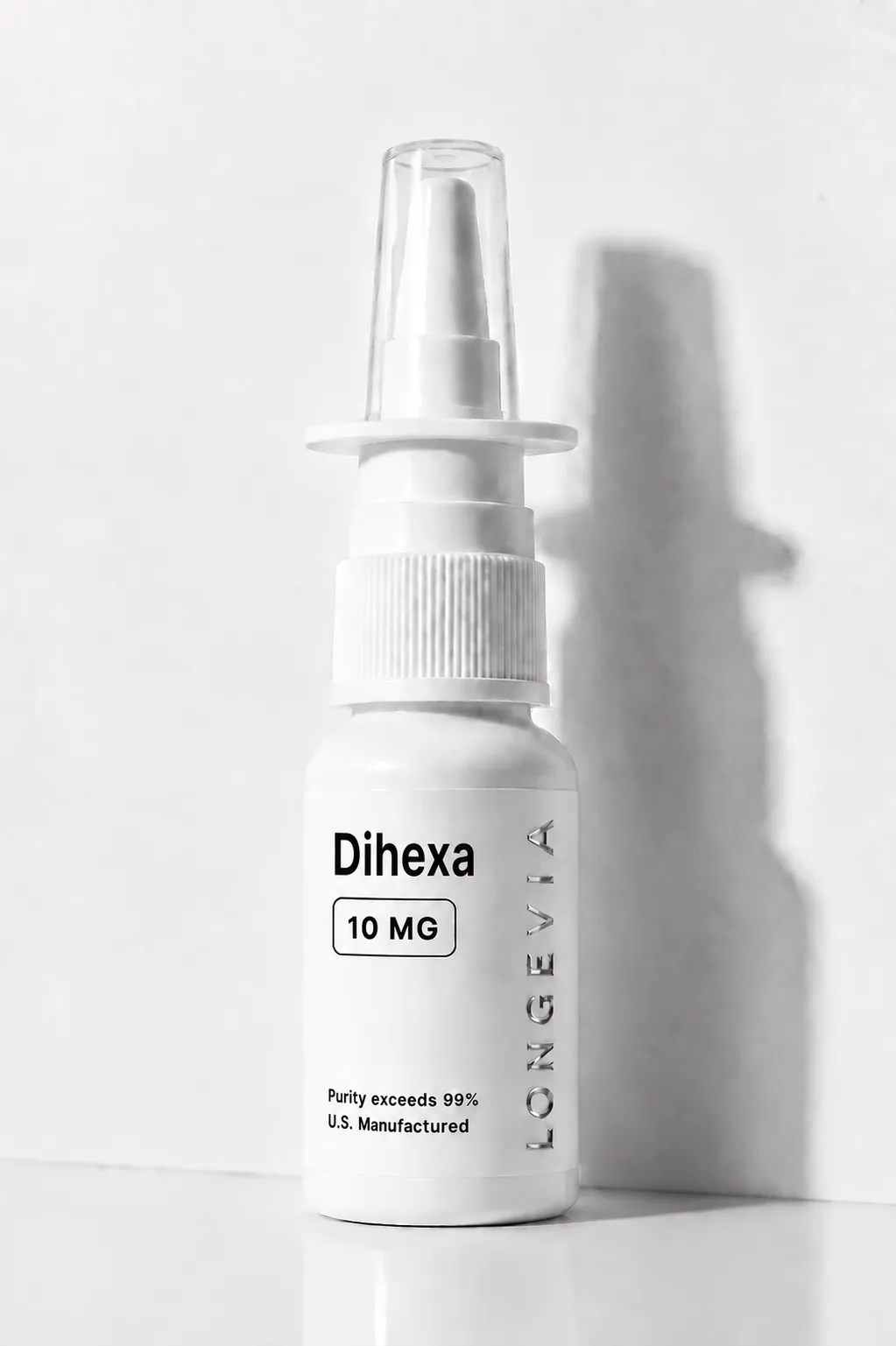
Dihexa 10mg — 45 Sprays
$171.00
1
Slide to Add
Purity≥99% Tested
TestingLC-MS Verified
LocationUS Based
Dihexa is a synthetic research compound formally designated N-hexanoic-Tyr-Ile-(6) aminohexanoic amide — a small-molecule peptidomimetic derived from the angiotensin IV chemotype. Unlike conventional research peptides, Dihexa is classified as a capped dipeptide analogue rather than a standard linear peptide: it incorporates two amino acid residues (L-tyrosine and L-isoleucine) from the angiotensin IV core sequence, with an N-terminal hexanoyl group and a C-terminal 6-aminohexanoic amide providing metabolic stability and lipophilicity that distinguish it from uncapped peptide research compounds. The compound was developed through structure-activity research at Washington State University as a stabilized, blood-brain-barrier-permeable analogue of angiotensin IV — the endogenous hexapeptide that engages the AT₄ receptor population in the brain and is studied in experimental models examining memory-related behavior and synaptic biology. The current evidentiary base for Dihexa is more limited than it appeared prior to 2025, and researchers should engage the published literature with full awareness of this context. Longevia Research supplies Dihexa as 10mg per bottle in a liquid spray format — 45 sprays per bottle — for qualified laboratory and scientific research purposes only.
Standard Delivery3-4 Working Days
Free ShippingOn all orders above $300
Product Details
Scientific identity
Dihexa (CAS 1401708-83-5), also designated PNB-0408 and ATH-1001, is a synthetic peptidomimetic with the chemical name N-hexanoic-Tyr-Ile-(6) aminohexanoic amide. Its molecular formula is C₂₇H₄₄N₄O₅ and molecular weight is approximately 504.66 g/mol (~504.7 Da). PubChem CID: 129010512.
Compound class
Synthetic peptidomimetic; capped dipeptide analogue. Dihexa is not a conventional linear research peptide — it consists of two amino acid residues (L-Tyr, L-Ile) flanked by non-peptidic capping groups: an N-terminal hexanoyl chain and a C-terminal 6-aminohexanoic amide (Ahx-NH₂). This architecture produces a compound with small-molecule size (~500 Da) and physicochemical properties — lipophilicity, metabolic stability, and CNS penetrability in preclinical models — that distinguish it from uncapped peptide research compounds and from the parent angiotensin IV hexapeptide from which its core residues are derived. Mass spectrometric confirmation of the molecular weight (~504.66 g/mol) immediately identifies the compound and distinguishes it from any conventional peptide. Classified as a Research Use Only material and is not a drug, dietary supplement, food, or cosmetic.
Primary research context
Angiotensin IV receptor (AT₄) pharmacology; CNS biology research in preclinical models. Dihexa is not interchangeable with angiotensin IV (Val-Tyr-Ile-His-Pro-Phe) or with fosgonimeton (ATH-1017), a separate HGF/c-Met-targeting compound developed by Athira Pharma that reached Phase 2/3 human trials and failed its primary endpoints in 2024.
Product content: 10mg per bottle; 45 sprays per bottle.
Physical form: Liquid research spray.
Purity: Research-grade.
Analytical documentation
A batch-specific Certificate of Analysis is available on the Longevia Research website, covering compound identity, purity, and lot traceability.
Research-use classification
Research Use Only. Not approved for human or veterinary use. Not intended for administration to humans or animals.
Research Focus & Mechanism Overview
Research background and angiotensin IV context
Angiotensin IV (AngIV) is the hexapeptide Val-Tyr-Ile-His-Pro-Phe — a C-terminal metabolic fragment of angiotensin II generated by sequential aminopeptidase processing. Unlike angiotensin II, which acts through AT₁ and AT₂ receptors to regulate blood pressure and fluid homeostasis, angiotensin IV engages a pharmacologically distinct receptor population designated AT₄, expressed in brain regions including the hippocampus and cortex. Research in rodent models over several decades documented associations between angiotensin IV administration and changes in learning and memory-related behavioral endpoints. Ho and Nation (Neuroscience and Biobehavioral Reviews, 2018) conducted a systematic review of 32 animal studies examining angiotensin IV analogues and found consistent experimental facilitation of memory-related measures across multiple rodent paradigms — providing the broader compound class context from which Dihexa emerges as a tool compound. Dihexa was designed to retain the Tyr-Ile core residues of angiotensin IV while replacing the remaining amino acids with metabolically stable non-peptidic caps, addressing the rapid aminopeptidase-mediated degradation that limits native angiotensin IV's utility as a research tool.
The HGF/c-Met proposed mechanism
retraction and current status. Earlier research from the Washington State University programme proposed that Dihexa's activity was mediated through allosteric potentiation of hepatocyte growth factor (HGF) binding to the c-Met receptor, principally supported by Benoist, Kawas, Zhu, and colleagues in Journal of Pharmacology and Experimental Therapeutics 351 (2014) 390–402 (PMID 25187433). This paper was formally retracted in April 2025 (PMID 40312093) following a Washington State University research-integrity investigation; the retraction notice identifies falsified and fabricated data in figures 1B and 2A/C. Multiple additional papers from the same laboratory were simultaneously retracted, and the foundational McCoy et al. (2013) characterization paper carries an active Expression of Concern. Researchers must not treat the HGF/c-Met mechanism as established pharmacology for Dihexa. The claim that Dihexa binds HGF with picomolar affinity rests substantially on the retracted work, and experimental designs premised on HGF/c-Met engagement require independent validation.
Remaining preclinical evidence
The current evidentiary base must be understood in full awareness of the retraction context. McCoy et al. (2013) — which reported improved performance in aged Sprague-Dawley rats in the Morris water maze following Dihexa administration — carries an active Expression of Concern and must be cited accordingly. Sun et al. (Brain Sciences, 2021), from an independent research group not subject to retraction, examined Dihexa in APP/PS1 transgenic mice and reported changes in cognitive function measures and PI3K/AKT signaling markers — a preclinical animal study providing independent but limited positive evidence. Wells et al. (Journal of Huntington's Disease, 2024) reported negative findings: Dihexa produced no significant protective effect on body weight, motor function, or spatial learning and memory in a 3-nitropropionic acid rat model of Huntington's-like neurodegeneration — establishing that Dihexa's activity, whatever its true nature, is not universal across neurodegenerative animal model systems. The independent positive evidence is limited; the negative evidence is material; and the mechanistic foundation for early Dihexa research has been substantially undermined by retractions.
Clinical status and research applications
Dihexa has not entered a human clinical trial. No regulatory authority has approved it for any human indication, and no human pharmacokinetic, safety, or efficacy data exists. Researchers may consider Dihexa in the following qualified laboratory contexts: AT₄ receptor pharmacology studies where the native angiotensin IV hexapeptide is impractical due to rapid degradation; preclinical CNS behavioral models within the angiotensin IV research lineage, conducted with full awareness of the retracted literature and the Wells et al. (2024) negative findings; comparative neuropharmacology and angiotensin system research; independent replication research examining Dihexa's actual biological activity in defined experimental systems — a scientifically important application given the retraction history; and analytical reference use given its defined molecular identity (CAS 1401708-83-5, MW 504.66 g/mol, C₂₇H₄₄N₄O₅). All research should be conducted in controlled laboratory environments by qualified personnel.
Quality & Purity Standards
For a small-molecule peptidomimetic such as Dihexa, analytical quality documentation centres on molecular identity and chromatographic purity — and on the compound's lipophilic handling requirements.
Identity confirmation: Each production lot of Longevia's Dihexa 10mg spray is characterised by mass spectrometric analysis, verifying the observed molecular ion against the expected mass for C₂₇H₄₄N₄O₅ at 504.66 g/mol (CAS 1401708-83-5). This is a clean, distinctive small-molecule mass signature that unambiguously identifies the compound.
Purity assessment: Chromatographic purity analysis quantifies Dihexa relative to all UV-absorbing species in the chromatogram. Purity data is reported on the batch Certificate of Analysis.
Batch traceability and Certificate of Analysis: Every production lot of Dihexa 10mg spray is traceable to a specific batch. A batch-specific Certificate of Analysis is accessible on the Longevia Research website. Researchers are encouraged to review current documentation before use.
Handling note: Dihexa is lipophilic with limited aqueous solubility at neutral pH. It dissolves in DMSO and ethanol-containing solvent systems. Specific storage conditions are confirmed on the batch Certificate of Analysis. Researchers should account for the compound's lipophilicity when preparing working solutions for cell-based or biochemical assays.
Compliance Notice
Longevia Research supplies Dihexa 10mg — 45 Sprays for laboratory and in-vitro research use only. The product is intended for qualified researchers and trained laboratory personnel working in appropriate controlled research environments.
Dihexa is a synthetic peptidomimetic research compound supplied strictly as a laboratory research tool. It is not a drug, not a dietary supplement, not a food or food ingredient, and not a cosmetic. No regulatory authority has approved Dihexa for human or veterinary therapeutic use, and Longevia does not supply this product for administration to humans or animals, for clinical diagnostics, or for any therapeutic application.
No therapeutic, diagnostic, or cognitive-enhancement claims are made for this compound. Researchers should be aware that portions of the historical mechanistic literature on Dihexa have been retracted following a research-integrity investigation, as described above. No dosing instructions, spray-frequency guidance, administration protocols, or experimental guidance is provided. The purchaser assumes full responsibility for lawful acquisition, handling, storage, use, and disposal of this material, and for compliance with all applicable local, state, federal, and institutional regulations.
Continue Exploring
Also Considered.
Selank 10mg — 90 Sprays
Longevia Research supplies Selank 10mg in a 90-spray format for qualified laboratory research. Selank is a synthetic heptapeptide analog related to tuftsin and investigated in neurobiology, GABAergic signaling, neuroimmune research, and behavioral neuroscience. Research Use Only.
$148.50
Slide to add
DSIP 10mg — 90 Sprays
DSIP (Delta Sleep-Inducing Peptide) is a research-grade nonapeptide investigated in experimental studies examining sleep-related biology, neurobiology, and neuroendocrine systems. Available from Longevia Research as a 10mg spray — 90 sprays — for qualified laboratory research use only.
$171.00
Slide to add
Semax Spray
Buy Semax Spray, a research-grade nootropic neuropeptide preparation in a convenient spray format studied for BDNF modulation and neuroprotective signaling research. COA-verified. Research use only.
$90.00
Slide to add
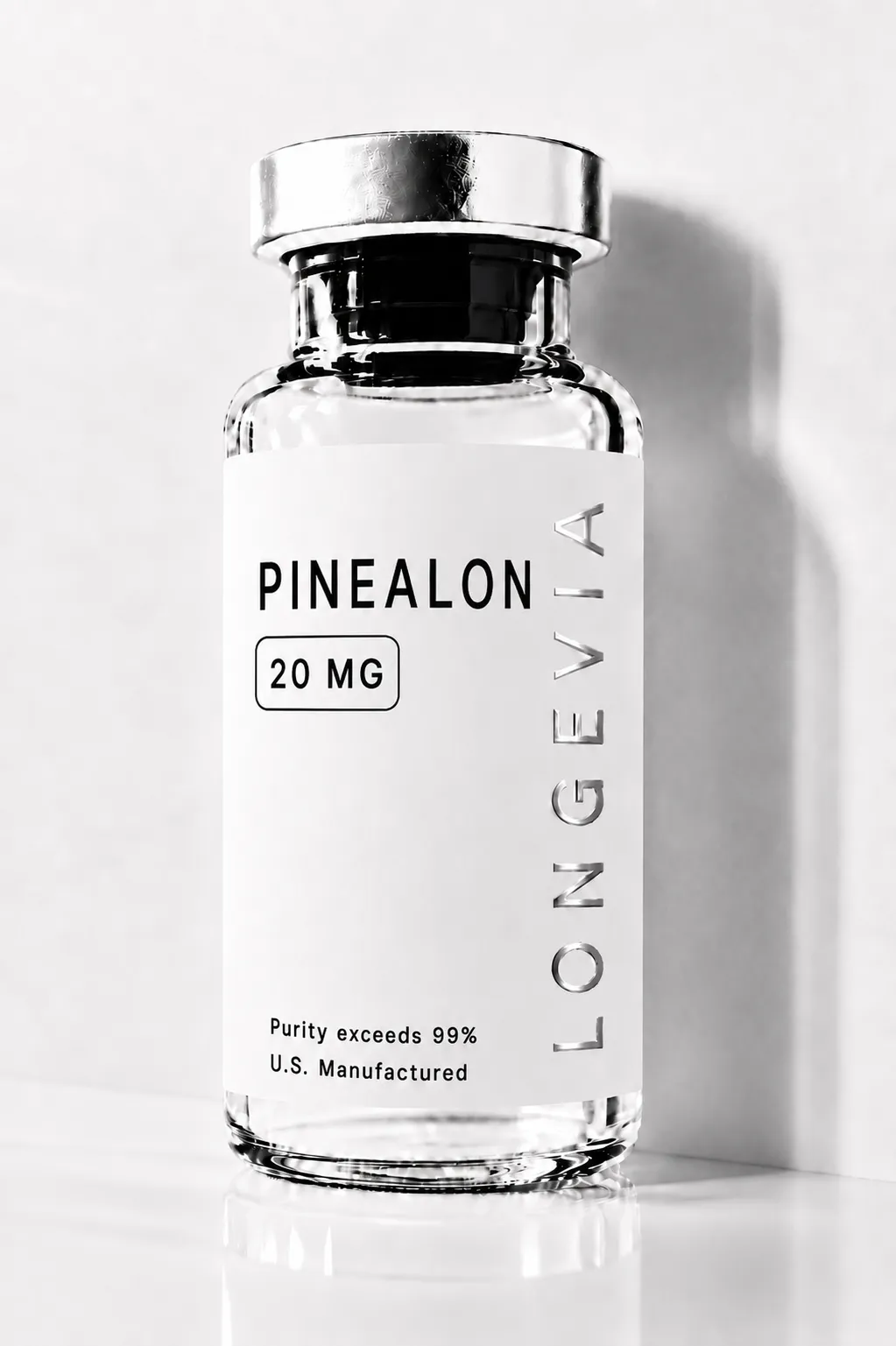
Pinealon
Buy 99%+ pure Pinealon research peptide, a synthetic tripeptide bioregulator studied for neuroprotection, retinal function, and pineal gland signaling research. Research use only.
$105.00
Slide to add
Product FAQs
Find answers to common questions regarding storage, reconstitution, and testing guidelines for this specific compound.