Mitochondrial & Cellular Energy
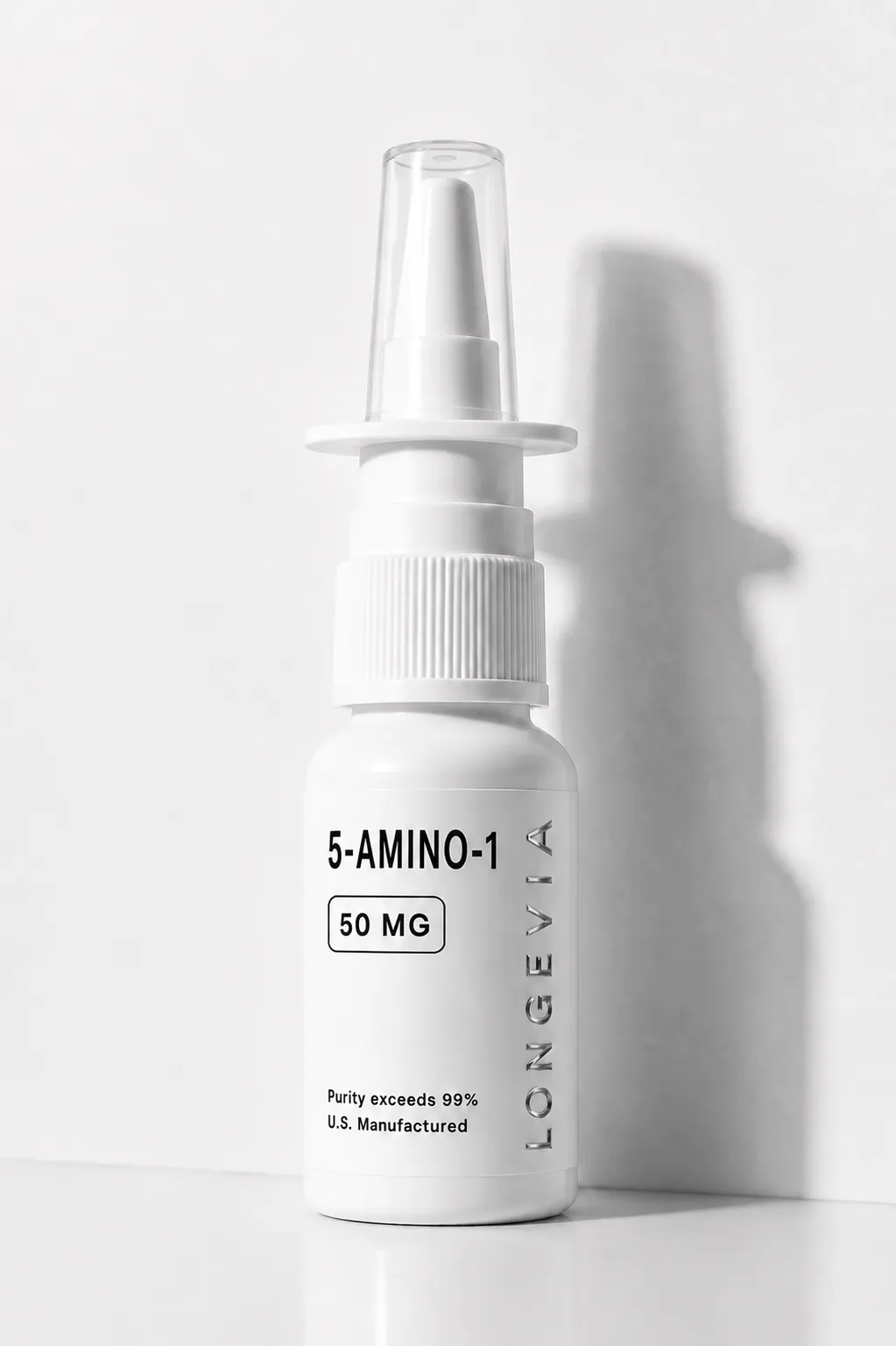
5-Amino-1 50mg Spray
$162.00
1
Slide to Add
Purity≥99% Tested
TestingLC-MS Verified
LocationUS Based
5-Amino-1 50mg Spray is a small-molecule research compound supplied by Longevia Research in a spray format containing 45 sprays. The active compound — 5-amino-1-methylquinolinium, widely referenced in the scientific literature as 5-Amino-1MQ or 5-AMQ — is a synthetic quinolinium salt studied as a selective inhibitor of nicotinamide N-methyltransferase (NNMT). It belongs to a distinct chemical class from the research peptides that appear elsewhere in the Longevia catalogue: 5-Amino-1MQ is a small molecule with a fused bicyclic ring structure and a permanent positive charge, not a peptide or amino-acid sequence. Researchers investigating NNMT enzymology, nicotinamide metabolism, and the intersection of methyl-donor biology with NAD+ salvage pathway research have used 5-Amino-1MQ as a tool compound in preclinical and cell-based experimental systems. The spray format provides an alternative presentation of the same research compound available as a vial, with the same 50mg total quantity supplied across 45 sprays. This product is supplied strictly for in-vitro, analytical, and other controlled non-clinical laboratory research. It is not a drug, supplement, food, or cosmetic, and it is not intended for human or veterinary use. No dosing, administration, or spray-frequency guidance is provided.
Standard Delivery3-4 Working Days
Free ShippingOn all orders above $300
Product Details
Scientific Identity
5-Amino-1MQ is the established shorthand for 5-amino-1-methylquinolinium — a synthetic small-molecule quaternary quinolinium salt. The compound is built on a quinoline bicyclic scaffold that carries a primary amine at the C5 position, while methylation at the ring nitrogen (N1) creates a quaternary centre and a permanent positive charge. That cationic architecture defines the compound's physical handling characteristics, including its high aqueous solubility compared with many neutral heterocyclic small molecules, and distinguishes it behaviourally from synthetic research peptides.
Alternative names. 5-AMQ · 5A-1MQ · 5-amino-1-methylquinolin-1-ium · NNMTi (as used in several published studies to denote the NNMT-inhibitor chemotype)
5-Amino-1MQ Is Not a Peptide
5-Amino-1MQ contains no amino acid residues and no amide backbone — the two structural features that define a peptide. It is a single fused bicyclic ring system with a molecular size substantially smaller than any research peptide. Many research catalogues list it alongside peptides for convenience, which generates persistent confusion. The distinction carries practical significance: identity confirmation, purity assessment, solubility behaviour, and analytical methodology all follow small-molecule conventions rather than peptide conventions.
Molecular Information
The 5-amino-1-methylquinolinium cation is registered at PubChem under CID 950107 with the cationic formula C₁₀H₁₁N₂⁺ and a formula weight of 159.21 g/mol for the cation alone. Supplied material carries a permanent positive charge and is therefore handled as a salt — most commonly the iodide (C₁₀H₁₁IN₂, CAS 42464-96-0) in primary literature and commercial reference material, though chloride and methyl sulfate forms also circulate. The molecular formula, molecular weight, and CAS applicable to the specific Longevia formulation depend on the counter-ion used; the batch Certificate of Analysis documents the compound's specific chemical form.
A note on conflicting identifiers. Some catalogue pages report different CAS numbers or molecular weights for 5-Amino-1MQ. These discrepancies arise because different salt forms carry distinct CAS registry numbers and different masses. Researchers should confirm which form is present in their material from the Certificate of Analysis rather than relying on a generic value.
Product Format
The 50mg designation refers to the total quantity of 5-amino-1-methylquinolinium in this product. The quantity per individual spray is documented on the product label and batch Certificate of Analysis. Longevia does not provide dosing, administration, or spray-frequency guidance; quantity information is provided to support laboratory planning by qualified researchers.
Research Focus & Mechanism Overview
NNMT and the Methyl-Donor Economy
Nicotinamide N-methyltransferase (NNMT) is a cytosolic enzyme that catalyses a single but consequential reaction: it transfers a methyl group from S-adenosylmethionine (SAM) — the universal cellular methyl donor — onto nicotinamide (NAM, also a precursor in the NAD+ salvage pathway), producing two products: 1-methylnicotinamide (1-MNA) and S-adenosylhomocysteine (SAH).
Both substrates carry independent metabolic significance beyond this reaction. Nicotinamide is the direct precursor to NAD+ through the NAMPT-mediated salvage pathway, meaning every molecule of nicotinamide that NNMT methylates is one that does not enter NAD+ biosynthesis. SAM, meanwhile, donates methyl groups across the entire cellular methylation economy — for DNA methylation, histone modification, phospholipid biosynthesis, and numerous other enzymatic reactions. NNMT therefore occupies a position at the intersection of two important systems: nicotinamide metabolism and methyl-donor availability.
NNMT expression is not uniform across tissues. Elevated expression has been documented in white adipose tissue under certain metabolic conditions, and a number of tumour cell types show upregulation relative to normal tissue counterparts. These expression patterns are what drew systematic research attention to NNMT as a potential research target.
Mechanism Under Investigation
Published enzymology characterises 5-Amino-1MQ as a substrate-site-targeting, selective NNMT inhibitor. In enzyme inhibition assays conducted under defined conditions (50 µM SAM, 100 µM nicotinamide as co-substrate), investigators have reported an IC₅₀ of approximately 1.2 µM against NNMT. In 3T3-L1 adipocyte cell culture, researchers have measured concentration-dependent reductions in 1-methylnicotinamide output — the direct product of the NNMT reaction — with an EC₅₀ near 2.3 µM, confirming on-target pathway engagement at the cellular level. A concentration-dependent reduction in lipogenesis in the same 3T3-L1 model has also been reported, with an EC₅₀ near 30 µM.
These figures are cell-culture and enzyme-assay observations. The IC₅₀ describes NNMT inhibitory potency in a defined biochemical system; it is not a dosing figure, a recommended concentration for any experimental use, or a human-use parameter.
The broader mechanistic model proposed in the published literature — that inhibiting NNMT spares nicotinamide for NAD+ salvage while simultaneously conserving the SAM methyl-donor pool, with downstream effects on cellular cofactor availability — remains a research hypothesis under active investigation. It has not been established as a demonstrated outcome in any intact organism.
Selectivity Profile
A key consideration in evaluating any enzyme inhibitor for experimental use is its selectivity against related enzymes. Published work examining 5-Amino-1MQ against a panel of potentially related targets reported no significant inhibition of DNMT1 (DNA methyltransferase 1) or PRMT3 (protein arginine methyltransferase 3) at tested concentrations. Against COMT (catechol O-methyltransferase), approximately 10% inhibition was observed at a maximal tested concentration of 600 µM, without a consistent concentration-dependent trend. Against NAMPT (nicotinamide phosphoribosyltransferase) — the rate-limiting enzyme of the NAD+ salvage pathway — no inhibition was observed up to 100 µM; a fluorinated analogue confirmed no NAMPT inhibition at higher concentrations where the parent compound interfered with the assay readout. Against SIRT1, no significant inhibition was observed between 10 nM and 300 µM, with only minor activity reduction at 600 µM.
These findings support selectivity for NNMT over the specific enzymes tested at the concentrations tested. They do not establish selectivity across the broader methyltransferase family or in any intact biological system.
Preclinical and Cell-Based Research
The published research record for 5-Amino-1MQ is entirely preclinical. Every finding below derives from defined experimental models.
Research lineage. Foundational work establishing NNMT as a research target was published by Kraus and colleagues in Nature (2014), using adipocyte-specific genetic knockdown of NNMT in mice rather than a small-molecule inhibitor. That study reported protection from diet-induced weight gain and altered metabolic parameters in treated animals relative to controls — establishing NNMT as a candidate target and motivating the development of selective small-molecule inhibitors including 5-Amino-1MQ.
Adipocyte and metabolic mouse models. Neelakantan and colleagues (Biochemical Pharmacology, 2018) translated the genetic NNMT-knockdown model into a pharmacological approach, examining 5-amino-1-methylquinolinium in diet-induced obese C57BL/6 mice fed a high-fat diet. Relative to vehicle controls, treated animals showed progressive changes in body weight and adipose tissue parameters over the treatment period. These are rodent observations under specific dietary and experimental conditions; they do not establish a human metabolic outcome.
Skeletal muscle research. A 2019 study from the same research group applied the quinolinium NNMT-inhibitor chemotype in 24-month-old aged mice and reported changes in muscle stem cell proliferation and fusion relative to controls. This finding concerns cellular behaviour in aged rodent skeletal muscle and carries no implication for human physiology.
Microbiome research. Dimet-Wiley and colleagues (Scientific Reports, 2022) examined cecal microbiome composition in diet-induced obese mice under NNMT inhibition combined with a low-fat dietary intervention, reporting distinct microbial community profiles in treated versus vehicle-treated animals. The clinical significance of these microbiome differences in humans is unknown.
Oncology cell-line research. Because NNMT overexpression has been observed in certain tumour cell types, investigators have evaluated NNMT inhibitors including 5-Amino-1MQ in osteosarcoma and Merkel cell carcinoma cell lines in vitro, measuring viability, reactive oxygen species production, and apoptosis markers. These are preliminary cell-line observations with no implication for cancer treatment.
Pharmacokinetics. One published pharmacokinetic study exists for 5-Amino-1MQ, conducted in rats. No human pharmacokinetic data has been published.
Clinical Status
5-Amino-1MQ has no approved human therapeutic use in any jurisdiction. No regulatory authority has approved the compound for any human indication. As of the date of publication, no completed human clinical trial of 5-amino-1-methylquinolinium appears in the published literature or in public trial registries. The available pharmacokinetic data comes from a single rodent study. All mechanistic and efficacy observations described on this page derive from cell-based systems or animal models.
Quality & Purity Standards
Research reproducibility for small-molecule inhibitor studies depends on the integrity of the research material — particularly for a quaternary quinolinium compound where salt-form differences affect the mass-per-unit content and chromatographic behaviour. For 5-Amino-1MQ, this means confirming compound identity (distinguishing the correct salt form from analogues or impurities), purity (quantifying the target compound relative to related impurities), and formulation consistency across the 45-spray delivery format.
Identity and purity. A batch-specific Certificate of Analysis is available on the Longevia Research website, covering the analytical characterisation of the compound and lot traceability for this product. Researchers planning to use 5-Amino-1MQ as a reference standard in enzyme inhibition assays or cell-based studies should review the current batch documentation before use, as analytical specifications apply at the lot level.
Salt form. The molecular weight and mass-per-unit content of 5-Amino-1MQ depend on the counter-ion present in the supplied material. Researchers performing quantitative assays — particularly enzyme kinetics where concentration accuracy matters — should confirm the salt form from the Certificate of Analysis before calculating working concentrations.
Spray format considerations. For a research compound supplied in a spray format, formulation consistency is an additional quality parameter: researchers should verify that the supplied material meets their requirements for the experimental system in which they intend to use it. The batch Certificate of Analysis documents the product's specification for this lot.
Storage and stability. Specific storage requirements and stability information for this lot are confirmed on the batch Certificate of Analysis and product labelling. Longevia recommends consulting the COA for lot-specific guidance before opening the product.
Compliance Notice
Longevia Research supplies 5-Amino-1 50mg Spray for laboratory and in-vitro research use only. The product is intended for qualified researchers and trained laboratory personnel working in appropriate controlled research environments.
5-Amino-1MQ is a synthetic small-molecule quinolinium research compound — it is not a peptide — supplied strictly as a laboratory research tool. It is not a drug, not a dietary supplement, not a food or food ingredient, and not a cosmetic. No regulatory authority has approved this compound for human or veterinary therapeutic use, and Longevia does not supply it for administration to humans or animals, for clinical diagnostics, or for any therapeutic application.
The spray format of this product does not alter its Research Use Only classification. No dosing instructions, spray-frequency guidance, administration protocols, reconstitution instructions, treatment recommendations, or cycle guidance is provided for this product.
No therapeutic, diagnostic, or efficacy claims are made for this compound. The scientific literature referenced on this page describes experimental observations in defined cell-based and animal model systems. Those findings do not establish human efficacy, human safety, or fitness for any clinical application. The purchaser assumes full responsibility for lawful acquisition, handling, storage, use, and disposal of this material, and for compliance with all applicable local, state, federal, and institutional regulations.
Continue Exploring
Also Considered.
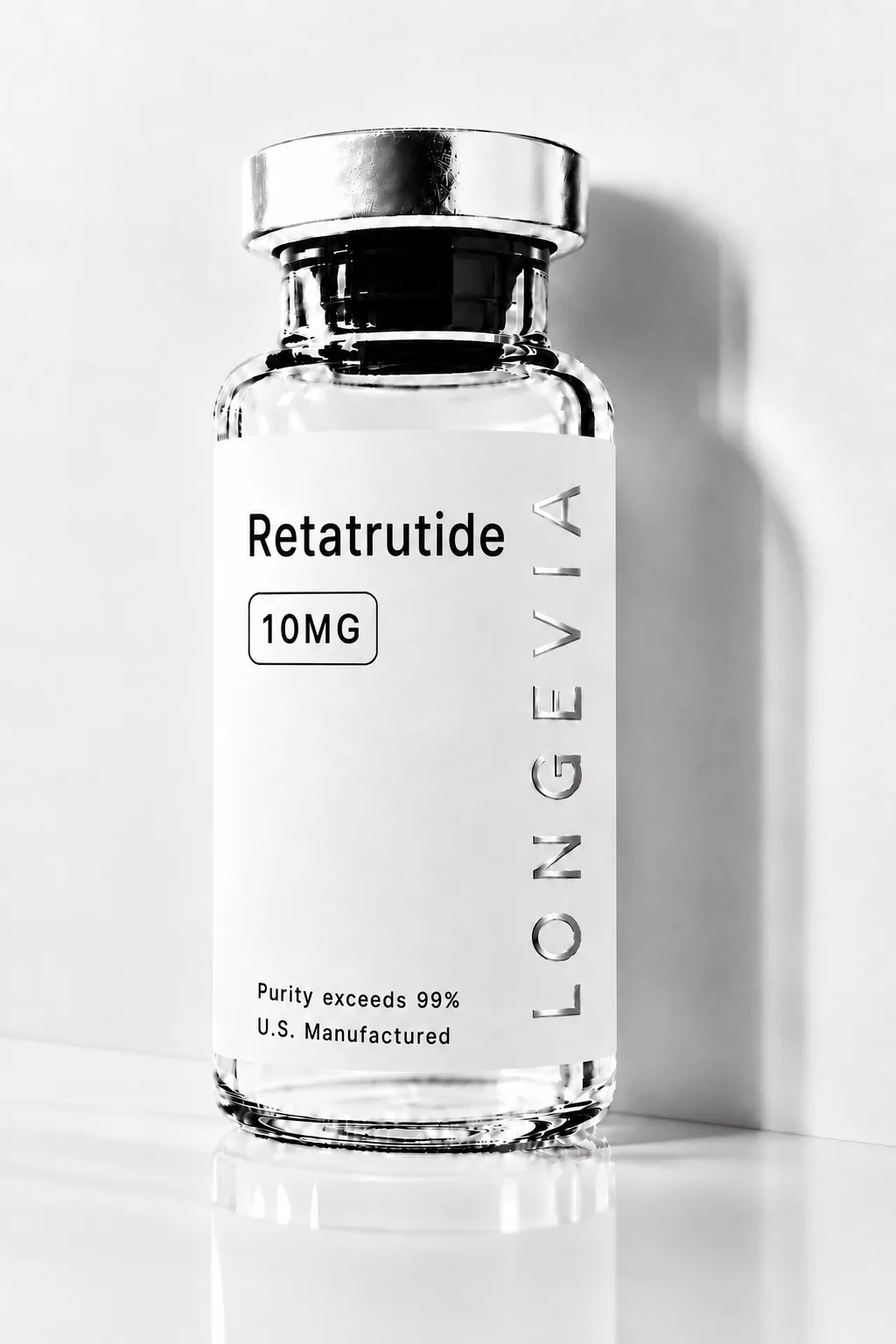
Retatrutide 10mg–60mg
Retatrutide (LY3437943) — an investigational GLP-1/GIP/glucagon triple receptor agonist supplied by Longevia Research in 10mg, 20mg, 30mg and 60mg vials for laboratory use only.
$121.50
Slide to add
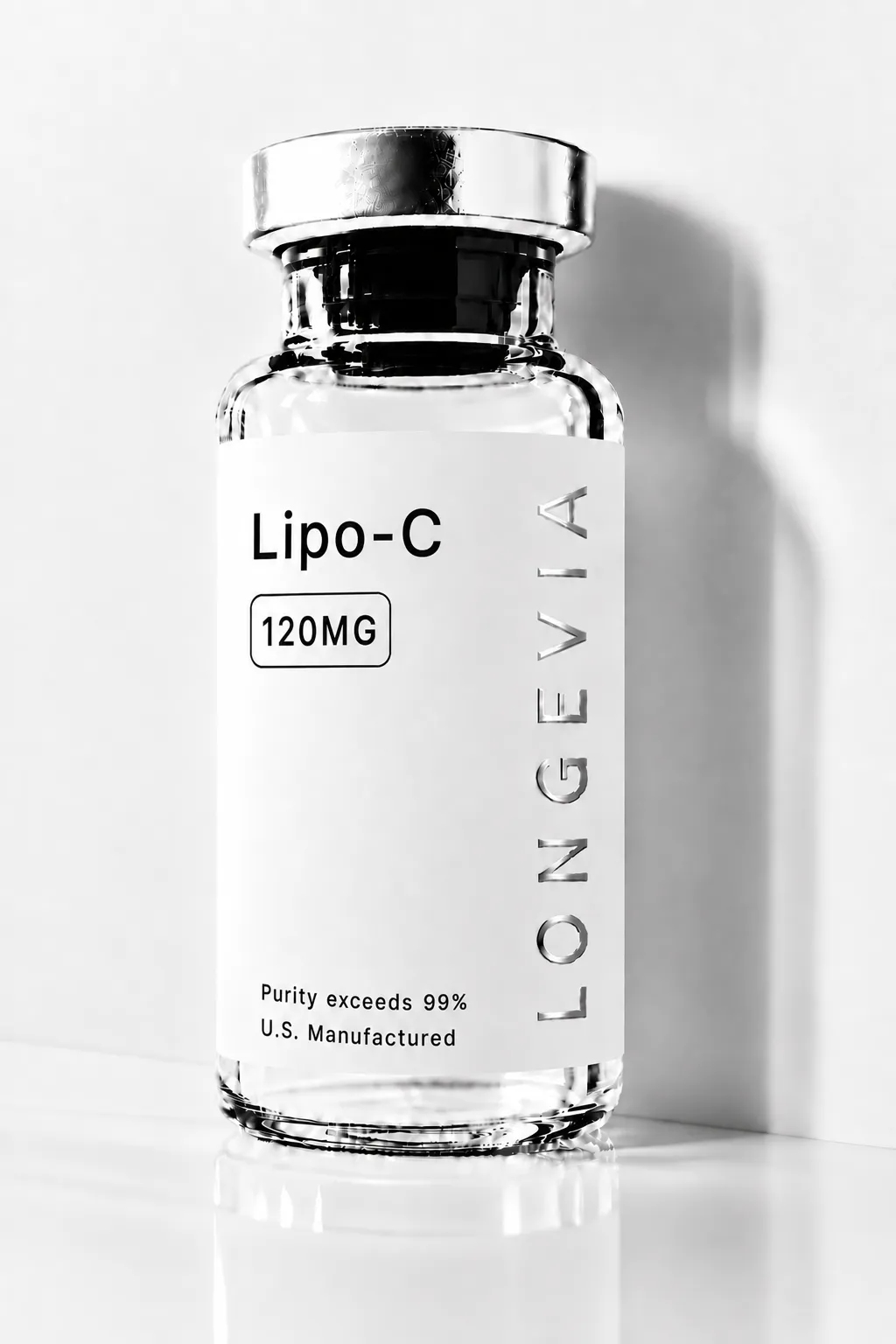
Lipo-C
Lipo C 120mg from Longevia Research — a four-component lipotropic research formulation containing L-Methionine, Inositol, Choline, and L-Carnitine. Supplied for laboratory use only. Batch COA available.
$45.00
Slide to add
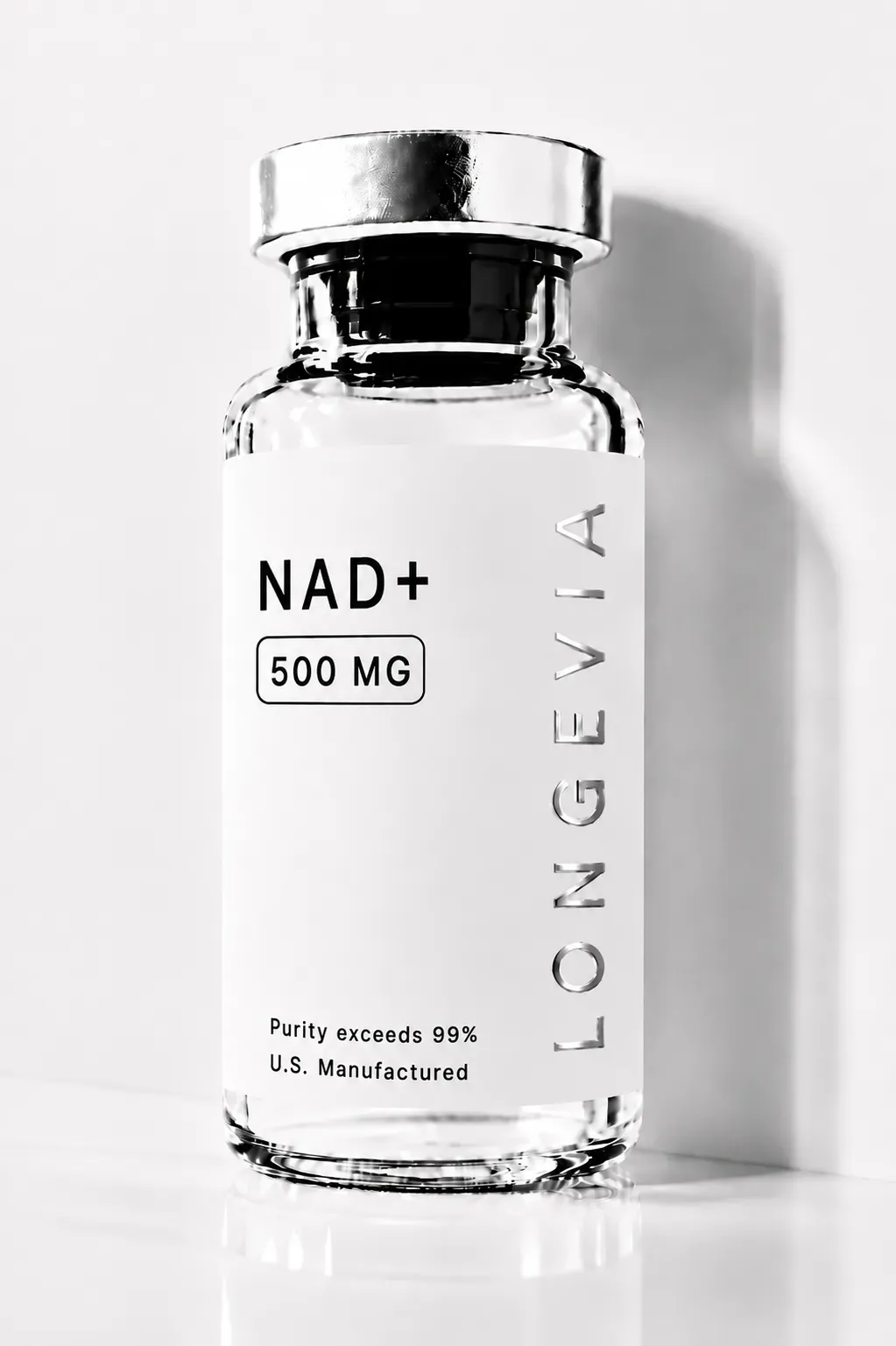
NAD⁺
NAD⁺ (nicotinamide adenine dinucleotide) is a naturally occurring coenzyme investigated in research involving cellular energy metabolism, sirtuin biology, PARP enzyme systems, mitochondrial function, and NAD⁺ homeostasis. Available in 500mg and 1000mg vials. Research Use Only — Longevia Research.
$117.00
Slide to add
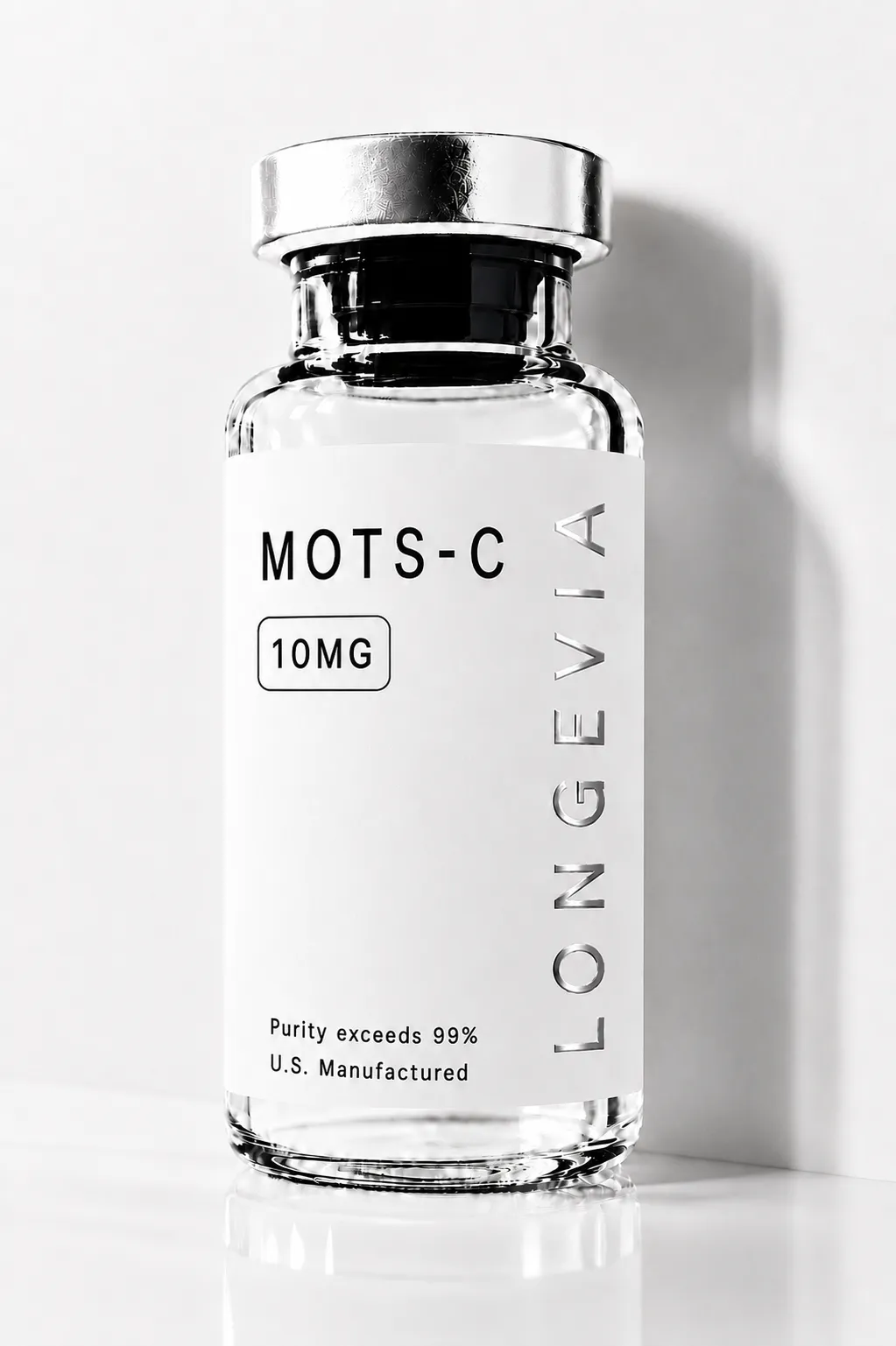
MOTS-C
Longevia Research supplies MOTS-C in 10mg and 40mg quantities, 45-spray format, for qualified laboratory research. MOTS-C is a mitochondrial-derived peptide (MDP) investigated in research involving mitochondrial biology, cellular metabolism, AMPK-related signaling, and stress-response pathways. Research Use Only.
$75.00
Slide to add
Product FAQs
Find answers to common questions regarding storage, reconstitution, and testing guidelines for this specific compound.