Metabolic Research
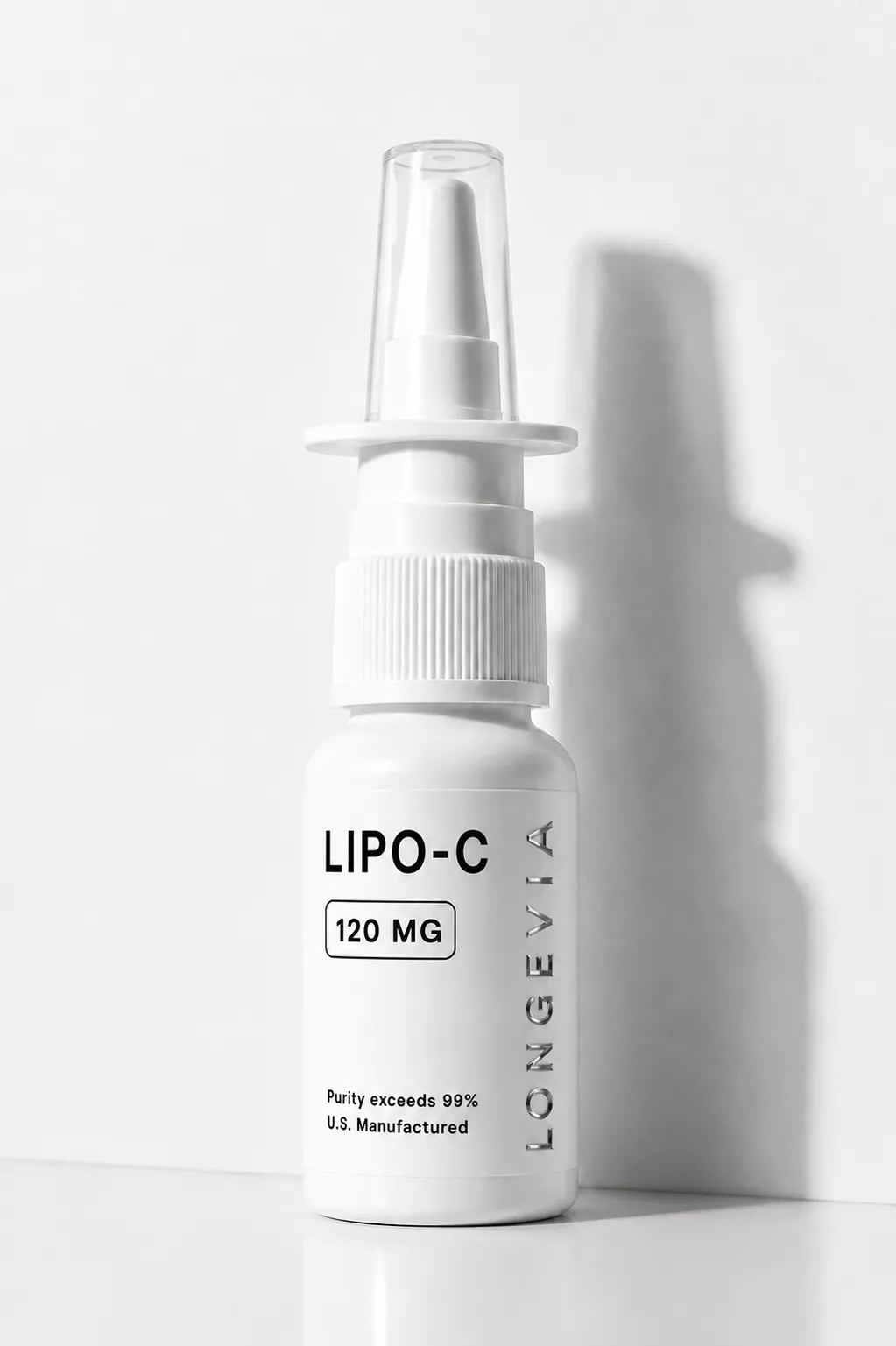
Lipo-C 120mg — 45 Sprays
$90.00
1
Slide to Add
Purity≥99% Tested
TestingLC-MS Verified
LocationUS Based
Lipo-C is a formulation designation associated with lipotropic research — a category of scientific investigation concerned with compounds that participate in lipid metabolism, hepatic lipid handling, phospholipid biology, and related metabolic biochemistry. The term "lipotropic" is a functional descriptor rather than a defined chemical class: lipotropic compounds are a heterogeneous group of substances studied for their roles in cellular and tissue-level lipid handling, and the precise biological context of any Lipo-C preparation depends on the specific composition of the formulation in question. Because Longevia Research has not supplied the exact ingredient profile for this listing, no specific active compounds, molecular identities, or ingredient ratios are attributed to this product. Researchers should consult Longevia Research directly or refer to product documentation for formulation-specific details. Longevia Research supplies Lipo-C as 120mg per bottle in a liquid spray format — 45 sprays per bottle — for qualified laboratory and scientific research purposes only. This product is distinct from individually defined lipotropic substances — such as L-carnitine, choline, methionine, inositol, or methylcobalamin — which are separate compounds each with their own chemical identities, biological roles, and research literatures. Whether any of these compounds form part of this formulation is not established in the information provided for this listing. Researchers evaluating Lipo-C for a specific scientific application should verify the product's composition against their experimental requirements before use.
Standard Delivery3-4 Working Days
Free ShippingOn all orders above $300
Product Details
Product classification
Lipo-C is a product name and formulation designation rather than the name of a single defined chemical entity. A molecular formula, molecular weight, CAS number, and chemical structure cannot be assigned to "Lipo-C" as such without establishing the exact composition of this specific Longevia Research preparation. Unlike a single molecularly defined compound such as L-Carnitine (CAS 541-15-1, C₇H₁₅NO₃), Lipo-C is a formulation whose scientific characterization is tied to the identity and quantities of its constituent ingredients.
Lipotropic research context
In metabolic and nutritional biochemistry, "lipotropic" has historically been applied to compounds influencing lipid mobilization and hepatic lipid handling in experimental models. Compounds investigated under this descriptor include substances participating in methyl-group metabolism, phospholipid synthesis, fatty-acid transport, and related pathways. The following are examples of compounds individually investigated as lipotropic agents in the scientific literature — listed for scientific context only and not confirmed as ingredients of this Longevia Research product: choline (quaternary ammonium compound; phosphatidylcholine synthesis and one-carbon metabolism); methionine (sulfur-containing amino acid; primary methyl-group donor via S-adenosylmethionine); inositol (polyol; phosphoinositide signaling and phospholipid metabolism); methylcobalamin (vitamin B12 cofactor; one-carbon metabolism and methyl-group transfer); and L-carnitine (quaternary ammonium compound; carnitine shuttle and mitochondrial fatty-acid transport). Each has a distinct chemical identity and independent research literature. Research on any individual compound must not be attributed to the Longevia Lipo-C formulation without confirmation that the compound is a documented ingredient of this product.
Product content: 120mg per bottle; 45 sprays per bottle.
Physical form: Liquid research spray.
Purity: Research-grade. Exact formulation composition, ingredient identities, purity grade, excipients, and solvent are not stated for this listing. Researchers should consult product documentation or contact Longevia Research directly for applicable technical specifications.
Analytical documentation
A batch-specific Certificate of Analysis is available on the Longevia Research website, covering product identity, purity, and lot traceability.
Research-use classification
Research Use Only. Not a dietary supplement, pharmaceutical, food, or cosmetic. Not intended for administration to humans or animals outside of qualified research contexts.
Research Focus & Mechanism Overview
Scientific context: lipotropic research. The scientific study of lipotropic compounds sits at the intersection of lipid biochemistry, hepatic metabolism, one-carbon biology, and cellular metabolic regulation. Interest in this research area developed from early nutritional biochemistry investigations identifying certain dietary factors as relevant to hepatic fat accumulation, lipid transport, and phospholipid metabolism. Because "Lipo-C" is a formulation designation rather than a single defined compound, the research background most directly relevant to this product cannot be fully established without knowing its composition. The following describes the scientific context of lipotropic research as a field without attributing specific findings to the Longevia Lipo-C spray.
Key research areas
Lipid metabolism research has investigated lipotropic compounds in relation to their capacity to influence lipid accumulation, mobilization, and transport in experimental systems — spanning biochemical characterization of individual enzymatic steps, cell-based investigations of lipid flux, animal models of dyslipidemia and hepatic steatosis, and human observational and intervention studies in defined clinical populations. Hepatic metabolism research has examined individual lipotropic compounds in preclinical models of hepatic lipid accumulation, including methionine/choline-deficient dietary models used in fatty-liver research — experimental tools for studying the relevant biochemistry that do not imply therapeutic relevance for any specific compound or formulation. One-carbon metabolism research has investigated the network of biochemical reactions centered on methyl-group transfer via S-adenosylmethionine, with relevance to epigenetic regulation, amino-acid metabolism, nucleotide synthesis, and hepatic lipid handling — with specific compounds including methionine, choline, betaine, and methylcobalamin each carrying independent research bodies. Phospholipid research has examined the CDP-choline (Kennedy) pathway of phosphatidylcholine synthesis, membrane phospholipid composition, and the role of phospholipid metabolism in lipoprotein assembly and hepatic lipid secretion. The relevance of each of these research areas to the Longevia Lipo-C product depends on whether the compound or compounds being studied are confirmed ingredients of this formulation.
Human research and regulatory context
Individual lipotropic compounds — choline, methionine, inositol, L-carnitine, methylcobalamin — each carry their own human research literature, ranging from observational nutritional studies to defined clinical interventions. These bodies of research are compound-specific, population-specific, formulation-specific, and administration-route-specific. None automatically constitutes evidence for the Longevia Lipo-C spray. Researchers should not infer spray bioavailability, pharmacokinetics, or outcomes from human research involving oral or intravenous administration of individual lipotropic compounds. No regulatory body has evaluated "Lipo-C" as a category for safety or efficacy. The Longevia Research Lipo-C spray carries no regulatory approval for therapeutic use, and the clinical history of any individual lipotropic compound does not extend to this preparation, which is supplied for research use only.
Quality & Purity Standards
For a formulation product such as Lipo-C, quality characterization begins with establishing the identity and integrity of the product itself. Because Lipo-C is a formulation designation whose precise composition determines its scientific properties, quality assessment is appropriately oriented around two levels: the characterization of the formulation as a whole, and the characterization of individual constituent ingredients where they are identified.
Research-grade quality standards appropriate for a lipotropic formulation include:
Formulation identity confirmation: Verification that the supplied product matches the intended formulation specification, including the identity of constituent compounds where established. Where Lipo-C is composed of defined chemical entities, each ingredient requires individual identity confirmation.
Ingredient characterization: Where individual compounds are confirmed as components, appropriate methods include nuclear magnetic resonance (NMR) spectroscopy, infrared (IR) spectroscopy, high-resolution mass spectrometry (HRMS), and LC-MS/MS for identity confirmation.
Purity assessment of constituents: Where applicable, chromatographic analysis — HPLC or UHPLC with appropriate detection — to assess purity and quantify related substances or degradation products in each confirmed ingredient.
Absence of adulterants: Analytical verification that no undisclosed compounds are present in the formulation.
Batch documentation and traceability: Provision of batch-specific records enabling traceability from source materials through to final product supply.
Formulation stability where applicable: Assessment of whether stated components remain chemically intact through the product's intended shelf life and storage conditions.
Longevia Research's quality approach is oriented toward providing researchers with compounds and formulations supported by appropriate analytical documentation. Researchers should consult current product documentation and available certificates of analysis for batch-specific data applicable to this product.
No specific purity grade, third-party certification, cGMP status, independent laboratory verification, or specific analytical methodology is stated for this listing. Researchers requiring documentation of specific quality parameters should contact Longevia Research directly.
Compliance Notice
FOR RESEARCH USE ONLY. NOT FOR HUMAN CONSUMPTION. NOT FOR VETERINARY USE.
Lipo-C 120mg — 45 Sprays, as supplied by Longevia Research, is intended exclusively for qualified laboratory and scientific research conducted by trained professionals in appropriate research settings. This product is not a drug, dietary supplement, food, or cosmetic. It has not been evaluated or approved by the U.S. Food and Drug Administration, the European Medicines Agency, or any other regulatory authority for use as a therapeutic, prophylactic, or diagnostic agent in humans or animals.
This product is not intended to diagnose, treat, cure, or prevent any disease, condition, or health-related outcome.
Formulation dependency of evidence: Research involving individual lipotropic compounds — including choline, methionine, inositol, methylcobalamin, carnitine, or others — does not establish the efficacy, safety, bioavailability, or pharmacokinetics of this Longevia Research Lipo-C formulation, whose exact composition has not been established in this listing. Evidence from studies of specific compounds applies to those specific compounds and cannot be automatically attributed to this product.
Administration route distinction: Research involving oral, injectable, intravenous, or other administration routes of lipotropic compounds does not establish the safety, efficacy, bioavailability, or pharmacokinetics of this spray formulation.
Formulation non-equivalence: Different products marketed under the name "Lipo-C" may have substantially different compositions. Research on one Lipo-C formulation does not constitute evidence for another.
No clinical validation: This Longevia Research spray has not been the subject of clinical trials and is not approved for any therapeutic use. The existence of clinical research on individual lipotropic compounds does not constitute clinical validation of this product.
Purchasers are solely responsible for ensuring that acquisition, possession, storage, handling, use, and disposal of this product comply with all applicable local, state, national, and international laws and regulations. Longevia Research makes no warranties regarding the suitability of this product for any specific research application. This product should be handled by qualified personnel following appropriate laboratory safety protocols.
By purchasing this product, the purchaser confirms that they are a qualified researcher or research professional acquiring this compound for legitimate scientific research purposes only.
Continue Exploring
Also Considered.
Sale
Tirzepatide - 10 Kits Bundle
High-purity research peptide for laboratory use.
$699.99$799.99
Slide to add
Sale
Tirzepatide - 5 Kits Bundle
High-purity research peptide for laboratory use.
$399.99$449.99
Slide to add
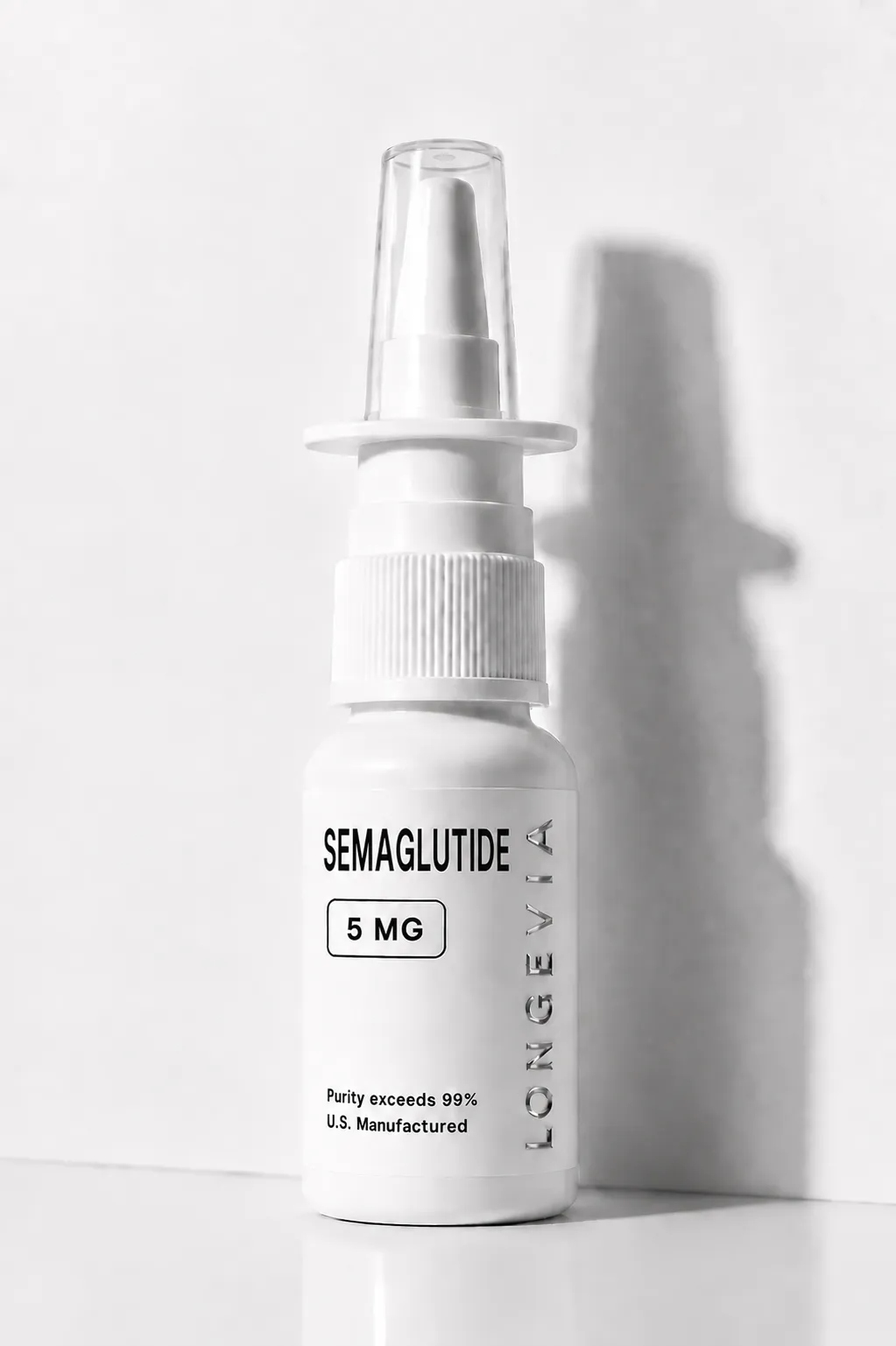
Semaglutide — Sprays
Longevia Research supplies Semaglutide in 5mg, 10mg, 20mg, and 30mg quantities, 45-spray format, for qualified laboratory research. Semaglutide is a synthetic modified GLP-1 analog and GLP-1 receptor agonist investigated in metabolic, endocrine, and incretin signaling research. Research Use Only.
$135.00
Slide to add
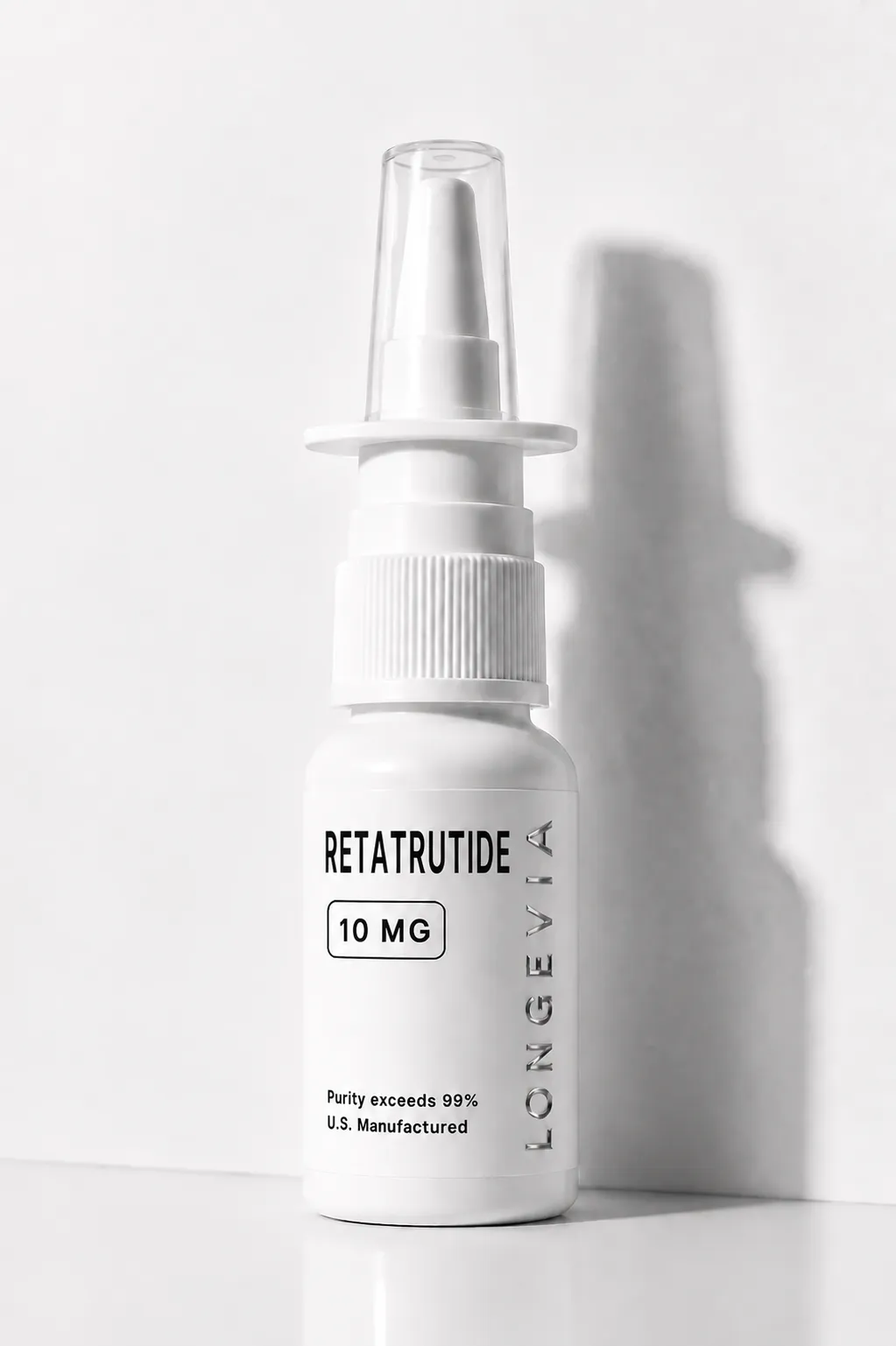
Retatrutide 10mg/20mg/30mg/60mg — 45 Sprays
Longevia Research supplies Retatrutide in 10mg, 20mg, 30mg, and 60mg quantities, 45-spray format, for qualified laboratory research. Retatrutide is an investigational synthetic peptide-based triple receptor agonist (GIPR/GLP-1R/GCGR) studied in metabolic signaling and clinical trials. Research Use Only.
$166.50
Slide to add
Product FAQs
Find answers to common questions regarding storage, reconstitution, and testing guidelines for this specific compound.