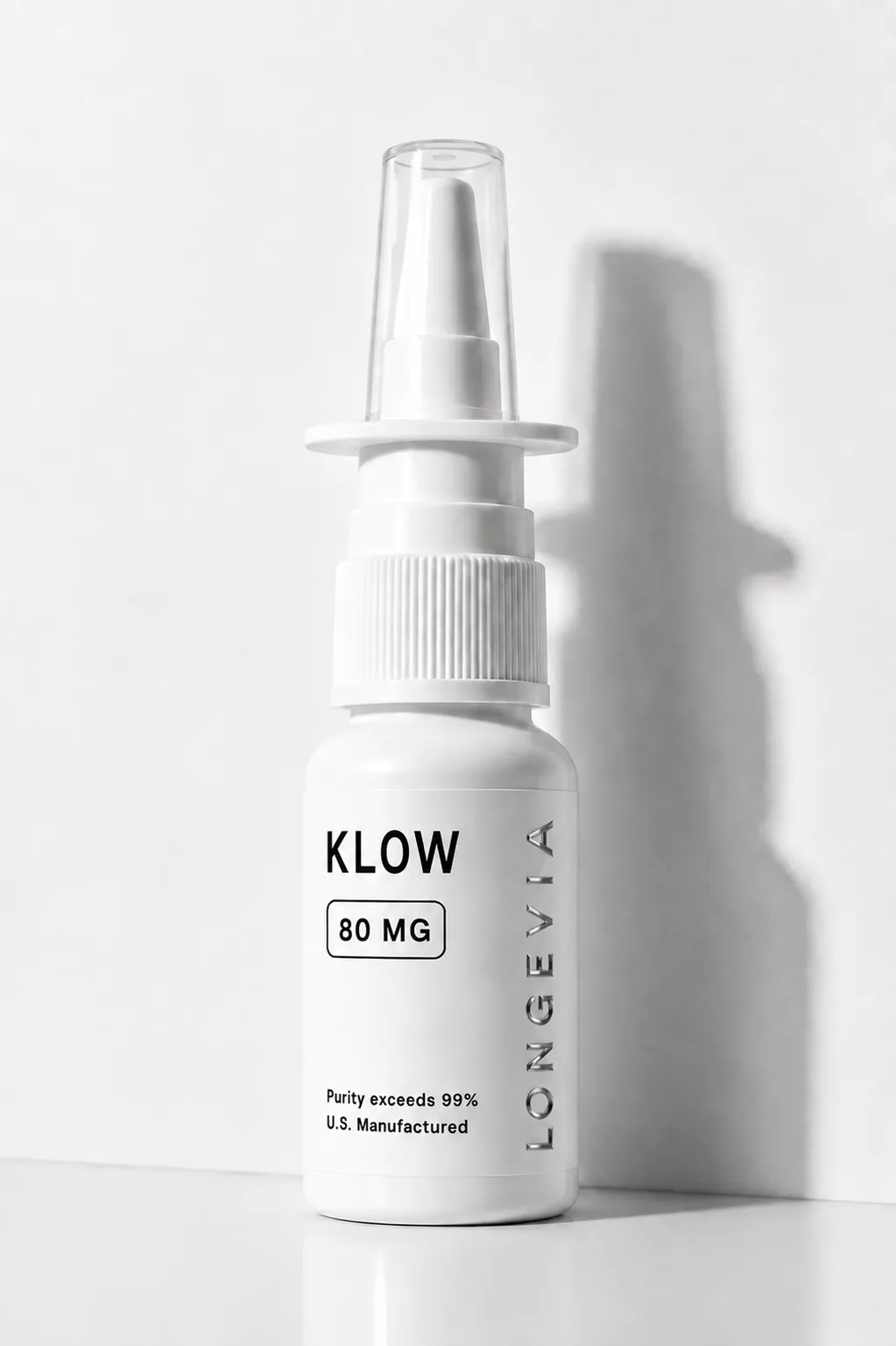
Metabolic Research
KLOW 80mg — 45 Sprays
$166.50
1
Slide to Add
Purity≥99% Tested
TestingLC-MS Verified
LocationUS Based
KLOW 80mg — 45 Sprays is a four-component research formulation supplied by Longevia Research combining four distinct research compounds in a single spray-format preparation: GHK-Cu (glycyl-L-histidyl-L-lysine copper(II) complex, 50mg), KPV (Lys-Pro-Val, an α-MSH C-terminal tribioactive fragment, 10mg), BPC-157 (a synthetic 15-residue synthetic compound, 10mg), and TB-500 (a synthetic thymosin beta-4 fragment, 10mg), totaling 80mg across all four components. Each constituent has been individually investigated in distinct experimental research domains — copper-dependent molecular biology and extracellular matrix research (GHK-Cu), melanocortin receptor and inflammatory signaling (KPV), cellular signaling and gastrointestinal biology (BPC-157), and actin cytoskeletal dynamics (TB-500). KLOW is most accurately understood through the individual scientific profiles of its constituent compounds rather than as a single pharmacological entity; no published controlled research has examined the specific four-component KLOW formulation in human subjects, and evidence for individual components does not automatically extend to the combined preparation. Longevia Research supplies KLOW in a liquid spray format — 45 sprays per bottle — for qualified laboratory and scientific research purposes only.
Standard Delivery3-4 Working Days
Free ShippingOn all orders above $300
Product Details
Product classification
KLOW 80mg — 45 Sprays is a four-component research compound blend. It is not a single molecular entity and does not have a single molecular formula, molecular weight, or CAS number. It is classified as a multi-component research formulation for Research Use Only.
Constituent components
GHK-Cu (glycyl-L-histidyl-L-lysine copper(II) complex) — CAS 89030-95-5; molecular formula C₁₄H₂₂CuN₆O₄; molecular weight ~401.91 g/mol. A naturally occurring copper-binding metal complex in which the copper(II) ion coordinates with the GHK sequence via an ATCUN-motif geometry. Stated quantity: 50mg. Analytically distinct from uncomplexed GHK (CAS 49557-75-7, MW ~340.38 g/mol); characterization must confirm both amino acid sequence and copper association.
KPV (Lys-Pro-Val) — CAS 15997-32-7; molecular formula C₁₆H₃₀N₄O₄; molecular weight ~344 g/mol. A synthetic three-residue compound corresponding to residues 11–13 of alpha-melanocyte-stimulating hormone (α-MSH). Stated quantity: 10mg. Distinct from full-length α-MSH and from synthetic melanocortin receptor agonists such as Melanotan I or Melanotan II.
BPC-157 (Body Protection Compound-157) — CAS 137525-51-0; molecular formula C₆₂H₉₈N₁₆O₂₂; molecular weight ~1,419.53 g/mol. A synthetic 15-residue compound (sequence: Gly-Glu-Pro-Pro-Pro-Gly-Lys-Pro-Ala-Asp-Asp-Ala-Gly-Leu-Val) derived from a partial sequence of a gastric protein. Stated quantity: 10mg.
TB-500 (thymosin beta-4 synthetic fragment) — CAS 885340-08-9; molecular formula C₂₁₂H₃₅₀N₅₆O₇₈S; molecular weight ~4,963.51 g/mol. A synthetic 43-amino-acid compound corresponding to the thymosin beta-4 sequence, associated with G-actin sequestration via the LKKTET actin-binding motif. Stated quantity: 10mg.
Total stated formulation quantity
80mg combined (GHK-Cu 50mg + KPV 10mg + BPC-157 10mg + TB-500 10mg).
Product content
80mg per bottle; 45 sprays per bottle.
Physical form
Liquid research spray.
Purity. Research-grade
Given the multi-component nature of this preparation, analytical documentation should address each constituent compound individually. Researchers are encouraged to review available documentation prior to use.
Analytical documentation
A batch-specific Certificate of Analysis is available on the Longevia Research website, covering compound identity, purity, and lot traceability.
Research-use classification
Research Use Only. No component of this formulation — individually or in combination — is approved for human or veterinary use. Not intended for administration to humans or animals.
Research Focus & Mechanism Overview
Component research profiles and molecular targets. The four KLOW components engage distinct molecular targets and biological pathways; there is no single unified molecular target for the formulation as a whole. GHK-Cu has been investigated in relation to copper-dependent enzyme systems (lysyl oxidase, superoxide dismutase), extracellular matrix-associated pathways including MMP/TIMP modulation in fibroblast cell culture systems, and broad transcriptional regulatory networks as characterized in microarray studies in human cell lines — though no single primary mechanism has been definitively established. KPV has been investigated as a melanocortin receptor ligand, with research examining interactions with MC1R and MC3R — Gs-coupled GPCRs involved in anti-inflammatory and melanogenic signaling — as well as potential melanocortin-receptor-independent inflammatory pathways in gut epithelial cell systems. BPC-157's molecular mechanism has not been definitively established at the receptor level; proposed interactions include the nitric oxide system and growth factor receptor signaling pathways in animal model contexts. TB-500's primary characterized molecular interaction is G-actin sequestration through its LKKTET actin-binding motif, regulating the equilibrium between monomeric G-actin and filamentous F-actin and influencing cytoskeletal organization and cell migration in experimental systems.
Key research areas by component
Published preclinical research using the individual KLOW components spans extracellular matrix biology and collagen-associated gene expression (GHK-Cu); melanocortin receptor pharmacology and inflammatory signaling in rodent colitis models and intestinal epithelial cell systems (KPV); gastrointestinal biology, musculoskeletal tissue signaling, and angiogenesis-associated parameters in rodent animal models (BPC-157); and actin cytoskeletal dynamics, cellular migration biology, and wound-related parameters in animal model and cell-based systems (TB-500). The majority of the evidence base for all four components is from in-vitro cell culture and preclinical animal model research. Human research on individual components is limited and does not establish therapeutic efficacy for any component or for the KLOW combination.
Formulation-level considerations
The KLOW preparation combines four components with distinct mechanisms into a single research formulation, allowing investigators to study multiple biological pathways simultaneously within a controlled experimental system. No published peer-reviewed research has systematically characterized the combined molecular interactions of these four compounds at the receptor or biochemical level, and no controlled clinical research has examined the specific KLOW formulation in human subjects. Any discussion of combined or synergistic effects within this formulation would exceed what the available evidence supports. Researchers should treat the scientific evidence base as consisting exclusively of independent single-component preclinical and experimental data and design experiments accordingly. Evidence for individual components does not establish efficacy or safety for the complete KLOW combination.
Human research and regulatory status
No component of the KLOW formulation — GHK-Cu, KPV, BPC-157, or TB-500 — is approved by the FDA, EMA, or any comparable regulatory authority for any human therapeutic indication, individually or in combination. Small observational human studies involving topical GHK-Cu preparations have been published but differ substantially from controlled clinical trials and pertain to GHK-Cu specifically under different conditions. Human clinical research on KPV, BPC-157, and TB-500 as isolated research compounds is limited. None of these findings establish safety or efficacy for the Longevia Research KLOW spray preparation.
Quality & Purity Standards
Quality in a four-component research peptide formulation requires analytical approaches appropriate to each distinct constituent compound, as well as to the preparation as a whole. The KLOW formulation presents compound-specific analytical challenges given the diversity of its components — spanning a metallopeptide (GHK-Cu), a short tripeptide (KPV), a mid-length pentadecapeptide (BPC-157), and a large thymosin beta-4 fragment (TB-500) with molecular weights ranging from approximately 344 g/mol to approximately 4,964 g/mol.
Component identity verification: Analytical characterization of the KLOW formulation requires confirmation of the identity of all four components individually. The substantial molecular weight differences between components — GHK-Cu (~402 g/mol), KPV (~344 g/mol), BPC-157 (~1,419 g/mol), and TB-500 (~4,964 g/mol) — provide natural mass spectrometric resolution across the component mixture, supporting multi-analyte identification by mass.
Mass spectrometric characterization: Multi-analyte mass spectrometric approaches capable of covering the full molecular weight range of the four components — from the low-mass KPV and GHK-Cu to the high-mass TB-500 — are necessary for comprehensive identity confirmation. Electrospray ionization mass spectrometry generating multiply-charged ions is the standard approach for the larger components.
GHK-Cu-specific considerations: As a metallopeptide, GHK-Cu requires analytical confirmation of both the peptide sequence and the copper(II) coordination, distinguishing the copper-bound form (C₁₄H₂₂CuN₆O₄, MW ~401.91) from uncomplexed GHK (C₁₄H₂₄N₆O₄, MW ~340.38). Mass spectrometric detection of the characteristic copper isotope pattern provides direct confirmation of copper association.
KPV-specific considerations: KPV is the smallest component by molecular weight (~344 g/mol), and as a tripeptide it requires appropriate low-mass detection methods. The proline residue confers resistance to standard peptidase digestion, which may be relevant to stability considerations.
Chromatographic purity assessment: Reversed-phase HPLC provides chromatographic separation and quantitative purity assessment for the four-component mixture, separating individual peptides from each other and from synthesis-related impurities. Given the molecular weight range of the four components, method optimization may be required to achieve adequate resolution of all four peaks in a single analytical run.
Batch traceability: For a four-component research formulation, batch-specific documentation at the individual component level — confirming the identity, purity, and stated quantity of each compound — provides the traceability required for reproducible experimental design. Researchers should confirm that available analytical documentation for the KLOW preparation addresses each component separately, not only the total formulation.
Spray format considerations: As a spray-format preparation (unlike lyophilized KLOW formulations from other suppliers), the Longevia KLOW preparation requires formulation-specific characterization addressing component stability, homogeneity, and distribution within the spray preparation.
Longevia Research is committed to supplying research compounds that support rigorous scientific inquiry. Researchers are encouraged to review available analytical documentation for this product prior to incorporating it into laboratory workflows.
Compliance Notice
KLOW 80mg — 45 Sprays is supplied by Longevia Research strictly for research and laboratory use only. No component of this product — GHK-Cu, KPV, BPC-157, or TB-500 — is approved by the FDA or any global regulatory authority for human consumption, veterinary use, or therapeutic application, either individually or in combination. The formulation as a whole is not a drug, dietary supplement, food, or cosmetic, and it is not manufactured, labeled, or sold as any of these under any applicable regulatory framework.
No claims made regarding KLOW 80mg — 45 Sprays, or its constituent components, on this website are intended to diagnose, treat, cure, or prevent any disease or medical condition in humans or animals. The research findings summarized on this page arise from preclinical animal studies, cell-based experiments, biochemical investigations, and limited human observational or exploratory research conducted on the individual components. These findings do not establish human efficacy or safety for any application and do not constitute regulatory approval, clinical validation, or authorization for personal or therapeutic use.
Research conducted on individual components (GHK-Cu, KPV, BPC-157, or TB-500) does not automatically establish safety, efficacy, or regulatory approval for the complete KLOW formulation. The four components have distinct scientific identities, distinct research profiles, and have not been clinically validated in combination. Evidence from other peptide research formulations or commercial products should not be assumed to apply to the Longevia KLOW spray.
This product is sold exclusively to qualified researchers, laboratories, and scientific institutions for in-vitro and non-clinical laboratory research purposes. It is not intended for personal use, self-administration, topical application in any clinical or consumer context, injection, resale for human consumption, or any application outside of a controlled research environment. Purchasers are responsible for ensuring that the acquisition, possession, handling, storage, use, and disposal of this compound are conducted in full compliance with all applicable local, state, federal, and international laws and institutional policies governing research chemicals.
By purchasing KLOW 80mg — 45 Sprays from Longevia Research, the buyer confirms they are acquiring the product for legitimate scientific research purposes, agrees to handle and store it in accordance with applicable laboratory safety standards, and assumes full responsibility for compliance with all laws and regulations governing the purchase and use of research chemicals in their jurisdiction.
Continue Exploring
Also Considered.
Sale
Tirzepatide - 10 Kits Bundle
High-purity research peptide for laboratory use.
$699.99$799.99
Slide to add
Sale
Tirzepatide - 5 Kits Bundle
High-purity research peptide for laboratory use.
$399.99$449.99
Slide to add
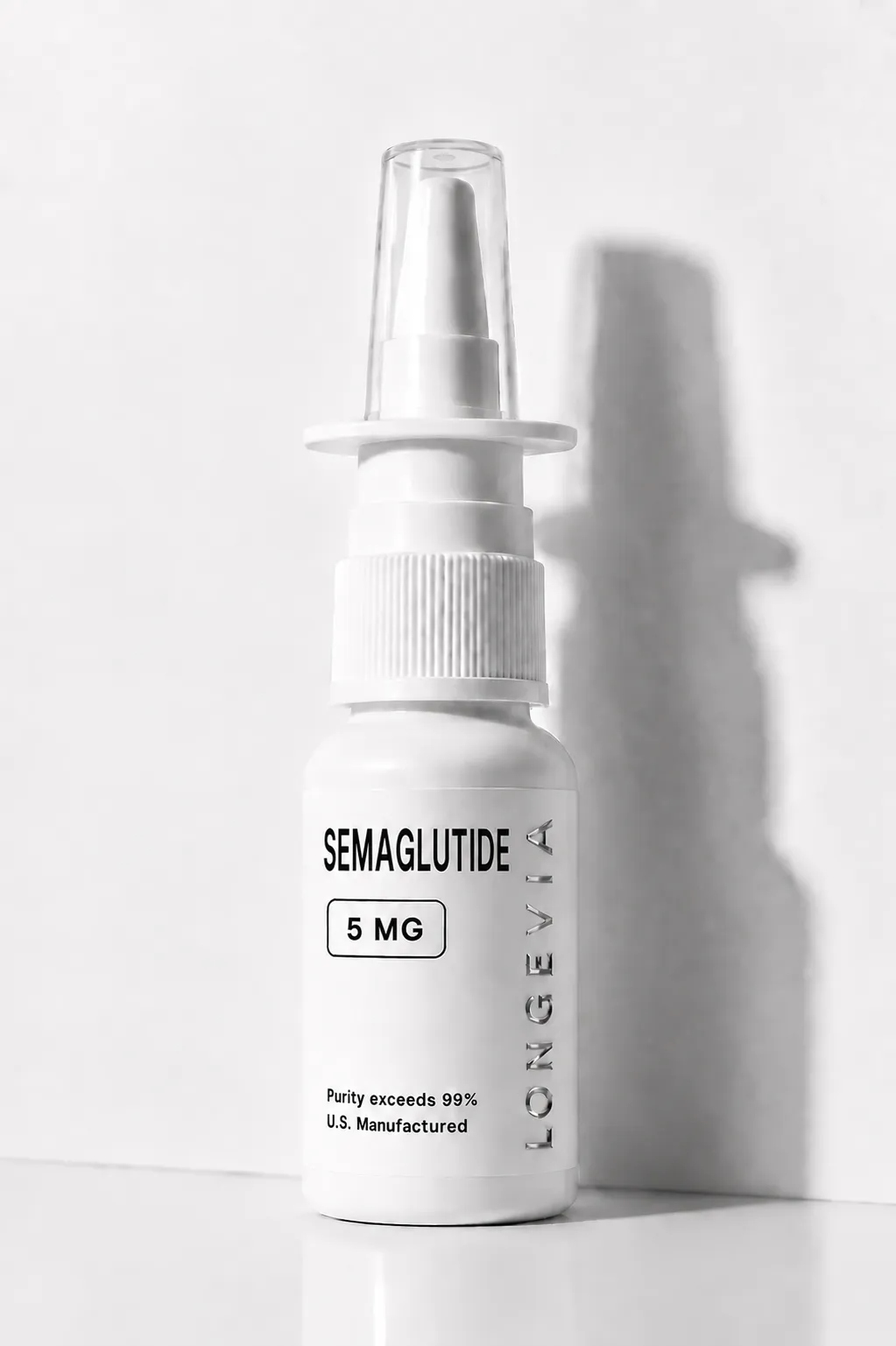
Semaglutide — Sprays
Longevia Research supplies Semaglutide in 5mg, 10mg, 20mg, and 30mg quantities, 45-spray format, for qualified laboratory research. Semaglutide is a synthetic modified GLP-1 analog and GLP-1 receptor agonist investigated in metabolic, endocrine, and incretin signaling research. Research Use Only.
$135.00
Slide to add
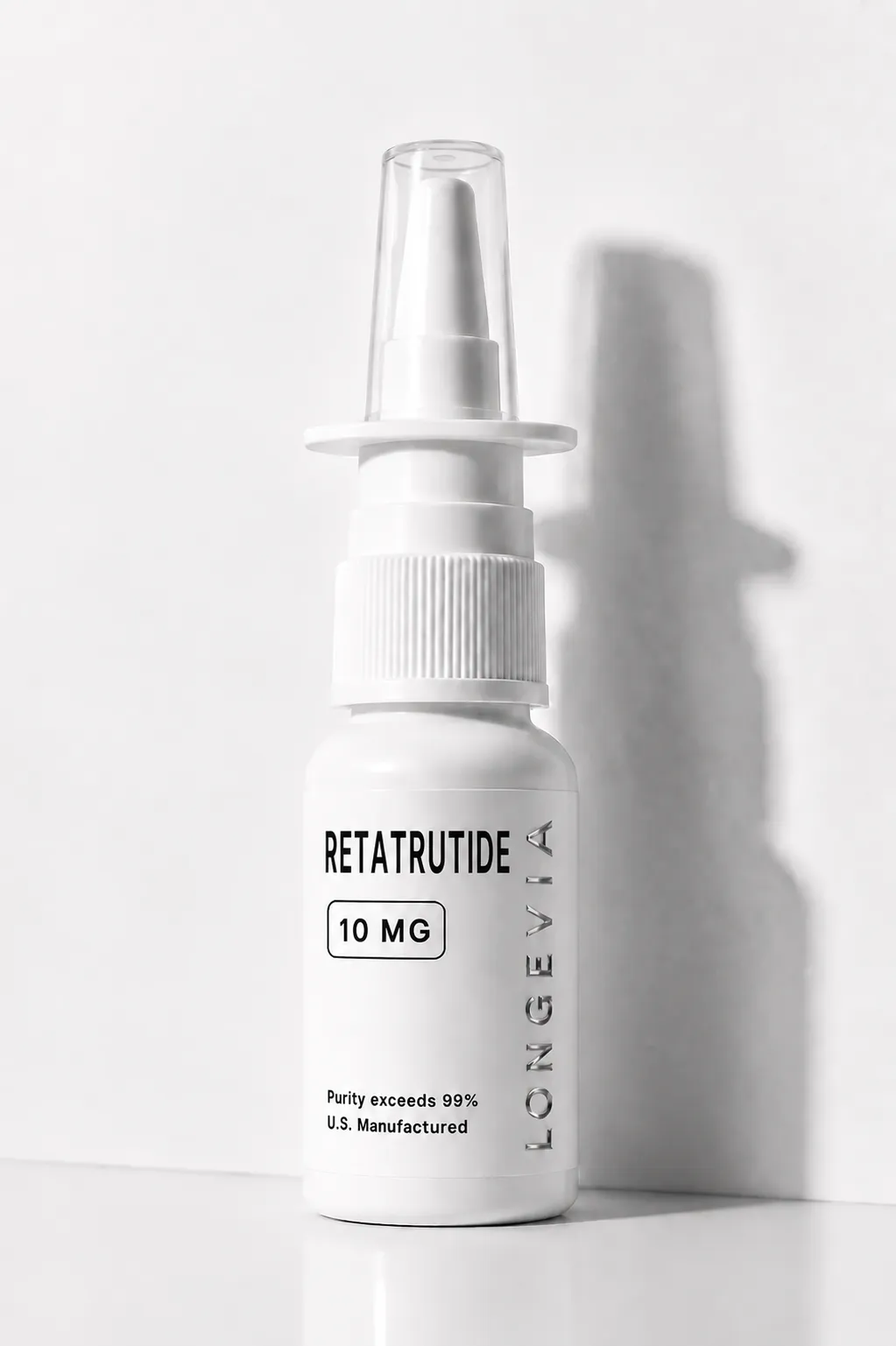
Retatrutide 10mg/20mg/30mg/60mg — 45 Sprays
Longevia Research supplies Retatrutide in 10mg, 20mg, 30mg, and 60mg quantities, 45-spray format, for qualified laboratory research. Retatrutide is an investigational synthetic peptide-based triple receptor agonist (GIPR/GLP-1R/GCGR) studied in metabolic signaling and clinical trials. Research Use Only.
$166.50
Slide to add
Product FAQs
Find answers to common questions regarding storage, reconstitution, and testing guidelines for this specific compound.