Metabolic Research
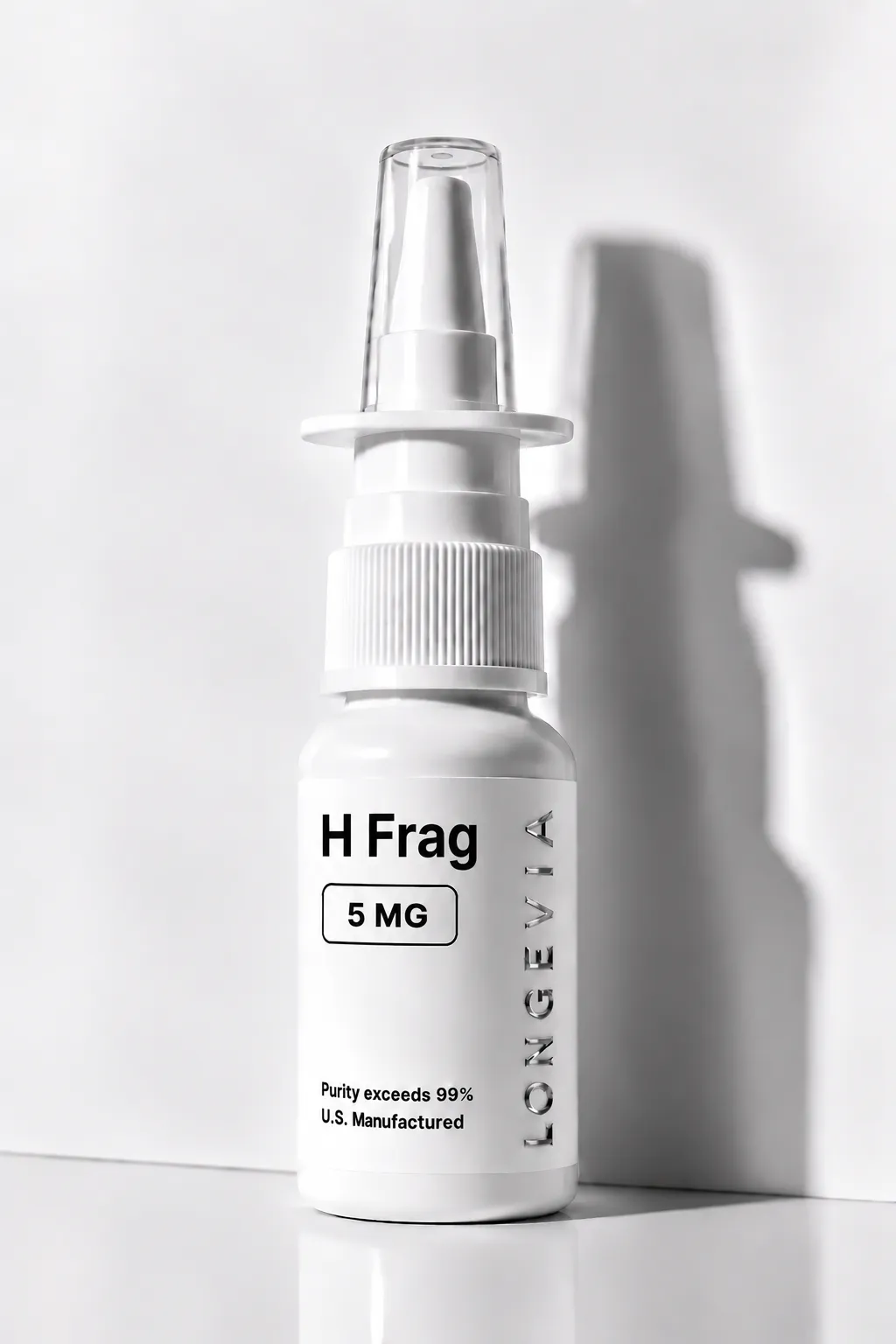
H Frag 5mg — 45 Sprays
$153.00
1
Slide to Add
Purity≥99% Tested
TestingLC-MS Verified
LocationUS Based
H Frag (HGH Fragment 176-191) is a synthetic hexadecapeptide corresponding to residues 176 through 191 of the C-terminal region of human growth hormone. It is a 16-residue synthetic research compound — not full-length human growth hormone, not a growth hormone receptor agonist, and not a growth hormone replacement product. H Frag has been investigated in preclinical experimental research examining growth hormone structure-function relationships, adipose tissue biology, and lipid metabolism in animal model systems, with particular interest in the C-terminal region of hGH as a putative locus of lipolytic activity distinct from the somatotropic effects associated with the full-length hormone. An important research context applies to this compound: the characterization of HGH Frag 176-191 as having lipolytic properties has been based substantially on extrapolations from data on AOD9604 — a structurally modified analogue carrying an N-terminal modification — rather than on direct human studies of the unmodified HGH Frag 176-191 itself. HGH Frag 176-191 and AOD9604 are related but distinct research compounds with different molecular identities, regulatory histories, and published evidence bases, and researchers should carefully distinguish between them when evaluating the published literature. Longevia Research supplies H Frag as 5mg per bottle in a liquid spray format — 45 sprays per bottle — for qualified laboratory and scientific research purposes only.
Standard Delivery3-4 Working Days
Free ShippingOn all orders above $300
Product Details
Scientific identity
H Frag (HGH Fragment 176-191; CAS 66004-57-7) is a synthetic hexadecapeptide with the sequence Tyr-Leu-Arg-Ile-Val-Gln-Cys-Arg-Ser-Val-Glu-Gly-Ser-Cys-Gly-Phe (one-letter: YLRIVQCRSVEGSCGF). Molecular formula C₇₈H₁₂₃N₂₃O₂₂S₂; molecular weight approximately 1,815–1,817 g/mol. The ~2 Da range reflects whether the intramolecular disulfide bridge is present (reducing MW by 2 Da through loss of two hydrogen atoms); CAS 66004-57-7 corresponds to the cyclic disulfide form.
Compound class
Synthetic peptide fragment; growth hormone-derived research compound. Classified as a Research Use Only material and is not a drug, dietary supplement, food, or cosmetic.
Structural characteristics
HGH Frag 176-191 contains two cysteine residues — at positions 7 and 14 within the 16-residue fragment, corresponding to Cys-182 and Cys-189 in the full hGH sequence — that form an intramolecular disulfide bridge constraining the peptide's three-dimensional conformation. This disulfide bridge is considered functionally relevant to the fragment's experimental profile, and analytical characterization must address both sequence identity and disulfide bridge integrity. Researchers should confirm the conformational state of the supplied material from product documentation, as the cyclic (disulfide) and linear (free thiol) forms are analytically distinct.
Relationship to full-length hGH
HGH Frag 176-191 replicates only the C-terminal 16 residues of the 191-amino-acid human growth hormone protein. It does not contain the N-terminal receptor-binding domains responsible for hGH's somatotropic effects — including IGF-1 stimulation, linear bone growth, and muscle-related biology — and does not function as a growth hormone receptor agonist in the manner of full-length hGH.
Distinction from AOD9604
AOD9604 is a structurally modified analogue of the hGH 176-191 region carrying an N-terminal modification (N-tyrosine or D-Tyr) designed to enhance stability. AOD9604 has been studied in human clinical trials and received an FDA GRAS designation for oral food ingredient use at evaluated doses — a regulatory classification pertaining specifically to that modified compound at those conditions, which does not apply to HGH Frag 176-191. The two compounds have different molecular identities, regulatory histories, and evidence bases and should not be treated as equivalent.
Product content: 5mg per bottle; 45 sprays per bottle.
Physical form: Liquid research spray.
Purity: Research-grade.
Analytical documentation
A batch-specific Certificate of Analysis is available on the Longevia Research website, covering peptide identity, purity, and lot traceability.
Research-use classification
Research Use Only. Not approved for human or veterinary use. Not intended for administration to humans or animals.
Research Focus & Mechanism Overview
Research background and scientific context
Scientific interest in peptide fragments of human growth hormone developed from efforts to identify which regions of the hGH molecule are responsible for its diverse biological activities. Research published in the 1990s — including work from the Heffernan group at Monash University — examined the C-terminal region of hGH as a putative locus of lipolytic activity and used HGH-derived C-terminal fragments as experimental probes in preclinical systems. Preclinical studies in obese rodent models — including genetically obese Zucker rats and dietary-obesity mouse models — reported changes in body fat composition and metabolic parameters following administration of HGH C-terminal fragments, generating the primary data that established the scientific rationale for this research area. These are animal model findings and should not be presented as evidence of human weight-management effects. An important accuracy note for researchers: the characterization of HGH Frag 176-191 as having human lipolytic effects has been based on extrapolations from AOD9604 data, not on direct human studies of the unmodified fragment — a distinction significant for evaluating the translational relevance of preclinical findings.
Molecular targets and proposed mechanisms
The specific molecular target through which HGH Frag 176-191 may influence biological systems in experimental contexts has not been definitively established in the published literature. HGH Frag 176-191 does not contain the primary growth hormone receptor-binding domains of full-length hGH and should not be assumed to engage GHR in the manner of intact growth hormone. Mechanistic proposals in the research literature have included potential interactions with beta-3 adrenergic receptors in adipocytes and effects on lipolysis-related enzyme systems including hormone-sensitive lipase (HSL) and adipose triglyceride lipase (ATGL) — though these proposed mechanisms remain under investigation and have not been definitively established for the unmodified HGH Frag 176-191 with the same rigor as for AOD9604. The intramolecular disulfide bridge between the two cysteine residues contributes to the peptide's three-dimensional conformation and is considered relevant to its biological interactions in experimental systems based on structure-activity relationship considerations. Researchers should approach mechanistic proposals in the popular literature critically and prioritize the primary research literature for experimental design decisions.
Key research areas and preclinical evidence
Published preclinical research spans animal model studies in obese rodents examining body composition and metabolic parameters; structure-activity relationship research comparing different fragment lengths, cyclic versus linear forms, and amino acid substitutions to probe which structural elements are associated with observed biological activities; and comparative studies positioning HGH Frag 176-191 alongside AOD9604 and other modified analogues. Preclinical studies proposed that HGH-derived C-terminal fragments appeared to influence lipid-related parameters in animal models without the insulin antagonism and IGF-1 elevation associated with full-length hGH — an apparent selectivity considered scientifically interesting as a potential tool for dissecting somatotropic and metabolic activities of growth hormone. All preclinical findings are reported to provide scientific context and do not constitute evidence of human therapeutic efficacy or safety.
Human research and regulatory status
According to the available published literature, the unmodified HGH Frag 176-191 has not been studied in human subjects in published clinical research. Human research in this area has been conducted with AOD9604 — the structurally modified analogue — and those findings cannot be directly extrapolated to HGH Frag 176-191. Evidence from full-length human growth hormone research also does not transfer to this fragment. H Frag is not approved by the FDA, EMA, or any comparable regulatory authority for any human therapeutic indication — including weight management, fat loss, body composition, metabolic enhancement, or any other application. The FDA GRAS designation for AOD9604 pertains to that modified compound specifically and does not apply to HGH Frag 176-191. This product is classified strictly as a Research Use Only material for qualified laboratory investigation.
Quality & Purity Standards
Quality in HGH Frag 176-191 research material requires analytical attention to the specific structural features that define this peptide's identity and experimental relevance. As a 16-residue synthetic peptide fragment with an intramolecular disulfide bridge between two cysteine residues, HGH Frag 176-191 presents several analytically significant quality considerations beyond those applicable to simpler linear peptides.
Sequence identity and correct residue composition: Confirmation that the supplied material corresponds to the HGH 176-191 sequence — Tyr-Leu-Arg-Ile-Val-Gln-Cys-Arg-Ser-Val-Glu-Gly-Ser-Cys-Gly-Phe — is a foundational analytical requirement. Given the existence of related but distinct analogues (including AOD9604 with an N-terminal modification), sequence confirmation is particularly important for ensuring that the material under study corresponds to the intended unmodified fragment.
Mass spectrometric identity confirmation: Mass spectrometry provides molecular weight confirmation capable of distinguishing the intact HGH Frag 176-191 (MW approximately 1,815–1,817 g/mol, depending on the disulfide state) from truncated sequences, deletion products, and modified analogues such as AOD9604. For a 16-residue peptide, electrospray ionization mass spectrometry generating multiply-charged ions is typically used for molecular weight confirmation at the resolution needed to distinguish closely related analogue sequences.
Disulfide bridge integrity: The intramolecular disulfide bridge between the two cysteine residues is a structural feature considered relevant to the peptide's conformation and experimental profile. Analytical confirmation of disulfide bridge formation — and assessment of any free-thiol-containing linear form or mixed-disulfide impurities — is therefore a quality parameter specific to this peptide. Assays distinguishing the cyclic (disulfide) and linear (free thiol) forms may be relevant for research applications where the conformational state of the peptide is experimentally significant.
Chromatographic purity assessment: High-performance liquid chromatography provides quantitative purity assessment of the HGH Frag 176-191 preparation, separating the target peptide from truncated sequences, deletion products, oxidized variants, and other synthesis-related impurities. The HPLC purity profile, combined with mass spectrometric identity confirmation, constitutes the core analytical characterization for research-grade use.
Batch traceability: Linking experimental results to a defined, analytically characterized batch is a prerequisite for reproducible research. Batch-specific documentation enables data integrity and compliance with institutional and regulatory requirements governing research chemical use.
Longevia Research is committed to supplying research compounds that support rigorous scientific inquiry. Researchers are encouraged to review available analytical documentation for this product prior to incorporating it into laboratory workflows.
Compliance Notice
H Frag 5mg — 45 Sprays is supplied by Longevia Research strictly for research and laboratory use only. This product is not approved by the FDA or any global regulatory authority for human consumption, veterinary use, or therapeutic application. It is not a drug, dietary supplement, food, or cosmetic, and it is not manufactured, labeled, or sold as any of these under any applicable regulatory framework.
H Frag is a synthetic peptide fragment corresponding to residues 176–191 of human growth hormone. It is not full-length human growth hormone, it is not recombinant hGH, and it is not a growth hormone therapy or replacement product. Evidence or regulatory designations pertaining to full-length human growth hormone or to the related modified analogue AOD9604 do not automatically extend to H Frag / HGH Frag 176-191.
No claims made regarding H Frag on this website are intended to diagnose, treat, cure, or prevent any disease or medical condition in humans or animals. The research findings summarized on this page arise from preclinical animal model studies, biochemical investigations, and structure-activity research on related compounds. These findings do not establish human efficacy or safety for this preparation for any application — including weight management, body composition, fat loss, metabolic enhancement, athletic performance, anti-aging, or any other consumer or therapeutic outcome — and they do not constitute regulatory approval, clinical validation, or authorization for personal or therapeutic use.
This product is sold exclusively to qualified researchers, laboratories, and scientific institutions for in-vitro and non-clinical laboratory research purposes. It is not intended for personal use, self-administration, resale for human consumption, or any application outside of a controlled research environment. Purchasers are responsible for ensuring that the acquisition, possession, handling, storage, use, and disposal of this compound are conducted in full compliance with all applicable local, state, federal, and international laws and institutional policies governing research chemicals.
By purchasing H Frag 5mg — 45 Sprays from Longevia Research, the buyer confirms they are acquiring the product for legitimate scientific research purposes, agrees to handle and store it in accordance with applicable laboratory safety standards, and assumes full responsibility for compliance with all laws and regulations governing the purchase and use of research chemicals in their jurisdiction.
Continue Exploring
Also Considered.
Sale
Tirzepatide - 10 Kits Bundle
High-purity research peptide for laboratory use.
$699.99$799.99
Slide to add
Sale
Tirzepatide - 5 Kits Bundle
High-purity research peptide for laboratory use.
$399.99$449.99
Slide to add
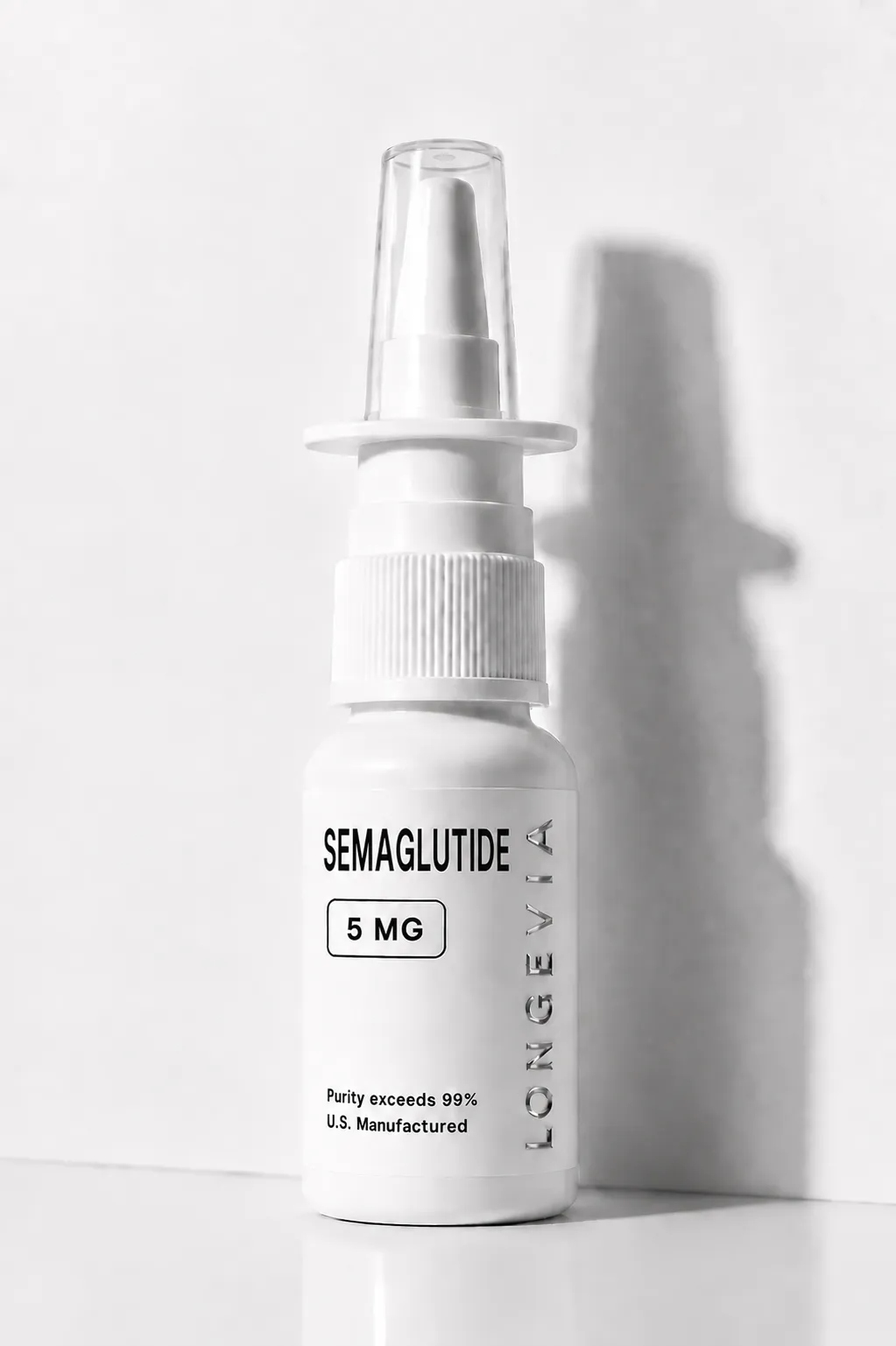
Semaglutide — Sprays
Longevia Research supplies Semaglutide in 5mg, 10mg, 20mg, and 30mg quantities, 45-spray format, for qualified laboratory research. Semaglutide is a synthetic modified GLP-1 analog and GLP-1 receptor agonist investigated in metabolic, endocrine, and incretin signaling research. Research Use Only.
$135.00
Slide to add
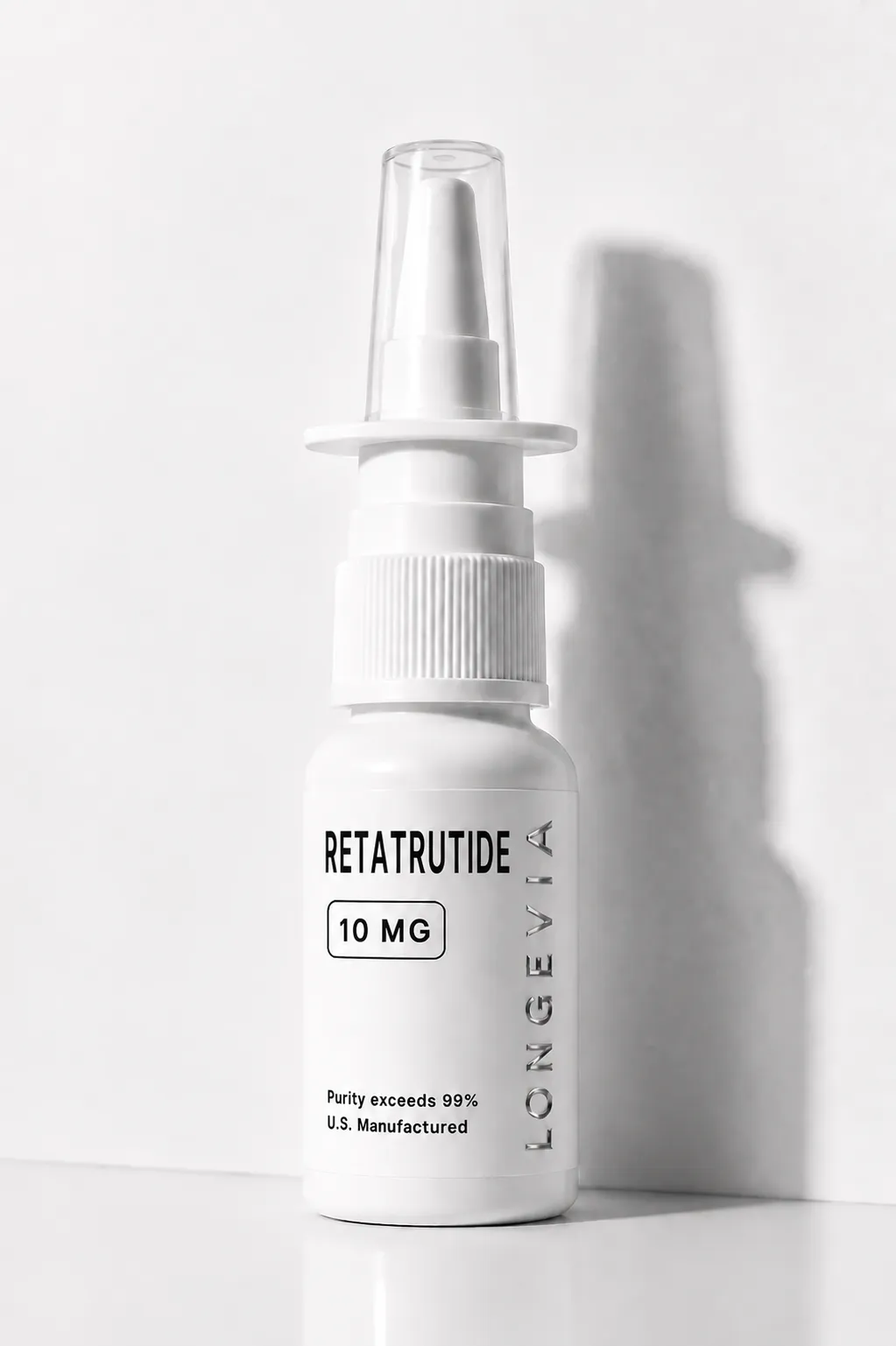
Retatrutide 10mg/20mg/30mg/60mg — 45 Sprays
Longevia Research supplies Retatrutide in 10mg, 20mg, 30mg, and 60mg quantities, 45-spray format, for qualified laboratory research. Retatrutide is an investigational synthetic peptide-based triple receptor agonist (GIPR/GLP-1R/GCGR) studied in metabolic signaling and clinical trials. Research Use Only.
$166.50
Slide to add
Product FAQs
Find answers to common questions regarding storage, reconstitution, and testing guidelines for this specific compound.