Growth Hormone Secretagogues
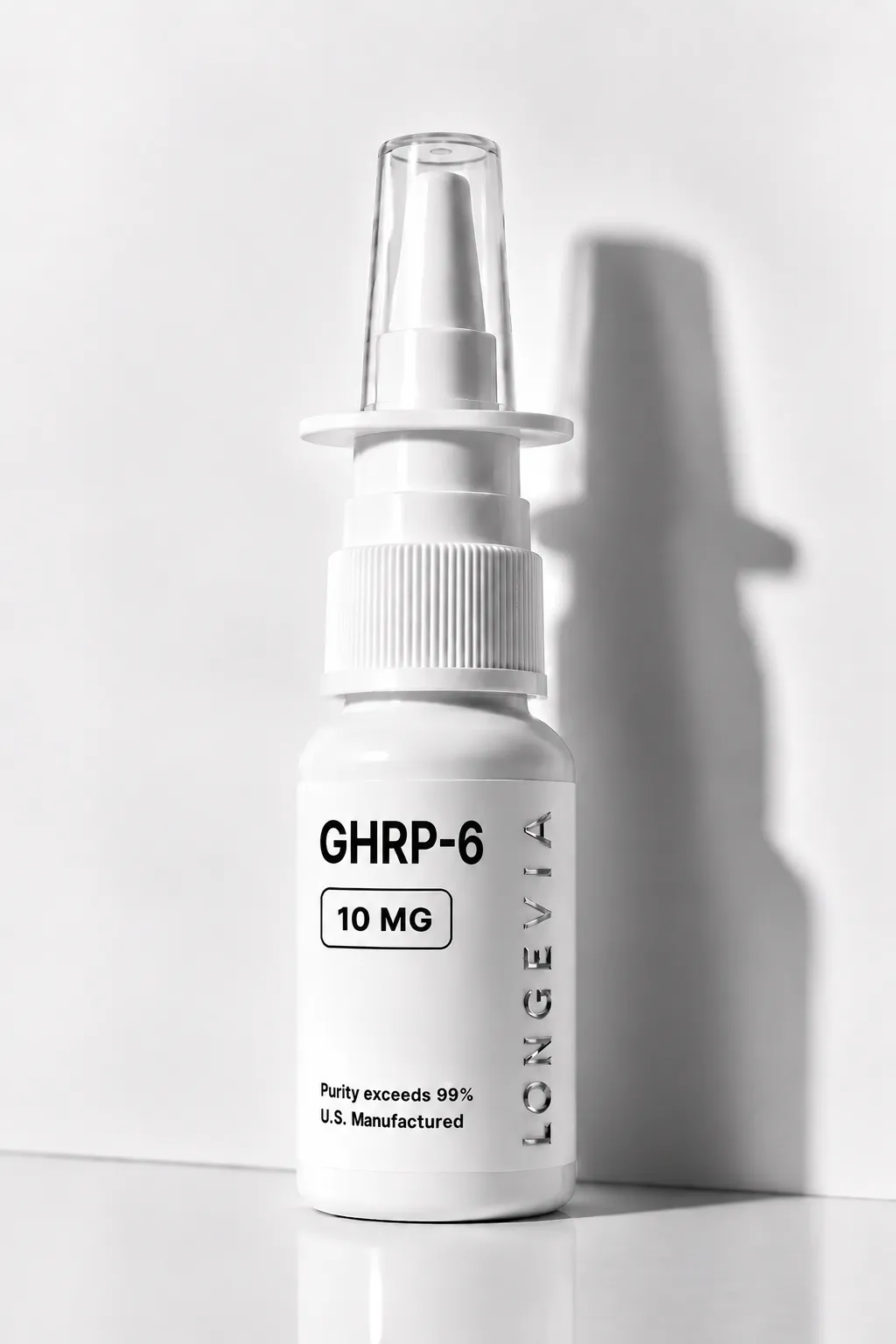
GHRP-6 10mg — 45 Sprays
$144.00
1
Slide to Add
Purity≥99% Tested
TestingLC-MS Verified
LocationUS Based
GHRP-6 (Growth Hormone-Releasing Peptide-6) is a synthetic hexapeptide investigated as a growth hormone secretagogue in experimental research examining the growth hormone axis, endocrine signaling, and growth hormone secretagogue receptor biology. It engages the growth hormone secretagogue receptor type 1a (GHSR-1a), also known as the ghrelin receptor, and has been studied in research concerning pituitary somatotroph biology, hypothalamic-pituitary regulation, and the pharmacological characterization of GHSR-mediated signaling. GHRP-6 emerged from synthetic GHS research programs of the early 1980s and served as a foundational experimental tool in the characterization of GHSR biology — including contributing to the receptor's identification — prior to the discovery of ghrelin in 1999 as the endogenous GHSR ligand. Longevia Research supplies GHRP-6 as 10mg per bottle in a liquid spray format — 45 sprays per bottle — for qualified laboratory and scientific research purposes only.
Standard Delivery3-4 Working Days
Free ShippingOn all orders above $300
Product Details
Scientific identity
GHRP-6 (CAS 87616-84-0), also designated Growth Hormone-Releasing Hexapeptide, is a synthetic hexapeptide growth hormone secretagogue. Its sequence is His–D-Trp–Ala–Trp–D-Phe–Lys–NH₂; molecular formula C₄₆H₅₆N₁₂O₆; molecular weight approximately 873.03 g/mol.
Compound class
Synthetic hexapeptide; growth hormone secretagogue (GHS); GHSR-1a agonist. Classified as a Research Use Only material and is not a drug, dietary supplement, food, or cosmetic.
Structural characteristics
GHRP-6 incorporates two D-amino acid residues — D-tryptophan at position 2 and D-phenylalanine at position 5 — and a C-terminal primary amide. The two aromatic tryptophan residues (one L-configuration, one D-configuration) contribute significantly to its molecular mass and are considered important to GHSR engagement in experimental systems. These features distinguish GHRP-6 from naturally occurring peptide sequences and reflect synthetic GHS design principles.
Primary molecular target
GHSR-1a (growth hormone secretagogue receptor type 1a) — a seven-transmembrane Gq/11-coupled GPCR expressed in pituitary somatotroph cells, hypothalamic nuclei including the arcuate nucleus, and other tissues. GHRP-6 has been established as a high-affinity GHSR-1a agonist through radioligand binding studies and functional assays in GHSR-expressing cell systems.
Distinction from related compounds
GHRP-6 and ghrelin share GHSR-1a as a pharmacological target but are chemically unrelated — GHRP-6 should not be described as a ghrelin analogue in the structural sense. GHRP-6 and GHRP-2 are both synthetic hexapeptide GHSR-1a agonists but differ in sequence and pharmacological profile; findings from one should not be attributed to the other without explicit scientific justification.
Product content:10mg per bottle; 45 sprays per bottle.
Physical form: Liquid research spray.
Purity: Research-grade.
Analytical documentation
A batch-specific Certificate of Analysis is available on the Longevia Research website, covering peptide identity, purity, and lot traceability.
Research-use classification
Research Use Only. Not approved for human or veterinary use. Not intended for administration to humans or animals.
Research Focus & Mechanism Overview
Research background
GHRP-6's development traces to a synthetic peptide research program initiated by Cyril Bowers and colleagues at Tulane University, working from observations that certain opioid-related peptide structures could stimulate growth hormone secretion in experimental systems. Systematic modification of enkephalin-derived sequences to optimize GHS activity while minimizing opioid receptor engagement yielded the growth hormone-releasing peptide series, of which GHRP-6 was one of the most extensively characterized early members. GHRP-6's significance extends beyond its individual pharmacological properties: as one of the first synthetic GHS compounds characterized in detail, it provided researchers with a pharmacological tool for probing what was then an unknown receptor — contributing to the cloning of GHSR by Howard and colleagues in 1996 and to the subsequent discovery of ghrelin in 1999 as the endogenous GHSR ligand. This represents a notable case study in how synthetic pharmacological tools contribute to the discovery of novel receptor systems and endogenous ligands.
Molecular target and mechanism
GHRP-6's mechanism of action is well-characterized at the receptor and cellular level. GHSR-1a activation by GHRP-6 couples to Gq/11 proteins, activating phospholipase C (PLC), generating IP3 and DAG, and mobilizing intracellular calcium — a cascade linked to growth hormone exocytosis from pituitary somatotroph secretory granules in experimental systems. In experimental systems, GHRP-6 has been observed to exhibit synergistic effects on growth hormone secretion when combined with GHRH, suggesting complementary mechanisms between the GHSR and GHRH receptor signaling systems at the pituitary level. Research has also examined GHRP-6 in relation to hypothalamic neuroendocrine circuits, proposing that the compound may influence hypothalamic GHRH-releasing neurons alongside direct pituitary effects — though relative contributions of these pathways remain under investigation. As a GHSR-1a agonist with a pharmacological profile overlapping ghrelin's, GHRP-6 can also engage GHSR-mediated signaling in appetite-relevant hypothalamic nuclei in animal models; these observations are relevant to basic research into ghrelin receptor biology and the neurobiology of appetite regulation, not to the development of appetite-management applications.
Key research areas
Published preclinical research spans radioligand binding and functional assay characterization of GHSR-1a pharmacology; cell-based signaling studies examining calcium mobilization and IP3 generation in GHSR-transfected cell systems; rodent endocrine model studies measuring growth hormone secretory responses including dose-response relationships and GHRH interaction; ex-vivo pituitary gland and hypothalamic slice preparation studies; preclinical appetite-related experimental models examining food intake-associated parameters in the context of ghrelin receptor biology research; and systematic comparative pharmacology studies positioning GHRP-6 alongside GHRP-2, ipamorelin, ghrelin, and other GHSR ligands. All preclinical findings are reported to provide scientific context and do not constitute evidence of human therapeutic efficacy or safety.
Human research and regulatory status
GHRP-6 has been examined in human pharmacological studies documenting growth hormone secretory responses following experimental administration in controlled research settings, including studies examining GHRP-6 and GHRH interaction in human subjects. These findings establish pharmacodynamic activity in experimental conditions but do not establish therapeutic efficacy for any indication. GHRP-6 is not approved by the FDA, EMA, or any comparable regulatory authority as a drug or therapeutic agent for any human health indication — including growth hormone deficiency, body composition modification, metabolic conditions, athletic performance, or appetite management — and no marketing authorization exists for GHRP-6 as a pharmaceutical product in any jurisdiction. Acute growth hormone secretion responses measured in human pharmacological studies are pharmacodynamic observations in controlled experimental settings and do not authorize human self-administration of this compound.
Quality & Purity Standards
Quality in synthetic GHS hexapeptide research begins with the structural integrity of the compound. GHRP-6's sequence — His–D-Trp–Ala–Trp–D-Phe–Lys–NH₂ — incorporates two D-amino acid residues and two tryptophan residues: specific structural features that are not only chemically characteristic of the compound but pharmacologically relevant to its GHSR-1a engagement. Sequence errors, epimerization of D-amino acids, or oxidative modification of tryptophan residues are all potential sources of batch heterogeneity that can alter receptor binding properties, pharmacological potency, and experimental reproducibility.
Peptide identity and sequence confirmation: The foundational quality requirement for any GHRP-6 research preparation is confirmation of the correct hexapeptide sequence: His–D-Trp–Ala–Trp–D-Phe–Lys–NH₂. This includes verification of D-amino acid configurations at positions 2 and 5, the integrity of both tryptophan residues, and confirmation of the C-terminal primary amide — all of which are structurally significant features that distinguish GHRP-6 from other GHS hexapeptides including GHRP-2.
Mass spectrometric identity verification: Mass spectrometry — including electrospray ionization approaches — provides molecular weight determination capable of confirming the intact hexapeptide (MW ~873.03 g/mol, formula C₄₆H₅₆N₁₂O₆) and distinguishing it from truncated sequences, deletion products, and synthesis-related impurities. For a compound containing two tryptophan residues — which are susceptible to oxidation under certain conditions — mass spectrometric monitoring of the intact compound and potential oxidation products represents a relevant quality consideration.
Tryptophan integrity: The presence of two tryptophan residues in GHRP-6 — including one in the non-standard D-configuration — introduces a specific oxidative stability consideration. Tryptophan can be susceptible to oxidation under certain storage and processing conditions; analytical characterization addressing the integrity of tryptophan residues is therefore a relevant quality parameter for GHRP-6 research materials.
Chromatographic purity assessment: High-performance liquid chromatography (HPLC) provides complementary analytical characterization, separating GHRP-6 from co-eluting impurities and enabling quantitative assessment of the purity profile at the batch level. Combined HPLC and mass spectrometric data provide the analytical foundation required for reproducible research with a well-characterized GHS reference compound.
D-amino acid stereochemical integrity: GHRP-6 contains D-tryptophan and D-phenylalanine residues whose correct stereochemistry is essential to the compound's receptor pharmacological activity. Analytical approaches addressing stereochemical integrity — including awareness that epimerization at D-amino acid positions could yield closely related but pharmacologically distinct diastereomers — represent quality considerations specific to this class of synthetic peptide.
Batch traceability: Linking experimental results to a defined, analytically characterized batch is a prerequisite for reproducible research and compliance with institutional requirements governing research chemical use. Batch-specific documentation enables systematic review and supports data integrity across different experiments conducted with the same material.
Longevia Research is committed to supplying research peptides that support rigorous scientific inquiry. Researchers are encouraged to review available analytical documentation for this product prior to incorporating it into laboratory workflows.
Compliance Notice
GHRP-6 10mg — 45 Sprays is supplied by Longevia Research strictly for research and laboratory use only. This product is not approved by the FDA or any global regulatory authority for human consumption, veterinary use, or therapeutic application. It is not a drug, dietary supplement, food, or cosmetic, and it is not manufactured, labeled, or sold as any of these under any applicable regulatory framework.
No claims made regarding GHRP-6 on this website are intended to diagnose, treat, cure, or prevent any disease or medical condition in humans or animals. The research findings summarized on this page arise from preclinical, biochemical, receptor pharmacology, and clinical pharmacology research contexts. These findings do not establish human therapeutic efficacy or safety for any application — including growth hormone deficiency, muscle growth, fat loss, athletic performance, appetite management, anti-aging, or recovery — and they do not constitute regulatory approval, clinical validation, or authorization for personal or therapeutic use.
This product is sold exclusively to qualified researchers, laboratories, and scientific institutions for in-vitro and non-clinical laboratory research purposes. It is not intended for personal use, self-administration, resale for human consumption, or any application outside of a controlled research environment. Purchasers are responsible for ensuring that the acquisition, possession, handling, storage, use, and disposal of this compound are conducted in full compliance with all applicable local, state, federal, and international laws and institutional policies governing research chemicals.
By purchasing GHRP-6 from Longevia Research, the buyer confirms they are acquiring the product for legitimate scientific research purposes, agrees to handle and store it in accordance with applicable laboratory safety standards, and assumes full responsibility for compliance with all laws and regulations governing the purchase and use of research chemicals in their jurisdiction.
Continue Exploring
Also Considered.
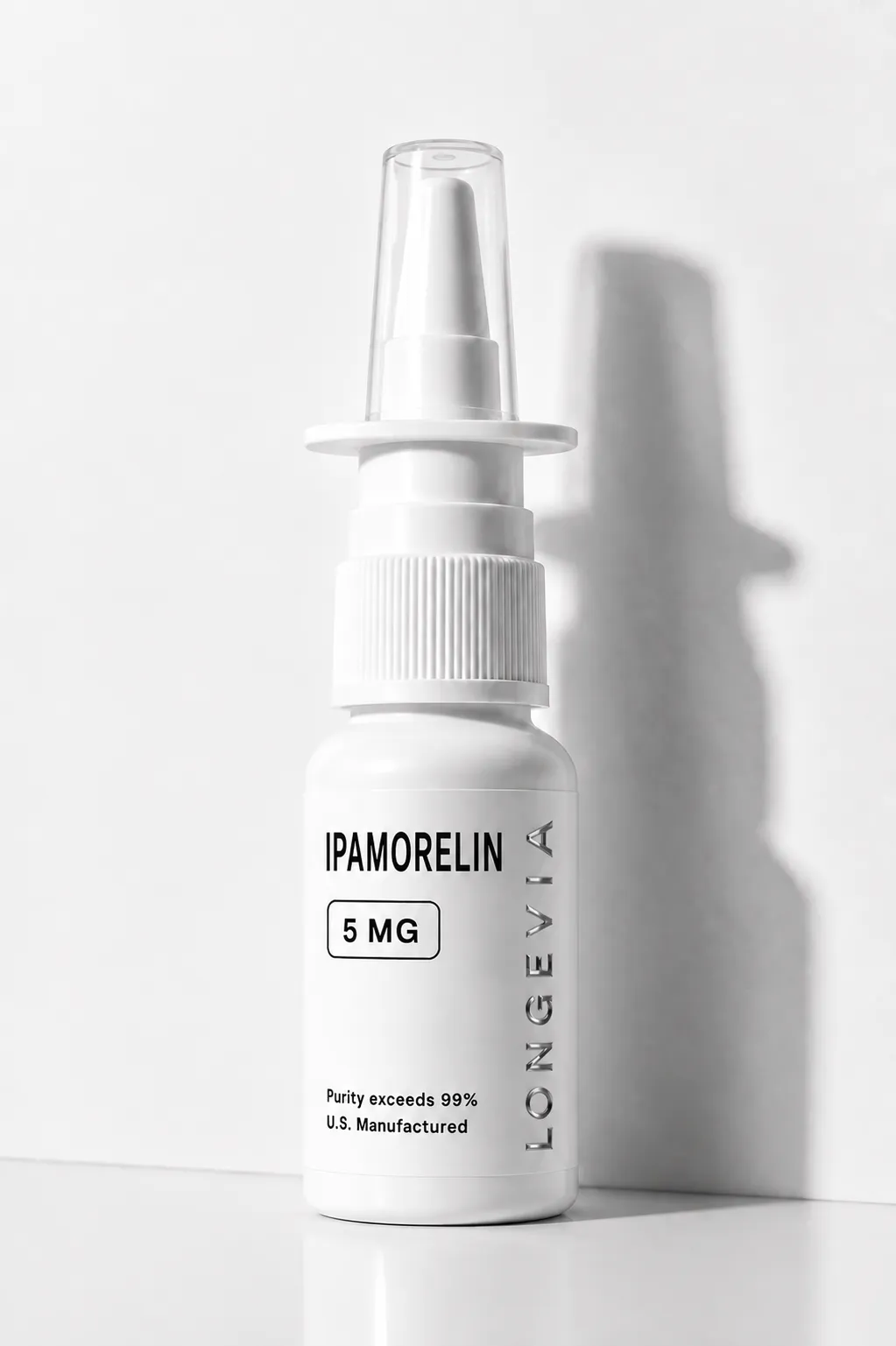
Ipamorelin 5mg / 10mg — 45 Sprays
Ipamorelin is a synthetic pentapeptide and selective growth hormone secretagogue investigated in experimental research examining GHSR/ghrelin receptor biology, pituitary somatotroph signaling, and endocrine pharmacology. Available from Longevia Research in 5mg and 10mg — 45 sprays — for qualified laboratory research use only.
$135.00
Slide to add
IGF-LR3 1mg — 45 Sprays
IGF-LR3 (Long R3 IGF-1) is a modified synthetic 83-amino-acid IGF-1 analogue with reduced IGF binding protein affinity, investigated in cell-based research examining IGF1R signaling, PI3K/AKT and MAPK/ERK pathways, and cellular biology. Available from Longevia Research as 1mg — 45 sprays — for qualified laboratory research use only.
$198.00
Slide to add
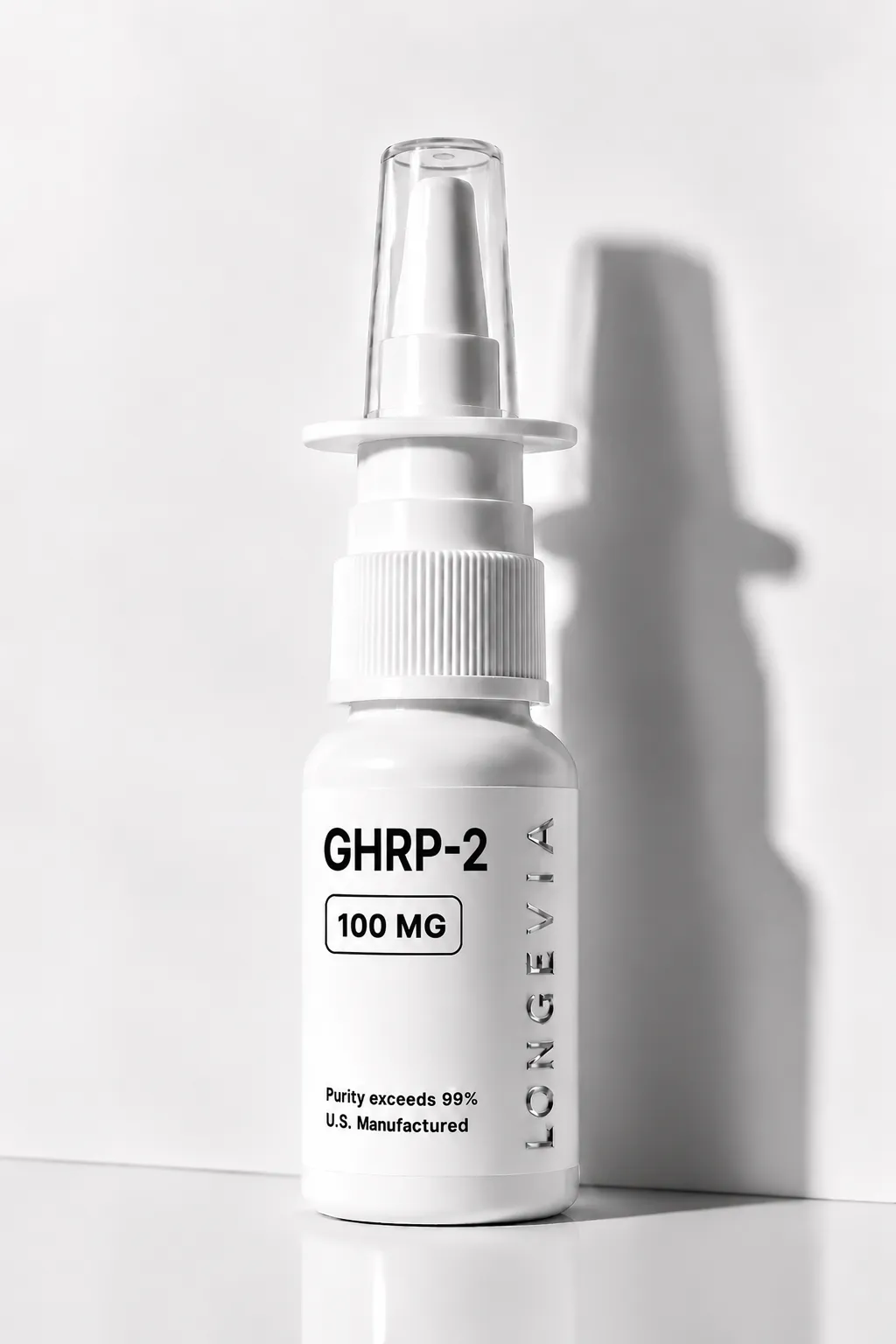
GHRP-2 100mg — 45 Sprays
GHRP-2 (Growth Hormone-Releasing Peptide-2) is a synthetic hexapeptide and growth hormone secretagogue investigated in experimental research involving GHSR/ghrelin receptor biology, pituitary signaling, and endocrine physiology. Available from Longevia Research as 100mg — 45 sprays — for qualified laboratory research use only.
$139.50
Slide to add
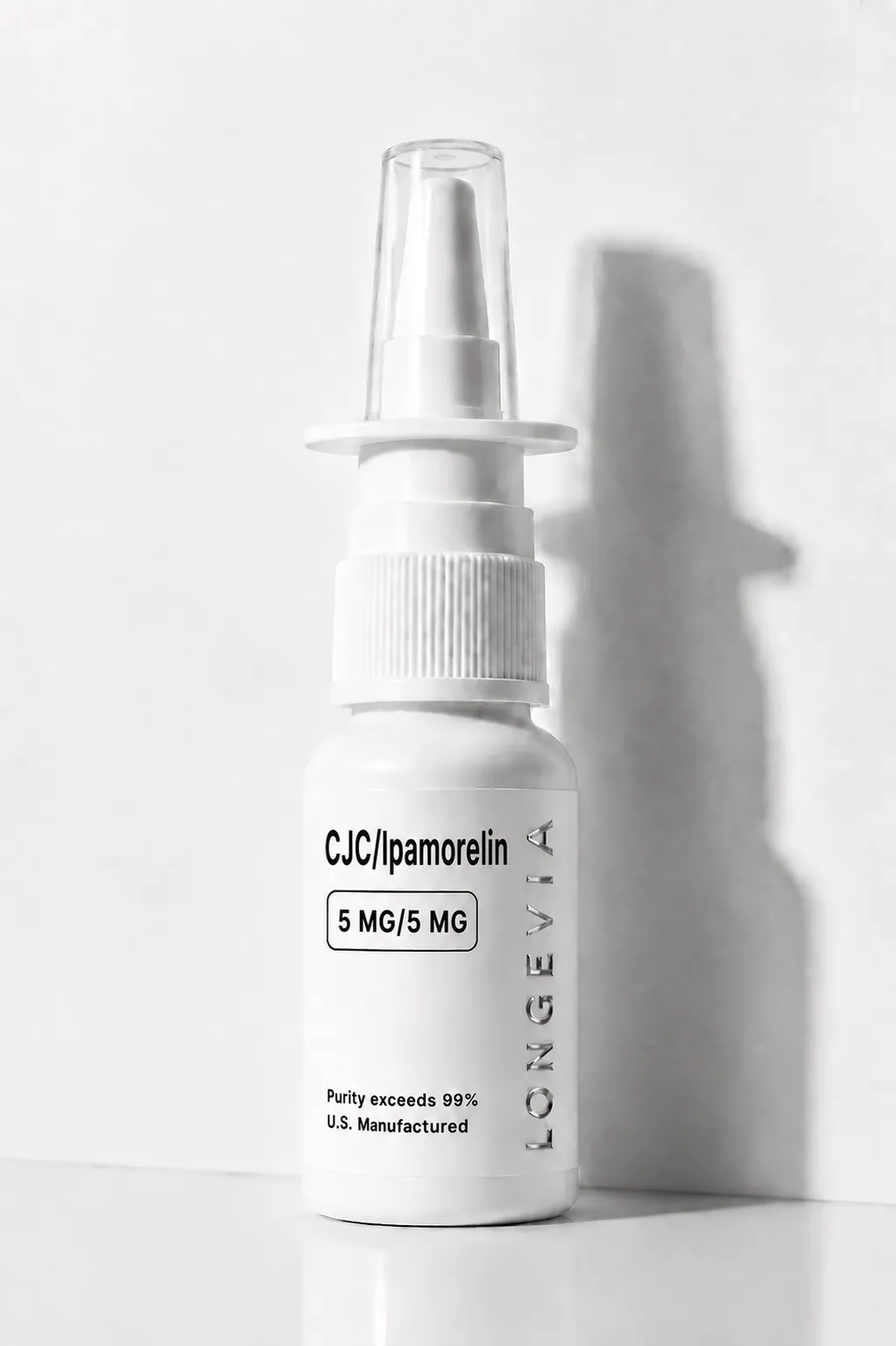
CJC/Ipamorelin 5mg/5mg — 45 Sprays
CJC/Ipamorelin 5mg/5mg spray — 45 sprays of two distinct synthetic research peptides targeting separate GH-axis receptor systems. Supplied by Longevia Research for laboratory use only. Batch COA available.
$166.50
Slide to add
Product FAQs
Find answers to common questions regarding storage, reconstitution, and testing guidelines for this specific compound.